24/7 Emergency Services in Hilton Head, SC
Commercial mold is more than a maintenance concern — it’s an operational liability that can lead to failed inspections, employee exposure complaints, tenant disputes, and even temporary closures. In coastal regions like Hilton Head, Bluffton, and Beaufort, persistent humidity, storm‑driven moisture, and aging building assemblies make commercial properties especially vulnerable to hidden mold growth behind walls, ceilings, and shared assemblies. PuroClean of Hilton Head provides protocol‑based commercial mold remediation designed to protect your license, reputation, and revenue by restoring safe indoor conditions with documentation that stands up to scrutiny.
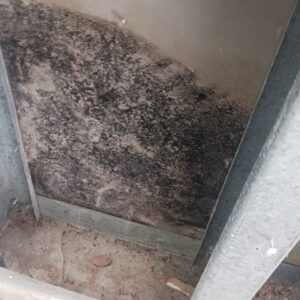
Mold in commercial environments often develops long before staining or odor appears. Concealed moisture from slow leaks, drainage overload, or high humidity can migrate into drywall, insulation, and subfloor materials, expanding the affected footprint and increasing the risk of inspection issues. Our team focuses on moisture‑source correction, containment discipline, negative air pressure, and clearance‑ready documentation so property managers, risk teams, and compliance stakeholders can make defensible re‑occupancy decisions.
The Lowcountry’s climate creates mold conditions that differ from inland markets. Persistent humidity, slow drying, and storm‑driven moisture intrusion allow mold to develop in concealed spaces long before visible signs appear. Commercial buildings in Hilton Head, Bluffton, and Beaufort often include:
These factors increase the likelihood of mold spreading beyond the original moisture source. PuroClean of Hilton Head uses a zone‑based remediation strategy to control scope, prevent cross‑contamination, and maintain inspection‑ready documentation.
Commercial mold rarely stays confined to the area where moisture first appears. It can migrate through:
This migration often expands the affected footprint and triggers additional remediation requirements. Our documentation helps owners, tenants, adjusters, and inspectors understand exactly where mold traveled — and why.
In health‑code‑regulated environments across Hilton Head, Bluffton, and Beaufort, even a mild musty odor can trigger inspection concerns. Back‑of‑house moisture, wall‑cavity saturation, or hidden growth under finishes can jeopardize licensing and customer trust.
PuroClean of Hilton Head isolates the affected zone, identifies the moisture driver, and documents every step of remediation to support re‑inspection readiness before reopening food prep or service areas. This reduces downtime and helps prevent repeat violations.
Lower‑level seepage, drainage overload, and storm‑driven intrusion frequently impact multifamily buildings throughout the Lowcountry — especially in Bluffton and Beaufort, where older drainage systems and high water tables are common. Moisture can travel behind base materials and shared assemblies, creating mold that spreads beyond the initially visible area.
PuroClean uses moisture mapping, targeted removal, and strict containment to prevent building‑wide disruption. Our documentation trail — photos, readings, and scope notes — helps property teams address tenant concerns with facts, not assumptions.
In Hilton Head’s and Beaufort’s humid climate, materials may not dry quickly after minor water events. Moisture can migrate into drywall or insulation, creating hidden mold that leads to employee air‑quality complaints and HR exposure concerns.
PuroClean of Hilton Head uses negative air, HEPA filtration, and moisture‑source correction to protect adjacent suites while maintaining a clearance‑oriented documentation record that supports risk and compliance reporting.
Shared walls and ceilings allow moisture to move across tenant lines, complicating containment and increasing the risk of escalation. This is especially common in Beaufort’s historic mixed‑use buildings and Bluffton’s rapidly expanding commercial corridors.
PuroClean coordinates access, isolates work zones, and maintains controlled traffic flow so unaffected spaces can continue operating when appropriate. This reduces disruption and helps prevent complaints from spreading faster than the mold itself.
The Lowcountry’s climate creates unique challenges:
These conditions increase the likelihood of concealed mold growth and recurring odors. PuroClean of Hilton Head treats remediation as a controlled risk event, using containment, negative air pressure, and moisture verification to keep the affected area isolated and compliant.
Commercial stakeholders need more than cleanup — they need defensible documentation.
PuroClean of Hilton Head provides:
For additional industry guidance on mold remediation standards in commercial and large buildings, the EPA outlines best practices in their Mold Remediation in Schools and Commercial Buildings resource.
If an insurance claim is involved, we help organize the file and coordinate communication with the carrier so the scope and timeline are easy to review. This documentation also supports business‑interruption discussions by establishing what areas were impacted and when re‑occupancy was appropriate.
PuroClean of Hilton Head follows a disciplined, compliance‑forward process:
Commercial mold remediation in the Lowcountry requires a partner who understands liability, compliance, and operational continuity. PuroClean of Hilton Head brings an IICRC‑certified team trained for the complex realities of Hilton Head, Bluffton, and Beaufort — including shared assemblies, mixed‑use layouts, historic structures, and high‑humidity environments.
We use disciplined containment, moisture‑source correction, negative air pressure, and HEPA filtration to protect unaffected areas and support investigation, cleaning, and verification steps. Our team maintains clear communication with owners, tenants, adjusters, and inspectors, ensuring every phase is inspection‑ready and aligned with compliance requirements.
Commercial mold losses often involve water intrusion, structural moisture, biohazard concerns, and multi‑tenant coordination. PuroClean of Hilton Head manages all interconnected challenges with one unified plan, reducing downtime and preventing scope creep. Our Lowcountry‑specific approach ensures your property receives remediation tailored to coastal humidity, shared mechanical systems, and the unique building styles of our region.
When your business is facing mold concerns, you need more than cleanup — you need a partner who understands compliance, communication, and commercial continuity. PuroClean of Hilton Head delivers that level of expertise every time.
Commercial mold spreads quietly — but the operational impact is loud. PuroClean of Hilton Head delivers code‑aligned, inspection‑ready commercial mold remediation that protects your building, your tenants, and your operations. Call (843) 949‑4988 now for immediate response and coordinated remediation.
What Our Customers Say:
Find answers to common questions about our services
We help define controlled access points, work-zone boundaries, and a communication plan so tenants understand where work is occurring and what areas remain unaffected. For multi-unit buildings, we coordinate scheduling and entry requirements to keep containment intact and reduce disruption. The goal is to limit complaints and prevent cross-traffic that can compromise air-quality controls.
We capture condition documentation such as photos, moisture mapping/readings, containment notes, and remediation activity records that show what was affected, what was removed/cleaned, and what was verified. This helps support re-occupancy decisions and reduces exposure to disputes about whether the work was performed to a professional standard. If insurance is involved, these records also help keep the claim file consistent and reviewable.
Cleaning typically addresses what you can see, but commercial remediation is a protocol-based process that includes containment, negative air/HEPA filtration, removal of impacted materials when necessary, and verification steps. The objective is to reduce the chance of re-growth and limit exposure risk—not just improve appearance. Without correcting the moisture source, surface cleaning is often temporary.
The moisture source must be identified and corrected during the remediation plan—otherwise mold conditions can return and create ongoing liability. In many cases, remediation and moisture correction are coordinated in phases so containment stays effective while the underlying driver is addressed. We document the source findings and the corrective actions so the plan is defensible to stakeholders.
Yes—visible growth, musty odors, or occupant complaints can lead to failed inspections, citations, or pressure to restrict access until conditions are addressed. A professional remediation plan helps protect your operating license by controlling airborne spread, documenting the scope, and supporting re-inspection readiness before areas are put back into service. If a complaint escalates, having a clear documentation package can reduce exposure to allegations of inaction.
We help define controlled access points, work-zone boundaries, and a communication plan so tenants understand where work is occurring and what areas remain unaffected. For multi-unit buildings, we coordinate scheduling and entry requirements to keep containment intact and reduce disruption. The goal is to limit complaints and prevent cross-traffic that can compromise air-quality controls.
We capture condition documentation such as photos, moisture mapping/readings, containment notes, and remediation activity records that show what was affected, what was removed/cleaned, and what was verified. This helps support re-occupancy decisions and reduces exposure to disputes about whether the work was performed to a professional standard. If insurance is involved, these records also help keep the claim file consistent and reviewable.
Cleaning typically addresses what you can see, but commercial remediation is a protocol-based process that includes containment, negative air/HEPA filtration, removal of impacted materials when necessary, and verification steps. The objective is to reduce the chance of re-growth and limit exposure risk—not just improve appearance. Without correcting the moisture source, surface cleaning is often temporary.
The moisture source must be identified and corrected during the remediation plan—otherwise mold conditions can return and create ongoing liability. In many cases, remediation and moisture correction are coordinated in phases so containment stays effective while the underlying driver is addressed. We document the source findings and the corrective actions so the plan is defensible to stakeholders.
Yes—visible growth, musty odors, or occupant complaints can lead to failed inspections, citations, or pressure to restrict access until conditions are addressed. A professional remediation plan helps protect your operating license by controlling airborne spread, documenting the scope, and supporting re-inspection readiness before areas are put back into service. If a complaint escalates, having a clear documentation package can reduce exposure to allegations of inaction.
A single water loss can ripple through your entire business — affecting tenants, disrupting workflows, and risking long-term structural damage. We deploy 24/7 with commercial-grade equipment and expertise to protect your property and keep your business running. You don’t have time for guesswork — you need a team that arrives fast, understands commercial environments, and gets your facility stabilized without delay.
Call Our Commercial Response Team at
(843) 949-4988
Contact Us
PuroClean of Hilton Head
(843) 949-4988
18 Fisherman Lane, Bluffton, SC 29910


© 2026 PuroClean. All Rights Reserved.