


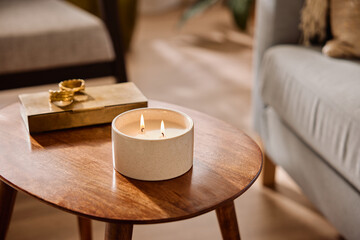
Candles bring warmth, beauty, and a sense of calm to homes Across Hilton Head, Bluffton, Beaufort, Okatie, and the Surrounding Lowcountry communities. But even small flames can create candle fire risks when not handled properly. Whether you’re lighting a candle for a special celebration, a quiet evening ritual, or simply to add ambiance to your coastal home, it’s important to remember that open flames can quickly become hazardous in the wrong conditions.
According to the National Fire Protection Association (NFPA), nearly 10,000 residential fires each year are caused by improper use – a statistic that surprises many homeowners who view candles as harmless decor.
In the Lowcountry, where homes often feature natural materials, open floor plans, abundant textiles, and breezy indoor-outdoor lvining spaces, practicing candle fire safety is especially important. Coastal winds, pets moving between screened porches, and active households can all increase the risk of accidental fire. As your local restoration experts, PuroClean of Hilton Head has seen firsthand how quickly a small candle mishap escalate into smoke damage, soot residue, or structural fire loss.
This comprehensive guide provides positive, practical, and easy-to-follow candle fire safety tips designed specifically for Lowcountry homeowners. With the right habits, you can enjoy the beauty of candles while keeping your home safe, your family protected, and your property secure.
Why Candle Fire Safety Matters in the Lowcountry
Homes in Hilton Head, Bluffton, and Beaufort often include features that make them uniquely vulnerable to fire spread: tall drapes, wicker furniture, coastal decor, indoor plants, and open windows that allow airflow to move flames unpredictably. Many second-home owners also leave properties vacant for extended periods, increasing the risk of unnoticed hazards.
Practicing candle fire safety isn’t about eliminating candles – it’s about using them wisely so you can enjoy their charm without worry. These guidelines help reduce fire risk, protect indoor air quality, and prevent damage to your home’s surfaces, furnishings, and structure.
Candle Fire Safety Tips to Keep Your Home Safe
✅Dos
1. Burn candles in well-ventilated rooms
Proper ventilation ensures that smoke, soot, and fumes disperse instead of lingering in your living space. In coastal homes, where humidity can trap odors and particles, good airflow helps maintain indoor air quality and keeps the flame steady. Ventilation also reduces the risk of respiratory irritation for sensitive family members.
2. Keep candles at least one foot away from flammable objects
This is one of the most important candle safety rules. Keep candles away from:
- Curtains
- Bedding
- Paper
- Plants
- Holiday decor
- Electronics
- Wicker or fabric furniture
In the Lowcountry, lightweight fabrics and coastal decor can ignite quickly. Maintaining a one-foot buffer prevents accidental ignition and keeps your home protected.
3. Burn candles in sturdy, heat-resistant holders
Choose holders made of:
- Ceramic
- Metal
- Thick glass
Place them on stable, level, heat-safe surfaces such as stone countertops, solid wood tables, or tile. Avoid placing candles on uneven surfaces like woven baskets, soft furniture, or decorative trays that can shift.
4. Keep lit candles at least three inches apart
Candles placed too closely can melt each other, causing wax pooling, unstable flames, and increased fire risk. Spacing them three inches apart ensures even burning and prevents heat transfer between candles.
5. Keep candles out of reach of children and pets
children and pets are naturally curious. A wagging tail, a playful swipe, or a quick movement can knock over a candle in seconds. Place candles on high shelves, mantels, or secure surfaces away from foot traffic.
6. Always supervise rooms with lit candles
Never leave a burning candle unattended – even for a moment. If you leave the room, blow it out. If you’re going to bed, extinguish all candles first. Continuous supervision is the simplest and most effective candle fire safety habit.
7. Consider replacing burning candles with battery-operated flameless candles
Flameless candles offer:
- Realistic flickering
- Safe LED lighting
- No soot
- No open flame
- No wax spills
They’re ideal for second-home owners who want ambiance without risk. Many flameless candles even include timers and remote controls.
❌Don’ts
1. Don’t burn too many candles in a small rooms
Multiple candles in a confined space can reduce oxygen levels, increase carbon dioxide, and create poor air quality. Soot buildup can discolor walls, ceilings, and furniture – especially in humid Lowcountry homes where particles cling to surfaces.
2. Don’t burn candles near vents, drafts, fans, or air currents
Airflow causes:
- Flickering
- Uneven burning
- Flame flare-ups
- Excessive soot
- Increased fire spread
In Hilton Head and Bluffton homes, open windows and coastal breezes can push flames toward flammable objects. Keep candles away from airflow sources.
3. Don’t use candles in bedrooms or sleeping areas
Most candle fires start in bedrooms. People fall asleep, forget candles are burning, or knock them over while reaching for items. Avoid candles in any sleeping space – even during relaxation routines.
4. Avoid burning candles all the way down
Extinguish candles when:
- Two inches of wax remain (pillar candles)
- 1/2 inch remains (container candles)
Burning candles completely can cause glass containers to overheat, crack, or explode. It can also ignite surfaces underneath.
5. Don’t move candles while they’re burning
How wax can spill and cause burns, damage flooring, or ignite nearby materials. Always extinguish the candle before moving it to prevent accidents and injuries.
6. Avoid using candles during a power outage
Handling candles in the dark increases the risk of knocking them over, causing a fire or injury. Instead use:
- Flashlights
- LED lanterns
- Battery-powered lamps
These provide safe, bright illumination without the fire risk associated with open flames.
7. Never use water to put out a candle
Using water to extinguish a candle can cause hot wax to splash, potentially leading to burns and spreading the fire. Instead, use a candle snuffer or gently blow out the flame, ensuring that the wick is fully extinguished.
If a Candle Fire Damages Your Home, PuroClean of Hilton Head Is Here to Help
Even with excellent candle fire safety habits, accidents can still happen – especially in homes with active families, pets, or coastal airflow. And when a candle fire does occur, the damage often goes beyond soot and smoke. Many homeowners are surprised to learn that fire damage and water damage frequently happen together.
When firefighters extinguish a candle fire, the water used to put out the flames can soak floors, walls, cabinets, and personal belongings. This combination of fire, smoke, soot, and water can create a complex restoration situation that requires fast, professional attention to prevent secondary issues like mold growth or structural deterioration.
If a candle mishap leads to:
- Smoke damage
- Soot residue
- Odor issues
- Burn marks
- Structural damage
- Water damage from firefighting efforts
PuroClean of Hilton Head provides 24/7 emergency fire & smoke damage restoration and water damage restoration across Hilton Head Island, Bluffton, Beaufort, Okatie, Ridgeland, Hardeeville, and surrounding communities.
Our certified technicians use industry-leading equipment to:
- Remove smoke odor
- Clean soot-covered surfaces
- Restore damaged materials
- Protect belongings
- Prevent secondary damage
- Return your home to pre-loss condition
We understand the emotional impact of fire damage and respond with compassion, clarity, and professionalism. Whether the damage is minor or extensive, our team guides you through every step of the restoration process.