


Table of Contents
- Why HVAC Pan Overflows Are a Major Issue in Hilton Head, Bluffton, and Beaufort
- Understanding How HVAC Systems Behave in Coastal Climates
- Early Warning Signs of an HVAC Pan Overflow
- What Happens When the Pan Overflows
- Why HVAC Pan Overflows Often Go Unnoticed
- How to Prevent HVAC Pan Overflows in Lowcountry Homes
- Why HVAC Pan Overflows Are More Severe in the Lowcountry
- What Homeowners Should Do If They Suspect an Overflow
- When You Need Clarity, We’re Here
Why HVAC Pan Overflows Are a Major Issue in Hilton Head, Bluffton, Beaufort, and Surrounding Lowcountry
In the Lowcountry, HVAC systems work harder than almost anywhere else in the country. Our climate is defined by high humidity, long summers, salt-heavy air, and rapid temperature swings, all of which force air conditioners to run for extended periods. As these systems cool your home, they pull moisture out of the air and deposit it into a shallow metal tray called the condensate pan.
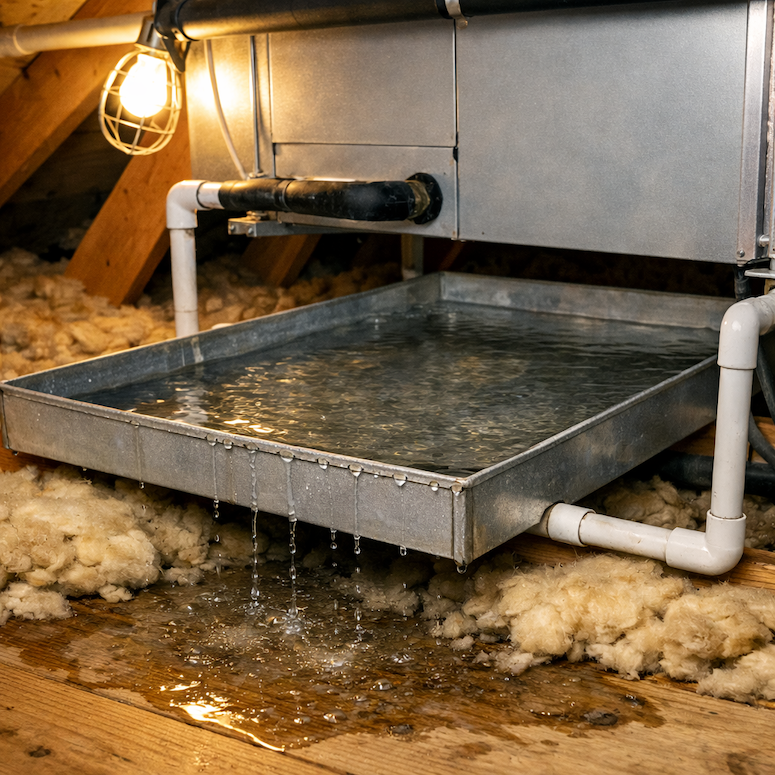
When everything is functioning properly, the water drains through a small PVC line and exists the home. But when that line clogs, cracks, or becomes overwhelmed, the pan fills and eventually spills over. Because many HVAC units in Hilton Head, Bluffton, and Beaufort are installed in attics or elevated utility closets, an overflow can quickly become a major water damage event requiring professional water damage restoration.
What makes HVAC pan overflows especially dangerous is how quietly and invisible they develop. Homeowners often don’t notice anything until water begins dripping through ceiling drywall, musty odors appear, or insulation becomes saturated. By the time these symptoms show up, the damage is already spreading.
Understanding How HVAC Systems Behave in Coastal Climates
1. Humidity Levels Stay High Year-Round
Even in winter, humidity in the Lowcountry rarely drops below 60%. During summer, it often sits between 70-90%. This means your HVAC system is constantly removing moisture, producing gallons of condensation per day.
2. Salt Air Accelerates Corrosion
Salt-heavy coastal air can corrode metal pans, fittings, and drain line components. A small rust spot can turn into a leak that allows water to escape before reaching the drain line.
3. Attic Installations Increase Risk
Many homes in Hilton Head and Bluffton have HVAC units installed in attics. When the pan overflows, water falls directly onto insulation, framing, and drywall. Because attics are rarely inspected, damage can continue for days or weeks before anyone notices – often resulting in hidden moisture that requires structural drying.
4. Storm Systems Push Moisture Indoors
Tropical storms, heavy rainfall, and rapid humidity spikes overwhelm HVAC systems. When humidity rises suddenly, the system produces more condensation than usual, filling the pan faster.
5. Algae Growth is Common in Warm Drain Lines
The warm, moist environment inside condensate drain lines is ideal for algae growth. Over time, algae buildup restricts water flow, causing the pan to fill and overflow.
Early Warning Signs of an HVAC Pan Overflow
Most homeowners don’t know what to look for, but these signs often appear before major damage occurs:
- Musty odors near attic access or utility closets
- Water dripping from ceiling vents or light fixtures
- Visible rust or staining around the HVAC pan
- A full or nearly full condensate pan
- Water pooling around the air handler
- Sudden increase in indoor humidity
- Unexplained ceiling discoloration or bubbling paint
If any of these symptoms appear, the overflow may already be underway – and moisture may already be spreading into areas that require mold remediation.
What Happens When the Pan Overflows
1. Insulation Saturation
Insulation absorbs water like a sponge. Once wet, it loses effectiveness and becomes a perfect environment for mold growth. In the Lowcountry, mold can begin forming within 24-48 hours, making mold remediation services a common follow-up need.
2. Ceiling Damage
Water dripping from the attic saturates drywall, causing stains, bubbling paint, sagging, and eventual collapse. Ceiling repairs can be costly, especially if multiple rooms are affected – and they almost always require water damage restoration.
3. Hidden Mold Growth
Moisture trapped behind drywall or inside attic cavities can lead to mold colonies that spread quickly. Because the Lowcountry is already humid, mold grows faster and more aggressively here than in drier climates.
4. Structural Damage
Persistent moisture can weaken framing, subflooring, and roof decking. Over time, this can compromise the structural integrity of the home.
5. Electrical Hazards
Water near wiring, junction boxes, or attic electrical components can create dangerous conditions that require immediate professional attention.
Why HVAC Pan Overflows Often Go Unnoticed
They happen in hidden spaces.
Attics and utility closets are rarely checked by homeowners, especially in second homes or rental properties.
The early signs are subtle.
A faint musty odor or a small ceiling stain may not seem urgent, but they often indicate a growing problem that may require odor removal services.
The overflow may be intermittent.
Drain lines sometimes partially clear themselves, causing the pan to fill and drain unpredictably.
Second-home owners are especially vulnerable.
Homes left unattended for weeks or months can experience severe damage before anyone discovers it.
How to Prevent HVAC Pan Overflows in Lowcountry Homes
1. Schedule Routine HVAC Maintenance
Twice-yearly maintenance is essential. Technicians can clear drain lines, inspect pans, and ensure the system is functioning properly.
2. Install a Float Switch
A float switch automatically shuts off the HVAC system when the pan fills, preventing overflow. This simple upgrade can prevent thousands of dollars in damage.
3. Flush the Drain Line Regularly
Technicians can flush the line to remove algae, sediment, and buildup. Homeowners can also use a wet/dry vacuum to clear the exterior drain line.
4. Inspect the Pan During Peak Heat
During July-September, homeowners should visually inspect the pan at least once a month. A quick check can prevent major damage.
5. Ensure Proper Attic Ventilation
Good airflow reduces condensation load and helps the HVAC system operate more efficiently.
6. Replace Rusted or Damaged Pans
If the pan shows signs of corrosion, replacement is recommended. Rust holes can cause leaks even when the drain line is functioning.
7. Consider a Secondary Drain Line
Some homes benefit from a secondary drain line that provides backup drainage if the primary line clogs.
Why HVAC Pan Overflows Are More Severe in the Lowcountry
High Humidity Means Faster Mold Growth
Mold thrives in humid environments. Even small overflows can lead to widespread mold growth in attics and wall cavities.
Salt Air Weakens Materials
Salt accelerates corrosion, making pans and fittings more vulnerable to leaks.
Storm season Creates Unpredictable Moisture Loads
Sudden humidity spikes overwhelm HVAC systems, increasing the likelihood of overflow.
Many Homes Are Built with Shared Attic Spaces
Townhomes, condos, and villas often have shared attic assemblies. Water damage can spread between units, complicating repairs and insurance claims – often requiring commercial water damage restoration.
Second-Home Owners Are Often Away
Unattended homes experience more severe damage because issues go unnoticed for longer periods.
What Homeowners Should Do If They Suspect an Overflow
1. Turn off the HVAC System
Prevent additional water from entering the pan.
2. Check for Visible Water
Look for wet insulation, dripping water, or ceiling stains.
3. Avoid Disturbing Wet Materials
Wet insulation and drywall can contain mold spores.
4. Call a Professional Restoration Team
HVAC pan overflows often cause more hidden damage than homeowners expect. Moisture spreads quickly in attics, and mold can begin forming within days. PuroClean of Hilton Head provides water damage restoration, mold remediation, structural drying, and moisture mapping for HVAC-related water damage Across Hilton Head, Bluffton, Beaufort, and the surrounding Lowcountry.
When You Need clarity, We’re Here
Water from an HVAC pan overflow doesn’t stay contained – it spreads into insulation, drywall, framing, and hidden cavities faster than most homeowners expect. If you’re seeing ceiling stains, musty odors, or signs of moisture near your air handler, getting help quickly protects your home from escalating damage.
PuroClean of Hilton Head provides professional water damage restoration, mold remediation, structural drying, and moisture mapping for HVAC-related leaks across Hilton Head, Bluffton, Beaufort, and the surrounding Lowcountry.
Our team responds fast, communicates clearly, and restores your home with precision and care – whether you’re a full-time resident or managing a second home from afar.
If your HVAC pan has overflowed or you suspect hidden moisture, reach out today. We’re ready to help you protect your home, your health, and your peace of mind.
Homeowners who want a reliable, government‑backed guide to HVAC maintenance and moisture prevention, ENERGY STAR provides an excellent maintenance checklist.