


Early on a frosty morning, you hear a dull thump from the basement as the heat kicks on. Later you notice gray smudges around the registers and a faint oily smell. Black, stringy streaks hang from a ceiling corner. Those are classic signs of a delayed ignition in an oil-fired system. The oil heat soot in Spencer and East Douglas homes it leaves behind can travel a long way. This post explains what happened and how to clean it up without making it worse.
What Is a Delayed Ignition?
It’s a burner misfire. Normally, an oil burner sprays a fine mist of fuel and lights it right away. If the flame doesn’t catch on time, fuel vapor builds up in the combustion chamber. When it finally lights, it does so all at once.
That small burst pushes smoke and soot back out of the boiler or furnace instead of up the chimney. People often call it a puffback. Depending on the system, residue can spread into the basement, through ductwork, or up through gaps around pipes.
Causes can include:
- A worn or clogged nozzle
- A failing ignition component
- A dirty or blocked chimney flue
- Air or water in the fuel line
- A system that hasn’t had its yearly service
Only a licensed oil burner technician should diagnose the cause.
How Do You Know Soot Came From the Heating System?
The pattern usually gives it away. Fuel oil residue is greasy and dark, and it tends to cling.
- Fine black film on walls, ceilings, and window sills
- Stringy black “webs” in corners, which are soot clinging to old cobwebs
- Dark outlines around supply registers and return grilles
- An oily, sooty smell, stronger near the boiler or furnace
- Smudges that smear when touched
If you see this after a loud bang or rumble from the burner, a delayed ignition is a likely cause.
What Should You Do Right Away?
1. Turn the heating system off at its emergency switch. In many homes, it’s a red switch near the basement stairs or at the boiler.
2. Don’t keep pressing the reset button. Repeated resets can add more unburned oil to the chamber.
3. Call your oil service company to inspect and repair the burner.
4. If you smell smoke, see flames, or hear repeated booms, leave the house and call 911.
5. Keep kids and pets out of sooty rooms and away from furniture.
6. Take photos before anything is cleaned.
If it’s very cold, plan for heat while the system is down. Space heaters should be used with care, kept clear of anything that can burn, and never left running unattended.
Does It Matter Whether You Have a Boiler or a Furnace?
Yes. The type of system changes where the soot usually ends up.
| System | How heat moves | Where soot tends to go |
|---|---|---|
| Oil boiler with baseboard or radiators | Hot water or steam through pipes | Mostly the basement, plus upstairs through pipe gaps and stairwells |
| Oil furnace with ducts | Warm air through ductwork | Every room with a register, often the whole house |
| Older converted systems | Varies | Hard to predict; inspect room by room |
With a boiler, oil heat soot in Spencer homes often concentrates near the boiler room and the stairs. With a forced-air furnace, the blower can push residue into every room within minutes. That’s why turning the system off quickly matters so much.
What Shouldn’t You Do?
Oil soot is tricky. A few common reactions spread it further.
- Don’t wipe walls with a wet rag. Water and household cleaners can smear oily soot into paint.
- Don’t vacuum with a regular household vacuum. Fine particles can blow through the exhaust.
- Don’t run the furnace fan to “clear the air” until ducts are checked.
- Don’t sit on soiled upholstery or walk soot across carpet.
How Common Are Heating-Related Fires?
Heating equipment is a well-known fire source. The NFPA’s home heating safety page says heating equipment was involved in 11 percent of reported home fires in 2020–2024. Nearly half of home heating fires, 46 percent, happened from December through February.
Not every misfire becomes a fire. Still, a delayed ignition is a sign that the system needs attention before the next cold snap.
Why Do Spencer and East Douglas Homes See This?
Many local homes are older and still heat with oil or older equipment. Census Bureau ACS 2020–2024 five-year estimates show Spencer town’s median year built at 1968 (±6), from table B25035. About 68 percent of its 5,695 housing units (±424) were built before 1980, per table B25034.
Douglas town as a whole is newer, with a median of 1986 (±5). The East Douglas CDP, the town’s older village, falls in the top-coded “1939 or earlier” bracket for median year built. Older chimneys and heating plants in homes like these can be more prone to draft and ignition problems.
How Is Oil-Heat Soot Cleaned?
Our fire and smoke damage restoration crew follows ANSI/IICRC S700 practices. Industry guidance recognizes fuel oil residue from puffbacks as its own type of smoke residue. Here’s what cleanup usually includes.
Dry Removal First
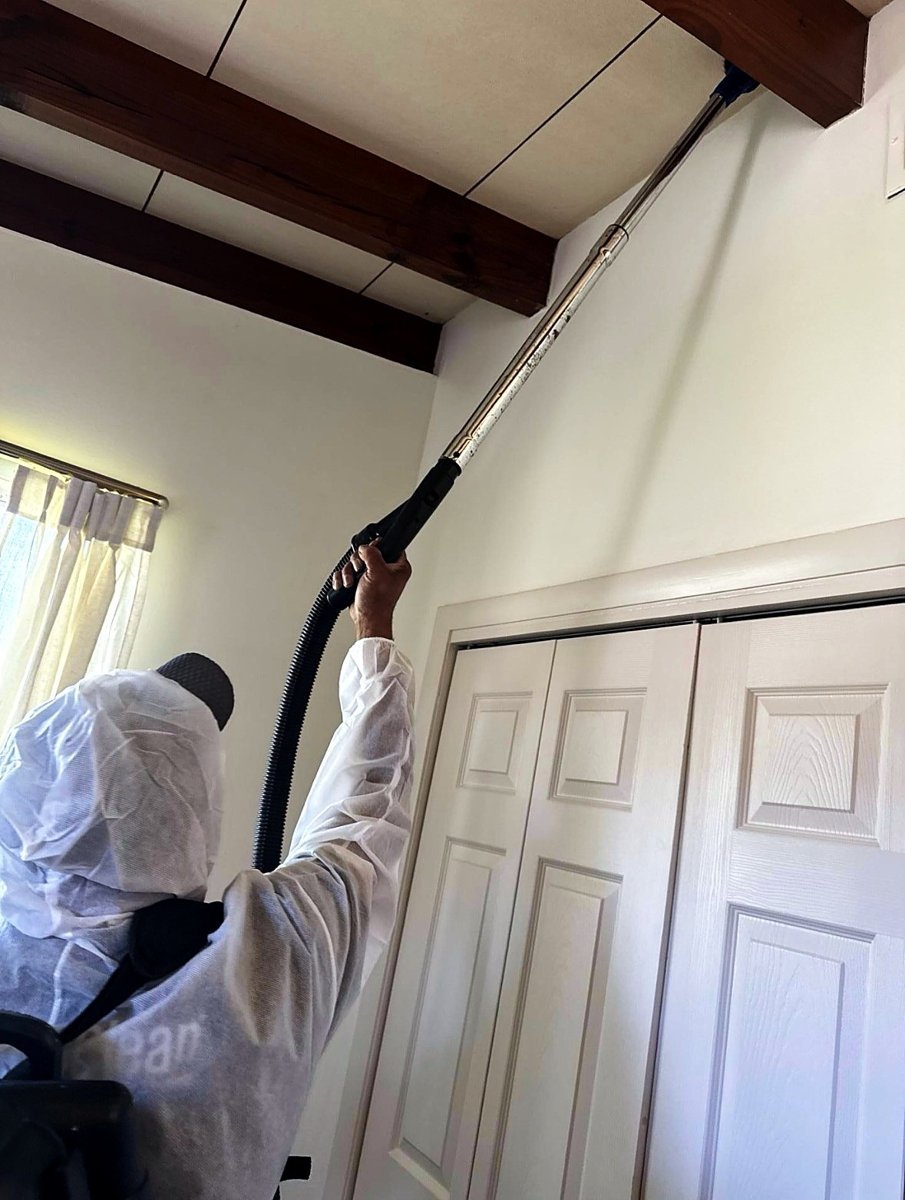
Technicians start with dry methods, such as HEPA vacuums and chemical sponges, to lift loose soot. This avoids smearing it into surfaces.
Detail Cleaning
Walls, ceilings, trim, and cabinets are cleaned with products that cut oily residue. Each surface type gets its own approach.
Contents
Furniture, clothing, electronics, and keepsakes are cleaned on site or packed out for specialty cleaning. Items that can’t be cleaned are documented.
Ductwork and Air Handling
If the system has ducts, they’re often a major path for soot. Duct cleaning and a new filter are usually part of the job.
Odor Treatment
Once surfaces are clean, deodorizing may follow. Methods include thermal fogging or hydroxyl generators. Ozone is used only in unoccupied spaces.
In older homes, ask about lead or asbestos testing before anything is sanded or removed. Paint from before 1978 may contain lead, and older boiler or pipe insulation can contain asbestos.
Does Insurance Pay for Soot Cleanup?
Many policies do. The Insurance Information Institute’s coverage guide lists smoke as a covered peril on standard homeowners forms. The details of your claim depend on the policy wording and your adjuster.
Coverage for the burner repair itself may be a separate question, since wear and maintenance issues are often excluded. Your agent can explain how your policy treats each part. We document soot spread with photos and estimate in Xactimate, which is widely used by adjusters.
How Can You Prevent Another Delayed Ignition?
- Schedule yearly service for an oil burner before the heating season.
- Ask the technician to check the nozzle, filter, electrodes, and chimney draft.
- Keep the fuel tank from running very low, which can stir up sediment.
- Have the chimney inspected and cleaned as recommended.
- Install smoke and carbon monoxide alarms on every level, and test them monthly.
Example: Oil heat soot in Spencer can show up far from the basement. A Spencer homeowner hears a bang from the boiler on a January morning. By afternoon, there are black streaks around the baseboards upstairs. This example is fictional and only meant to show the signs described above.
Frequently Asked Questions
Is Oil Heat Soot in Spencer Homes a Health Concern?
Soot is fine particle residue, and it’s best to avoid breathing it or touching it. Anyone with asthma or breathing concerns should talk to a doctor. Professional cleaning removes the residue from surfaces.
Can I Clean a Small Amount of Soot Myself?
A small, light patch can sometimes be lifted with a dry soot sponge. Larger areas, or soot that came through the ducts, usually need professional cleaning.
How Long Does Puffback Cleanup Take?
It depends on how far the soot traveled. One room may take a day. A whole house with ductwork and contents can take a week or more.
Should I Replace My Boiler After a Delayed Ignition?
Not necessarily. Many systems can be repaired. Your oil service technician can tell you whether repair or replacement makes more sense.
Will the Oily Smell Go Away?
Usually, once the soot is cleaned from surfaces, fabrics, and ducts. A smell that lingers after cleaning often points to residue in a spot that was missed, such as a closet or a return duct. Let the crew know so they can recheck.
Do You Serve Spencer and East Douglas?
Yes. See our Spencer service area page and our East Douglas service area page.
Get Help With Oil Heat Soot in Spencer and East Douglas
When a delayed ignition leaves soot behind, call PuroClean Certified Restoration Specialists at (774) 321-3232, 24/7. Owner Nigel Belgrave, a US Air Force veteran, leads our locally owned, veteran-owned office. Our team holds Fire and Smoke Restoration certification, along with Water Damage Restoration, Applied Structural Drying, and Applied Microbial Remediation. We’re EPA Lead-Safe Certified. Find us at 482 Southbridge Street, Auburn, MA 01501. Our service area includes Spencer, East Douglas, Auburn, Worcester, Oxford, Webster, and Whitinsville.