PuroClean of Caseyville — 1934 North 81st Street, Caseyville, IL 62232
French Village, Illinois is an unincorporated community in St. Clair County situated in the southwestern quadrant of the Metro-East, nestled between the Mississippi River bottomlands to the west and the higher ground of the Belleville ridge to the east. The community takes its name from the French colonial settlement history that defined this entire stretch of the American Bottom — the broad floodplain corridor between the Mississippi and the bluff line that was among the first areas of the interior continent settled by European traders and missionaries in the late seventeenth and early eighteenth centuries. Today, French Village occupies a semi-rural residential character that sets it apart from the denser urban communities to its north and west. The community is served primarily by IL-3, which runs north-south through the area as the main arterial, and by local roads including Modoc Road and Goose Lake Road that connect the scattered residential properties across the community’s footprint.
The housing stock in French Village is more varied than in the denser incorporated villages to the north. Older frame homes dating to the mid-twentieth century sit alongside newer construction from the 1980s and 1990s, with a notable presence of larger lot residential properties, manufactured homes, and rural residential structures that reflect the community’s semi-rural character. This variety in construction type and age creates a correspondingly varied property damage profile: the older frame homes carry the familiar vulnerabilities of aging plumbing and deteriorating foundations, while the manufactured housing stock presents distinct mold and structural challenges that require specific remediation approaches. Properties along the lower-lying terrain near IL-3 and closer to the Cahokia Creek drainage network face the same bottomland flooding dynamics that affect the incorporated communities immediately to the north.
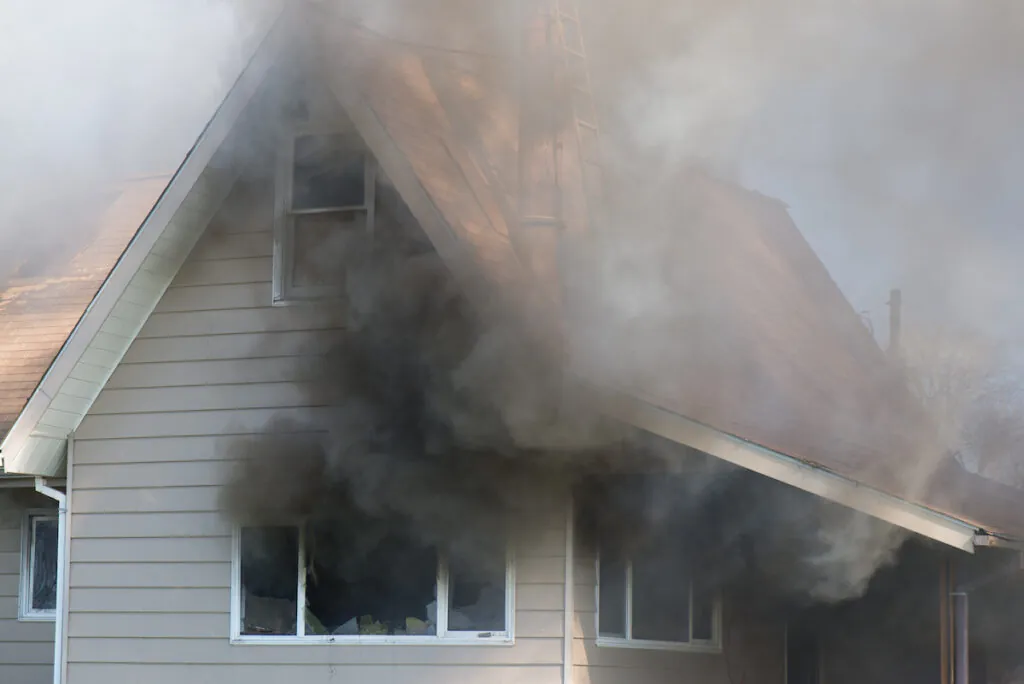
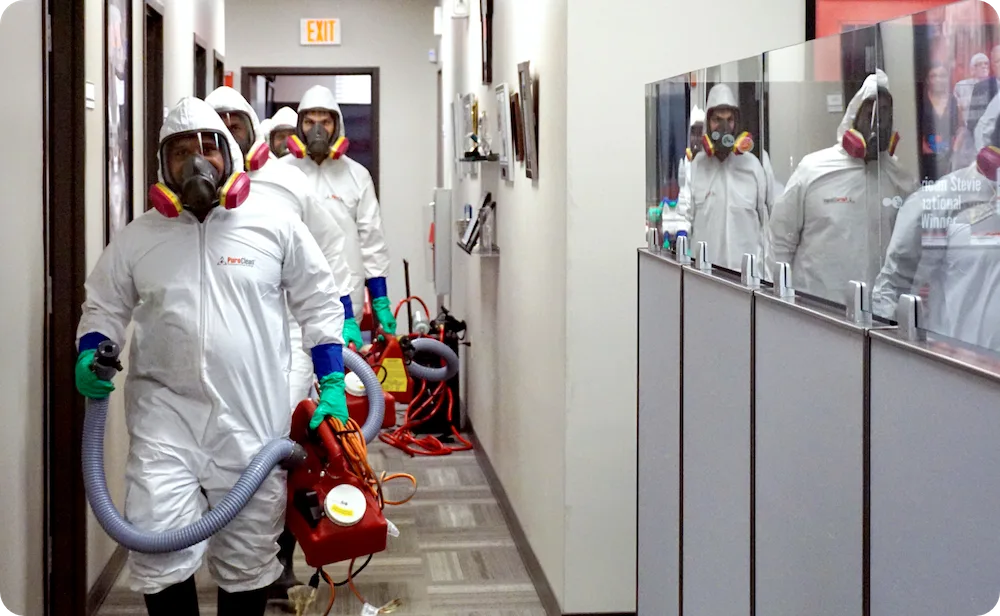
PuroClean of Caseyville serves French Village homeowners and property owners with 24/7 emergency response and the full range of IICRC-certified water damage mitigation, mold remediation, fire and smoke restoration, and reconstruction services. Whether a property sits on a larger rural lot along Goose Lake Road or in a denser residential pocket near IL-3, our technicians arrive equipped to assess completely and document thoroughly for insurance.
Damage events we handle in French Village include:
From our base at 1934 North 81st Street in Caseyville, our team reaches French Village in approximately 16 to 22 minutes depending on which part of the community a client is located in. French Village’s semi-rural, unincorporated character means its properties are spread across a broader geographic footprint than the denser incorporated villages in our service area, and routing is tailored to the specific address. Our primary approach follows IL-159 south from Caseyville to IL-3 South, which runs directly through the French Village area as the main north-south corridor. From IL-3, we have direct access to the residential properties along Modoc Road, Goose Lake Road, and the local streets that branch off the main corridor into the community’s residential pockets.
For properties in the eastern portions of the French Village area, closer to the bluff line and the higher ground near Fayetteville Road, we adjust routing via IL-159 to Fayetteville Road heading west, which provides efficient access to those addresses without requiring a full IL-3 approach from the north. During storm events that can generate surface flooding in the lower-lying areas along IL-3 near the Cahokia Creek drainage corridor, our dispatchers route via higher-ground alternates to maintain reliable response times even when bottomland roads are temporarily compromised.
Every vehicle dispatched to French Village carries the full emergency mitigation loadout: truck-mounted and portable water extraction units, LGR dehumidifiers, high-velocity air movers, a FLIR thermal imaging camera, and moisture meters calibrated for both wood-frame and manufactured housing assemblies. French Village clients receive a live intake call answered immediately, a confirmed arrival window before we hang up, and a named IICRC-certified technician who calls ahead when five minutes out.
French Village’s position in the transition zone between the Mississippi River bottomlands and the Belleville ridge creates a property damage risk profile that varies meaningfully by elevation and proximity to the Cahokia Creek drainage network. Properties in the lower-lying western and northern portions of the community — closer to IL-3 and the creek drainage corridor — share the same alluvial soil and high groundwater table characteristics that drive chronic moisture intrusion throughout the American Bottom communities to the north. During periods of heavy rainfall, this terrain saturates quickly, and the near-surface water table that results pushes hydrostatic pressure against crawl space piers, slab joints, and foundation walls in the older homes situated on low ground. Properties on slightly higher ground toward the bluff line are less susceptible to groundwater intrusion but remain fully exposed to weather-driven damage events including roof failures, pipe freeze events, and storm-driven water entry.
The manufactured housing stock present in French Village deserves specific attention in any risk analysis. Manufactured homes — particularly those installed on pier-and-beam or blocking foundations rather than permanent perimeter foundations — are highly susceptible to moisture intrusion into the crawl space created beneath the home. The underbelly vapor barrier on manufactured homes degrades over time and is easily punctured, allowing ground moisture to migrate upward into the floor system. Insulation batts in manufactured home floors absorb moisture readily and, once wet, hold it against the subfloor decking for extended periods — a combination that accelerates both structural deterioration and mold colonization in the floor assembly. IICRC S500-compliant drying of a manufactured home requires specific equipment positioning and access strategies that differ from site-built construction.
Septic system infrastructure is a risk factor unique to the more rural properties in French Village that are not connected to municipal sewer service. Septic system failures — from drain field saturation during prolonged wet periods, tank overflow, or lateral line blockage — can introduce Category 3 sewage contamination into a home through floor drains, toilets, and tub drains without the same warning signs that a municipal sewer backup might provide. During the Metro-East’s wet spring season, when soil moisture is at its annual peak, drain field saturation is a documented cause of sewage backup events in rural and semi-rural properties throughout St. Clair County. The combination of organic building materials, the region’s humid continental climate, and the elevated summer humidity levels common to the American Bottom means mold colonization in any affected space can begin within 24 hours of a moisture event and become visibly established within a week of unaddressed exposure.
Owned & Operated by Paul Reiss
1934 North 81 Street, Caseyville, IL, 62232
(618) 206-7055
 Belleville
Caseyville
Collinsville
Edwardsville
Fairview Heights
Freeburg
French Village
Gard
Glen Carbon
Holiday Shores
Hollywood Heights
Imbs
Maryville
Millstadt
O'Fallon
Oak Hills
Poag
Pontoon Beach
Rentchler
Roachtown
Roxana
Shiloh
Signal Hill
Smithton
South Roxana
State Park Place
Swansea
Westview
Belleville
Caseyville
Collinsville
Edwardsville
Fairview Heights
Freeburg
French Village
Gard
Glen Carbon
Holiday Shores
Hollywood Heights
Imbs
Maryville
Millstadt
O'Fallon
Oak Hills
Poag
Pontoon Beach
Rentchler
Roachtown
Roxana
Shiloh
Signal Hill
Smithton
South Roxana
State Park Place
Swansea
Westview
Water damage can result from unexpected leaks, flooding from storms, plumbing failures, or appliance malfunctions. Our certified teams focus on rapid water removal, drying, and stabilization to help prevent further damage and mold growth.
 Explore Our Water Damage Mitigation Services
Even after a fire is extinguished, smoke, soot, and odor can continue to affect your home. Fire damage restoration services address visible damage while also helping reduce lingering effects that impact indoor air quality and surfaces.
Explore Our Fire and Smoke Damage Restoration Services
Mold often develops as a result of unresolved moisture or hidden water damage. Professional mold remediation helps identify affected areas, contain growth, and restore healthy indoor conditions.
Explore Our Mold Removal and Remediation Services
Biohazard situations, including crime scene cleanup and virus decontamination, require specialized cleaning and handling to protect health and safety. Biohazard cleanup services address contamination using proper protocols and professional care.
Explore Our Biohazard Cleanup Services
In some cases, property damage requires repairs beyond cleanup and mitigation. Reconstruction services help restore damaged areas of the home after water, fire, or other incidents, supporting a smoother transition from damage to recovery.
Explore Our Reconstruction Services Services
PuroClean provides 24/7 commercial property damage restoration services for businesses and facilities across the United States.
Explore Our Commercial Services
Water damage can result from unexpected leaks, flooding from storms, plumbing failures, or appliance malfunctions. Our certified teams focus on rapid water removal, drying, and stabilization to help prevent further damage and mold growth.
Explore Our Water Damage Mitigation Services
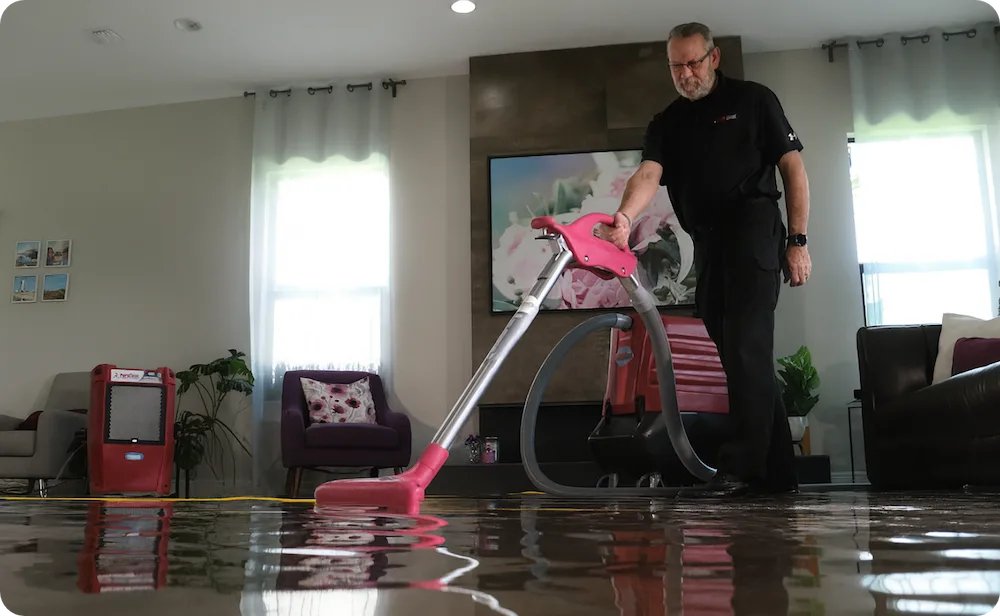
French Village, IL — Water Damage Restoration, Mold Remediation & Emergency Services
In a manufactured home, soft floor spots and persistent musty odor almost always indicate both problems occurring together. Moisture that has penetrated the subfloor decking — typically through a degraded underbelly vapor barrier or a crawl space moisture source — causes the OSB or particleboard subfloor to swell, delaminate, and lose structural integrity while simultaneously supporting mold colonization on the face of the decking and in the saturated insulation below. PuroClean’s assessment includes FLIR thermal imaging of the floor assembly, moisture meter readings at multiple points across the floor system, and air quality sampling if mold odor is present. The structural and remediation scope are documented together so your insurance adjuster receives a complete, defensible claim package.
Coverage for septic system-related sewage backup depends on how your specific HO-3 policy is written and whether you carry a sewage backup endorsement. Standard HO-3 policies typically exclude damage caused by water that backs up through a sewer or drain, but many policies offer a backup of sewers and drains endorsement that covers this exact event type for a modest additional premium. If you do not have that endorsement, the damage may not be covered under your primary policy. PuroClean documents the source, pathway, and full extent of the sewage intrusion with photographs and moisture data so that coverage determinations — and any appeal of a denial — are supported by a thorough evidence record.
Hidden moisture in an exterior wall assembly is one of the most common and underestimated damage patterns in older frame homes, and visible evidence at the siding removal point is rarely the full extent of the problem. Moisture that infiltrates through failed flashing, deteriorated caulking, or a compromised window or door seal wicks laterally through wall sheathing and vertically through insulation batts, often traveling several feet beyond the visible damage area. PuroClean uses FLIR thermal imaging to map moisture distribution across the full wall assembly without additional demolition, giving you an accurate scope before any further deconstruction. Moisture meter readings at multiple points confirm actual moisture content levels against IICRC drying targets.
Water from a burst supply pipe fed by a private well is classified the same way as municipal supply water under the IICRC S500 standard: Category 1 clean water, provided it has not contacted contaminants during its travel through the structure. The classification can change to Category 2 if the water contacts building materials with biological growth, cleaning products, or other contaminants as it migrates through the space. Being on well and septic does not affect the mitigation protocol for a supply line failure, but it does mean your water source should be tested if the well casing or pressure tank was affected by the event. PuroClean documents water category and source clearly in all job file documentation.
Crawl space drying requires a fundamentally different equipment configuration and access strategy than a finished basement. The low clearance common in crawl spaces under mid-century and manufactured homes limits which equipment can be positioned inside the space, and the exposed soil floor — if a vapor barrier is absent or compromised — continuously contributes ground moisture to the air even as drying progresses. PuroClean addresses crawl space moisture with a combination of portable extraction for any standing water, low-profile dehumidifiers appropriate for the clearance height, and targeted air movement through the joist bays above. Where a vapor barrier is damaged or absent, temporary or permanent encapsulation is factored into the restoration scope to prevent recurrence.
What Our Customers Say:
When you need water damage restoration services near you, call the experts at PuroClean. We are here day or night, 24/7, to help remove any standing water quickly and begin your water restoration service. We monitor the drying process so you can rest assured that your property is dried thoroughly. We offer commercial water restoration services for businesses and residential water damage restoration for homeowners.
Contact Us for 24/7 Emergency Response
(618) 206-7055
Contact Us
PuroClean Emergency Restoration Services
(618) 206-7055
1934 North 81 Street, Caseyville, IL 62232


© 2026 PuroClean. All Rights Reserved.