PuroClean of Caseyville — 1934 North 81st Street, Caseyville, IL 62232
Signal Hill is an unincorporated residential community in St. Clair County perched along the Belleville limestone bluff, just south of Belleville proper and northeast of the Dupo and French Village corridor. Like Oak Hills to its south, Signal Hill occupies genuinely elevated terrain above the American Bottom floodplain — the broad Mississippi River bottomland corridor that stretches west toward the river — and its name reflects that topographic prominence, referencing the bluff’s historic use as a high vantage point over the surrounding lowland. The community sits along the bluff crest accessible via Bluff Road and the local residential streets that branch into the established neighborhoods developed primarily from the 1950s through the 1970s. Signal Hill Road itself serves as one of the key local connectors within the community, linking the residential pockets that occupy the rolling bluff-top terrain between Belleville’s southern boundary and the more rural communities to the south.
The housing stock in Signal Hill reflects its mid-century development timeline and its appeal as an elevated residential enclave within commuting distance of Belleville, Scott Air Force Base, and the broader Metro-East employment corridor. Ranch homes, split-level residences, and modest two-story structures from the 1950s through 1970s make up the majority of the residential inventory, most sitting on full basements that take advantage of the bluff’s natural grade variation. These homes are well-established and owner-occupied in the main, but their age introduces the familiar vulnerabilities of mid-century residential construction: aging copper and galvanized supply lines, original-era cast-iron drain laterals, HVAC systems at or beyond their design service life, and finished basements that conceal moisture events behind drywall and drop ceilings until the damage has progressed significantly. The community’s mature tree canopy — a defining feature of Signal Hill’s residential character — contributes to lateral root intrusion in drain lines and downspout obstruction that can redirect roof drainage against foundation walls.
PuroClean of Caseyville provides 24/7 emergency response throughout Signal Hill for water damage, mold remediation, fire and smoke restoration, and full reconstruction. Our IICRC-certified technicians understand the bluff-top drainage dynamics, finished basement vulnerabilities, and insurance considerations specific to this community and arrive on every call ready to assess and begin mitigation immediately.
Damage events we handle in Signal Hill include:
From our base at 1934 North 81st Street in Caseyville, our team reaches Signal Hill in approximately 12 to 17 minutes under normal driving conditions — a relatively short run given Signal Hill’s position on the bluff just south of Belleville. Our primary routing takes us south on IL-159 from Caseyville, transitioning onto Mascoutah Avenue or Belleville’s southern connector roads to reach the bluff crest, then west onto Signal Hill Road and Bluff Road to access the residential streets within the community. This approach keeps us on well-maintained county and municipal roads for the full run and avoids the bottomland arterials that can experience temporary surface flooding during storm events. Signal Hill’s position directly adjacent to Belleville’s southern boundary also means we can approach from the north via South Illinois Street or the IL-159 corridor depending on the specific address.
For clients in the western portions of Signal Hill closer to the bluff edge and the residential streets that overlook the American Bottom, we adjust routing to approach from Bluff Road heading south from the Belleville city limit, which provides direct access to those addresses without routing through the interior residential grid. During winter conditions, the shaded road sections on the upper bluff face can accumulate ice more quickly than lower-elevation routes, and our dispatchers account for that in winter emergency dispatch decisions, coordinating safe arrival timing with clients when needed.
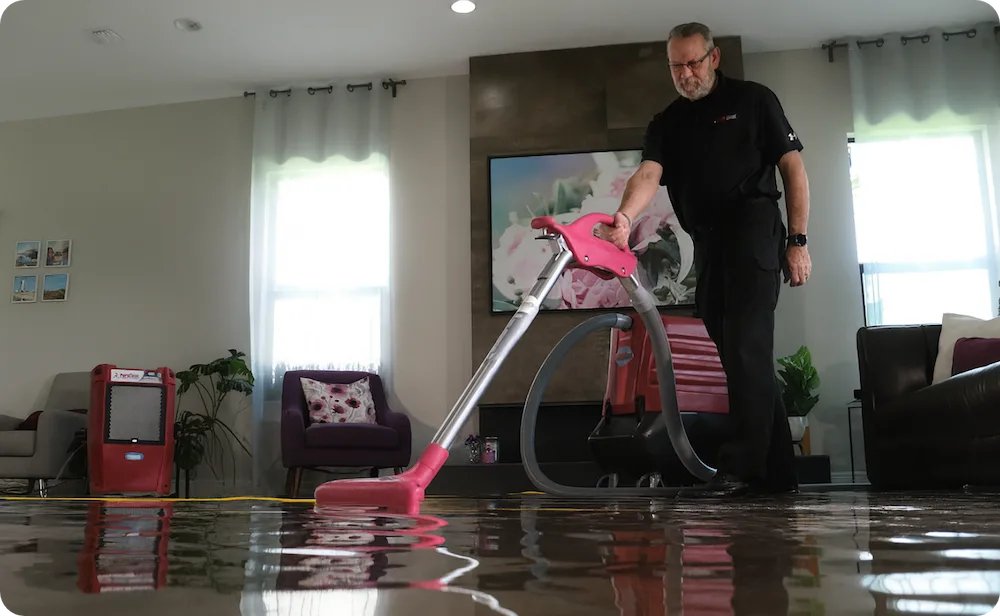
Every vehicle dispatched to Signal Hill carries truck-mounted and portable water extraction, LGR dehumidifiers, high-velocity air movers, a FLIR thermal imaging camera, and moisture meters for wood-frame and masonry assemblies. Signal Hill clients receive a live intake call answered immediately, a confirmed arrival window before we hang up, and a named IICRC-certified technician who calls ahead when five minutes out.
Signal Hill’s elevated position above the American Bottom means its residents are largely insulated from the river-stage flooding, high water table, and hydrostatic groundwater intrusion that define property damage risk in the bottomland communities to the west. However, elevation trades one set of risks for another, and Signal Hill’s bluff-top setting creates specific moisture and structural vulnerabilities that are worth understanding in detail.
The primary water intrusion risk in Signal Hill is stormwater-driven rather than groundwater-driven. The limestone and clay soils of the Belleville bluff have moderate permeability at the surface, and during the Metro-East’s frequent heavy convective rainfall events — which can deliver two inches or more in under an hour during severe summer thunderstorm activity — surface runoff from the bluff-top terrain concentrates rapidly and flows toward the downhill side of every lot. Homes with full basements on lots with significant rear grade drop face concentrated hydraulic loading against their downhill foundation walls during these events. Window wells on below-grade basement windows are a particularly common failure point: when a window well drain becomes clogged with leaf debris from Signal Hill’s mature tree canopy, a single heavy rain event can fill the well to the point of forcing water through the window frame and into the basement.
The mature tree canopy that makes Signal Hill one of the more visually appealing residential communities in St. Clair County also contributes meaningfully to property damage risk in two ways. First, root systems from large oak, maple, and elm trees adjacent to residential structures progressively intrude into cast-iron drain laterals, causing partial blockages that escalate to full line failures and sewage backup events — often with little advance warning. Second, clogged gutters and downspouts from seasonal leaf accumulation are a leading cause of roof-to-wall interface water intrusion in Signal Hill’s ranch and split-level homes, where overflowing gutters direct water against fascia boards, behind aluminum cladding, and into the top of exterior wall assemblies where it migrates downward invisibly inside the cavity.
The finished basements common throughout Signal Hill’s ranch and split-level housing stock represent the community’s most significant hidden moisture risk. Drywall, drop ceilings, and carpet installed over concrete block or poured foundation walls and concrete slab floors conceal moisture events that can progress for weeks before becoming apparent. Copper supply line pinholes, HVAC condensate drain blockages, and slow foundation wall seepage after heavy rains all produce gradual moisture accumulation in finished basement assemblies. In Signal Hill’s moderate-humidity continental climate, concealed moisture at these levels supports mold colonization within 24 to 48 hours — meaning damage that surfaces visually after several weeks has often been developing for far longer than the homeowner realizes.
Owned & Operated by Paul Reiss
1934 North 81 Street, Caseyville, IL, 62232
(618) 206-7055
 Belleville
Caseyville
Collinsville
Edwardsville
Fairview Heights
Freeburg
French Village
Gard
Glen Carbon
Holiday Shores
Hollywood Heights
Imbs
Maryville
Millstadt
O'Fallon
Oak Hills
Poag
Pontoon Beach
Rentchler
Roachtown
Roxana
Shiloh
Signal Hill
Smithton
South Roxana
State Park Place
Swansea
Westview
Belleville
Caseyville
Collinsville
Edwardsville
Fairview Heights
Freeburg
French Village
Gard
Glen Carbon
Holiday Shores
Hollywood Heights
Imbs
Maryville
Millstadt
O'Fallon
Oak Hills
Poag
Pontoon Beach
Rentchler
Roachtown
Roxana
Shiloh
Signal Hill
Smithton
South Roxana
State Park Place
Swansea
Westview
Water damage can result from unexpected leaks, flooding from storms, plumbing failures, or appliance malfunctions. Our certified teams focus on rapid water removal, drying, and stabilization to help prevent further damage and mold growth.
 Explore Our Water Damage Mitigation Services
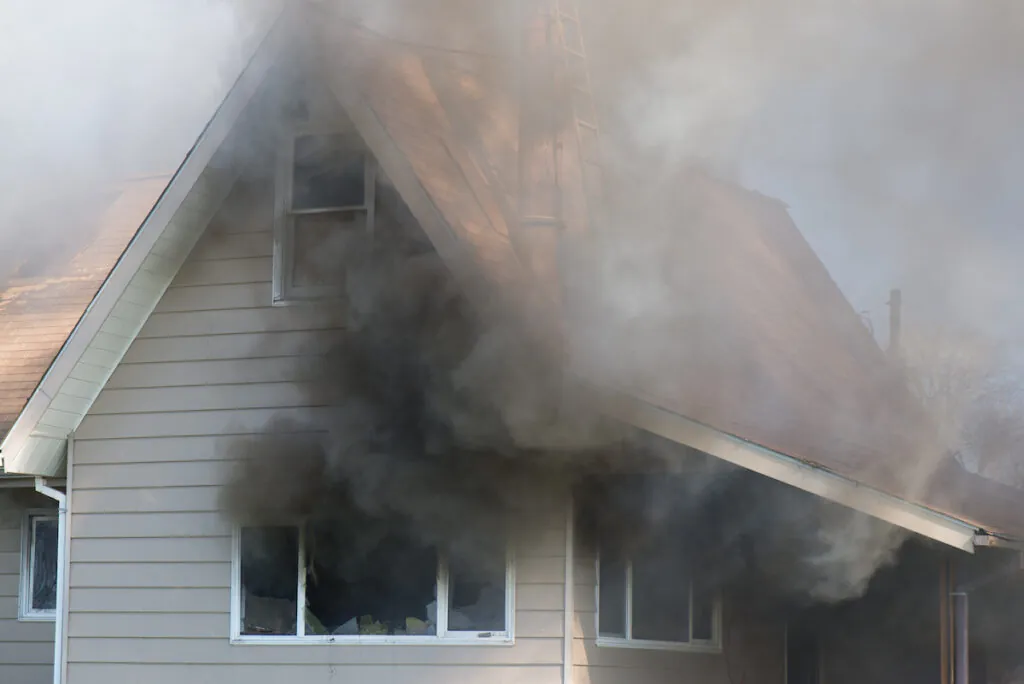
Even after a fire is extinguished, smoke, soot, and odor can continue to affect your home. Fire damage restoration services address visible damage while also helping reduce lingering effects that impact indoor air quality and surfaces.
Explore Our Fire and Smoke Damage Restoration Services
Mold often develops as a result of unresolved moisture or hidden water damage. Professional mold remediation helps identify affected areas, contain growth, and restore healthy indoor conditions.
Explore Our Mold Removal and Remediation Services
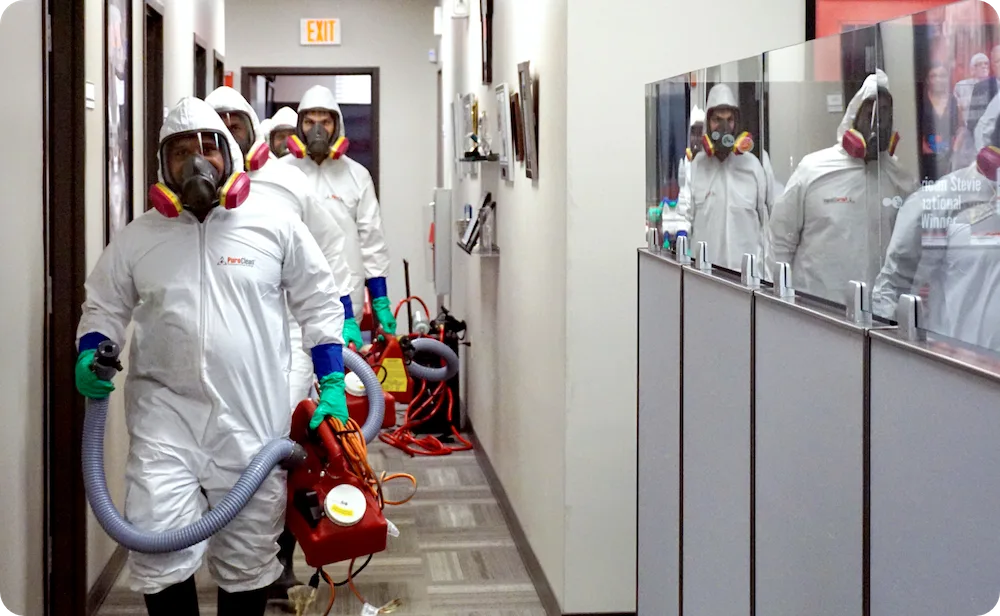
Biohazard situations, including crime scene cleanup and virus decontamination, require specialized cleaning and handling to protect health and safety. Biohazard cleanup services address contamination using proper protocols and professional care.
Explore Our Biohazard Cleanup Services
In some cases, property damage requires repairs beyond cleanup and mitigation. Reconstruction services help restore damaged areas of the home after water, fire, or other incidents, supporting a smoother transition from damage to recovery.
Explore Our Reconstruction Services Services
PuroClean provides 24/7 commercial property damage restoration services for businesses and facilities across the United States.
Explore Our Commercial Services
Water damage can result from unexpected leaks, flooding from storms, plumbing failures, or appliance malfunctions. Our certified teams focus on rapid water removal, drying, and stabilization to help prevent further damage and mold growth.
Explore Our Water Damage Mitigation Services
Signal Hill, IL — Water Damage Restoration, Mold Remediation & Emergency Services
Not necessarily, and it is worth pushing back with documentation. Window well flooding that results from a clogged drain — a maintenance-related failure of a component of the building — can be treated as a building envelope failure rather than a surface water intrusion event under some HO-3 policy interpretations. The distinction hinges on whether the water entered due to a failure of a building system versus overland surface flow. PuroClean photographs the window well condition, the drain status, the entry point, and the water migration pattern inside the basement during our initial assessment. That documentation gives you and your adjuster a factual basis for the coverage determination rather than a default surface water denial.
Mold on a concrete slab beneath carpet does not require a visible flood event to develop — it only requires sustained elevated moisture content at the slab surface. Concrete is hygroscopic and absorbs ambient moisture from the air, and a finished basement with moderate humidity, limited ventilation, and carpet installed directly on the slab creates near-ideal conditions for mold colonization over time. Slow foundation wall seepage after rain events, HVAC condensate migration, or a slow plumbing leak elsewhere in the basement can all elevate slab surface moisture to the threshold level without producing standing water. PuroClean maps the full extent of slab moisture with Tramex concrete meters and FLIR imaging before any flooring decisions are made.
A Category 3 sewage backup in an occupied home is a genuine health hazard that warrants serious consideration of temporary displacement, particularly if children, elderly family members, or anyone with respiratory or immune system vulnerabilities is in the household. Raw sewage contains bacteria including E. coli and Salmonella, viruses, and parasitic organisms that become airborne on aerosol droplets and settle on surfaces throughout the affected area. PuroClean’s response includes full containment of the affected zone, PPE-equipped technicians, EPA-registered disinfectants, and removal of all porous contaminated materials. We document the remediation completely for your insurance adjuster and can assist with temporary displacement documentation if your policy includes additional living expense coverage.
Yes, if sewage or drain water entered your home before or during the lateral failure. The plumber’s repair addresses the structural pipe failure, but it does not address the Category 2 or Category 3 water that contacted your building materials. Drain water from a root-compromised lateral carries organic debris, bacteria, and elevated contamination levels even if it does not appear to be raw sewage. Porous materials — carpet, drywall, insulation, and wood framing — that were contacted by that water require professional assessment for restorability, Applied Microbial Remediation where contamination is confirmed, and structural drying documented to IICRC S500 standards. Without that remediation, mold colonization in the affected materials is a near certainty within one to two weeks.
Old staining and historic mold growth discovered during renovation must be assessed and remediated before new finishes are installed — covering it over does not eliminate the biological material or the moisture conditions that supported its growth. IICRC S520 Applied Microbial Remediation protocols require that all mold-colonized materials be properly cleaned or removed, that the moisture source driving the growth be identified and corrected, and that post-remediation clearance testing by an independent Certified Industrial Hygienist confirm that spore counts in the space have returned to acceptable levels before reconstruction begins. Skipping that process and rebuilding over a prior mold condition creates liability in any future real estate transaction and may not satisfy your insurance carrier if a future moisture event reveals the undisclosed prior condition.
What Our Customers Say:
When you need water damage restoration services near you, call the experts at PuroClean. We are here day or night, 24/7, to help remove any standing water quickly and begin your water restoration service. We monitor the drying process so you can rest assured that your property is dried thoroughly. We offer commercial water restoration services for businesses and residential water damage restoration for homeowners.
Contact Us for 24/7 Emergency Response
(618) 206-7055
Contact Us
PuroClean Emergency Restoration Services
(618) 206-7055
1934 North 81 Street, Caseyville, IL 62232


© 2026 PuroClean. All Rights Reserved.