PuroClean of Caseyville — 1934 North 81st Street, Caseyville, IL 62232
Oak Hills is an unincorporated residential community in Caseyville Township, St. Clair County, about 2.4 miles east of the village of Caseyville and about a mile east of Hollywood Heights, and it shares Caseyville’s 62232 ZIP code. We know it as higher, rolling ground: USGS terrain data puts the center of Oak Hills at roughly 580 feet above sea level, about 125 feet higher than Caseyville’s village center. Hollywood Heights Road leads in from Caseyville, crosses IL-159 at the edge of Oak Hills and becomes Bethel Mine Road, with residential streets such as Oak Drive branching off nearby.
Much of the housing in and around Oak Hills is mid-century: Census estimates for the area put the median home’s year built at about 1959. Ranch homes, split-levels, and larger two-story residences sit on full basements and walkout basement configurations that take advantage of the rolling terrain, with some properties featuring dramatic grade changes from the street-facing front to the rear yard. That higher ground shapes the damage we see here: Oak Hills homes face their own set of moisture and structural vulnerabilities tied to sloping lots, how stormwater drains through upland soils, and the age of the housing.
PuroClean of Caseyville provides 24/7 emergency response throughout Oak Hills for the full range of water damage, mold remediation, fire and smoke restoration, and reconstruction services. Our IICRC-certified technicians understand the specific structural and drainage characteristics of homes on sloping upland lots and arrive on every call prepared to assess and document completely.
Damage events we handle in Oak Hills include:
From our base at 1934 North 81st Street in Caseyville, Oak Hills is about 9 miles by road. The quickest route runs I-255 north to Collinsville Road, then IL-157 south into Caseyville, where we turn east on Hollywood Heights Road. That road crosses IL-159 and becomes Bethel Mine Road right at Oak Hills, and from there the residential streets, including Oak Drive, are a short turn away.
Winter ice and heavy summer storms can slow any drive across St. Clair County. When the weather turns, we stay in touch with you about timing and let you know if a closed or flooded road means we need a different way in.
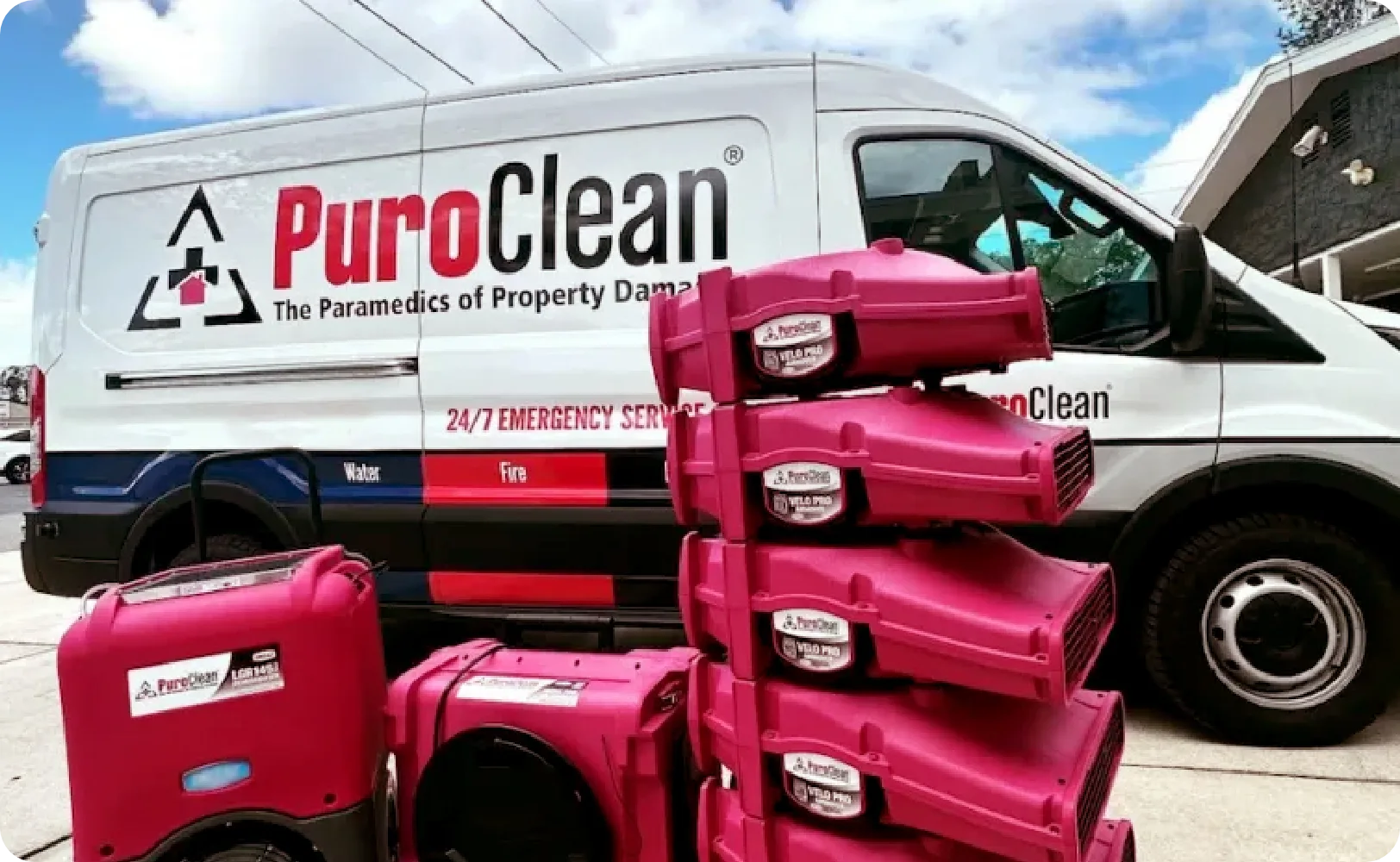
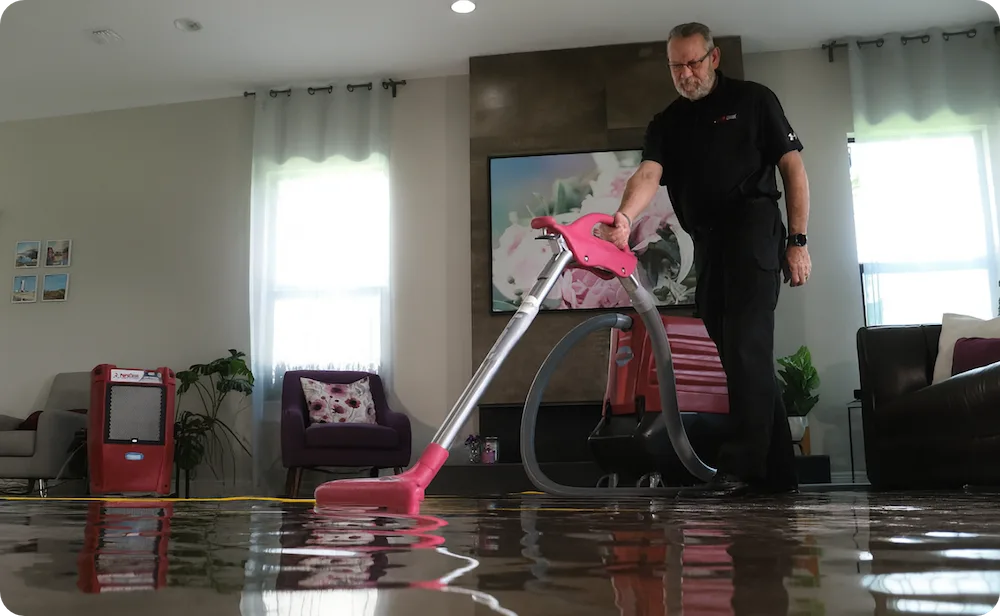
Every vehicle dispatched to Oak Hills carries the full emergency mitigation loadout: truck-mounted and portable water extraction, LGR dehumidifiers, high-velocity air movers, a FLIR thermal imaging camera, and moisture meters calibrated for wood-frame, masonry, and concrete slab assemblies. Oak Hills clients receive a live intake call, a confirmed arrival window, and a named IICRC-certified technician who calls ahead when five minutes out.
Sitting on higher ground than Caseyville doesn’t keep Oak Hills homes dry on its own; it brings a different set of moisture and structural vulnerabilities that are equally capable of producing serious property damage when conditions align. The primary environmental driver in Oak Hills is stormwater concentration on the rolling terrain itself. USDA’s soil survey maps the center of Oak Hills as Menfro silt loam, a very deep upland soil with a silty clay loam subsoil, and rates it slow to take in water once it’s thoroughly wet (hydrologic group C). During heavy convective rainfall events — which the Metro-East region receives regularly during the spring and summer storm season — surface runoff concentrates rapidly and flows downslope toward the lowest points on each lot. For homes with walkout basements or below-grade foundation walls on the downhill side, this concentrated runoff creates hydraulic loading against foundation walls that can exceed the drainage capacity of aging window wells, door sweeps, and footer drain systems installed decades ago.
Groundwater can also find its way in. After long stretches of wet weather, water moving through the soil can seep in where foundation walls meet the floor or come up through floor drains, even when no pipe has broken and the yard looks dry. That pattern is distinct from both a plumbing failure and a surface flood event, and homeowners who experience it often find it difficult to explain to their insurance adjuster.
The age of Oak Hills’ housing stock — much of it mid-century, going by Census estimates — brings the vulnerabilities typical of older homes. Copper water supply lines develop pinhole leaks at solder joints and fitting connections as they age, particularly in homes with hard water or aggressive water chemistry. Original HVAC systems in these homes often include condensate drain lines routed through finished basement ceilings that can become blocked over time, producing slow Category 1 leaks inside wall cavities that go undetected for weeks. Finished basements — a common feature in the full-basement ranch and split-level homes of this era — conceal these moisture events behind drywall and drop ceilings, where conditions for mold colonization develop silently before any visible damage appears.
Owned & Operated by Paul Reiss
1934 North 81 Street, Caseyville, IL, 62232
(618) 206-7055
 Belleville
Caseyville
Collinsville
Edwardsville
Fairview Heights
Freeburg
French Village
Gard
Glen Carbon
Holiday Shores
Hollywood Heights
Imbs
Maryville
Millstadt
O'Fallon
Oak Hills
Poag
Pontoon Beach
Rentchler
Roachtown
Roxana
Shiloh
Signal Hill
Smithton
South Roxana
State Park Place
Swansea
Westview
Water damage can result from unexpected leaks, flooding from storms, plumbing failures, or appliance malfunctions. Our certified teams focus on rapid water removal, drying, and stabilization to help prevent further damage and mold growth.
 Explore Our Water Damage Mitigation Services
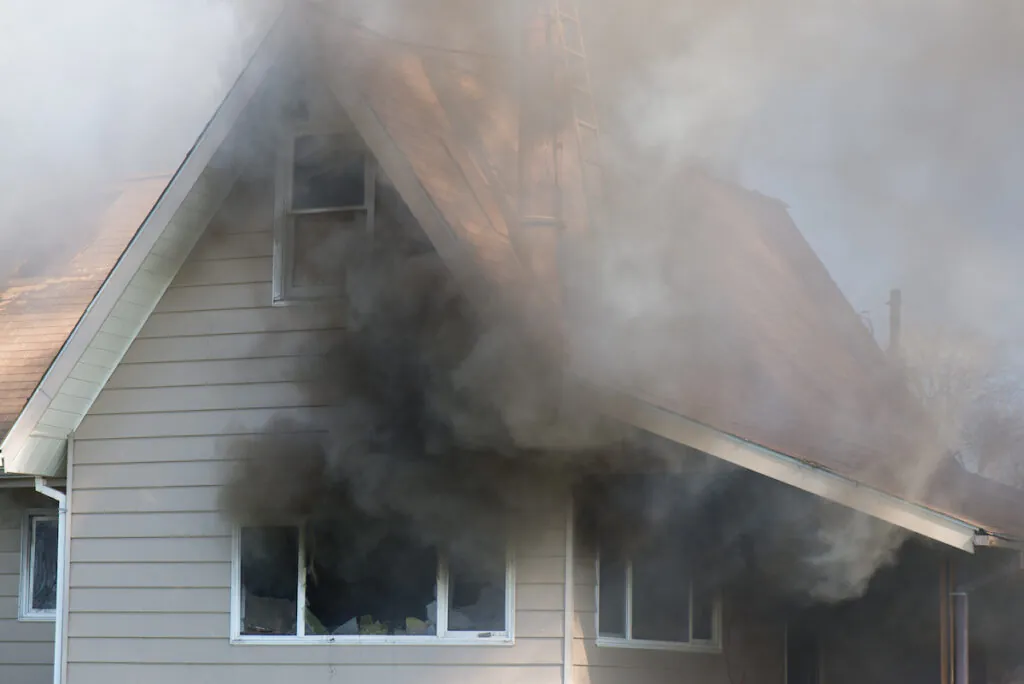
Even after a fire is extinguished, smoke, soot, and odor can continue to affect your home. Fire damage restoration services address visible damage while also helping reduce lingering effects that impact indoor air quality and surfaces.
Explore Our Fire and Smoke Damage Restoration Services
Mold often develops as a result of unresolved moisture or hidden water damage. Professional mold remediation helps identify affected areas, contain growth, and restore healthy indoor conditions.
Explore Our Mold Removal and Remediation Services
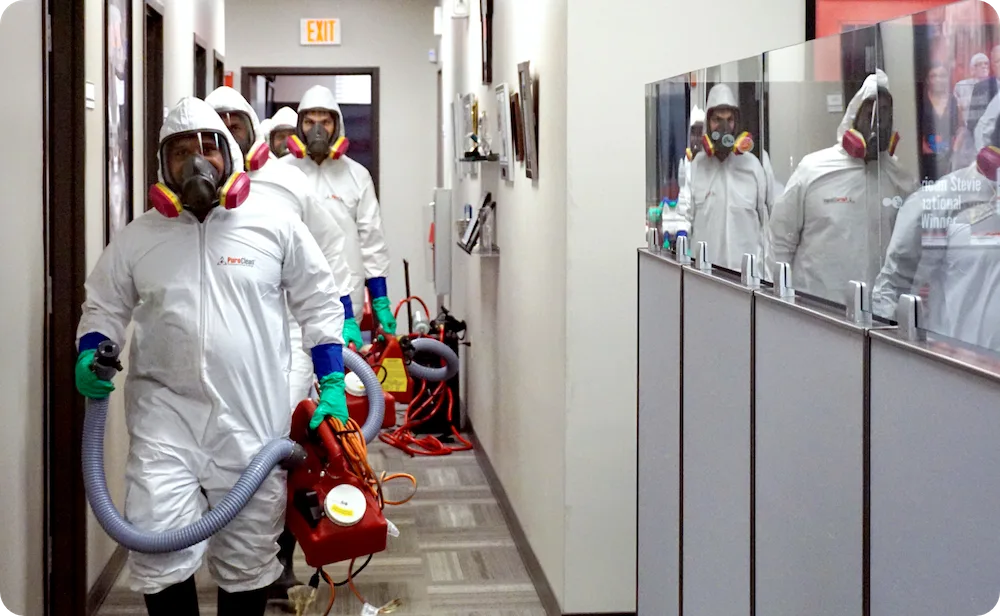
Biohazard situations, including crime scene cleanup and virus decontamination, require specialized cleaning and handling to protect health and safety. Biohazard cleanup services address contamination using proper protocols and professional care.
Explore Our Biohazard Cleanup Services
In some cases, property damage requires repairs beyond cleanup and mitigation. Reconstruction services help restore damaged areas of the home after water, fire, or other incidents, supporting a smoother transition from damage to recovery.
Explore Our Reconstruction Services Services
Commercial water damage travels farther than people expect. Water slips under partition walls, wicks into carpet pad and drips through ceiling tiles onto the floor below. Our crews handle emergency calls 24/7, 365 days a year, weekends and holidays included. We take on losses at offices, retail strips, restaurants, warehouses, churches, medical suites and apartment buildings.
Explore Our Commercial Water Damage Restoration Services
Commercial fire damage puts a business in a tough spot, even when the fire was small. Smoke drifts through return air and settles on stock, ceilings and electronics far from the flames. Firefighting water then soaks carpet, pad and drywall. We take fire calls at any hour, weekends and holidays included. Open walls, broken glass and holes in the roof invite weather, theft and vandalism. Our board-up and tarping service closes those openings and keeps animals and pests out.
Explore Our Commercial Fire Damage Restoration Services
Commercial mold remediation often starts in places nobody looks. It grows behind vinyl wallcovering, above drop ceilings, inside wall cavities and around condensate lines. Tenants usually notice a musty smell or a stain long after growth starts. Our crews remove the growth and help you deal with the moisture that fed it. A mold inspection relies on infrared cameras, moisture meters and air sampling. Together they find damp materials and hidden growth.
Explore Our Commercial Mold Remediation Services
Commercial biohazard cleanup follows events nobody plans for. An injury in a warehouse, a death in a rental unit or a sewage overflow changes the day. Employees, customers and tenants need the area cleaned, disinfected and safe again. Our crews handle these jobs discreetly, 24/7, 365 days a year.
Explore Our Commercial Biohazard Cleanup Services
Water damage can result from unexpected leaks, flooding from storms, plumbing failures, or appliance malfunctions. Our certified teams focus on rapid water removal, drying, and stabilization to help prevent further damage and mold growth.
Explore Our Water Damage Mitigation Services
Oak Hills, IL — Water Damage Restoration, Mold Remediation & Emergency Services
Water entry through a walkout basement door during a rain event can be covered under a standard HO-3 policy if it is caused by a specific, sudden failure — such as a door sweep that gave way, a failed threshold seal, or a window well that drained improperly — rather than general surface flooding. The key distinction your adjuster will apply is whether the water entered through a building envelope failure versus overland surface flow. PuroClean documents the exact entry point, the condition of the door assembly and threshold, and the weather conditions at the time of the event, giving your adjuster a complete evidence record to support a covered determination rather than a blanket surface-water exclusion.
A blocked or leaking HVAC condensate drain is one of the most common hidden moisture sources in finished basements, especially in older homes, and it is frequently the culprit behind musty odors with no obvious water origin. A condensate line that has developed a slow drip inside a wall cavity or drop ceiling plenum can deposit moisture into insulation and drywall consistently over weeks or months without producing visible surface staining. PuroClean uses FLIR thermal imaging to identify temperature differentials in finished basement walls and ceilings that indicate concealed moisture, and pin-type moisture meters to confirm above-normal moisture readings at depth. We locate the source before any demolition decisions are made.
Seepage with no fresh rain and no broken pipe is often groundwater: water that soaked into the soil during earlier wet weather and is still working its way toward your foundation. It can show up at foundation wall joints days or weeks after a rainfall event, well after surface conditions have dried. This type of intrusion is classified as a groundwater seepage event and is typically excluded under a standard HO-3 policy. PuroClean’s assessment documents the entry pathway and moisture distribution with FLIR imaging and moisture meters, which is useful both for insurance documentation and for informing a licensed waterproofing contractor about the specific source driving the event.
Determining moisture duration in a concealed wall assembly requires a combination of physical evidence and measurement. FLIR thermal imaging reveals the spatial pattern of moisture migration, and pin-type moisture meter readings at different depths in the assembly indicate how thoroughly the materials are saturated. Visible indicators — staining patterns, efflorescence on masonry, paint bubbling, or early mold surface growth — provide supporting timeline evidence. Mold colonization that is visible and established typically indicates moisture exposure of at least one to two weeks. PuroClean documents all of these indicators in the job file, which supports your insurance claim and establishes the basis for restorability versus replacement decisions on each affected material.
Even a contained chimney fire that produces limited smoke exposure in the living area warrants professional assessment. Smoke from a chimney fire contains creosote particulates, carbon compounds, and combustion byproducts that bond to painted surfaces, fabrics, and HVAC filter media — and the HVAC system itself may have circulated smoke residue throughout the home via the return air pathway before the fire was suppressed. What appears to be light smoke exposure at the fireplace can represent broader distribution through ductwork. PuroClean assesses the full extent of smoke migration with air quality sampling, cleans all affected surfaces by material type, and documents the scope for your homeowners insurance claim.
What Our Customers Say:
When you need water damage restoration services near you, call the experts at PuroClean. We are here day or night, 24/7, to help remove any standing water quickly and begin your water restoration service. We monitor the drying process so you can rest assured that your property is dried thoroughly. We offer commercial water restoration services for businesses and residential water damage restoration for homeowners.
Contact Us for 24/7 Emergency Response
(618) 206-7055
Contact Us
PuroClean Emergency Restoration Services
(618) 206-7055
1934 North 81 Street, Caseyville, IL 62232