PuroClean of Caseyville — 1934 North 81st Street, Caseyville, IL 62232
Hollywood Heights is an unincorporated residential community in St. Clair County occupying a narrow band of terrain along the transition zone between the Mississippi River bottomlands and the western face of the Belleville limestone bluff — the same escarpment that defines the eastern boundary of the American Bottom floodplain throughout the Metro-East region. Located along the IL-3 corridor south of Cahokia and north of Dupo, Hollywood Heights developed primarily as a bedroom community during the postwar residential expansion of the late 1940s and 1950s, when families working in the industrial operations along the river corridor and at nearby Scott Air Force Base sought affordable homeownership in the quieter stretch of St. Clair County between the major incorporated cities. The community is served by IL-3 as its primary north-south arterial, with residential streets including Sioux Drive, Cherokee Drive, and the grid of local roads running east from IL-3 toward the bluff face giving the neighborhood its distinctive semi-rural suburban character.
The housing stock in Hollywood Heights is dominated by single-story frame and brick ranch homes built between the late 1940s and late 1960s, with a smaller portion of split-level and two-story construction from the 1970s representing the tail end of the community’s primary growth period. These homes sit on a mix of full basement, crawl space, and slab-on-grade foundations, and their age is reflected in the infrastructure beneath them: galvanized water supply lines, cast-iron drain laterals, original-era HVAC systems, and in some cases roof assemblies that have been patched and re-covered rather than fully replaced. The elevation variation across Hollywood Heights — from the lower-lying properties along IL-3 to the higher-ground homes against the bluff face — means that water damage risk profiles differ noticeably from one block to the next, with bottomland-adjacent properties facing groundwater and surface flooding exposure while bluff-face properties are more vulnerable to stormwater runoff and foundation wall intrusion driven by downslope drainage.
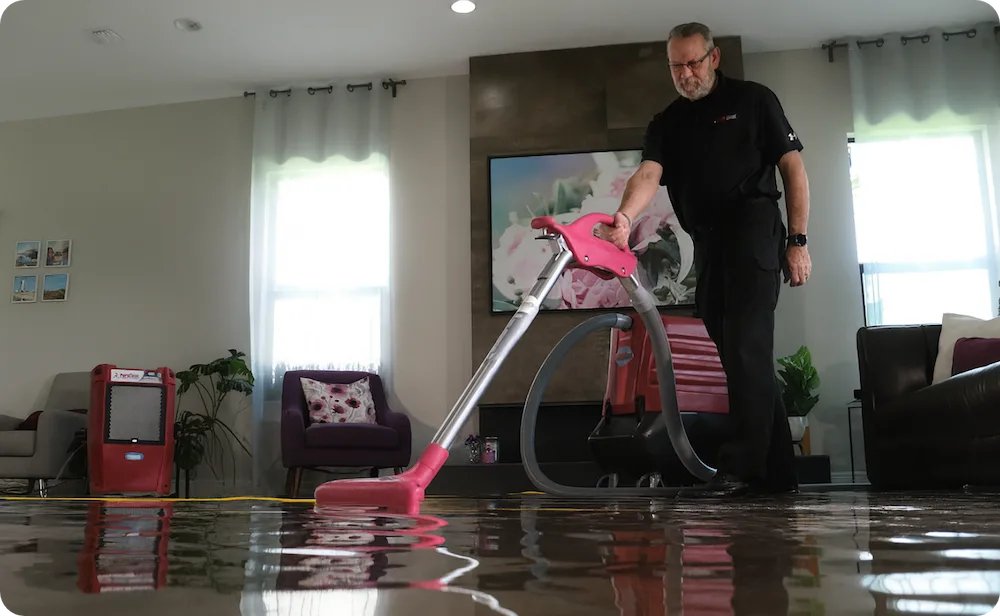
PuroClean of Caseyville provides 24/7 emergency response throughout Hollywood Heights for water damage, mold remediation, fire and smoke restoration, and full reconstruction. Our IICRC-certified technicians understand the elevation-dependent risk variation across this community and arrive on every call equipped to assess, document, and begin mitigation without delay.
Damage events we handle in Hollywood Heights include:
From our base at 1934 North 81st Street in Caseyville, our team reaches Hollywood Heights in approximately 14 to 19 minutes under normal driving conditions. Our primary routing takes us south on IL-159 from Caseyville, connecting to IL-3 South at the Falling Springs Road interchange and continuing south along IL-3 through the Cahokia corridor directly into the Hollywood Heights community. IL-3 serves as both our primary approach route and the main arterial through the community itself, giving us immediate access to the residential streets that branch east and west from it — including Sioux Drive, Cherokee Drive, and the local roads running toward the bluff face. This is a consistent, reliable route in all seasons and under nearly all weather conditions.
For clients whose properties sit on the higher bluff-face side of Hollywood Heights, we continue east from IL-3 along the connecting residential streets and can access those addresses in a single approach without backtracking. For properties in the lower-lying western sections closer to the river, our IL-3 approach keeps us on higher-ground arterials until we turn west onto the specific street, minimizing exposure to the surface flooding conditions that can temporarily affect low-lying intersections during heavy storm events. During those same storm events — precisely when Hollywood Heights generates its highest volume of emergency calls — our dispatchers are familiar with which intersections along the lower IL-3 corridor are prone to ponding and route technicians accordingly.
Every vehicle dispatched to Hollywood Heights carries truck-mounted water extraction, portable units for crawl space and basement access, LGR dehumidifiers, high-velocity air movers, a FLIR thermal imaging camera, and moisture meters for both wood and masonry assemblies. Hollywood Heights clients receive a live intake call, a confirmed arrival window before we hang up, and a named IICRC-certified technician who calls ahead when five minutes out.
Hollywood Heights occupies one of the more geographically interesting positions in St. Clair County from a property damage standpoint, because its elevation gradient from the American Bottom floodplain to the Belleville limestone bluff creates two distinctly different risk environments within the same community. Understanding which environment a given property sits in is the starting point for understanding its water damage exposure.
Properties in the lower-lying western portion of Hollywood Heights, nearest to IL-3 and the bottomland terrain, share the alluvial soil characteristics and near-surface water table dynamics that affect the American Bottom communities to the north. River-deposited clays and silts with low permeability retain groundwater close to the surface during wet seasons, and when the Metro-East receives its typical spring and summer convective rainfall — multi-inch totals delivered rapidly during severe thunderstorm activity — the water table in these areas can rise to within a foot or two of finished grade. Hydrostatic pressure against basement floors and crawl space assemblies in the older ranch homes on this side of the community is a recurring driver of moisture intrusion events, and aging sump pump systems in these homes are frequently the single point of failure that converts a manageable groundwater event into a flooded basement.
Properties against the bluff face face a different risk: stormwater runoff. The Belleville limestone bluff rises sharply behind the easternmost homes in Hollywood Heights, and during heavy rain events, water cascades down the bluff face and concentrates against the foundations of homes situated at the base of the slope. This downslope drainage load can overwhelm window wells, saturate foundation wall backfill, and force water inward through block or poured concrete foundation walls through a process of lateral hydraulic pressure rather than vertical groundwater rise. Homes in this position are also more susceptible to roof-to-wall interface failures during wind-driven rain events, as the bluff creates localized wind turbulence that drives precipitation at unusual angles against the building envelope.
Across both elevations, the age of Hollywood Heights’ housing stock introduces the familiar vulnerabilities of mid-century construction. Galvanized water supply lines in homes built before 1970 corrode progressively and fail without warning, typically inside wall cavities where leaks go undetected for days. Cast-iron drain laterals of the same era are prone to root intrusion from the mature trees that line Hollywood Heights’ established residential streets, leading to blockages and Category 3 sewage backup events. The community’s humid continental climate — with summer relative humidity regularly above 65 percent — means any undetected moisture in a wall assembly or crawl space can support mold colonization within 24 to 48 hours.
Owned & Operated by Paul Reiss
1934 North 81 Street, Caseyville, IL, 62232
(618) 206-7055
 Belleville
Caseyville
Collinsville
Edwardsville
Fairview Heights
Freeburg
French Village
Gard
Glen Carbon
Holiday Shores
Hollywood Heights
Imbs
Maryville
Millstadt
O'Fallon
Oak Hills
Poag
Pontoon Beach
Rentchler
Roachtown
Roxana
Shiloh
Signal Hill
Smithton
South Roxana
State Park Place
Swansea
Westview
Belleville
Caseyville
Collinsville
Edwardsville
Fairview Heights
Freeburg
French Village
Gard
Glen Carbon
Holiday Shores
Hollywood Heights
Imbs
Maryville
Millstadt
O'Fallon
Oak Hills
Poag
Pontoon Beach
Rentchler
Roachtown
Roxana
Shiloh
Signal Hill
Smithton
South Roxana
State Park Place
Swansea
Westview
Water damage can result from unexpected leaks, flooding from storms, plumbing failures, or appliance malfunctions. Our certified teams focus on rapid water removal, drying, and stabilization to help prevent further damage and mold growth.
 Explore Our Water Damage Mitigation Services
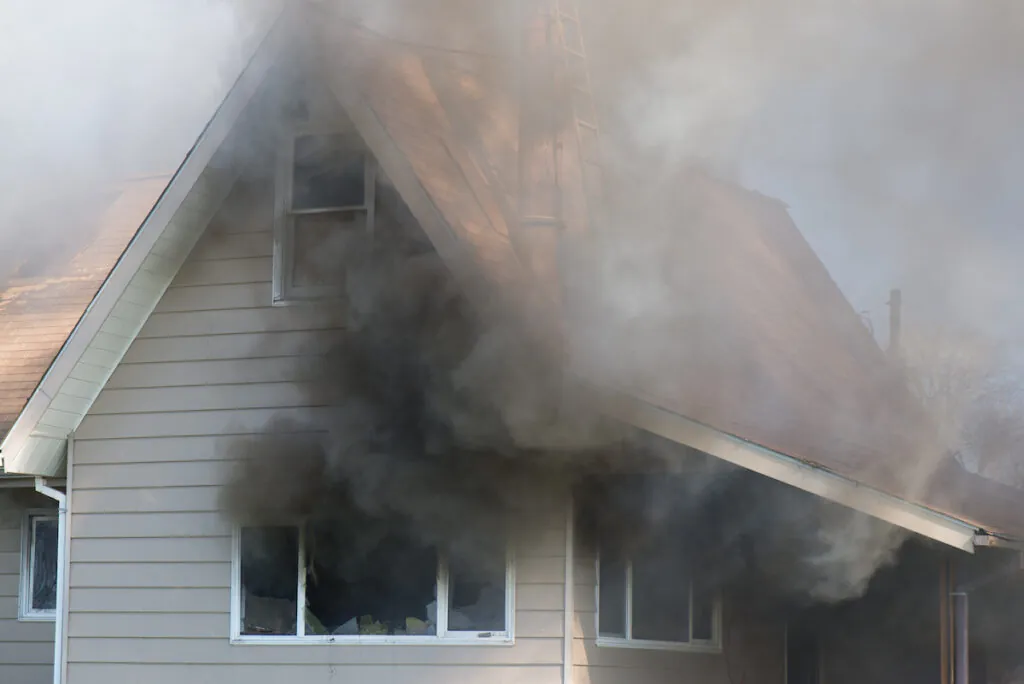
Even after a fire is extinguished, smoke, soot, and odor can continue to affect your home. Fire damage restoration services address visible damage while also helping reduce lingering effects that impact indoor air quality and surfaces.
Explore Our Fire and Smoke Damage Restoration Services
Mold often develops as a result of unresolved moisture or hidden water damage. Professional mold remediation helps identify affected areas, contain growth, and restore healthy indoor conditions.
Explore Our Mold Removal and Remediation Services
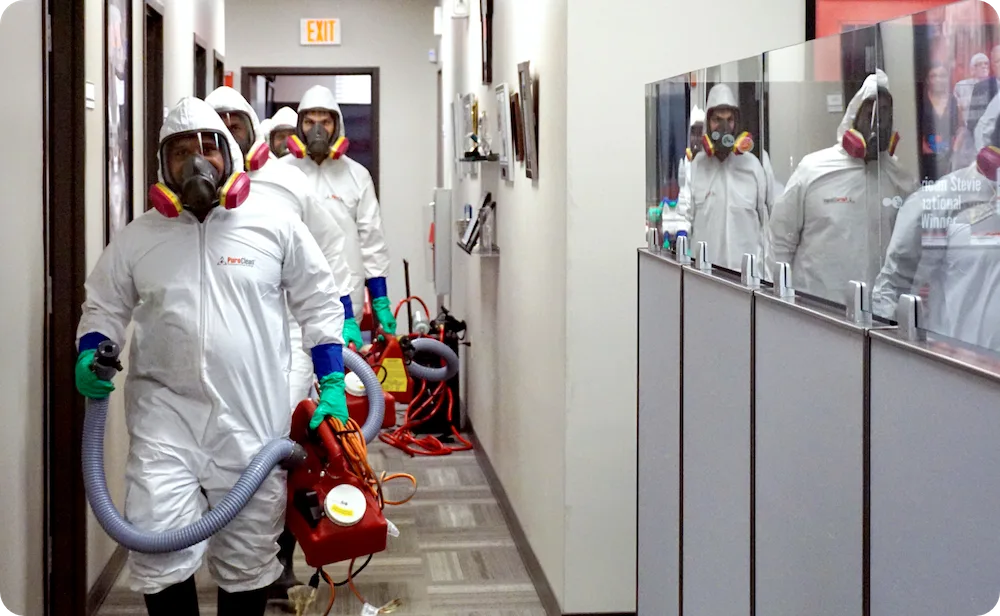
Biohazard situations, including crime scene cleanup and virus decontamination, require specialized cleaning and handling to protect health and safety. Biohazard cleanup services address contamination using proper protocols and professional care.
Explore Our Biohazard Cleanup Services
In some cases, property damage requires repairs beyond cleanup and mitigation. Reconstruction services help restore damaged areas of the home after water, fire, or other incidents, supporting a smoother transition from damage to recovery.
Explore Our Reconstruction Services Services
PuroClean provides 24/7 commercial property damage restoration services for businesses and facilities across the United States.
Explore Our Commercial Services
Water damage can result from unexpected leaks, flooding from storms, plumbing failures, or appliance malfunctions. Our certified teams focus on rapid water removal, drying, and stabilization to help prevent further damage and mold growth.
Explore Our Water Damage Mitigation Services
Hollywood Heights, IL — Water Damage Restoration, Mold Remediation & Emergency Services
Foundation wall intrusion driven by downslope stormwater runoff occupies a gray area in most HO-3 policies. If the water entry is caused by a sudden, identifiable event — such as a failed window well drain during a specific storm — some carriers will treat it as a covered sudden and accidental water loss. If it is characterized as a surface water or groundwater intrusion event, the standard HO-3 flood exclusion typically applies and coverage is denied. The distinction often comes down to documentation of the entry pathway and timing. PuroClean photographs and documents the intrusion source, pathway, and building conditions thoroughly during our assessment, giving your adjuster the evidence needed to make an accurate coverage determination rather than a default denial.
Standing water in a crawl space is urgent. Even a few inches of water under a ranch home creates continuous evaporative moisture loading into the crawl space atmosphere, which then migrates upward into the floor assembly and living space above. Within 24 to 48 hours in Hollywood Heights’ humid climate, moisture levels in floor joists and subfloor decking can reach the threshold for mold colonization. PuroClean extracts standing water, deploys appropriate drying equipment for the crawl space clearance height, maps moisture distribution in the floor assembly above with FLIR imaging, and identifies the intrusion source — whether groundwater, surface runoff, or a plumbing issue — so the problem is addressed rather than just dried.
A sump pump failure endorsement is an add-on to a standard HO-3 policy that specifically covers water damage resulting from sump pump mechanical failure or power loss during a storm event — the exact scenario you experienced. Without it, basement flooding caused by a failed sump pump is typically excluded under the standard flood and surface water exclusion. If you have the endorsement, it covers mitigation costs, structural drying, and damaged contents up to the endorsement limit, which is often $5,000 to $25,000 depending on your policy. PuroClean’s Xactimate documentation itemizes every line item of the mitigation scope so your claim is supported completely regardless of which coverage responds.
Bleach applied to visible mold on a porous masonry surface like a concrete block foundation wall kills surface organisms but does not penetrate into the substrate where mold hyphae are embedded — and it does nothing to address the moisture source driving the growth. Within weeks of surface bleaching, regrowth from surviving hyphae in the block is common. More importantly, visible surface mold on a foundation wall is almost always an indicator of more extensive mold colonization in adjacent wall framing, insulation, and stored materials. IICRC S520 Applied Microbial Remediation protocols exist precisely because surface cleaning alone is insufficient. PuroClean identifies the moisture source, remediates to protocol, and documents the completed scope for your records.
A water heater leak undetected for several days in an occupied rental is a significant mitigation event. Water heater failures typically release Category 1 clean water, but after several days of contact with flooring, drywall, and subfloor materials, moisture migration into wall cavities and under flooring is virtually certain. Depending on the location — utility closet, garage, or interior space — drywall, insulation, and subfloor materials may require removal rather than drying. Secondary mold risk is elevated given the timeline. PuroClean performs a full moisture mapping assessment, determines restorability versus replacement for each affected material per IICRC S500, and produces complete Xactimate documentation for your landlord’s homeowners or dwelling fire policy claim.
What Our Customers Say:
When you need water damage restoration services near you, call the experts at PuroClean. We are here day or night, 24/7, to help remove any standing water quickly and begin your water restoration service. We monitor the drying process so you can rest assured that your property is dried thoroughly. We offer commercial water restoration services for businesses and residential water damage restoration for homeowners.
Contact Us for 24/7 Emergency Response
(618) 206-7055
Contact Us
PuroClean Emergency Restoration Services
(618) 206-7055
1934 North 81 Street, Caseyville, IL 62232


© 2026 PuroClean. All Rights Reserved.