PuroClean of Terre Haute — 494 W Honey Creek Drive, Terre Haute, IN 47802
Center Point sits in the northeast corner of Sugar Ridge Township in Clay County, founded in 1856 by Martin H. Kennedy on land he’d purchased a few years earlier along the main mail route between Brazil and the former county seat of Bowling Green. Kennedy laid out the original 16 lots himself, built a sawmill and a three-story flour mill, and by 1858 the town’s business directory already listed blacksmiths, wagon makers, general stores, a hotel, and a church. Center Point even made a bid to become the new Clay County seat — a designation that ultimately went to Brazil — but the town thrived anyway, reaching its peak population of around 900 residents by 1900. Today, longtime residents still affectionately call it ‘the biggest little town in Indiana,’ a nod to its outsized community spirit relative to its modest size.
That nineteenth-century founding shapes the housing stock you’ll find in Center Point today. Many homes in town date back to the late 1800s and early 1900s, built during the decades when Center Point had its own flour mill, woolen mill, and a steady stream of new residents arriving by mail route and later by rail via the Vandalia line’s Center Point division. These homes have seen generations of small additions, plumbing updates, and roof replacements, and sit on modest in-town lots in Sugar Ridge Township’s rolling Clay County terrain. Just outside town, the township opens into farmland typical of this part of Clay County, with rural homes on larger lots, private wells and septic systems, and outbuildings tied to agricultural use. Both settings — a small, historic in-town core and the surrounding farmland — shape the kinds of restoration calls we see from this part of our service area.
Calls we regularly handle for Center Point homes and properties include:
When you call our 24/7 emergency line from Center Point, our response team leaves 494 W Honey Creek Drive in Terre Haute and travels east on Interstate 70 toward Clay County, exiting at SR 59 near Prairie City — the only Clay County interchange along I-70 and a junction known locally for the truck stops that surround this rural crossroads. From the SR 59 interchange, our crews head toward Center Point via the local roads connecting Prairie City and Sugar Ridge Township to town, reaching Center Point without needing to detour through downtown Brazil first. This I-70-to-SR-59 corridor gives us a direct line from Terre Haute into the heart of Sugar Ridge Township.
Center Point’s small footprint — well under a square mile — means that once our crew reaches town, every address is just a couple of minutes from the main road, whether that’s a home near the old mill sites or one of the streets that grew up around Kennedy’s original 16-lot plat. For rural properties scattered throughout Sugar Ridge Township outside of town, our dispatchers ask for the county road and nearest cross-road, since these properties sit along a farmland grid rather than a town street pattern. Most Center Point-area emergency calls receive an on-site response within roughly 60-90 minutes, and we coordinate with our broader Clay County routing and crew capacity for any regional storm event that creates demand across the area at the same time.
Center Point’s risk profile starts with the age of its core housing stock. Homes built during the town’s nineteenth-century boom — when Kennedy’s mills and the arrival of rail service drew steady growth through the 1890s — often retain original plumbing materials, framing, and electrical systems that have been added to and modified for well over a century. Indiana’s freeze-thaw winters are particularly hard on this kind of older galvanized plumbing, especially in uninsulated crawl spaces or additions built onto the original structure over the decades. A frozen, split pipe in one of Center Point’s older homes can send water into walls, subflooring, and basements before anyone notices, especially in rooms that see less daily use — a familiar pattern in homes that have been in the same family for generations.
Outside the town’s historic core, Sugar Ridge Township’s farmland presents a different set of factors. Rural properties here typically rely on private wells and septic systems, and the township’s agricultural drainage — ditches and field tile designed to move water off cropland rather than handle today’s storm intensity — can become overwhelmed during heavy spring rain, pushing groundwater toward basements and crawl spaces faster than a standard sump system can keep pace. When ground stays saturated for an extended period, septic systems on these properties can also experience slowed drainage or backups, which are classified as Category 3 ‘black water’ losses requiring specialized handling under IICRC S500 protocols.
Mold risk in Center Point follows directly from both factors: basements and crawl spaces in older in-town homes or rural farmhouses that take on moisture and aren’t dried within the industry-standard 24-48 hour window can develop mold colonization, particularly in spaces with the limited ventilation typical of nineteenth and early-twentieth century construction. Fire risk reflects the same building-age pattern — older electrical systems in homes that have stood since Center Point’s mill-town era, wood stoves and space heaters used to supplement heat in older or rural homes, and outbuildings and workshops on farm properties where wiring may not meet current code. For any of these situations, our crews use moisture meters and thermal imaging to trace moisture through century-old framing and rural additions alike, classify the loss by category and class, and prepare an Xactimate estimate that reflects the realities of restoring a property in one of Clay County’s oldest small towns.
Owned & Operated by Brock Phillips
494 W Honey Creek Drive, Terre Haute, IN, 47802
(812) 514-8555
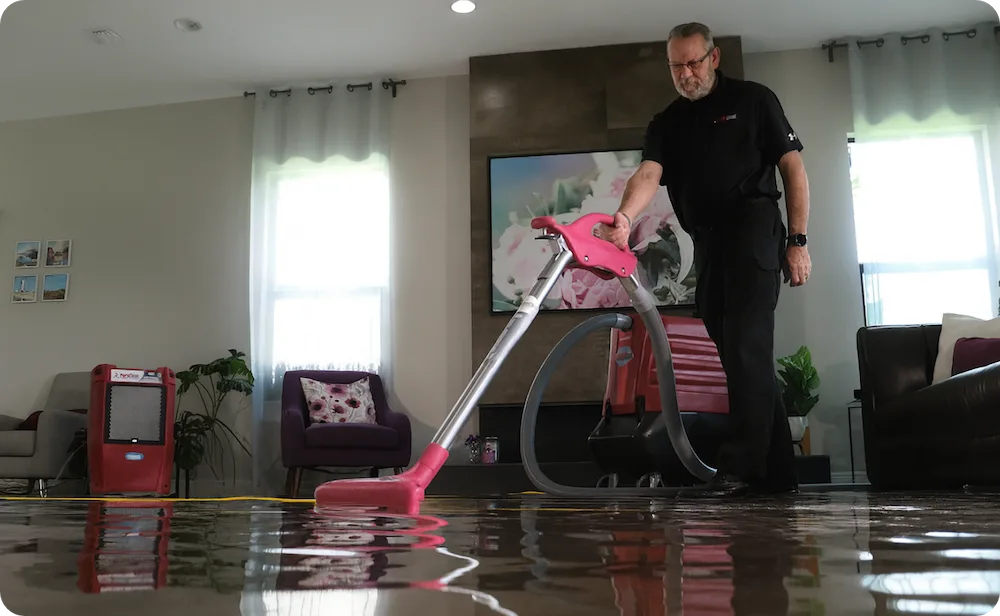
Water damage can result from unexpected leaks, flooding from storms, plumbing failures, or appliance malfunctions. Our certified teams focus on rapid water removal, drying, and stabilization to help prevent further damage and mold growth.
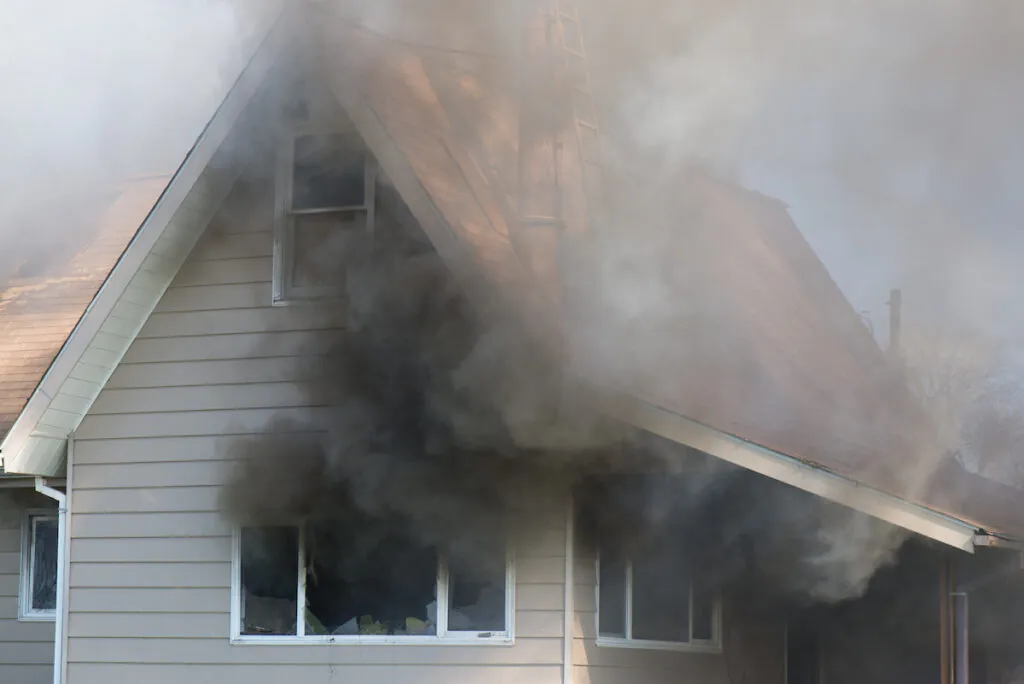
Even after a fire is extinguished, smoke, soot, and odor can continue to affect your home. Fire damage restoration services address visible damage while also helping reduce lingering effects that impact indoor air quality and surfaces.
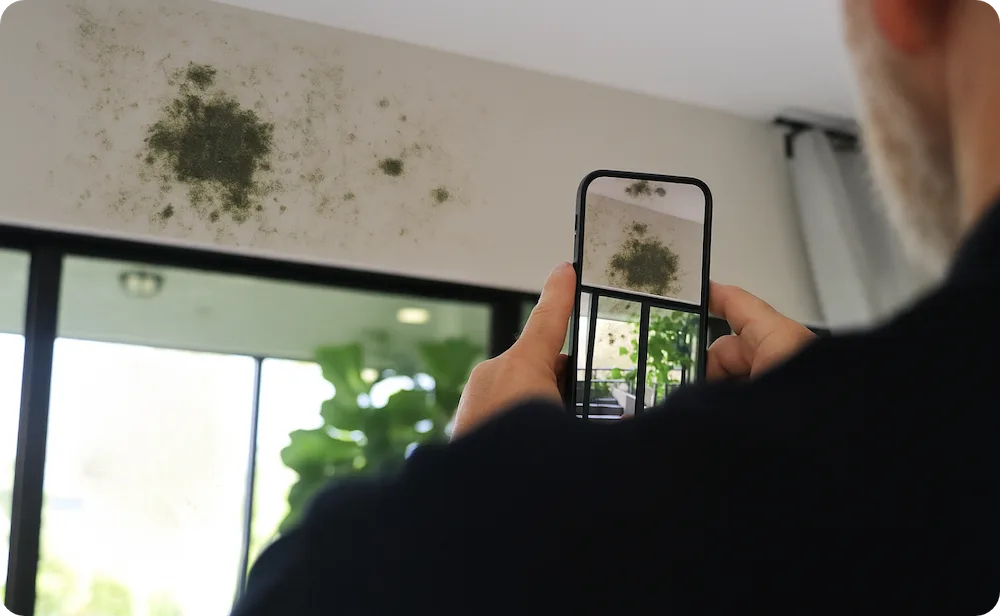
Mold often develops as a result of unresolved moisture or hidden water damage. Professional mold remediation helps identify affected areas, contain growth, and restore healthy indoor conditions.
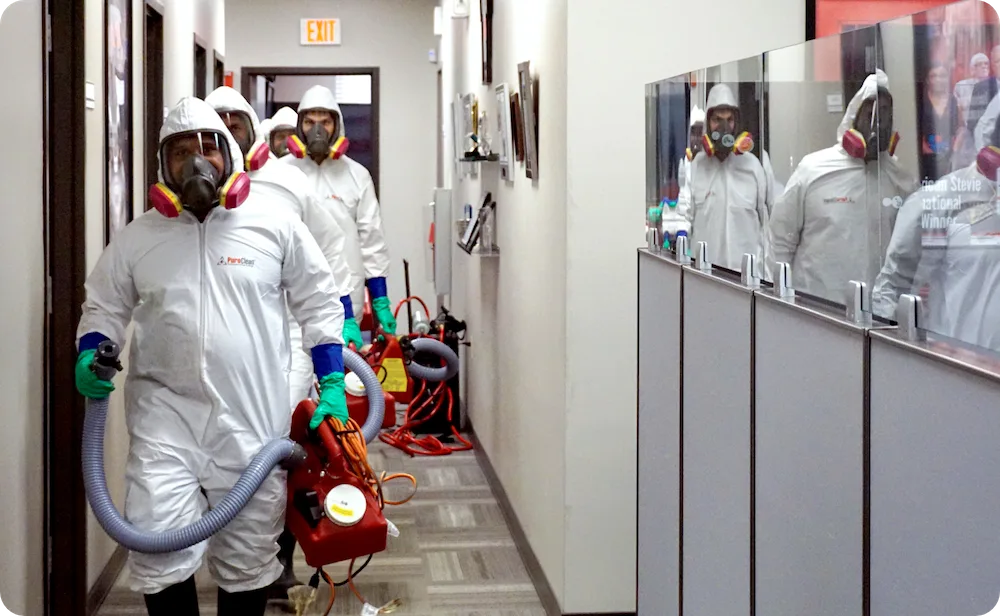
Biohazard situations, including crime scene cleanup and virus decontamination, require specialized cleaning and handling to protect health and safety. Biohazard cleanup services address contamination using proper protocols and professional care.
In some cases, property damage requires repairs beyond cleanup and mitigation. Reconstruction services help restore damaged areas of the home after water, fire, or other incidents, supporting a smoother transition from damage to recovery.
PuroClean provides 24/7 commercial property damage restoration services for businesses and facilities across the United States.
Water damage can result from unexpected leaks, flooding from storms, plumbing failures, or appliance malfunctions. Our certified teams focus on rapid water removal, drying, and stabilization to help prevent further damage and mold growth.
Answers to the questions Center Point-area homeowners ask us most often.
Our crews travel east from 494 W Honey Creek Drive in Terre Haute on Interstate 70 to the SR 59 interchange near Prairie City — the only Clay County exit along I-70 — then head toward Center Point through Sugar Ridge Township without detouring through downtown Brazil. Because Center Point’s town footprint is so small, once we’re off the interstate, every in-town address is just minutes away. Most Center Point-area emergency calls receive an on-site response within roughly 60-90 minutes. For rural properties, our dispatcher will ask for your county road and nearest cross-road.
Homes from Center Point’s mill-town era often have original framing, plumbing, and electrical work that’s been added to over more than a century, which means water can travel through wall and ceiling cavities in less predictable ways than in newer construction. We use moisture meters and thermal imaging to map exactly where water has spread rather than assuming based on the visible damage alone. We’re also mindful that homes like this often hold significant family history — original woodwork, built-ins, or fixtures — and we prioritize salvaging what can reasonably be saved as part of our scope of work.
Recurring spring basement flooding on rural Sugar Ridge Township properties is often tied to agricultural drainage — ditches and field tile built to handle farmland runoff rather than today’s heavier storm events — which can leave groundwater with nowhere to go but toward the nearest foundation. We use moisture meters to determine whether water is entering through foundation cracks, a sump pit being overwhelmed, or window wells, document the category of the water, and recommend whether a sump pump upgrade, exterior drainage improvement, or foundation sealing addresses the issue long term.
When a frozen pipe goes unnoticed over a long weekend, water has usually traveled well beyond the room where it failed — down through floor joists, into ceilings below, and into shared wall cavities with neighboring rooms, especially in homes from Center Point’s nineteenth-century building boom where vapor barriers are minimal or absent. Our first step is assessment: we use thermal imaging to map how far the water has spread through your home’s framing. From there we classify the loss, remove unsalvageable materials, apply antimicrobial treatment to prevent mold, and set up structural drying equipment the same visit.
A musty odor in the basement of an older Center Point home is common during pre-listing inspections, often tied to years of minor moisture exposure in spaces with limited ventilation — a hallmark of nineteenth and early-twentieth century construction throughout this part of Clay County. We can schedule a visual mold inspection quickly, with lab sample testing through a third-party lab available if your buyer or their agent requests documentation. Once we identify the source and remediate following IICRC S520 protocols, we can arrange post-remediation clearance testing so you have an ‘all clear’ ready before closing.
Our crews travel east from 494 W Honey Creek Drive in Terre Haute on Interstate 70 to the SR 59 interchange near Prairie City — the only Clay County exit along I-70 — then head toward Center Point through Sugar Ridge Township without detouring through downtown Brazil. Because Center Point’s town footprint is so small, once we’re off the interstate, every in-town address is just minutes away. Most Center Point-area emergency calls receive an on-site response within roughly 60-90 minutes. For rural properties, our dispatcher will ask for your county road and nearest cross-road.
Homes from Center Point’s mill-town era often have original framing, plumbing, and electrical work that’s been added to over more than a century, which means water can travel through wall and ceiling cavities in less predictable ways than in newer construction. We use moisture meters and thermal imaging to map exactly where water has spread rather than assuming based on the visible damage alone. We’re also mindful that homes like this often hold significant family history — original woodwork, built-ins, or fixtures — and we prioritize salvaging what can reasonably be saved as part of our scope of work.
Recurring spring basement flooding on rural Sugar Ridge Township properties is often tied to agricultural drainage — ditches and field tile built to handle farmland runoff rather than today’s heavier storm events — which can leave groundwater with nowhere to go but toward the nearest foundation. We use moisture meters to determine whether water is entering through foundation cracks, a sump pit being overwhelmed, or window wells, document the category of the water, and recommend whether a sump pump upgrade, exterior drainage improvement, or foundation sealing addresses the issue long term.
When a frozen pipe goes unnoticed over a long weekend, water has usually traveled well beyond the room where it failed — down through floor joists, into ceilings below, and into shared wall cavities with neighboring rooms, especially in homes from Center Point’s nineteenth-century building boom where vapor barriers are minimal or absent. Our first step is assessment: we use thermal imaging to map how far the water has spread through your home’s framing. From there we classify the loss, remove unsalvageable materials, apply antimicrobial treatment to prevent mold, and set up structural drying equipment the same visit.
A musty odor in the basement of an older Center Point home is common during pre-listing inspections, often tied to years of minor moisture exposure in spaces with limited ventilation — a hallmark of nineteenth and early-twentieth century construction throughout this part of Clay County. We can schedule a visual mold inspection quickly, with lab sample testing through a third-party lab available if your buyer or their agent requests documentation. Once we identify the source and remediate following IICRC S520 protocols, we can arrange post-remediation clearance testing so you have an ‘all clear’ ready before closing.
What Our Customers Say:
When you need water damage restoration services near you, call the experts at PuroClean. We are here day or night, 24/7, to help remove any standing water quickly and begin your water restoration service. We monitor the drying process so you can rest assured that your property is dried thoroughly. We offer commercial water restoration services for businesses and residential water damage restoration for homeowners.
PuroClean of Terre Haute
(812) 514-8555
494 W Honey Creek Drive, Terre Haute, IN 47802
© 2026 PuroClean. All Rights Reserved.