PuroClean of Terre Haute — 494 W Honey Creek Drive, Terre Haute, IN 47802
Staunton is a town of just under 500 residents in Posey Township, Clay County, sitting about 12 miles east of Terre Haute along State Road 59 between Terre Haute and Brazil. The town was platted on August 12, 1851 by Michael Combs and Lewis Bailey as the Vandalia Railroad was being built through the area. It was originally named ‘Highland,’ supposedly because an old-time resident claimed the site occupied the highest ground along the railroad line between Terre Haute and Indianapolis — but since a Highland already existed in Lake County, a new name was needed for the post office. Bailey had been born in Staunton, Virginia, and that name was chosen instead for the post office, the town, and the railroad station. Staunton was incorporated in 1873 with a population of 554.
Staunton holds a distinctive place in Clay County’s coal history: Michael Combs, one of the town’s founders, is credited with discovering, developing, and shipping the first coal produced within Clay County, and early mines around Staunton produced immense quantities of coal shipped out via the railroad. For its first decade or more, Staunton actually rivaled Brazil commercially and ranked as the county’s most important shipping point and railroad center. The town’s early industries included a grist mill, a stave factory, a broom manufacturing plant, and a tannery. In a notable political chapter, all of Staunton’s elected officials during the 1910s were members of the Socialist Party of America. Today, Staunton is served by the Posey Township Clay County Volunteer Fire Department, which rebuilt its firehouse in 2012 with the largest American Recovery and Reinvestment Act firehouse grant awarded in Indiana, and the town sits near the J.I. Case Wetland Wildlife Refuge. Staunton’s housing reflects this railroad and coal-era history — homes from the 1850s-1900s growth period alongside more recent residential development.
Calls we regularly handle for Staunton-area homes and properties include:
When you call our 24/7 emergency line from Staunton, our response team leaves 494 W Honey Creek Drive in Terre Haute and travels east on State Road 59, which runs directly through Staunton on its way toward Brazil. Staunton sits about 12 miles east of Terre Haute and about 4 miles southwest of Brazil along this corridor.
Because Staunton is a small town with its own compact grid centered on SR 59, our dispatchers ask for your street address if you’re in town, or your road and nearest cross-road for rural Posey Township properties, along with whether you’re closer to Staunton itself or toward Brazil to the northeast. Given the roughly 12-mile distance from Terre Haute, response times to Staunton run only slightly longer than for in-town Vigo County addresses, and we prioritize active water and fire emergencies. Our crews regularly travel SR 59 to serve Staunton and the surrounding Posey Township area.
Staunton’s risk profile starts with the coal-mining legacy that made it Clay County’s first coal shipping point. Michael Combs is credited with discovering and developing the first coal shipped from Clay County, and early mines around Staunton produced immense quantities before the town’s commercial peak in its first decade or more. Decades of underground mining throughout this part of Posey Township can cause ground to settle unevenly over time, opening small foundation cracks that let groundwater into basements and crawl spaces during heavy rain, particularly in homes built during Staunton’s 1850s-1900s railroad and coal era.
Building age is the second major factor. Staunton’s housing stock spans from its 1851 founding and 1873 incorporation through more than 170 years of subsequent development, and many homes from the town’s railroad and coal-era growth often retain original galvanized plumbing and framing updated piecemeal over generations rather than replaced wholesale. Indiana’s hard freeze-thaw winters are particularly tough on this kind of older plumbing in additions and uninsulated crawl spaces, and a frozen, split pipe in one of Staunton’s older homes can release significant water into wall cavities and subflooring before it’s discovered. For rural properties throughout Posey Township, many rely on private wells and septic systems, and saturated ground from heavy rain can slow septic drainage or cause backups, a Category 3 ‘black water’ situation requiring specialized handling under IICRC S500 protocols. The area’s drainage feeds into Eel River tributaries, and flood risk along these tributaries has prompted federal FEMA hazard mapping for parts of the surrounding area.
Mold risk in Staunton follows directly from both factors: basements and crawl spaces that take on moisture from settling-related foundation cracks, Eel River tributary-adjacent groundwater, or a slow plumbing leak in an older home, combined with the limited ventilation typical of older construction, create conditions where mold can establish itself within the industry-standard 24-48 hour window if not addressed quickly. Fire risk reflects the town’s age as well — older electrical systems in century-old homes that predate modern code remain a factor throughout much of Staunton’s housing stock. For any of these situations, our crews use moisture meters and thermal imaging to trace water intrusion through older construction, classify the loss by category and class, and build an Xactimate estimate that reflects the realities of restoring a property in one of Clay County’s earliest railroad and coal towns.
Owned & Operated by Brock Phillips
494 W Honey Creek Drive, Terre Haute, IN, 47802
(812) 514-8555
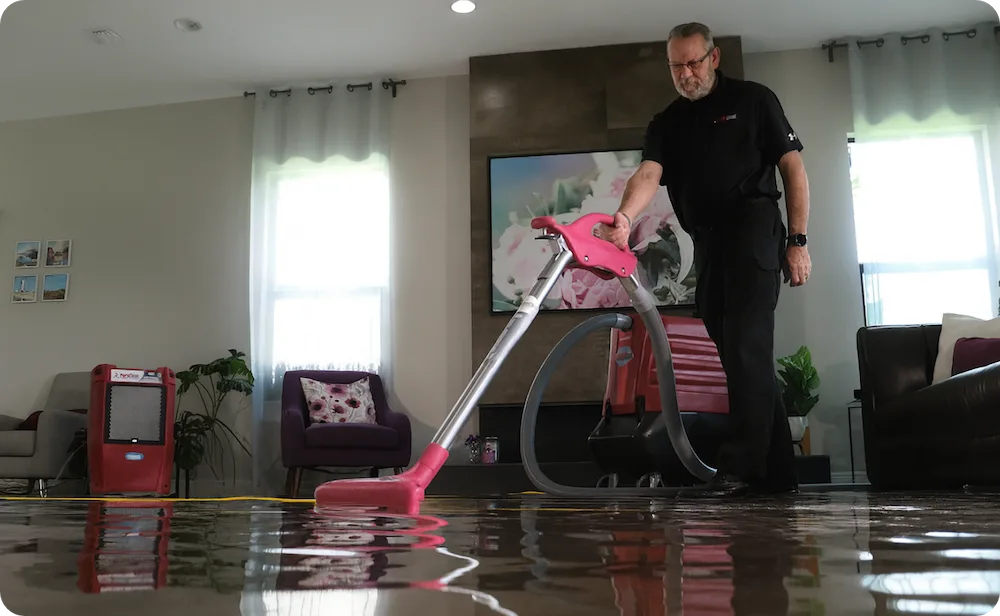
Water damage can result from unexpected leaks, flooding from storms, plumbing failures, or appliance malfunctions. Our certified teams focus on rapid water removal, drying, and stabilization to help prevent further damage and mold growth.
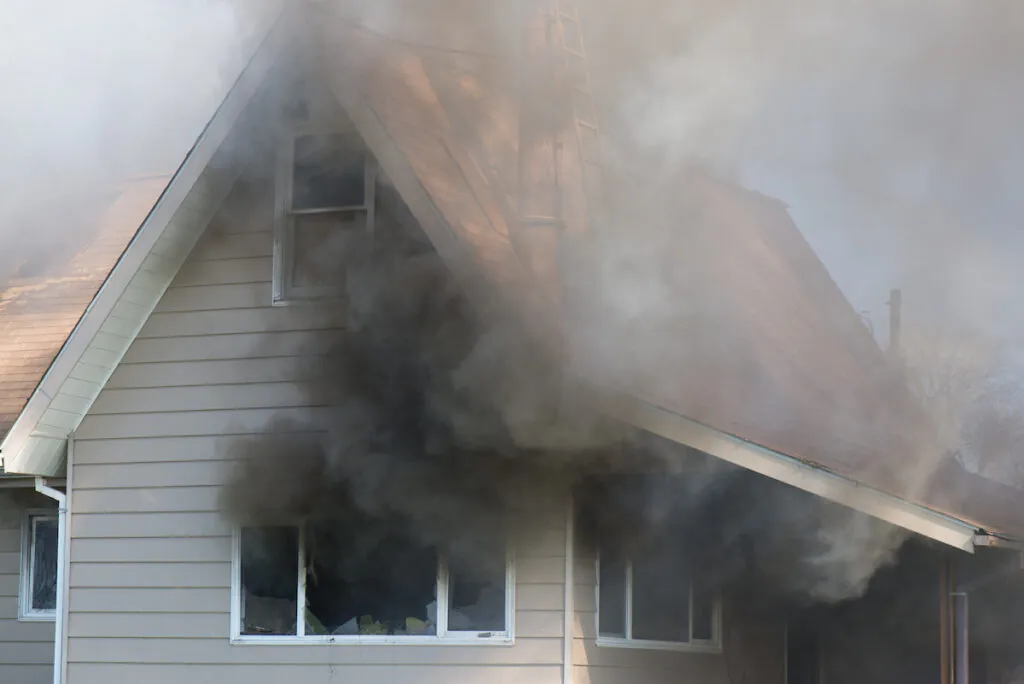
Even after a fire is extinguished, smoke, soot, and odor can continue to affect your home. Fire damage restoration services address visible damage while also helping reduce lingering effects that impact indoor air quality and surfaces.
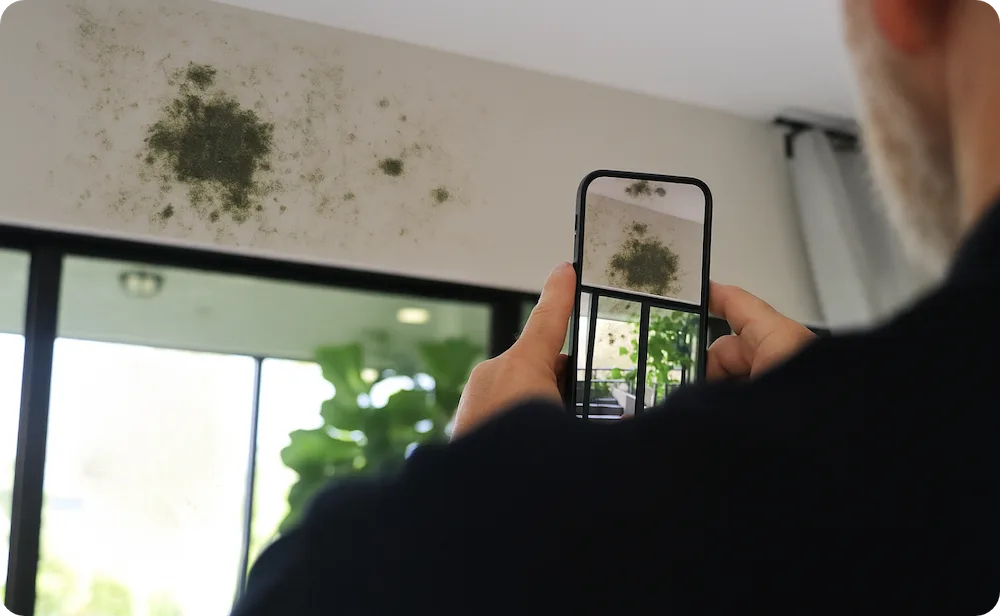
Mold often develops as a result of unresolved moisture or hidden water damage. Professional mold remediation helps identify affected areas, contain growth, and restore healthy indoor conditions.
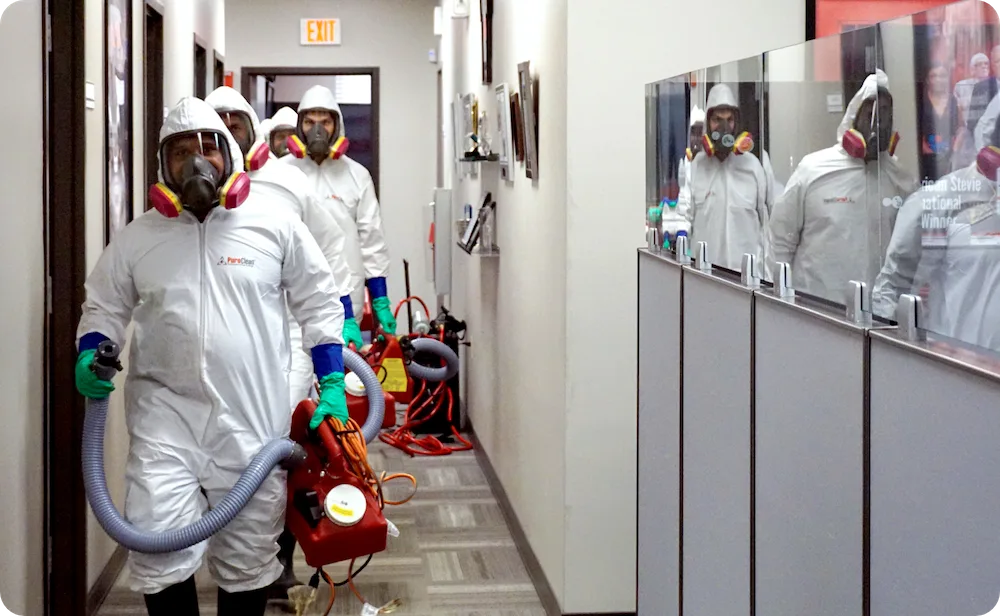
Biohazard situations, including crime scene cleanup and virus decontamination, require specialized cleaning and handling to protect health and safety. Biohazard cleanup services address contamination using proper protocols and professional care.
In some cases, property damage requires repairs beyond cleanup and mitigation. Reconstruction services help restore damaged areas of the home after water, fire, or other incidents, supporting a smoother transition from damage to recovery.
PuroClean provides 24/7 commercial property damage restoration services for businesses and facilities across the United States.
Water damage can result from unexpected leaks, flooding from storms, plumbing failures, or appliance malfunctions. Our certified teams focus on rapid water removal, drying, and stabilization to help prevent further damage and mold growth.
Answers to the questions Staunton-area property owners ask us most often.
Our crews travel east on State Road 59 from 494 W Honey Creek Drive in Terre Haute directly to Staunton, about 12 miles, on the same route that continues toward Brazil about 4 miles further northeast. Our dispatcher will ask for your street address if you’re in town, or your road and nearest cross-road for rural Posey Township properties. Given the roughly 12-mile distance, response times run only slightly longer than for in-town Vigo County addresses, and we prioritize active emergencies.
It’s worth investigating. Staunton holds the distinction of being where the first coal shipped from Clay County originated, discovered and developed by town founder Michael Combs, and early mines here produced immense quantities of coal during the town’s commercial peak. Decades of underground mining throughout this part of Posey Township can cause ground to settle unevenly over time, creating small foundation cracks that let groundwater in during heavy rain. We use moisture meters to determine how water is entering through these cracks, document the category and class of any resulting water damage, and can help you understand whether ground settlement appears to be a contributing factor.
Many of Staunton’s homes date to the town’s 1850s-1900s railroad and coal-era growth, when Staunton briefly rivaled Brazil as Clay County’s most important shipping point, and homes from this period often have original framing and plumbing with minimal vapor barriers, which lets water travel further than expected through wall and ceiling cavities once a pipe fails. Our first step is assessment: we use thermal imaging to map how far the water has spread through your home’s framing. From there we classify the loss, remove unsalvageable materials, apply antimicrobial treatment to prevent mold, and set up structural drying equipment the same visit.
It can be. The Staunton area drains into Eel River tributaries, and flood risk along these waterways has prompted federal FEMA hazard mapping for parts of the surrounding Posey Township area. Properties near these drainage channels can experience elevated groundwater and basement seepage during sustained heavy rain, particularly when the tributaries are running high from upstream precipitation. We use moisture meters to determine exactly how water is entering your property and document the category and class of any resulting damage.
A septic backup into the home is classified as a Category 3 ‘black water’ loss under IICRC S500 standards, requiring specialized handling, disposal, and decontamination procedures beyond a standard clean-water cleanup. Saturated ground on rural Posey Township properties after heavy rain can slow septic drainage and cause backups even when the system itself is functioning normally. We document the loss thoroughly, including the timeline and cause, and can help you understand how your specific homeowner’s policy addresses sewage and septic backup coverage as we work with your adjuster.
Our crews travel east on State Road 59 from 494 W Honey Creek Drive in Terre Haute directly to Staunton, about 12 miles, on the same route that continues toward Brazil about 4 miles further northeast. Our dispatcher will ask for your street address if you’re in town, or your road and nearest cross-road for rural Posey Township properties. Given the roughly 12-mile distance, response times run only slightly longer than for in-town Vigo County addresses, and we prioritize active emergencies.
It’s worth investigating. Staunton holds the distinction of being where the first coal shipped from Clay County originated, discovered and developed by town founder Michael Combs, and early mines here produced immense quantities of coal during the town’s commercial peak. Decades of underground mining throughout this part of Posey Township can cause ground to settle unevenly over time, creating small foundation cracks that let groundwater in during heavy rain. We use moisture meters to determine how water is entering through these cracks, document the category and class of any resulting water damage, and can help you understand whether ground settlement appears to be a contributing factor.
Many of Staunton’s homes date to the town’s 1850s-1900s railroad and coal-era growth, when Staunton briefly rivaled Brazil as Clay County’s most important shipping point, and homes from this period often have original framing and plumbing with minimal vapor barriers, which lets water travel further than expected through wall and ceiling cavities once a pipe fails. Our first step is assessment: we use thermal imaging to map how far the water has spread through your home’s framing. From there we classify the loss, remove unsalvageable materials, apply antimicrobial treatment to prevent mold, and set up structural drying equipment the same visit.
It can be. The Staunton area drains into Eel River tributaries, and flood risk along these waterways has prompted federal FEMA hazard mapping for parts of the surrounding Posey Township area. Properties near these drainage channels can experience elevated groundwater and basement seepage during sustained heavy rain, particularly when the tributaries are running high from upstream precipitation. We use moisture meters to determine exactly how water is entering your property and document the category and class of any resulting damage.
A septic backup into the home is classified as a Category 3 ‘black water’ loss under IICRC S500 standards, requiring specialized handling, disposal, and decontamination procedures beyond a standard clean-water cleanup. Saturated ground on rural Posey Township properties after heavy rain can slow septic drainage and cause backups even when the system itself is functioning normally. We document the loss thoroughly, including the timeline and cause, and can help you understand how your specific homeowner’s policy addresses sewage and septic backup coverage as we work with your adjuster.
What Our Customers Say:
When you need water damage restoration services near you, call the experts at PuroClean. We are here day or night, 24/7, to help remove any standing water quickly and begin your water restoration service. We monitor the drying process so you can rest assured that your property is dried thoroughly. We offer commercial water restoration services for businesses and residential water damage restoration for homeowners.
PuroClean of Terre Haute
(812) 514-8555
494 W Honey Creek Drive, Terre Haute, IN 47802
© 2026 PuroClean. All Rights Reserved.