PuroClean of Terre Haute — 494 W Honey Creek Drive, Terre Haute, IN 47802
Linton is a city of just over 5,000 residents in Stockton Township, Greene County, with roots going back to the early 1830s when pioneer John Wines began selling goods in the area, opening a general store in 1837. The city itself wasn’t officially platted and named until June 1850, laid out by Hannah E. Osborn and Isaac V. Coddington. Linton’s population boomed in the late nineteenth and early twentieth centuries as small underground coal mines opened in and around the city, and at the peak of that era the town reportedly supported at least 35 drinking establishments and an equal number of churches. That coal-era downtown survives today as the Linton Commercial Historic District, listed on the National Register of Historic Places, along with the 1908 Carnegie library building — now the Carnegie Heritage and Arts Center of Greene County, which also houses a collection related to Linton-born entertainers Phil Harris and Alice Faye.
Today, Linton’s identity has shifted from coal production to outdoor recreation built on that same mining legacy. South of the city along State Road 59 sits the Goose Pond Fish and Wildlife Area, a more than 9,000-acre restored wetland and prairie property, while the Hillenbrand Fish and Wildlife Area about five miles north of Linton occupies thousands of acres of reclaimed surface-mine land. General Electric also operated a small-motor factory in Linton starting in 1952 before closing it in the 1980s. Each year, Linton hosts its Freedom Festival, featuring what’s billed as Indiana’s largest Independence Day parade, drawing roughly 40,000 visitors. Linton’s housing stock reflects this layered history — historic homes near the Commercial Historic District downtown, mid-century housing from the GE era, and rural properties throughout Stockton Township set on ground shaped by both reclaimed mining land and the restored wetlands of Goose Pond.
Calls we regularly handle for Linton homes and businesses include:
When you call our 24/7 emergency line from Linton, our response team leaves 494 W Honey Creek Drive in Terre Haute and travels south on State Road 59, the same corridor that runs through Brazil and Jasonville on its way to Linton, where SR 59 runs concurrently with State Road 54 through the north side of town. This SR 59 corridor gives our crews a direct path from Terre Haute to Linton, about 35 miles to the south.
Because Linton is the largest city in Greene County with a real street grid downtown near the Commercial Historic District, our dispatchers ask for your street address within the city, and for rural Stockton Township properties, your road and nearest cross-road — along with whether you’re near Goose Pond FWA to the south or Hillenbrand FWA to the north. Given the roughly 35-mile distance from Terre Haute, response times to Linton run somewhat longer than for in-town Vigo County addresses, but we prioritize active water and fire emergencies and our crews are familiar with the SR 59/SR 54 corridor connecting this area to the rest of our coverage.
Linton’s risk profile starts with the coal-mining legacy that built the city in the first place. Decades of underground mining beneath and around Linton during its late-1800s and early-1900s boom can cause ground to settle unevenly over time, opening small foundation cracks that let groundwater into basements and crawl spaces during heavy rain — a particular concern for the historic homes near the Linton Commercial Historic District and other older neighborhoods built during the mining era. The reclaimed surface-mine land that now makes up much of the Hillenbrand Fish and Wildlife Area north of town is a visible reminder of how thoroughly this landscape was reshaped, and properties near these reclaimed areas can have different groundwater behavior than typical farmland nearby.
Goose Pond adds a second, more recent factor. The more than 9,000-acre restoration south of Linton along SR 59 returned thousands of acres of former farmland to shallow wetlands and prairie — a dramatic illustration of how naturally wet this part of Greene County’s landscape wants to be when not actively drained for agriculture. Properties on the south side of Linton and throughout the surrounding low-lying parts of Stockton Township can experience elevated groundwater and basement seepage during sustained heavy rain, particularly when drainage ditches and field tiles in the surrounding farmland are already running at capacity. Building age compounds this in Linton’s historic core: homes from the city’s coal-boom decades around the turn of the twentieth century often retain original galvanized plumbing and framing updated piecemeal over more than a century, and Indiana’s hard freeze-thaw winters are particularly tough on this kind of older plumbing in additions and uninsulated crawl spaces.
Mold risk in Linton follows directly from both factors: basements and crawl spaces that take on moisture from settling-related foundation cracks, wetland-adjacent groundwater, or a slow plumbing leak in an early-1900s home, combined with the limited ventilation typical of older construction, create conditions where mold can establish itself within the industry-standard 24-48 hour window if not addressed quickly. For rural Stockton Township properties, many rely on private wells and septic systems, and saturated ground from heavy rain can slow septic drainage or cause backups, a Category 3 ‘black water’ situation requiring specialized handling under IICRC S500 protocols. Fire risk reflects the city’s age and history as well — electrical systems in century-old homes and commercial buildings downtown that predate modern code. For any of these situations, our crews use moisture meters and thermal imaging to trace water intrusion through older construction, classify the loss by category and class, and build an Xactimate estimate that reflects the realities of restoring a property in Greene County’s largest city.
Owned & Operated by Brock Phillips
494 W Honey Creek Drive, Terre Haute, IN, 47802
(812) 514-8555
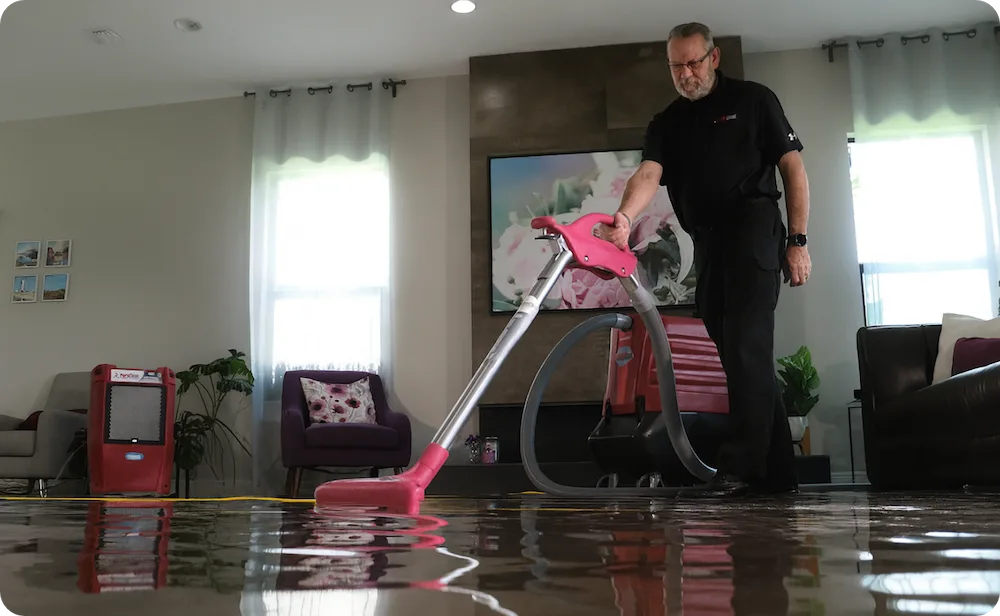
Water damage can result from unexpected leaks, flooding from storms, plumbing failures, or appliance malfunctions. Our certified teams focus on rapid water removal, drying, and stabilization to help prevent further damage and mold growth.
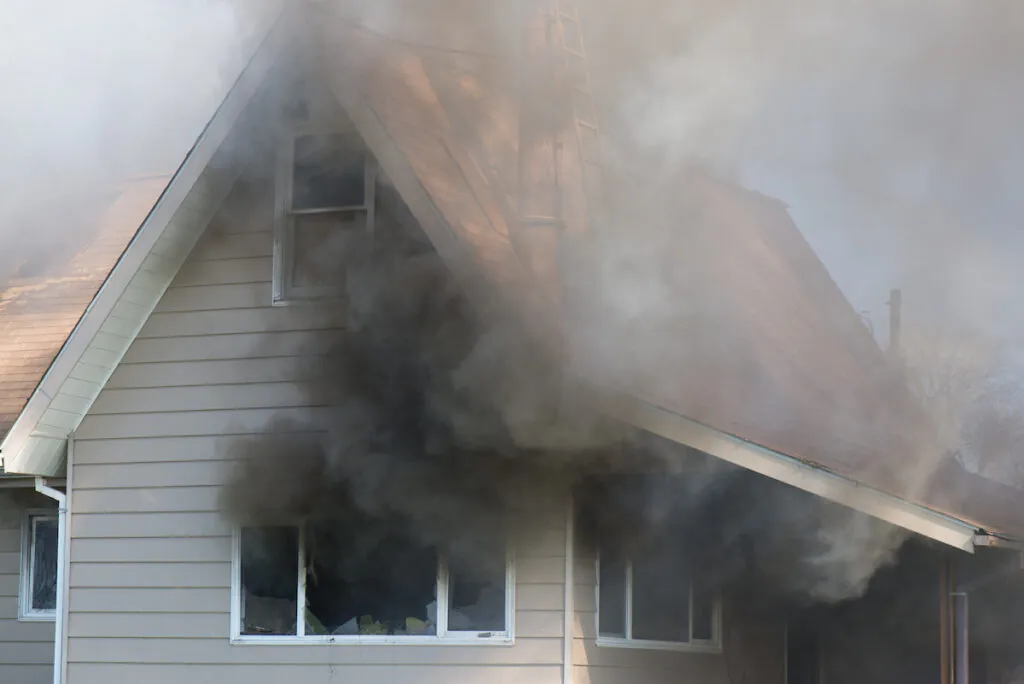
Even after a fire is extinguished, smoke, soot, and odor can continue to affect your home. Fire damage restoration services address visible damage while also helping reduce lingering effects that impact indoor air quality and surfaces.
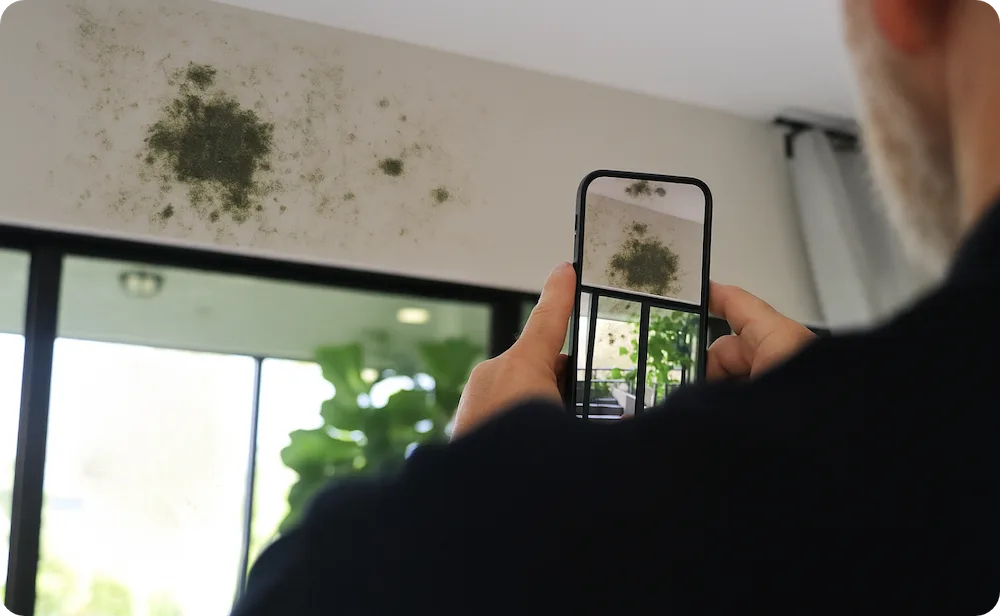
Mold often develops as a result of unresolved moisture or hidden water damage. Professional mold remediation helps identify affected areas, contain growth, and restore healthy indoor conditions.
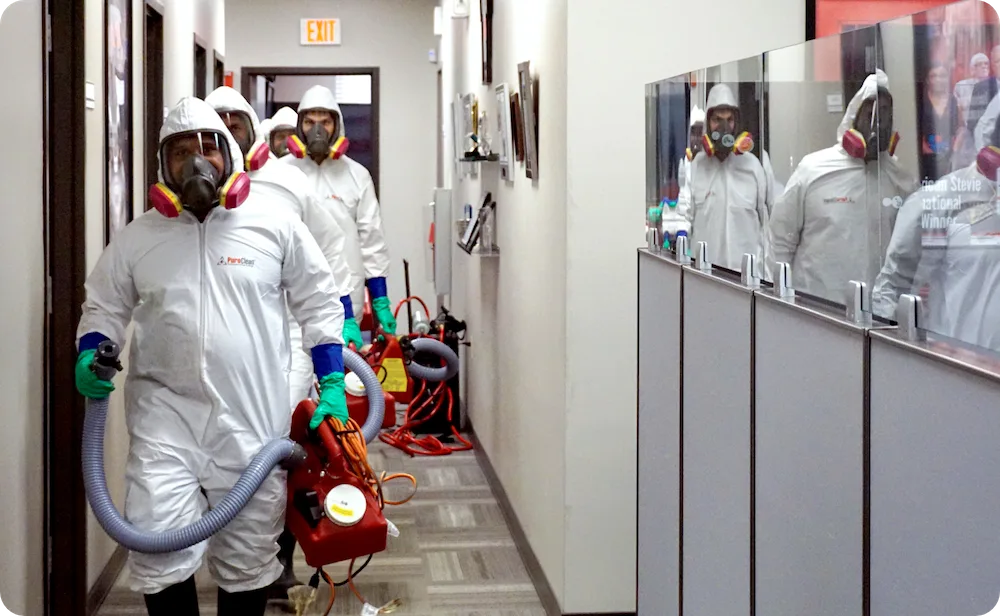
Biohazard situations, including crime scene cleanup and virus decontamination, require specialized cleaning and handling to protect health and safety. Biohazard cleanup services address contamination using proper protocols and professional care.
In some cases, property damage requires repairs beyond cleanup and mitigation. Reconstruction services help restore damaged areas of the home after water, fire, or other incidents, supporting a smoother transition from damage to recovery.
PuroClean provides 24/7 commercial property damage restoration services for businesses and facilities across the United States.
Water damage can result from unexpected leaks, flooding from storms, plumbing failures, or appliance malfunctions. Our certified teams focus on rapid water removal, drying, and stabilization to help prevent further damage and mold growth.
Answers to the questions Linton homeowners and business owners ask us most often.
Our crews travel south on State Road 59 from 494 W Honey Creek Drive in Terre Haute, through Brazil and Jasonville, to Linton, about 35 miles south where SR 59 runs concurrently with SR 54 through the north side of town. Our dispatcher will ask for your street address in the city or your road and nearest cross-road for rural Stockton Township properties, along with whether you’re near Goose Pond FWA or Hillenbrand FWA. Given the distance, response times run somewhat longer than for in-town Vigo County addresses, but we prioritize active emergencies.
It’s worth investigating. Linton’s population boomed in the late 1800s and early 1900s as underground coal mines opened in and around the city, and decades of mining beneath areas like the Linton Commercial Historic District can cause ground to settle unevenly over time, creating small foundation cracks that let groundwater in during heavy rain. The reclaimed mining land at Hillenbrand FWA north of town is a visible example of how much this landscape changed. We use moisture meters to determine how water is entering through these cracks and document the category and class of any resulting water damage.
The Goose Pond Fish and Wildlife Area south of Linton restored more than 9,000 acres of former farmland to shallow wetlands and prairie — a sign of how naturally wet this part of Greene County’s landscape is without active drainage. Properties on the south side of Linton and throughout the surrounding low-lying farmland can see elevated groundwater and basement seepage during sustained heavy rain, especially when nearby drainage ditches and field tiles are already at capacity. We use moisture meters to determine exactly how water is entering your basement and document the category and class of the loss.
Linton’s downtown commercial buildings date to the city’s coal-boom era, and many sit close together or share walls, so a pipe burst can affect more than just your space. Our technicians assess the full scope using moisture meters and thermal imaging, classify the water loss by category and class, and begin extraction and structural drying immediately to minimize disruption to your business. We document everything in an Xactimate estimate that can be submitted directly to your commercial property insurance.
Mold findings during a pre-listing inspection on older Linton homes are common, often tied to ground moisture, settling-related foundation cracks linked to the city’s mining history, and limited basement ventilation typical of early-1900s construction. We can schedule a visual mold inspection quickly, with lab sample testing through a third-party lab available if your buyer’s agent or lender requires documentation. Once we identify the moisture source and remediate following IICRC S520 protocols, we can arrange post-remediation clearance testing so you have an ‘all clear’ ready before closing.
Our crews travel south on State Road 59 from 494 W Honey Creek Drive in Terre Haute, through Brazil and Jasonville, to Linton, about 35 miles south where SR 59 runs concurrently with SR 54 through the north side of town. Our dispatcher will ask for your street address in the city or your road and nearest cross-road for rural Stockton Township properties, along with whether you’re near Goose Pond FWA or Hillenbrand FWA. Given the distance, response times run somewhat longer than for in-town Vigo County addresses, but we prioritize active emergencies.
It’s worth investigating. Linton’s population boomed in the late 1800s and early 1900s as underground coal mines opened in and around the city, and decades of mining beneath areas like the Linton Commercial Historic District can cause ground to settle unevenly over time, creating small foundation cracks that let groundwater in during heavy rain. The reclaimed mining land at Hillenbrand FWA north of town is a visible example of how much this landscape changed. We use moisture meters to determine how water is entering through these cracks and document the category and class of any resulting water damage.
The Goose Pond Fish and Wildlife Area south of Linton restored more than 9,000 acres of former farmland to shallow wetlands and prairie — a sign of how naturally wet this part of Greene County’s landscape is without active drainage. Properties on the south side of Linton and throughout the surrounding low-lying farmland can see elevated groundwater and basement seepage during sustained heavy rain, especially when nearby drainage ditches and field tiles are already at capacity. We use moisture meters to determine exactly how water is entering your basement and document the category and class of the loss.
Linton’s downtown commercial buildings date to the city’s coal-boom era, and many sit close together or share walls, so a pipe burst can affect more than just your space. Our technicians assess the full scope using moisture meters and thermal imaging, classify the water loss by category and class, and begin extraction and structural drying immediately to minimize disruption to your business. We document everything in an Xactimate estimate that can be submitted directly to your commercial property insurance.
Mold findings during a pre-listing inspection on older Linton homes are common, often tied to ground moisture, settling-related foundation cracks linked to the city’s mining history, and limited basement ventilation typical of early-1900s construction. We can schedule a visual mold inspection quickly, with lab sample testing through a third-party lab available if your buyer’s agent or lender requires documentation. Once we identify the moisture source and remediate following IICRC S520 protocols, we can arrange post-remediation clearance testing so you have an ‘all clear’ ready before closing.
What Our Customers Say:
When you need water damage restoration services near you, call the experts at PuroClean. We are here day or night, 24/7, to help remove any standing water quickly and begin your water restoration service. We monitor the drying process so you can rest assured that your property is dried thoroughly. We offer commercial water restoration services for businesses and residential water damage restoration for homeowners.
PuroClean of Terre Haute
(812) 514-8555
494 W Honey Creek Drive, Terre Haute, IN 47802
© 2026 PuroClean. All Rights Reserved.