


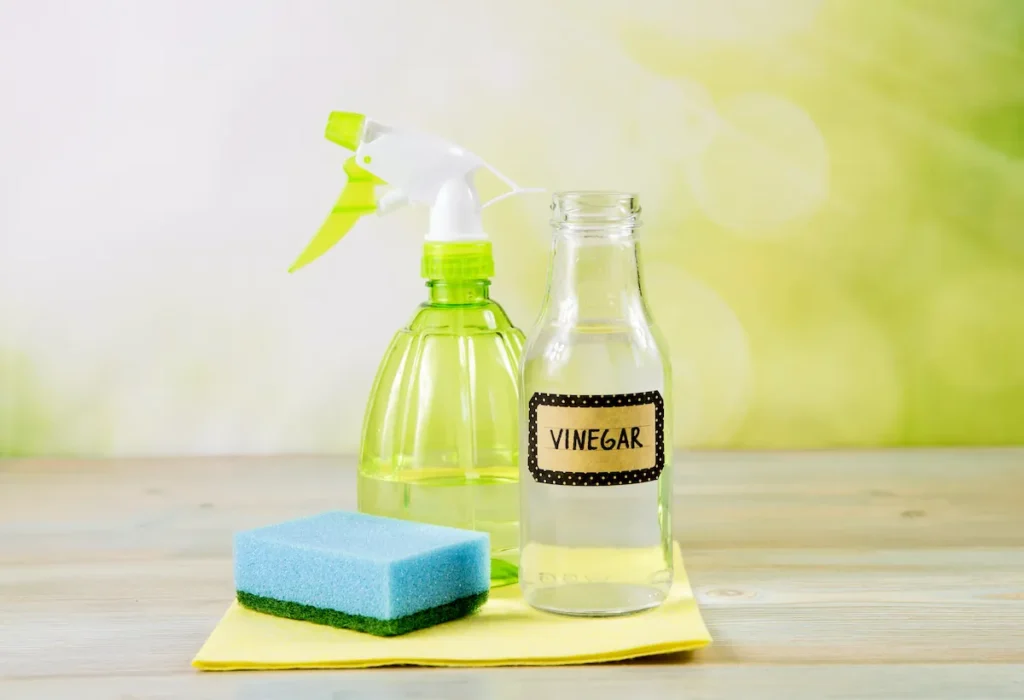
While household vinegar has many applications in home cleaning, using this versatile substance is inappropriate in many situations. Because vinegar is acidic, it can corrode wood and stone, it can destroy wax, kill plants, and cause other damage.
In this article, you will learn what not to clean with vinegar and which cleaning methods work best.
What Not to Clean With Vinegar
- Hardwood Floors, Wood Furniture, and Other Wood Surfaces: Due to its acidic nature, vinegar can damage hardwood floor finishes, causing them to look dingy. Use either a cleaner specifically made for hardwood floors or a mix of soap and water. This method should also be applied to wood furniture and all other wood surfaces. Tips to protect hardwood floors from water damage are available here.
- Unsealed Wood: Unsealed or unfinished wood surfaces can absorb vinegar, causing the wood to swell and potentially crack. For cleaning unsealed wood, use a mixture of water and mild dish soap. Wring out the cloth or mop well to avoid excessive moisture on the wood.
- Grease Stains: The acidic properties of vinegar won’t help you remove grease from any surface. If you want to clean greasy spots, use a regular dishwashing detergent or another alkaline cleaner.
- Waxed Surfaces: Vinegar dissolves the wax and should not be used to clean waxed furniture. However, vinegar is a reliable option if you want to remove an old coat of wax from a surface. Use a wax-cleaning solvent instead.
- Granite or Marble Stoneware: Stone can pit and corrode when it comes in contact with vinegar. Thus, vinegar should never be used to clean stone. Instead of vinegar, use a pH-neutral stone cleaner or a mixture of mild dish soap and water to clean natural stone surfaces. These products are gentle and won’t damage the stone.
- Stone Tile Grout: While vinegar can clean tile surfaces, it’s not great for grout. Its acidity can erode the grout, causing it to weaken and deteriorate. Opt for grout-specific cleaner or make a paste using baking soda and water for grout cleaning. Gently scrub the grout lines to avoid damage.
- Electronics: Most laptops, smartphones, tablet screens, televisions, etc., have a layer of oleophobic coating that gets damaged if you spray vinegar on them. Use a microfiber cloth slightly dampened with water or a screen-specific electronic cleaning solution to safely clean your devices without risking damage from vinegar.
- Bug-Infested Plants. Although you can use vinegar as a weed killer, spraying it on bug-infested plants will most likely damage the plants and could even kill them.
- Egg Spills: When vinegar mixes with the proteins in the egg, its acidity will cause the egg spill to coagulate, resulting in a gluey substance that’s difficult to remove. Clean up egg spills with a mixture of water and mild dish soap. This will help break down the egg proteins without causing them to coagulate.
- Cast Iron Cookware: The acid in vinegar can break down cast iron seasoning, causing it to lose its non-stick properties and promote rust. To clean cast iron, use a mixture of coarse salt and water to scrub away food residue.
- Delicate Fabrics: Vinegar’s acidity can weaken and fade delicate fabrics like silk, acetate, and rayon. Avoid using vinegar-based solutions on these materials. Follow the care instructions on the label. Use mild dish soap and water on a soft cloth for spot cleaning.
- Stainless Steel Appliances: While vinegar can remove stains from stainless steel, it can also strip away the protective layer and cause it to corrode over time. Use a specialized stainless steel cleaner or simply a microfiber cloth dampened with water and a drop of mild dish soap. Wipe with the grain of the steel.
- Elastic or Rubberized Items: Vinegar can cause elastic and rubber materials to break down, becoming brittle and less flexible. Clean these items with water and mild detergent. Avoid excessive soaking to prevent weakening.
Warning: Never mix vinegar with bleach. Both of these substances are powerful cleaning agents, but combining them will result in chlorine gas which can damage your health.
Remember, always check the manufacturer’s recommendations and test any cleaning solution in an inconspicuous area before applying it to a larger surface. Each material has its own unique properties, so it’s important to use cleaning methods that are safe and suitable for the specific surface you’re cleaning.
Baking soda is also a common household cleaning ingredient. Discover the top 10 ways to effectively clean with baking soda and additional eco-friendly cleaning tips for your home.
Conclusion
In conclusion, while vinegar is a versatile and popular cleaning agent, it’s crucial to recognize its limitations. Learn what not to clean with vinegar to prevent unintended damage.
From the delicate luster of natural stone to the intricate circuits of electronics, vinegar’s acidic properties can sometimes do more harm than good. By being aware of what not to clean with vinegar, you can safeguard your belongings, preserve their quality, and maintain the pristine condition of your home.
If you need assistance with removing hazardous substances such as mold from hardwood, walls, or other surfaces, PuroClean is here to help. Our trained and certified technicians can assess the extent of mold growth in your home and efficiently eliminate it using specialized equipment.



