


To prevent mold growth in winter, homeowners must control indoor moisture, improve ventilation, and fix water issues quickly. Cold weather causes homes to trap humidity from cooking, showers, and heating systems, creating ideal conditions for mold, especially in basements, bathrooms, and crawl spaces. Keeping indoor humidity between 35% and 45%, addressing leaks, and ensuring proper airflow are the most effective ways to stop winter mold before it spreads.
Why Mold Grows More Often in Winter
Mold is a fungus that grows in damp environments and spreads through airborne spores.
In winter, homes are sealed tightly to conserve heat. While this improves energy efficiency, it also traps moisture indoors. Condensation on cold surfaces, limited ventilation, and unnoticed leaks make winter mold problems in homes more common than many people expect.

Control Indoor Humidity Levels
Managing indoor moisture is the single most important step to prevent mold growth in winter. Cold outdoor temperatures increase condensation on windows, walls, and poorly insulated surfaces, creating ideal conditions for mold if humidity is not controlled.
Recommended Humidity Levels
- Indoor humidity levels should remain below 60% at all times
- Ideal winter range shifts to 35%–45%
Humidity above this range allows mold spores to activate and spread—even when no standing water is present.
How to Reduce Indoor Humidity
- Use dehumidifiers in basements, bathrooms, and laundry rooms
- Monitor humidity levels with a digital hygrometer
- Avoid overusing humidifiers, especially in well-sealed homes
- Run bathroom fans during and after showers
Excess humidity fuels mold growth even when water damage is not visible.
Improve Ventilation Throughout Your Home
Poor airflow allows moisture to remain trapped indoors, increasing condensation and mold risk during winter months.
Best Ventilation Practices
- Use exhaust fans when cooking, showering, or washing dishes
- Open windows briefly (5–10 minutes) to release trapped moisture when weather allows
- Confirm that bathroom and kitchen vents exhaust outside, not into attics or crawl spaces
Proper ventilation is critical to winter mold prevention, especially in moisture-heavy rooms.
Clean Regularly to Remove Mold Food Sources
Mold feeds on organic material commonly found in household dust, dirt, and debris
Winter Cleaning Tips
- Vacuum and dust regularly, especially near exterior walls
- Pay close attention to bathrooms, kitchens, basements, and laundry areas
- Clean condensation-prone surfaces such as windows, sills, and exterior-facing walls
Routine cleaning helps prevent mold in the house during winter by limiting what mold can grow on.
Reduce Moisture in Floors, Carpets, and Storage Areas
Materials that stay damp for long periods increase mold risk.
Smart Material Choices
- Use washable rugs instead of wall-to-wall carpet in entryways
- Avoid storing books, paper, or clothing in damp spaces
- Keep storage items off basement floors
Dry storage areas reduce the chance of hidden mold growth.
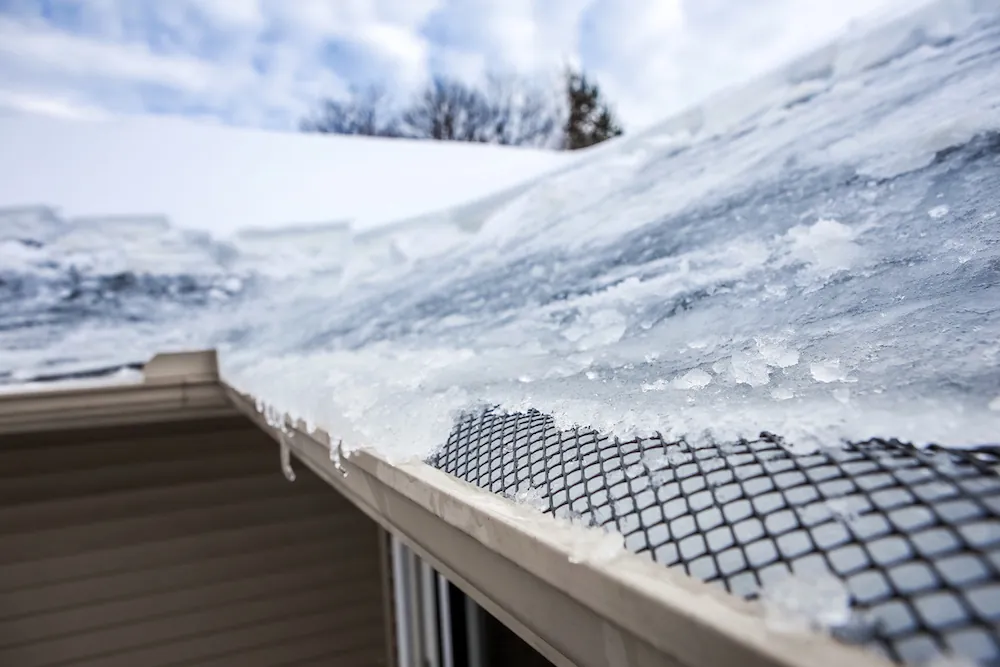
Inspect Roofs, Gutters, and Drainage Systems
Exterior moisture problems often lead to interior mold.
What to Check Before and During Winter
- Clear gutters and downspouts to prevent ice dams and overflow
- Repair roof leaks immediately
- Ensure downspouts direct water away from the foundation
Poor drainage is a leading cause of basement moisture and mold.
Address Basement and Crawl Space Moisture
Basements and crawl spaces are among the most common mold-prone areas in winter due to temperature differences and limited airflow.
Basement Moisture Control
- Repair cracked or deteriorated mortar and foundation gaps
- Use a dehumidifier to manage condensation
- Inspect regularly for plumbing or foundation leaks
Crawl Space Protection
- Install vapor barriers (polyethylene sheeting)
- Maintain airflow and proper venting, even in colder months
Managing moisture below living spaces is essential to prevent mold growth throughout the home.
Prevent Frozen and Burst Pipes
Frozen pipes often cause sudden water damage and mold.
Pipe Protection Tips
- Insulate pipes in attics, garages, and crawl spaces
- Seal air leaks near plumbing
- Maintain consistent indoor temperatures
Burst pipes release large volumes of water quickly, creating ideal conditions for mold growth if not addressed immediately.
DIY Prevention vs Professional Mold Help
| Situation | DIY Prevention | Professional Help |
|---|---|---|
| High humidity | ✅ | ❌ |
| Minor condensation | ✅ | ❌ |
| Ongoing leaks | ❌ | ✅ |
| Visible mold growth | ❌ | ✅ |
| Water damage | ❌ | ✅ |
FAQs: How to Prevent Mold Growth in Winter
Why does mold grow more in winter?
Because homes are sealed tightly, trapping moisture from daily activities and heating systems.
What humidity level prevents mold in winter?
Keeping indoor humidity between 35% and 45% helps prevent mold growth.
Can mold grow without visible water leaks?
Yes. Condensation and high humidity alone can cause mold.
Should I use a humidifier in winter?
Only if humidity levels drop too low. Overuse can increase mold risk.
When should I call a professional for mold?
If mold is visible, recurring, or caused by water damage, professional remediation is recommended.
Need Help Preventing or Removing Winter Mold?
If moisture problems or mold growth persist despite prevention efforts, professional help is critical. PuroClean provides expert mold remediation and water removal services designed to eliminate moisture at the source and restore healthy indoor environments.
Our trained technicians are available 24/7 to assess damage, remove mold safely, and help protect your home during winter.
Contact your local PuroClean office today for professional mold prevention and remediation services.
Key Takeaways
- Prevent mold growth in winter by controlling moisture
- Keep indoor humidity between 35% and 45%
- Improve ventilation in kitchens and bathrooms
- Fix leaks and drainage issues promptly
- Protect basements and crawl spaces from condensation
- Insulate pipes to avoid winter water damage
- Call professionals when mold or water damage appears



