


Table of Contents
The difference between cleaning, disinfecting, and sanitizing comes down to what each step removes. Cleaning removes dirt and debris, disinfecting kills germs using EPA-registered products, and sanitizing lowers germs to a safer level based on public health standards. For a healthy home in 2025, cleaning is always the first step—but disinfecting or sanitizing may be necessary depending on risk, surface type, and exposure.
Difference Between Cleaning, Disinfecting, and Sanitizing
These terms are often used interchangeably, but according to updated CDC and EPA guidance, they serve different purposes:
- Cleaning: Removes dirt, dust, and impurities from surfaces using soap or detergent and water.
- Disinfecting: Uses chemicals to kill germs on surfaces after cleaning.
- Sanitizing: Reduces germs to a level considered safe by public health standards.
What Is Cleaning?
Cleaning is always the first and most important step.
What Cleaning Does
- Removes visible dirt, dust, and organic matter
- Reduces the number of germs on a surface
- Improves the effectiveness of disinfectants and sanitizers
What Cleaning Does NOT Do
- It does not reliably kill germs
- It does not eliminate viruses or bacteria on its own
Cleaning should be done using soap or detergent and water, followed by rinsing when needed.
What Is Sanitizing?
Sanitizing reduces germs to a safe level, but does not eliminate all pathogens.
Common Sanitizing Uses
- Food-contact surfaces
- Children’s items and toys
- Bathrooms and kitchens
Sanitizing can be done with chemicals, heat, or approved sanitizing solutions. It is often used when full disinfection is unnecessary but germ reduction is still important.
What Is Disinfecting?
Disinfecting goes a step further by killing germs on cleaned surfaces. Disinfectants must be EPA-registered and used exactly as directed to be effective.
When Disinfecting Is Necessary
- After illness in the home
- On high-touch surfaces (doorknobs, switches, keyboards)
- In kitchens, bathrooms, and shared spaces
Important: Never mix disinfectants or cleaners unless the label explicitly states it is safe.

Cleaning vs Disinfecting vs Sanitizing Comparison
| Method | Removes Dirt | Kills Germs | When to Use |
|---|---|---|---|
| Cleaning | ✅ Yes | ❌ No | Everyday maintenance |
| Sanitizing | ✅ Yes | ⚠️ Reduces | Food prep & low-risk areas |
| Disinfecting | ✅ Yes | ✅ Yes | Illness, high-risk surfaces |
Are Disinfectant Wipes Effective?
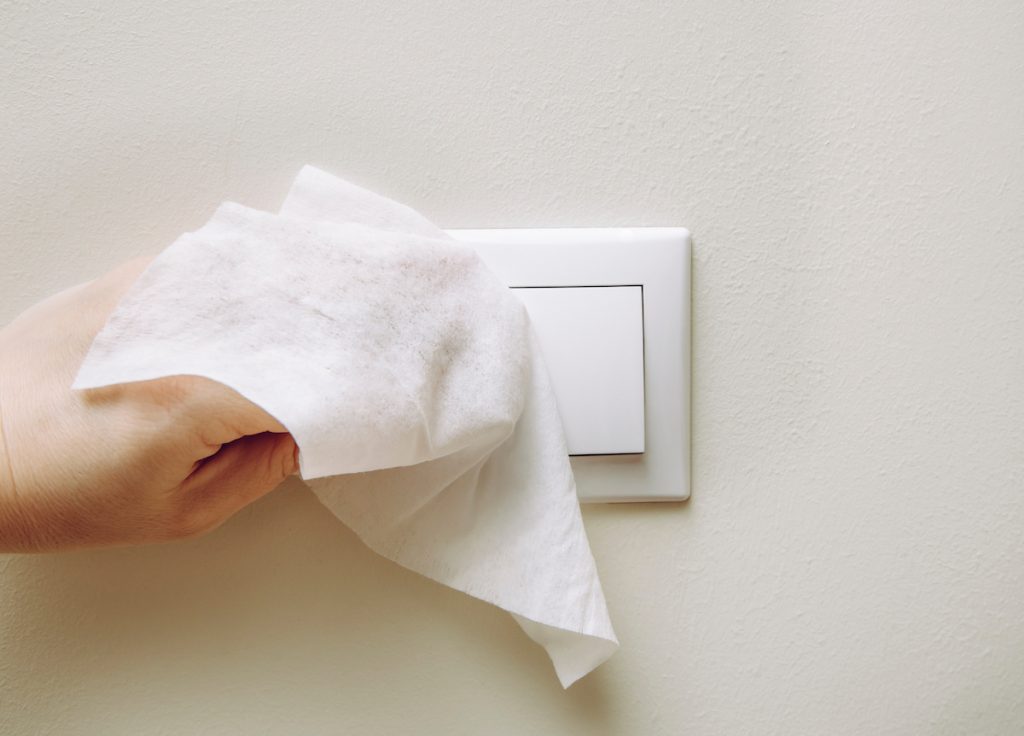
Disinfectant wipes are effective when used correctly.
What They Work Best On
- Non-porous surfaces (countertops, handles, phones)
- Quick touch-ups between cleanings
Limitations of Disinfectant Wipes
- Not effective on porous materials like carpet or upholstery
- Require proper contact time to disinfect
Always wipe surfaces thoroughly and allow them to remain wet for the time listed on the label.
Tips for Keeping Your Home Clean and Healthy
- Establish a regular cleaning schedule
- Declutter to reduce dust-collecting surfaces
- Use the right product for the right task
- Store cleaning products safely and separately
- Avoid over-disinfecting low-risk areas
FAQs: Difference Between Cleaning Disinfecting, and Sanitizing
What is the difference between cleaning and sanitizing?
Cleaning removes dirt and debris, while sanitizing reduces germs to a safer level. Cleaning is always required before sanitizing.
Is disinfecting better than sanitizing?
Not always. Disinfecting kills more germs, but sanitizing is often sufficient for food areas and everyday use.
Do I need to disinfect my home every day?
No. Routine cleaning is usually enough unless someone is sick or high-risk surfaces are involved.
Can cleaning remove viruses?
Cleaning can reduce viruses but does not reliably kill them. Disinfecting is required to kill viruses.
When Professional Cleaning and Disinfection Is Needed
After biohazard events, illness outbreaks, or contamination, household cleaning is often not enough. PuroClean provides professional cleaning, sanitizing, disinfecting, and biohazard remediation using EPA-registered products and industry best practices.
Our teams are available 24/7 to help restore safe, healthy environments.
Call (800) 775-7876 or contact your local PuroClean office today.
Key Takeaways
- Professional services are needed for biohazards
- Cleaning removes dirt but doesn’t kill germs
- Disinfecting kills germs using EPA-registered products
- Sanitizing lowers germs to safe levels
- Cleaning is always the first step
- Disinfect only when risk justifies it
- Labels and contact time matter



