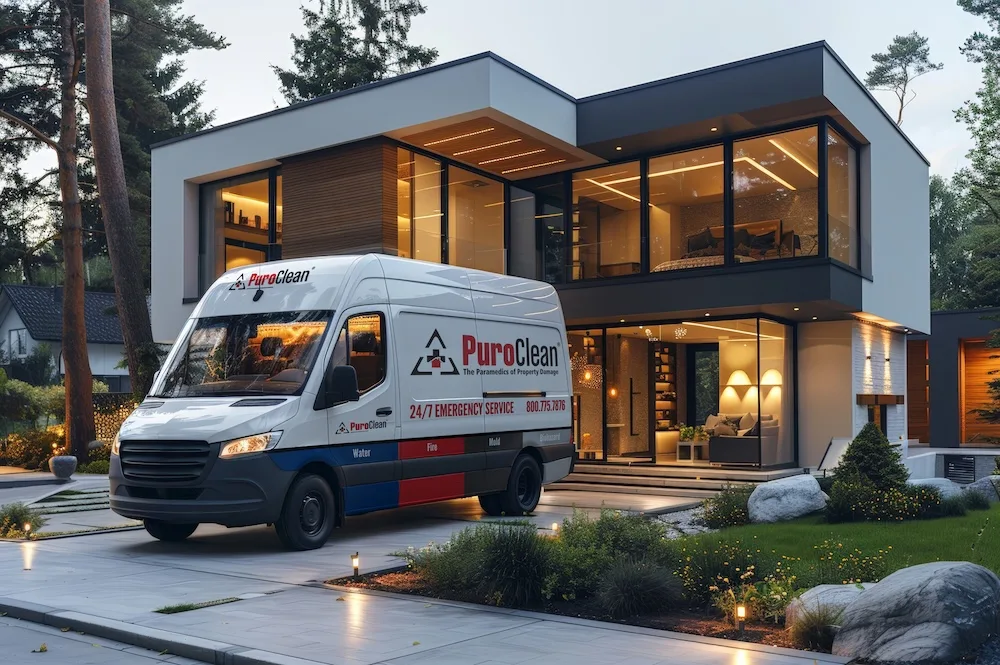
24/7 Emergency Services in Antioch, CA
For property managers and commercial tenants, mold is an indoor air quality and liability issue—not just a stain. PuroClean of Antioch focuses on source-driven remediation, containment discipline, and documentation that supports informed re-occupancy decisions.
In commercial and mixed-use buildings, mold is often the symptom of an unresolved moisture pathway—behind walls, under flooring, or around shared assemblies. Superficial cleaning can leave concealed growth active, creating recurring complaints, indoor air quality concerns, and tenant disruption. A protocol-based approach with containment and clearance documentation helps reduce re-growth risk and supports defensible re-entry decisions.
After drainage overload or lower-level seepage, moisture can persist in baseboards, wall cavities, or under resilient flooring where it’s not obvious during routine walkthroughs. We use moisture mapping to identify wet materials, correct the moisture source, then remediate under containment to prevent cross-contamination into occupied corridors and suites.
In multi-tenant or mixed-use properties, moisture can migrate through shared walls/ceilings, creating mold conditions in an adjacent suite even when the original leak appears “fixed.” We coordinate access, isolate the work area with negative air pressure where appropriate, and document findings so stakeholders can align on scope and responsibilities.
When a small leak is slow to dry, dampness can remain behind cabinetry or inside wall assemblies and reappear as odor or occupant complaints. We verify drying progress with moisture readings, remove impacted materials when required by protocol, and confirm conditions support safe re-occupancy.
mixed-use buildings, commercial suites, multi-tenant properties, offices, storefronts, operating businesses, multi-unit housing (multi-unit / multi-tenant context)
Commercial mold remediation has to protect people and keep the property functional. We plan containment boundaries, use controlled work zones and negative air pressure where appropriate, and sequence removal/cleaning to reduce impact on occupied areas. For multi-tenant properties, we coordinate access windows, pathways, and communications so tenants and onsite teams can continue essential operations while remediation proceeds.
For commercial stakeholders, documentation matters as much as the physical work. PuroClean of Antioch provides clear job notes, photo documentation, and moisture readings/verification checkpoints to support decision-making with owners, risk teams, and claims contacts. We also keep communication structured when multiple parties need updates (property management, tenants, and vendors).
In this service area, water intrusion and seepage can follow predictable pathways that create hidden dampness in lower levels and within building assemblies—conditions that can escalate into mold if drying and verification are delayed. Mixed-use and multi-tenant layouts increase the chance that moisture or contamination concerns affect adjacent units, so scope control and containment discipline are critical. Storm-driven intrusion events also make early inspection, moisture mapping, and documented verification especially important for commercial interiors.
PuroClean of Antioch brings a commercial-ready remediation approach focused on source correction, containment integrity, and defensible re-occupancy documentation. Our team is IICRC-certified and uses established protocols to address mold as an indoor air quality and operational risk. We’re set up to communicate clearly with property managers, tenants, and decision-makers throughout the project lifecycle.
What Our Customers Say:
Find answers to common questions about our services
We help define affected areas, access needs, and containment boundaries so property management can notify the right tenants without over-alerting unaffected spaces. When possible, we schedule disruptive steps (demolition, HEPA cleaning) in planned windows and maintain controlled pathways to reduce tenant impact. A single point of contact and consistent updates help keep all parties aligned.
We provide job documentation that can include photos, moisture mapping/reading notes, containment details, and verification checkpoints tied to the remediation scope. This supports internal reporting, vendor coordination, and re-occupancy decision-making. If clearance testing is part of the plan, we document the steps and results as applicable.
Cleaning typically targets visible growth, but it may not address contaminated porous materials or the moisture source that enabled growth. Professional remediation follows a protocol: identify and correct moisture conditions, contain the work area, remove/clean impacted materials appropriately, and verify conditions before re-occupancy. The goal is to reduce the likelihood of re-growth and cross-contamination.
Containment separates the work zone so disturbed spores and dust are not carried into occupied suites or common areas. Negative air pressure (when appropriate) helps keep air moving into the contained area rather than outward. Combined with HEPA filtration and controlled entry/exit procedures, this supports indoor air quality protection during active remediation.
Remediation planning should account for moisture correction as a prerequisite—otherwise mold conditions can return. In some cases, source correction happens first; in others, it can be coordinated in parallel with safe containment and staged work. The key is verifying the moisture pathway is addressed and drying is confirmed, not assumed.
Yes—phased work and off-hour scheduling are common in commercial settings when access, noise, or occupant sensitivity is a concern. We can prioritize critical pathways and isolate work zones so unaffected areas remain usable when safe. The right schedule depends on containment layout, material removal needs, and building operations.
We help define affected areas, access needs, and containment boundaries so property management can notify the right tenants without over-alerting unaffected spaces. When possible, we schedule disruptive steps (demolition, HEPA cleaning) in planned windows and maintain controlled pathways to reduce tenant impact. A single point of contact and consistent updates help keep all parties aligned.
We provide job documentation that can include photos, moisture mapping/reading notes, containment details, and verification checkpoints tied to the remediation scope. This supports internal reporting, vendor coordination, and re-occupancy decision-making. If clearance testing is part of the plan, we document the steps and results as applicable.
Cleaning typically targets visible growth, but it may not address contaminated porous materials or the moisture source that enabled growth. Professional remediation follows a protocol: identify and correct moisture conditions, contain the work area, remove/clean impacted materials appropriately, and verify conditions before re-occupancy. The goal is to reduce the likelihood of re-growth and cross-contamination.
Containment separates the work zone so disturbed spores and dust are not carried into occupied suites or common areas. Negative air pressure (when appropriate) helps keep air moving into the contained area rather than outward. Combined with HEPA filtration and controlled entry/exit procedures, this supports indoor air quality protection during active remediation.
Remediation planning should account for moisture correction as a prerequisite—otherwise mold conditions can return. In some cases, source correction happens first; in others, it can be coordinated in parallel with safe containment and staged work. The key is verifying the moisture pathway is addressed and drying is confirmed, not assumed.
Yes—phased work and off-hour scheduling are common in commercial settings when access, noise, or occupant sensitivity is a concern. We can prioritize critical pathways and isolate work zones so unaffected areas remain usable when safe. The right schedule depends on containment layout, material removal needs, and building operations.
A single water loss can ripple through your entire business — affecting tenants, disrupting workflows, and risking long-term structural damage. We deploy 24/7 with commercial-grade equipment and expertise to protect your property and keep your business running. You don’t have time for guesswork — you need a team that arrives fast, understands commercial environments, and gets your facility stabilized without delay.
Call Our Commercial Response Team at
(925) 303-4488
Contact UsPuroClean of Antioch
(925) 303-4488
5682 Leitrim Court, Antioch, CA 94531
© 2026 PuroClean. All Rights Reserved.