


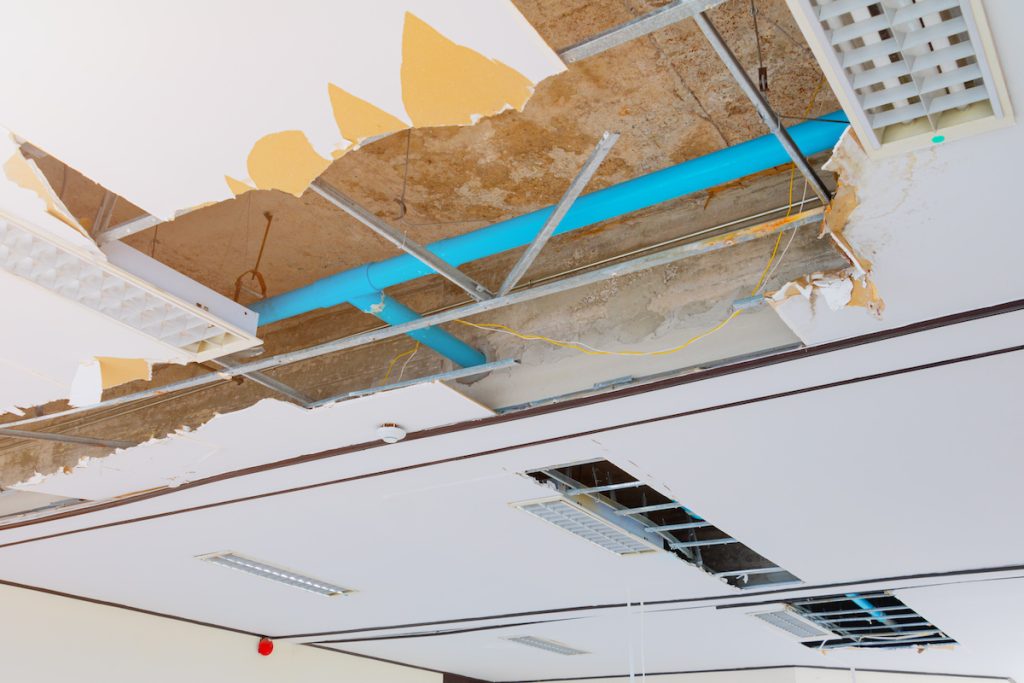
Water damage from a commercial roof leak can disrupt business operations, damage building materials, and create conditions for mold growth if it isn’t addressed promptly. Even a small commercial roof leak can allow moisture to spread behind walls, above ceilings, and into insulation before visible signs appear. Knowing how to identify the warning signs, respond quickly, and schedule professional restoration can help protect your property and reduce repair costs.
Signs of Water Damage From a Commercial Roof Leak
Roof leaks are not always immediately visible. Water often travels through ceilings, walls, or structural cavities before becoming noticeable inside the building.
Common signs of commercial roof water damage include:
- Water dripping from ceilings
- Ceiling stains or discoloration
- Sagging ceiling tiles
- Bubbling or peeling paint
- Damp drywall
- Musty odors
- Wet carpeting or flooring
- Water stains around windows or walls
- Warped building materials
If employees, tenants, or maintenance staff notice any of these warning signs, report them immediately. Early detection can significantly reduce repair costs and business interruptions.
If water has already entered the building, PuroClean’s Commercial Water Damage Restoration professionals can assess the damage, remove excess water, and begin structural drying.

Common Causes of Commercial Roof Leaks
Understanding why roof leaks occur can help property owners reduce the likelihood of future damage.
Exterior Causes
Many commercial roof leaks begin because of damage to the roofing system itself.
Common exterior causes include:
- Damaged flashing
- Cracked or deteriorated roofing membranes
- Missing roofing materials
- Improperly sealed roof penetrations
- Damaged vent boots
- Clogged gutters and roof drains
- Storm damage
- Fallen tree limbs or debris
Scheduling roof inspections after severe weather can help identify damage before it becomes a larger problem.
Interior Causes
Not every leak originates from damaged roofing materials.
Moisture may also result from:
- HVAC condensation
- Plumbing leaks
- Rooftop mechanical equipment
- Skylight leaks
- Failed sealants around roof penetrations
- Excess indoor humidity
Identifying the true source of the moisture is essential before beginning commercial roof leak repair.
How to Respond to a Commercial Roof Leak
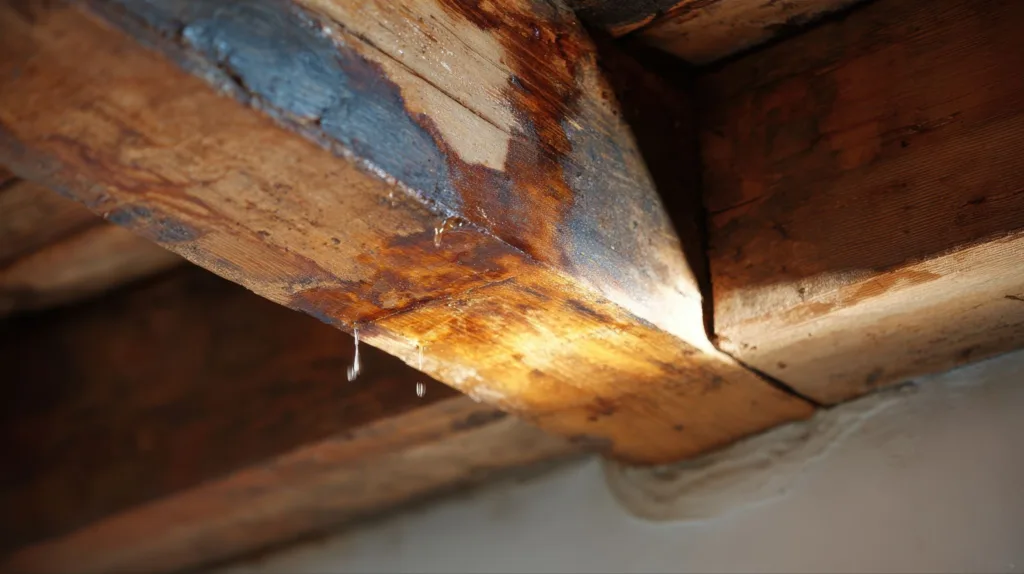
Taking immediate action after discovering water damage from a commercial roof leak can help limit structural damage and reduce downtime.
If it is safe to do so:
- Protect employees, customers, and visitors by restricting access to affected areas.
- Move furniture, electronics, inventory, and equipment away from standing water.
- Place containers beneath active leaks to collect dripping water.
- Document visible damage with photographs for insurance purposes.
- Contact a qualified roofing contractor to identify and repair the leak.
Avoid attempting major roof leak repair yourself unless you are qualified and it is safe to access the roof. Commercial roofing systems can be hazardous, particularly after storms or during wet weather.
Dry the Building as Quickly as Possible
Stopping the leak is only the first step.
Once water intrusion has been controlled, affected building materials should be dried as quickly as possible. Moisture trapped inside ceilings, insulation, drywall, and flooring can lead to mold growth in as little as 24 to 48 hours under the right conditions.
Professional drying typically includes:
- Moisture inspections
- Water extraction
- Industrial air movers
- Commercial dehumidifiers
- Ongoing moisture monitoring
If moisture is not completely removed, hidden damage may continue long after the visible leak has been repaired. Learn more about Commercial Water Damage Restoration and how rapid drying helps minimize secondary damage.
Document the Damage for Insurance
Most commercial property insurance policies require documentation of damage before repairs begin.
Helpful documentation includes:
- Photos of affected areas
- Videos of active leaks
- Damaged inventory or equipment
- Moisture stains
- Repair estimates
- Records of emergency mitigation services
Keeping detailed documentation can help streamline the insurance claims process while supporting restoration planning.
Why Professional Commercial Water Damage Restoration Matters
While repairing the roof stops the source of the leak, it does not remove the moisture that may already be trapped inside the building. Hidden water can remain in insulation, drywall, ceilings, and structural materials long after the leak has been repaired.
Professional commercial water damage restoration helps identify and address damage that may not be immediately visible.
Restoration professionals use specialized equipment to:
- Detect hidden moisture
- Extract standing water
- Dry structural materials
- Monitor moisture levels throughout the drying process
- Sanitize affected areas when necessary
If the leak has been present for an extended period, mold may also develop. In these cases, PuroClean’s Mold Remediation services can help safely remove mold and restore affected areas.
Attempting to dry significant commercial roof water damage without professional equipment may leave moisture trapped inside the building, increasing the likelihood of structural deterioration and future repairs.
How to Help Prevent Future Commercial Roof Leaks
Preventive maintenance is one of the most effective ways to reduce the risk of water damage from a commercial roof leak.
Property owners and facility managers should schedule regular roof inspections, especially:
- After severe storms
- Before winter weather
- During seasonal maintenance programs
- After rooftop equipment has been installed or serviced
A preventive maintenance plan should include:
- Inspecting flashing and roof penetrations
- Cleaning roof drains, gutters, and downspouts
- Removing leaves and debris
- Checking rooftop HVAC equipment for leaks
- Repairing damaged roofing materials promptly
- Monitoring ceilings for signs of moisture
Addressing minor roofing issues early is usually far less expensive than repairing widespread commercial roof water damage later. For additional property maintenance guidance, visit the PuroClean Blog.
Protect Your Commercial Property From Water Damage
Water damage from a commercial roof leak can affect much more than your roof. Moisture can spread into ceilings, insulation, flooring, equipment, and structural materials, disrupting business operations and creating conditions for mold growth.
Responding quickly, arranging commercial roof leak repair, and ensuring affected materials are professionally dried can help reduce long-term repair costs and minimize downtime.
If your commercial property has experienced water damage after a roof leak, PuroClean is ready to help. Learn more about our Commercial Water Damage Restoration services, find your local PuroClean office, or explore the PuroClean Blog for additional property maintenance and restoration resources.
Frequently Asked Questions
How do I know if my commercial roof is leaking?
Common warning signs include ceiling stains, dripping water, sagging ceiling tiles, peeling paint, musty odors, damp flooring, and warped drywall. Even minor discoloration may indicate hidden moisture inside the building.
Can a small commercial roof leak cause major water damage?
Yes. Even a slow commercial roof leak can allow water to spread into insulation, drywall, ceilings, and structural materials over time. If moisture remains trapped, mold growth and structural deterioration may occur.
Should I repair a commercial roof leak myself?
Minor maintenance may be appropriate in some situations, but most commercial roof leak repair work should be performed by qualified roofing professionals. If water has entered the building, professional restoration is also recommended to ensure hidden moisture is properly removed.
How quickly should water damage be addressed?
Water damage should be addressed as soon as possible. Prompt mitigation helps reduce damage to building materials and lowers the likelihood of mold growth developing within 24 to 48 hours.
What should I do after a commercial roof leak?
Protect occupants, document the damage, contact a qualified roofing contractor to repair the leak, and arrange for professional commercial water damage restoration if ceilings, walls, insulation, or flooring have been affected.



