


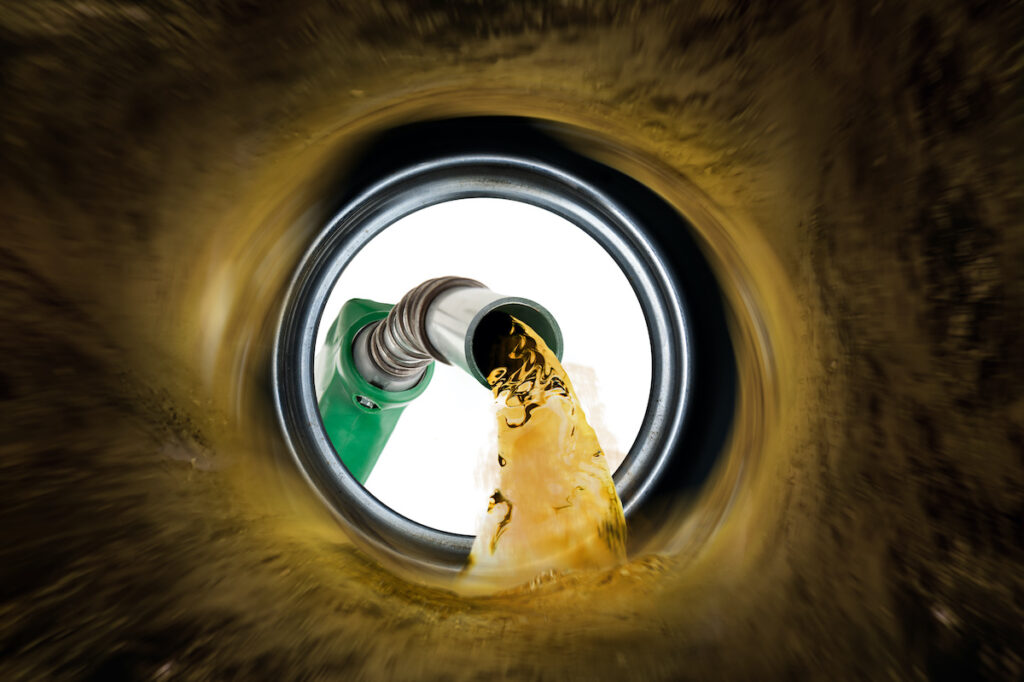

Gasoline is a very flammable liquid that must be handled with care. It can even lead to potential health problems such as respiratory illnesses such as worsening asthma, difficulty breathing, and skin irritations. Using gasoline irresponsibly can lead to injuries, fires, or other disasters.
Gasoline is highly volatile, which means that proper safety measures must always be taken when handling or storing it. Here are some gasoline safety tips to keep in mind to ensure that you and your home stay safe when handling gasoline.
Gasoline Can Safety
- Check local and state bulletins for gasoline storage regulations. Fire codes and laws typically restrict the amount of gasoline an individual owner can store (generally no more than 25 gallons) in approved containers of less than five gallons each.
- Never store gasoline in non-reusable plastic containers or glass containers. Safely store gasoline in an approved container, such as a plastic gas can. A plastic gas can is sealed using safety mechanisms to prevent leaks. These containers also come with a built-in gas can spout to deposit gasoline into the vehicle’s fuel tank without spilling it.
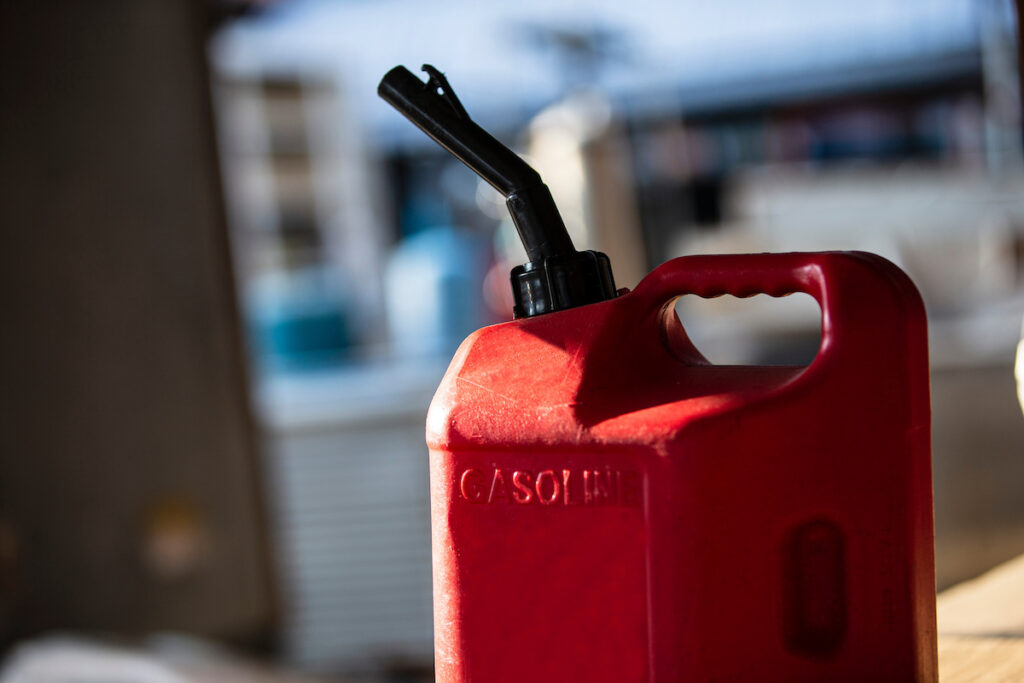
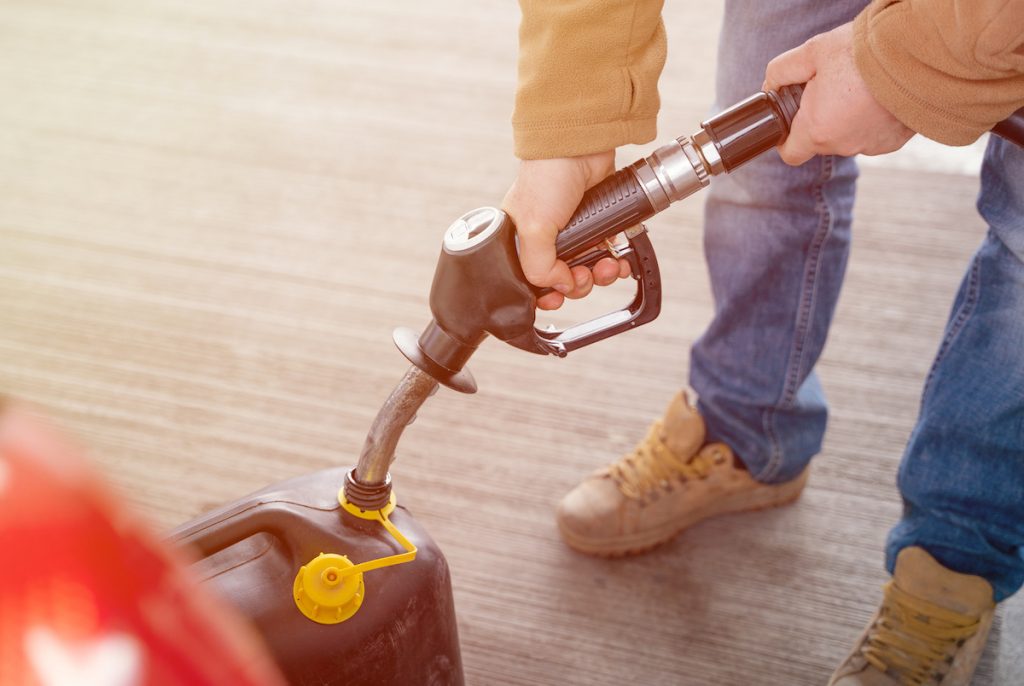
- To fill your gas can, place it on the ground and insert the fuel pump nozzle into the gas container. It’s unsafe to fill the empty gasoline container on an elevated surface such as a truck bed. A flat surface ensures you won’t spill.
- Fill the container with gasoline to 90-95 percent capacity. To avoid gas spillage, never fill the container to the brim. Stop filling the container when it’s 50 percent filled. Then, fill slowly and check the fluid level constantly. For optimal visibility, you may try removing the nozzle of the gas can from its container.
- Ensure the gas can lid is tightly screwed on after filling it with gasoline. Failure to do so can cause a gasoline spill, which can go unnoticed and put you in danger.
- Keep gasoline containers at room temperature. Store them at a safe distance (at least 50 feet) from heat sources, such as a space heater, electrical generator, furnace, or other devices.
- When pouring gasoline into another container, always do so slowly and carefully to avoid spillage. Gasoline vapors are heavier than air and can travel along the floor to ignition sources.
- Your gas can should be stored properly in a cool, dry place out of reach of children and pets.
- Keep storage tanks outside the home, in a detached garage or lawn shed. Never store gasoline inside your home.
- Place the gasoline container in an upright position when transporting it. To prevent the gas container from falling, use a rope to tie it securely. Ensure that the container is sealed when it’s in motion.
- It’s important to remember that regular gasoline has a shelf life of three to six months before it begins to degrade.
Gasoline Containers and Their Explosion Risks
If you use gasoline to power machinery or equipment containing small engines, taking steps to prevent accidents and injuries when using gasoline containers is absolutely essential. Gasoline is highly flammable, and improper handling can lead to dangerous situations, including explosions. According to scientific tests carried out by the Worcester Polytechnic Institute’s Department of Fire Protection, several specific conditions significantly increase the risk for an explosion:
1. Holding the can at a 42-degree pouring angle:
One of the most common angles at which consumers pour gasoline is 42 degrees. When the can is held at this angle without the lid and spout open, it can create a hazardous situation. This pouring method can cause gasoline vapors to escape and mix with air, forming a flammable mixture that can easily ignite.
2. A very low volume of gasoline inside the gas can:
Gas cans with a very low volume of gasoline are particularly dangerous. The lower the volume of liquid gasoline, the greater the amount of volatile gasoline vapors inside the can. These vapors are highly explosive and can ignite with even a small spark or static discharge.
3. Low temperatures:
Low temperatures can exacerbate the risk of an explosion. When gasoline is stored at low temperatures, it becomes less volatile, but the vapors that do form are denser and can accumulate more easily. This dense vapor layer can ignite more readily, especially if the can is not properly sealed or if it is opened in an environment where sparks or static electricity are present.
4. Gasoline that has been stored for a long time:
Gasoline that has been stored for an extended period can become more unstable. Over time, gasoline can degrade and form deposits that make it more prone to ignition. Additionally, older gasoline may have absorbed moisture, increasing the risk of vapor formation and explosion.
To ensure safety when using gasoline containers, always store them in a cool, well-ventilated area away from ignition sources. Use containers specifically designed for gasoline storage, which have safety features like flame arrestors and pressure relief valves. Always keep the lid tightly closed when not in use, and never pour gasoline in confined spaces or near open flames. By understanding and mitigating these risks, you can significantly reduce the likelihood of accidents and injuries associated with gasoline use.
Always Handle Gasoline Outdoors
When working with gasoline, it is crucial to prioritize safety by always handling it outdoors. Using a well-ventilated area helps to disperse harmful fumes and reduce the risk of fire or explosion. Gasoline emits volatile organic compounds (VOCs) that can accumulate quickly in enclosed spaces, posing significant health and safety risks.
1. Use a Ventilated Area:
Always choose an open, outdoor space when dealing with gasoline. Whether you’re filling up your lawnmower, chainsaw, or any other equipment with a small engine, doing so in an outdoor environment ensures that fumes can disperse into the atmosphere rather than becoming concentrated in a confined area. Proper ventilation prevents the buildup of explosive gasoline vapors and reduces the risk of inhaling toxic fumes.
2. Avoid Filling Up Equipment Indoors:
Even if you have the garage door open, filling up equipment indoors is dangerous. Gasoline fumes are heavier than air and can settle in low areas, creating a flammable environment. Ignition sources such as pilot lights, electrical sparks, or static electricity can ignite these vapors, leading to fires or explosions. Therefore, always move your equipment outside before refueling.
3. Ensure Clean Air Circulation:
When handling gasoline, make sure there is thorough air circulation. This means not only working outdoors but also ensuring that there are no barriers blocking the flow of fresh air. Position yourself upwind of the gasoline to avoid inhaling fumes directly. If you must work in a semi-enclosed space, use fans or other ventilation equipment to keep the air moving and disperse vapors quickly.
4. Additional Safety Precautions:
In addition to handling gasoline outdoors, take these extra steps to enhance safety:
Store Gasoline Properly: Use approved gasoline containers and store them in a cool, well-ventilated area away from living spaces and ignition sources.
Wear Protective Gear: Use gloves and safety glasses to protect your skin and eyes from splashes and fumes.
Avoid Static Electricity: Ground yourself before opening gas containers to prevent static sparks. Touch a metal surface away from the gasoline container to discharge any static buildup.
Keep a Fire Extinguisher Handy: Have a suitable fire extinguisher nearby in case of an accidental fire.
Gasoline and Cleanup Materials
Clean up spilled gasoline immediately with rags, paper, or sawdust, then dispose of the cleanup materials in secure containers that are designed for proper disposal. Don’t discard materials in toilets, drains, sewers, or garbage disposals. Doing so could start a fire or seep into streams, bays, lakes, or groundwater, causing contamination.
Contact your local government or hazardous waste disposal center about the safest way to dispose of a large gasoline spill.
Gasoline Safety Tips: Machinery
If you’re using gasoline to power a lawn mower, generator, leaf blower, or other outdoor equipment, safely pour the gasoline into the equipment. Always allow machinery to cool off before refueling.
Most lawn mower engines are designed to use minimum octane-rated gasoline. Anything higher can easily damage the fuel system of the mower. Do not modify your mower’s engine to run on alternate fuels. If gasoline in the lawn mower’s small engine has not been treated with a fuel stabilizer, drain it into an appropriate container.

NEVER:
- Use gasoline for anything other than its intended purpose.
- Use gasoline as a cleaning agent or fuel for kerosene heaters or lamps.
- Mix gasoline with kerosene or diesel.
Lastly, NEVER smoke or ignite flames when handling gasoline. Please do not allow children to handle gasoline; keep it out of their reach and sight.
By following these gasoline safety tips, you can protect yourself and your household from gasoline dangers. Always exercise caution and common sense when handling the highly flammable liquid. If you have any questions regarding gasoline safety or are unsure of what measures to take, please consult your local fire department or contact a professional for further information. Your safety is of the utmost importance.
Call Your Local PuroClean Office For Disaster Restoration Services
PuroClean’s skilled and professional property restoration experts are available 24/7 to assist with fire damage restoration, water damage restoration, mold remediation, and biohazard cleanup. As “The Paramedics of Property Damage®,” we are the first responders on the scene. We proudly serve residential and commercial clients using our state-of-the-art tools and equipment. Call us at (800) 775-7876 or visit our website to connect with your local PuroClean office today.



