


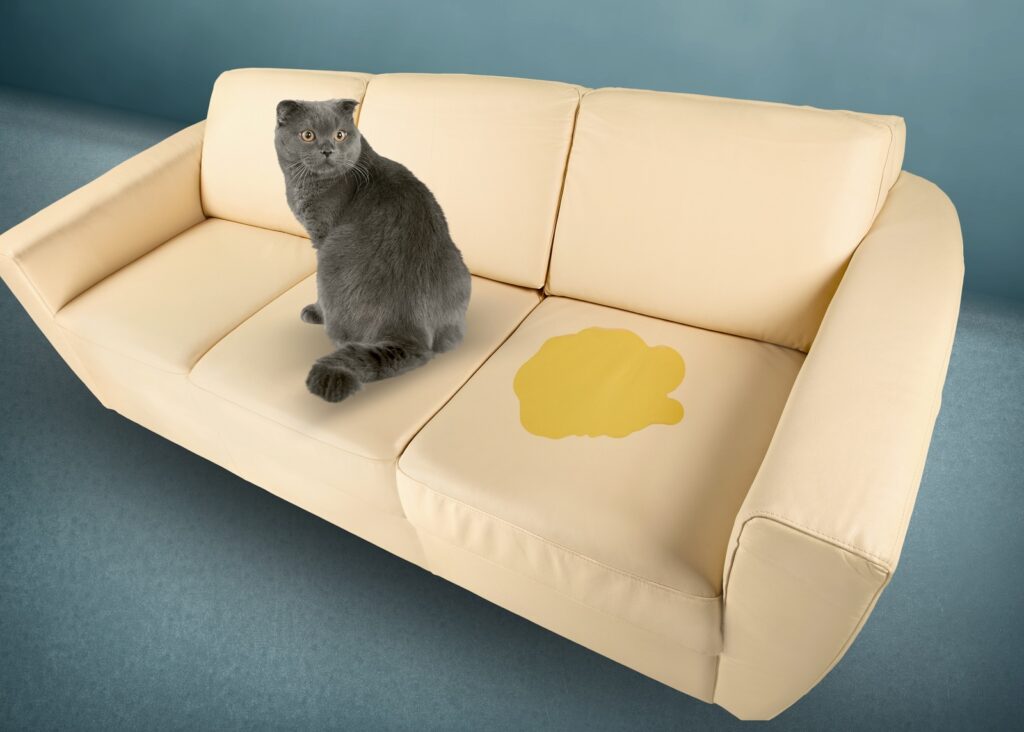

If you want to know how to get rid of cat pee smell, the only reliable method is to break down uric acid crystals using an enzyme-based cleaner.
Regular household cleaners may reduce odor temporarily, but they do not eliminate the compounds that cause the smell to return, especially in carpets, furniture, and subfloors.
When urine has soaked into porous materials or keeps reappearing, professional biohazard-style odor removal may be required.
Why Does Cat Pee Smell So Bad?
Cat urine has a stronger and longer-lasting odor than many other pet accidents due to its chemical makeup and how it breaks down over time.
What Causes the Odor
Cat urine contains:
- Urea, which bacteria convert into ammonia
- Uric acid, which forms odor-causing crystals
- Hormones and proteins, especially in unneutered males
As urine dries, bacteria break down urea and release ammonia. Over time, uric acid crystals bond to surfaces and reactivate when exposed to moisture, causing lingering or recurring odors.
Factors That Intensify Cat Urine Smell
- Older cats (reduced kidney efficiency)
- Unneutered male cats (testosterone-driven marking)
- Repeated urination in the same area
- Porous materials like carpet padding or wood
Preventing repeat behavior is just as important as cleaning, since lingering scent markers can encourage re-soiling.
Why Enzyme Cleaners Are Required
What Enzyme Cleaners Do
Enzyme cleaners contain live cultures that digest uric acid crystals, eliminating odor at a molecular level instead of covering it up.
What Happens Without Enzymes
- Vinegar and baking soda = temporary deodorizing
- Bleach = dangerous reaction + odor fixation
- Steam cleaning = odor locked into fibers
Bottom line:
If enzymes are not used, the smell will almost always come back.
How to Get Rid of Cat Pee Smell on Couches
Cat urine on couches is difficult to remove because it often penetrates fabric and foam cushions.
Step-by-Step Couch Cleaning
- Locate the urine source using your nose or a UV/pet urine detector.
- Blot the area with paper towels or a clean cloth. Do not scrub.
- Apply an enzyme cleaner, fully saturating the area so it reaches the foam.
- Allow to air-dry completely (12–48 hours). Avoid heat or fans.
Vinegar and baking soda may reduce surface odor temporarily, but enzyme cleaners are required to break down uric acid trapped inside cushions.
How to Get Rid of Cat Urine Odor in Fabrics
Washable fabrics can retain odor if urine compounds aren’t treated before washing.
Best Practices for Clothing and Linens
- Rinse items with cold water before washing
- Pretreat with an enzyme cleaner to break down uric acid
- Wash with detergent; baking soda or vinegar may help boost results
- Air-dry only until odor is fully gone
Warning: Never mix bleach with ammonia-based residues. This can release harmful gases.
You may need to repeat the process if the smell persists after drying.
How to Get Rid of Cat Pee Smell in Carpets
Carpet odor often returns because urine seeps into padding and subfloors.
Carpet Cleaning Steps
- Blot up fresh urine immediately.
- Extract moisture using a wet/dry vacuum (cold setting only).
- Apply an enzyme cleaner generously, soaking beyond the visible stain.
- Let sit per product instructions, then blot excess moisture.
- Prevent pets from accessing the area until fully dry.
Avoid steam cleaning as heat can permanently set urine odors into carpet fibers.
Removing Cat Pee Smell From Unsealed Hardwood Floors

Unsealed wood absorbs urine quickly, making odor removal more difficult.
What You Can Do
- Clean the area with cold water and blot dry.
- Lightly scrub with diluted vinegar, then rinse and dry.
- Spot-test an enzyme cleaner before broader use.
- If odor persists, sanding or sealing may be required.
Once urine penetrates the wood grain, surface cleaning alone may not be effective.
Preventing Your Cat From Urinating in Inappropriate Places
Cleaning alone won’t solve the problem if the underlying cause isn’t addressed.
Common Reasons Cats Urinate Outside the Litter Box
- Stress or anxiety
- Medical issues (UTIs, kidney disease)
- Dirty or inaccessible litter boxes
- Territorial marking
Prevention Tips
- Keep litter boxes clean and easily accessible
- Scoop daily and change litter regularly
- Use litter attractants if needed
- Ensure fresh water and a balanced diet
If behavior continues, consult a veterinarian to rule out medical causes.
For Carpet/Upholstery Cleaning and Biohazard Remediation, Contact PuroClean Today!
If odors keep returning or urine has soaked into padding, subfloors, or furniture, professional remediation may be required. PuroClean provides expert carpet cleaning, upholstery treatment, and biohazard cleanup services designed to fully eliminate contamination—not just mask odors.
Our trained technicians use advanced detection tools and professional-grade odor removal methods to restore indoor air quality safely and effectively.
Call (800) 775-7876 or schedule service online today.
FAQs: How to Get Rid of Cat Pee Smell
How do I get rid of cat pee smell permanently?
Use an enzyme cleaner to break down uric acid crystals. Regular cleaners only mask the odor, so it often comes back.
Why does cat urine smell return after cleaning?
Because uric acid remains in porous materials and reactivates with moisture if not enzymatically removed.
Does vinegar remove cat pee smell?
No. Vinegar may reduce odor briefly, but it does not eliminate uric acid, so the smell can return.
Can steam cleaning remove cat urine odor?
No. Heat can lock urine odors into carpets and upholstery, making them harder to remove.
When should I call a professional?
If odors persist after enzyme cleaning or urine has soaked into padding, furniture, or subfloors.
Key Takeaways
- Cat urine odor is caused by uric acid crystals
- Enzyme cleaners are required for permanent odor removal
- Household cleaners only provide temporary relief
- Heat and steam can lock odors into surfaces
- Carpets and cushions often trap urine below the surface
- Repeated accidents may require professional cleanup
- Addressing behavior is essential to prevent recurrence



