




Table of Contents
Mold in the shower is usually caused by trapped moisture, steam, and poor ventilation. Small surface patches can sometimes be cleaned safely, but recurring growth, strong odors, or hidden moisture often point to a larger issue that requires professional mold remediation.
Why Mold Develops in Showers
Mold in the shower forms when airborne mold spores settle on wet surfaces and are given enough moisture and warmth to grow. Because showers are used daily and often stay damp long after use, they create ideal conditions for mold growth.
Common areas where mold appears include:
- Tile grout
- Shower corners
- Caulk and sealant lines
- Along tub edges
- Behind shower curtains or doors
Even bathrooms that are cleaned regularly can develop mold if moisture isn’t removed quickly enough.
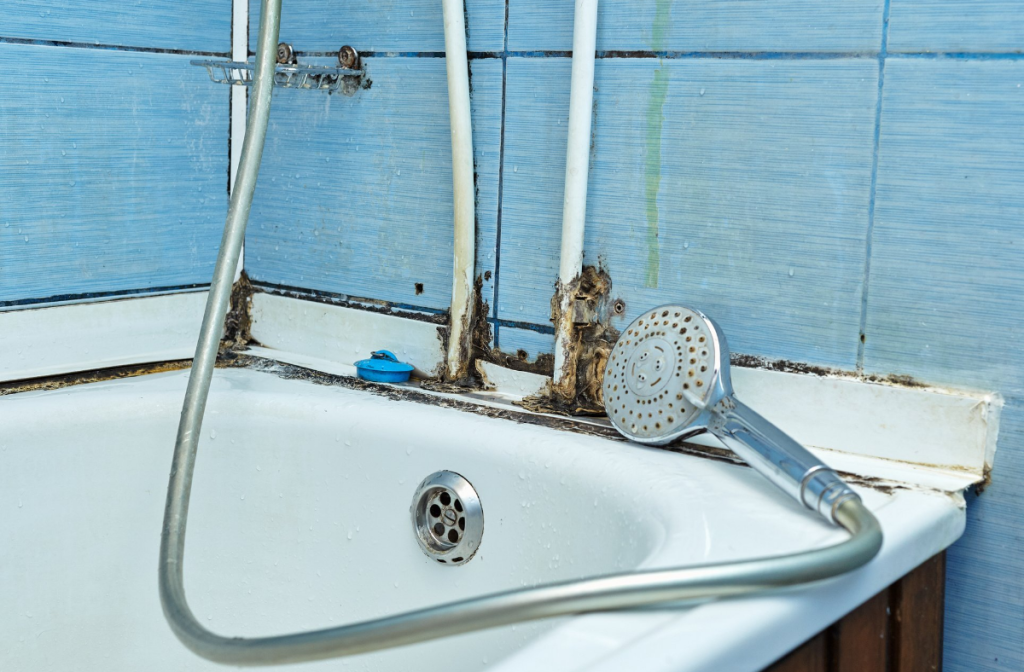
Is It Normal to Find Mold in the Shower?
It’s common, but it’s not something that should be ignored.
Finding mold in the shower usually means moisture is lingering longer than it should. While it may look like soap scum or surface staining at first, mold can spread quickly once it takes hold. Simply scrubbing away what you see doesn’t always address the cause of the problem.
If mold keeps coming back, it’s a sign that humidity, airflow, or hidden moisture needs to be addressed.
What Causes Mold Growth in Showers?
Most shower mold problems can be traced back to moisture and ventilation issues. The most common causes include:
- Poor bathroom ventilation or a weak exhaust fan
- Steam buildup after hot showers
- Condensation on tile and grout
- Cracked grout or deteriorating caulk that traps water
- Plumbing leaks behind walls or fixtures
- Wet towels, bath mats, or shower curtains left in enclosed spaces
Even small amounts of trapped moisture can be enough to allow mold spores to grow and spread.
Health Concerns Associated With Shower Mold
Mold in the shower can affect indoor air quality and may trigger health symptoms, especially with repeated exposure.
Possible Health Effects
- Eye, nose, or throat irritation
- Coughing or wheezing
- Nasal congestion or sinus discomfort
- Headaches or fatigue
- Skin irritation, particularly for sensitive skin
People with asthma, allergies, or weakened immune systems may experience stronger reactions. Because showers are enclosed spaces, exposure can happen frequently if mold is left untreated.
Understanding Black Mold in the Shower
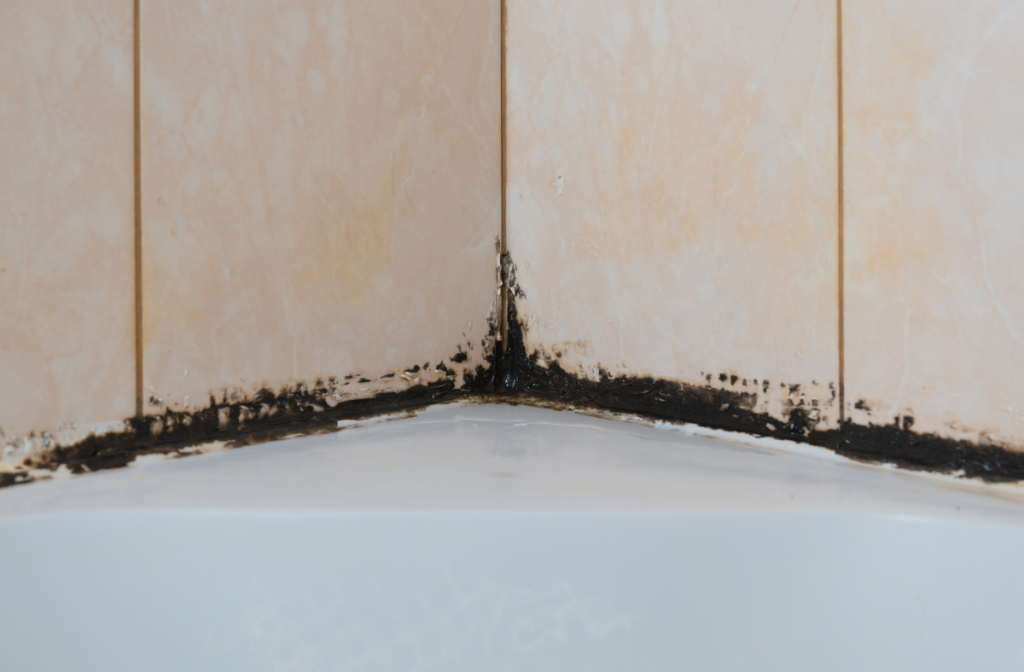
Dark-colored growth in a shower is often referred to as black mold, but not all black or dark green mold is the same. Several mold species can appear dark, and visual identification alone isn’t reliable.
One mold that raises concern is Stachybotrys chartarum, which is associated with prolonged moisture exposure. It may appear slimy or fuzzy and often grows in grout lines, corners, or behind caulk.
Because mold spores can become airborne when disturbed, dark mold should always be handled carefully. Avoid dry scraping or aggressive cleaning methods that can spread spores throughout the bathroom.
How to Remove Mold From the Shower Safely
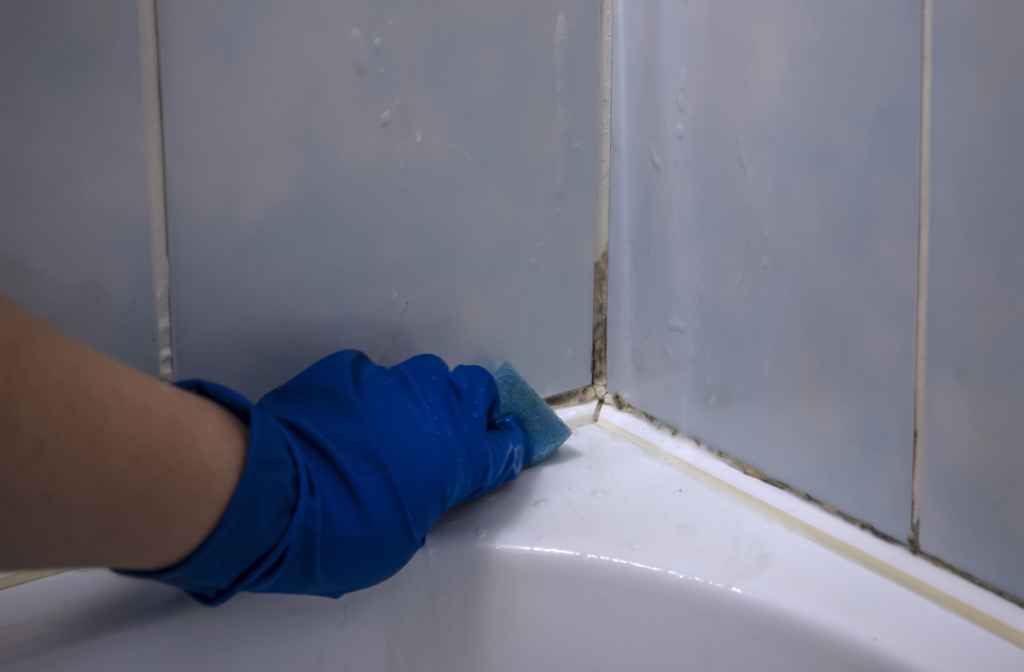
If the affected area is small and limited to surface growth, you may be able to clean mold safely on your own. The most important goals are personal safety, containment, and thorough drying.
Step 1: Protect Yourself
Before cleaning:
- Ventilate the bathroom by opening windows or running the exhaust fan
- Keep the door open if possible
- Wear gloves, eye protection, and an N-95 or similar mask
Keep children and pets out of the area during cleanup.
Step 2: Prepare the Area
- Remove towels, bath mats, and personal items
- Avoid turning on fans that blow directly at the mold
- Have cleaning supplies ready before starting
Proper preparation helps limit spore spread and speeds up cleanup.
Step 3: Common At-Home Cleaning Methods
These methods are sometimes used for small, surface-level mold. They are not substitutes for professional remediation.
Ammonia
Ammonia can remove surface mold but must be used with caution.
- Mix equal parts warm water and household ammonia
- Spray directly on affected tile, grout, or caulk
- Let sit for about 10 minutes
- Gently scrub and wipe clean
- Dry surfaces completely
Distilled White Vinegar
Never mix ammonia with other cleaners.
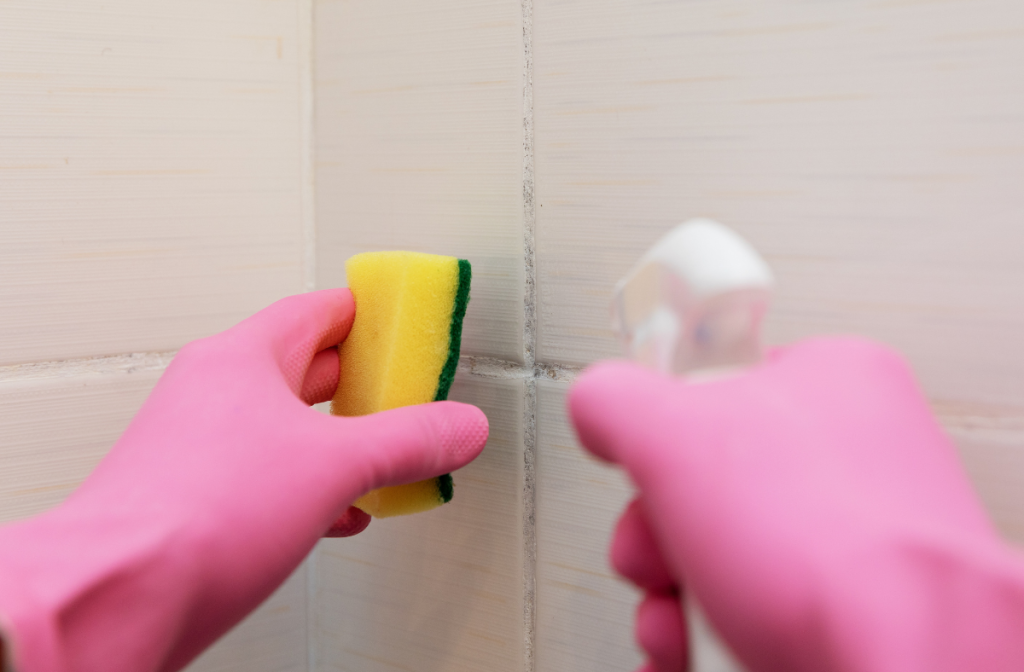
Vinegar is a safer, chemical-free option.
- Spray directly onto moldy areas
- Let sit for about one hour
- Scrub with a brush or cloth
- Rinse with clean water and dry thoroughly
This works best for light to moderate surface mold.
Hydrogen Peroxide
Hydrogen peroxide can be effective when mold growth is limited.
- Apply using a spray bottle
- Let sit for about 10 minutes
- Scrub and wipe clean
- Dry all surfaces completely
Never mix hydrogen peroxide with ammonia.
Step 4: Dry the Area Completely
Drying is one of the most important steps.
- Run the exhaust fan well after cleaning
- Use a dehumidifier if humidity remains high
- Towel-dry grout and caulk instead of air drying
Leaving moisture behind makes regrowth more likely.
How to Prevent Mold From Returning to the Shower
Preventing mold in the shower depends on consistent moisture control.
Helpful prevention steps include:
- Running the bathroom exhaust fan during showers and 20–30 minutes afterward
- Keeping shower doors or curtains open to allow airflow
- Repairing cracked grout and replacing damaged caulk
- Cleaning shower surfaces regularly to remove residue
- Addressing plumbing leaks as soon as they appear
Good ventilation and drying habits make a significant difference over time.
DIY Cleaning vs. Professional Mold Remediation
DIY cleaning may be suitable for small, isolated patches of mold. Professional mold remediation is recommended if:
- Mold covers more than about 10 square feet
- Mold returns quickly after cleaning
- Musty odors persist
- Grout, drywall, or backing materials are damaged
- Anyone in the home has respiratory sensitivities
Professionals don’t just remove visible mold—they identify and correct the moisture source to help prevent future growth.
FAQs
Can mold in the shower spread to other rooms?
Yes. Mold spores released from mold in the shower can travel through the air and settle in other damp areas of the home. If moisture conditions are right elsewhere, new mold growth can develop outside the bathroom.
Why does mold come back even after cleaning the shower?
Recurring mold usually means moisture is still present. In most cases, the issue isn’t cleaning technique—it’s insufficient ventilation, lingering humidity, or moisture trapped behind grout or caulk.
Is it safe to use bleach on mold in the shower?
Bleach can lighten stains on non-porous surfaces, but it doesn’t always eliminate mold roots and can leave moisture behind. In some cases, bleach may worsen regrowth if underlying moisture problems aren’t resolved.
Can mold grow behind shower walls or tile?
Yes. Mold can grow behind tile, drywall, or backer boards if water leaks or moisture seeps behind the surface. Hidden growth is often indicated by musty odors, loose tile, or recurring surface mold.
How do I know when shower mold is a professional-level problem?
If mold in the shower returns quickly, covers a large area, produces persistent odors, or coincides with wall or ceiling damage, it’s likely beyond surface cleaning and should be evaluated by a mold remediation professional.
Contact PuroClean for Professional Mold Remediation
If mold in the shower keeps coming back or appears to be spreading, it’s important to take action. Ongoing moisture and mold growth can affect indoor air quality and damage bathroom materials over time.
PuroClean provides 24/7 professional mold remediation services to safely remove mold and address the conditions that allow it to grow.
Call 1-800-775-7876 or use the online office locator to find your nearest PuroClean location.



