


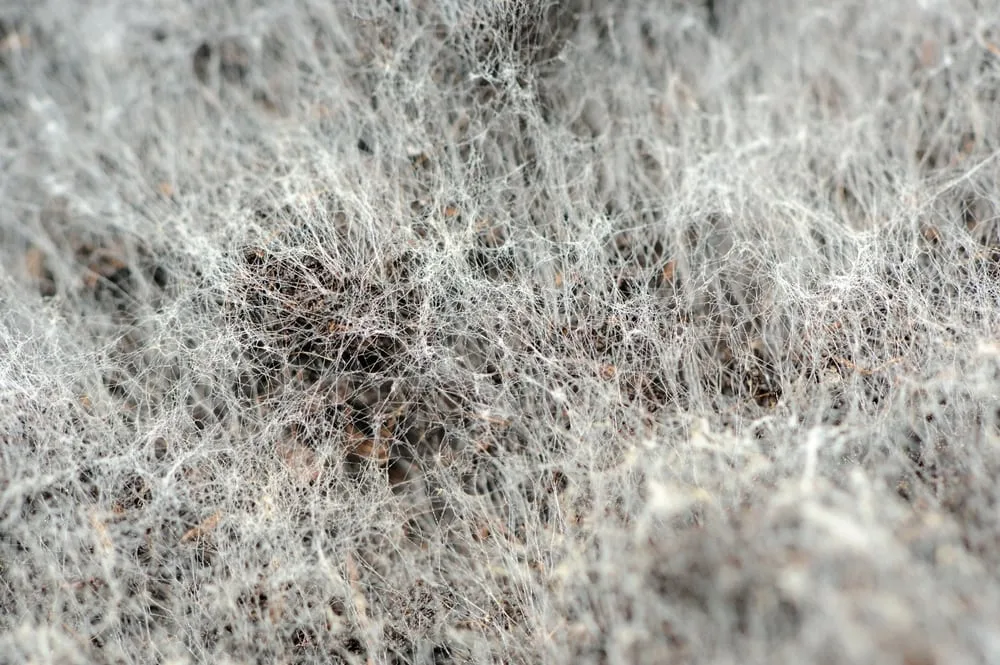

White mold is a term that applies to many species of mold which can grow in homes. And, like any other mold, it may compromise your property and health if you don’t deal with it. Read on to learn what white mold is and how it can affect your health.
What is White Mold?
White mold is not a specific type of mold – many species of mold may appear white. The species commonly found in homes are Aspergillus, Cladosporium, and Penicillium. These molds may also appear gray, green, black, or other tints. Moreover, all molds thrive in moist areas with a food source like wood.
Generally, it is not necessary to determine the specific type of mold you have in your home – all molds have the same negative effects.
Some molds may appear white in their early stages of development. Later, these molds may change color after producing spores. However, many molds appear white regardless of age because their spores are not pigmented. The lack of spore pigmentation is caused by the type of material on which it is growing.
Also, white mold appears powdery and may blend in with the materials it is growing on, making it hard to distinguish from other substances.
White Mold vs. Mildew and Efflorescence
Sometimes, people confuse white mold with mildew, which may also have a white appearance. However, mildew rarely grows on surfaces other than plants and does not destroy materials. By contrast, white mold penetrates the surface of porous materials like wood or drywall and can damage them.
It is also common for people to mistake white mold for a substance called efflorescence. Efflorescence is a salt deposit caused by salty water seeping through concrete, brick, or stone. When the water evaporates, it leaves behind a white crystalline substance similar in appearance to this type of mold.
Yet, unlike white mold, efflorescence does not pose health risks and does not grow or spread.
To determine whether a substance is white mold or efflorescence, examine the affected surface. If it is masonry, it is likely efflorescence. Also, put some of it into a drop of water; if it dissolves, it is not mold. Lastly, squeeze some of the substance between your fingers; it is efflorescence if it breaks into a fine powder.
Is White Mold Dangerous?
All types of mold, including white mold, can cause health problems. It should be removed as soon as possible to avoid health risks and structural damage. Even milder forms of mold can endanger your health.
Since some people may not realize that white mold is mold, it may put them at risk for extended periods. Symptoms induced by white mold include allergic reactions, respiratory infections, eye irritations, dizziness, nausea, headaches, and even depression.
If you suspect that you or a family member has been affected by mold exposure, consult a doctor and have the mold removed immediately.
How to Remove White Mold
Cleaning white mold can be challenging, as it requires thoroughness and caution to prevent the spread of spores. Here are some steps you can follow to clean white mold:
- Wear protective gear. Before starting the cleaning process, put on protective gear to safeguard yourself. This should include gloves, goggles, a mask, and a disposable coverall or clothing that can be easily washed or discarded.
- Isolate the area. If possible, isolate the affected area to minimize the spread of mold spores. Close off the room or section with plastic sheets or tarps and use fans or negative air pressure to direct airflow out of the area.
- Remove and discard porous materials. Items such as carpeting, upholstery, and insulation that are extensively affected by mold may need to be removed and disposed of properly. Consult with professionals for guidance on safely removing and disposing of contaminated materials.
- Dampen the mold. Before cleaning, lightly spray the mold-infested surfaces with water to minimize the release of mold spores into the air. This helps to prevent their dispersal during the cleaning process.
- Clean non-porous surfaces. Non-porous surfaces like tile, glass, metal, or plastic can be cleaned using a mixture of water and detergent. Scrub the surfaces thoroughly with a scrub brush or sponge to remove visible mold growth. Rinse the area with clean water and dry it completely.
- Use a mold cleaner or solution. For more stubborn mold or porous surfaces like wood or drywall, you may need to use a specialized mold cleaner or a mixture of water and vinegar. Follow the instructions provided by the manufacturer and use a scrub brush to remove the mold. Rinse the area with clean water and allow it to dry completely.
- Dispose of cleaning materials. After completing the cleaning process, dispose of any brushes, sponges, or cleaning cloths that came into contact with the mold. Seal them in plastic bags and discard them in a proper manner.
- Prevent future mold growth. After cleaning, take measures to prevent the reoccurrence of white mold. This involves ensuring adequate ventilation, managing humidity levels, resolving water leaks or moisture problems, and conducting regular inspections and cleaning of the area.
A note of caution: These steps provide general guidelines, and DIY mold removal may not always be a good idea. Based on the severity of the mold infestation and the type of affected surfaces, you may need professional assistance. Consult a mold remediation specialist who can evaluate the problem and offer pertinent advice if the mold is persistent or covers an area larger than three square feet.
For Mold Removal, Call the PuroClean Disaster Remediation Experts!
Are you dealing with a mold problem in your home or property? Don’t let it compromise your health and safety any longer. Take action and trust the experts at PuroClean for effective mold removal and remediation.
Each of our teams across the US and Canada are highly trained and experienced professionals who specialize in handling mold-related issues. They understand the importance of thorough and safe mold removal to restore your property to a clean and healthy environment. Call your local PuroClean today!



