


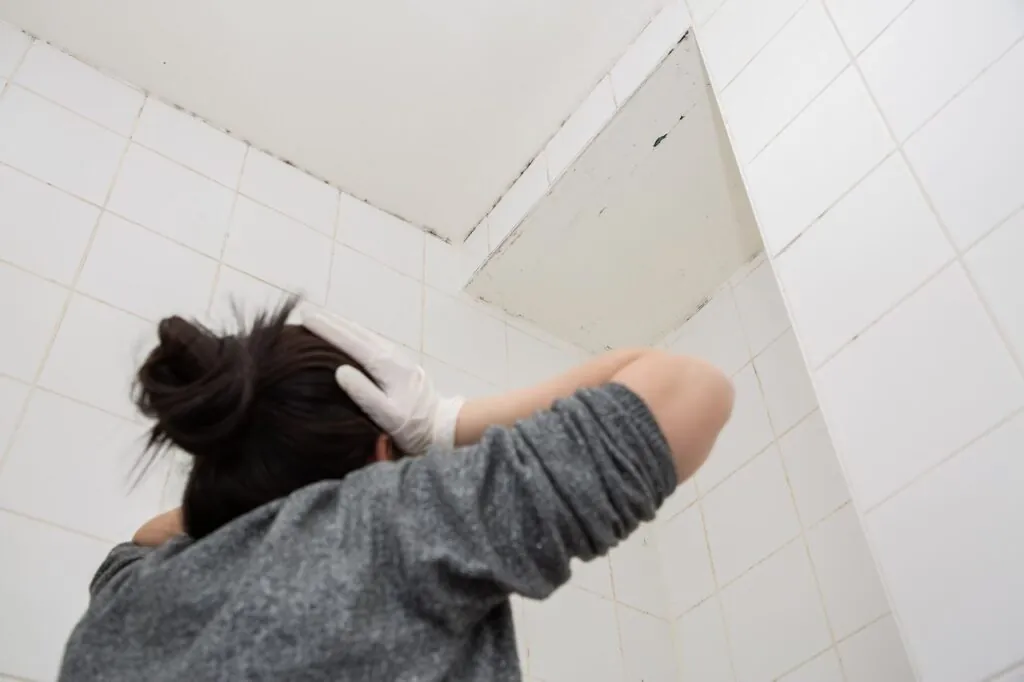
Bathroom ceiling mold is a fungal growth that forms when excess humidity, shower steam, condensation, and poor ventilation occur. Small surface spots can sometimes be cleaned safely, but recurring growth, strong odors, or larger affected areas often require professional mold remediation.
What Is Bathroom Ceiling Mold?
Bathroom Ceiling Mold is a fungal growth that forms when airborne mold spores land on a damp ceiling surface and begin multiplying. Bathrooms naturally create ideal conditions for mold growth—and in some cases, pink or orange discoloration caused by bacteria—due to warm temperatures, frequent steam, and lingering moisture.
Even well-maintained homes can develop bathroom ceiling mold if moisture is not properly managed.
Is It Normal to Have Bathroom Ceiling Mold?
It’s common, but it’s not normal in the sense that it should be ignored.
If bathroom ceiling mold appears, it’s a sign that moisture is staying trapped long enough for mold spores to grow. Removing the visible mold helps, but fixing the underlying humidity or ventilation issue is what prevents it from coming back.
What Causes Bathroom Ceiling Mold?
Most cases of bathroom ceiling mold are caused by one or more of the following:
- High humidity after showers and baths
- Poor or ineffective bathroom ventilation
- Condensation forming on cooler ceiling surfaces
- Ceiling materials or paint that retain moisture
- Hidden moisture from plumbing leaks or roof issues
If bathroom ceiling mold returns shortly after cleaning, moisture control, not cleaning technique, is usually the problem.
Is Bathroom Ceiling Mold Dangerous?
Yes, bathroom ceiling mold can impact indoor air quality and trigger health symptoms, especially for people with allergies, asthma, or respiratory conditions.
Potential Health Effects of Bathroom Ceiling Mold
Bathroom ceiling mold can pose health risks, particularly in enclosed spaces with repeated exposure. Symptoms include:
- Eye, nose, and throat irritation
- Coughing or wheezing
- Nasal congestion or sinus flare-ups
- Headaches and fatigue
- Skin irritation or rashes
Not everyone reacts the same way, but repeated exposure in a small, humid space can worsen symptoms over time.
Black Mold on Bathroom Ceilings: What to Know
Many homeowners refer to dark growth as black mold, but several mold types can appear black or dark green. While Stachybotrys chartarum is less common on ceilings than in areas with chronic water intrusion, it can be present if moisture problems are ongoing or hidden.
Black mold on bathroom ceilings may appear greenish-black or gray and develop a slightly textured surface over time. Because visual identification isn’t reliable, dark mold should always be handled cautiously.
If you suspect black mold, avoid dry scraping and focus on controlling moisture while planning safe removal with remediation professionals

How to Remove Bathroom Ceiling Mold Safely
For small, surface-level areas, bathroom ceiling mold removal may be handled carefully with DIY methods. The key is minimizing spore spread.
Step 1: Safety First
- Ventilate the bathroom using a window or exhaust fan
- Keep the door closed to limit spore movement
- Wear gloves, eye protection, and a protective mask designed to reduce exposure to mold spores
Step 2: Prepare the Area
- Cover floors and fixtures with plastic sheeting
- Use a spray bottle with a mold cleaner or mild detergent solution
- Avoid aiming fans directly at the mold
Step 3: Clean the Mold
- Lightly mist the affected area
- Gently scrub without aggressive scraping
- Wipe residue as you go to avoid spreading spores
Step 4: Dry the Ceiling Thoroughly
- Run the exhaust fan well after cleaning
- Use a dehumidifier if the humidity levels remain high
- Ensure the ceiling is completely dry before ending cleanup
Step 5: Prevent Bathroom Ceiling Mold From Returning
- Run the bathroom fan during showers and 20–30 minutes after
- Maintain healthy indoor humidity levels
- Repair or upgrade weak ventilation systems
- Apply mold-resistant ceiling paint once surfaces are dry

DIY vs Professional Mold Remediation
Professional mold remediation is the safest option. Certified technicians use containment, HEPA filtration, and moisture detection tools to remove mold properly and prevent recurrence.
| Situation | DIY Cleaning | Professional Remediation |
|---|---|---|
| Small surface area | ✅ | Optional |
| Recurring bathroom ceiling mold | ❌ | ✅ |
| Black or dark mold | ❌ | ✅ |
| Ceiling or attic moisture | ❌ | ✅ |
| Health symptoms present | ❌ | ✅ |
Professional remediation addresses both the mold and the moisture source, reducing recurrence risk.

FAQs
Can I paint over mold on a bathroom ceiling?
No. Painting over mold traps moisture and allows it to continue growing beneath the surface.
Does bleach permanently remove ceiling mold?
Bleach may lighten stains, but often does not eliminate mold roots embedded in porous materials like drywall, and can leave moisture behind if underlying conditions are not corrected.
Why does ceiling mold keep coming back?
Recurring growth usually means humidity, ventilation, or hidden moisture issues remain unresolved.
How quickly can mold grow after moisture exposure?
Mold can begin growing within 24–48 hours under the right conditions.
Contact PuroClean for Professional Mold Remediation Services Today!
If you discover bathroom ceiling mold in your home, don’t delay. Mold can affect indoor air quality and may damage building materials if moisture issues continue.
Large areas are typically defined as more than about 10 square feet and may require the help of certified professional companies.
PuroClean provides 24/7 professional mold remediation services to safely remove mold and help prevent future growth.
Call 800-775-7876 or use the PuroClean office locator to find your nearest team.



