PuroClean of Caseyville — 1934 North 81st Street, Caseyville, IL 62232
Oak Hills is an unincorporated residential community in St. Clair County situated on the elevated terrain of the Belleville limestone bluff, rising above the American Bottom floodplain along the southwestern edge of the Metro-East. Unlike the river-adjacent communities to its west — Dupo, French Village, Hollywood Heights, and East Carondelet — Oak Hills occupies genuinely higher ground, with its residential properties spread across the rolling bluff-top terrain that characterizes the transition from the Mississippi River bottomlands to the inland upland plateau of central St. Clair County. The community is accessible primarily via Bluff Road, which traces the bluff crest and connects the hilltop residential properties to IL-3 and the broader road network below, and via local roads including Quarry Road that branch into the residential subdivisions carved into the bluff-top oak woodland that gives the community its name.
The housing stock in Oak Hills reflects its position as an elevated, semi-rural residential enclave developed primarily between the 1960s and 1990s — a later construction era than many of the bottomland communities to the west. Ranch homes, split-levels, and larger two-story residences sit on full basements and walkout basement configurations that take advantage of the bluff topography, with some properties featuring dramatic grade changes from the street-facing front to the rear yard. This bluff-top construction context creates a property damage profile that differs meaningfully from the floodplain communities in PuroClean’s service area: while Oak Hills properties are largely free from the groundwater and river-stage flooding risks that define communities like Dupo and East Carondelet, they face their own set of moisture and structural vulnerabilities tied directly to their elevated terrain, the drainage dynamics of bluff-top soils, and the age of residential construction from the 1960s through 1980s.
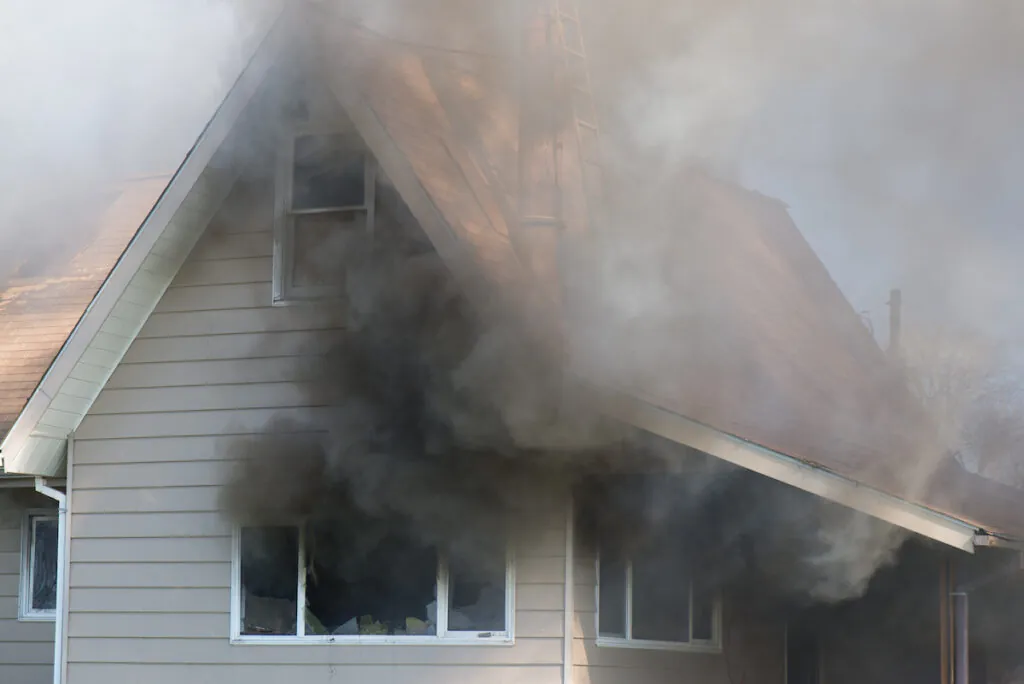
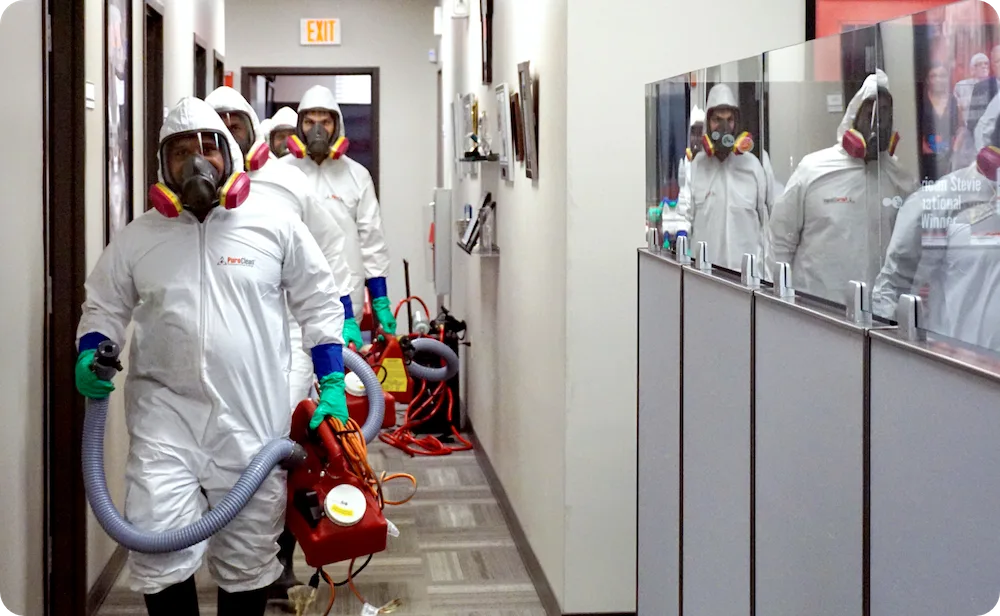
PuroClean of Caseyville provides 24/7 emergency response throughout Oak Hills for the full range of water damage, mold remediation, fire and smoke restoration, and reconstruction services. Our IICRC-certified technicians understand the specific structural and drainage characteristics of bluff-top residential construction and arrive on every call prepared to assess and document completely.
Damage events we handle in Oak Hills include:
From our base at 1934 North 81st Street in Caseyville, our team reaches Oak Hills in approximately 16 to 22 minutes depending on which part of the bluff-top community a client is located in. Our primary routing takes us south on IL-159 from Caseyville, connecting to IL-3 South at the Falling Springs Road interchange and continuing south into the Dupo and French Village corridor. From IL-3, we turn east onto Bluff Road, which climbs the limestone escarpment and provides the main access route to the Oak Hills residential properties spread along the bluff crest. Bluff Road is the primary artery serving this community, and from it we can reach the residential subdivisions along Quarry Road and the local streets branching into the oak woodland residential pockets without needing to descend back to the bottomland corridor.
The bluff road network serving Oak Hills presents a specific routing consideration that our dispatchers account for year-round: Bluff Road and the grades leading up to it from IL-3 can become hazardous during winter ice events, when the elevated terrain and shaded road sections on the bluff face accumulate ice more aggressively than the bottomland arterials below. During those conditions, we coordinate with clients on safe approach timing and, where necessary, deploy four-wheel-drive capable response vehicles. During summer storm events — the peak season for emergency calls — the bluff roads themselves remain passable while the bottomland approaches may experience temporary surface flooding, making Oak Hills one of the more reliably accessible communities in our southern service area during severe weather.
Every vehicle dispatched to Oak Hills carries the full emergency mitigation loadout: truck-mounted and portable water extraction, LGR dehumidifiers, high-velocity air movers, a FLIR thermal imaging camera, and moisture meters calibrated for wood-frame, masonry, and concrete slab assemblies. Oak Hills clients receive a live intake call, a confirmed arrival window, and a named IICRC-certified technician who calls ahead when five minutes out.
Oak Hills’ elevated position above the American Bottom eliminates the groundwater and river-stage flooding risks that define the property damage profile of the bottomland communities to its west — but it substitutes a different set of moisture and structural vulnerabilities that are equally capable of producing serious property damage when conditions align. The primary environmental driver in Oak Hills is stormwater concentration from the bluff-top terrain itself. The limestone and clay soils of the Belleville bluff have moderate to low permeability, and during heavy convective rainfall events — which the Metro-East region receives regularly during the spring and summer storm season — surface runoff from the bluff-top plateau concentrates rapidly and flows downslope toward the lowest points on each lot. For homes with walkout basements or below-grade foundation walls on the downhill side, this concentrated runoff creates hydraulic loading against foundation walls that can exceed the drainage capacity of aging window wells, door sweeps, and footer drain systems installed decades ago.
The specific geology of the Belleville bluff adds a secondary moisture risk: the limestone bedrock that underlies Oak Hills is fractured and permeable in ways that create localized subsurface drainage pathways. In some locations, groundwater moving through fracture systems in the bluff can emerge as seepage at foundation wall interfaces or through floor drains in homes built at certain elevations on the bluff face — a phenomenon distinct from the water table-driven intrusion common in the bottomlands but equally capable of producing sustained moisture loading against a basement assembly. Homeowners who experience this type of intrusion often find it difficult to explain to their insurance adjuster because it does not fit the familiar pattern of either a plumbing failure or a surface flood event.
The construction era of Oak Hills’ housing stock — predominantly the 1960s through 1980s — introduces the structural vulnerabilities typical of that period. Copper water supply lines in homes from this era, while more durable than the galvanized lines of the 1950s, develop pinhole leaks at solder joints and fitting connections as they age, particularly in homes with hard water or aggressive water chemistry. Original HVAC systems in these homes often include condensate drain lines routed through finished basement ceilings that can become blocked over time, producing slow Category 1 leaks inside wall cavities that go undetected for weeks. Finished basements — a common feature in the full-basement ranch and split-level homes of this era — conceal these moisture events behind drywall and drop ceilings, where conditions for mold colonization develop silently before any visible damage appears.
Owned & Operated by Paul Reiss
1934 North 81 Street, Caseyville, IL, 62232
(618) 206-7055
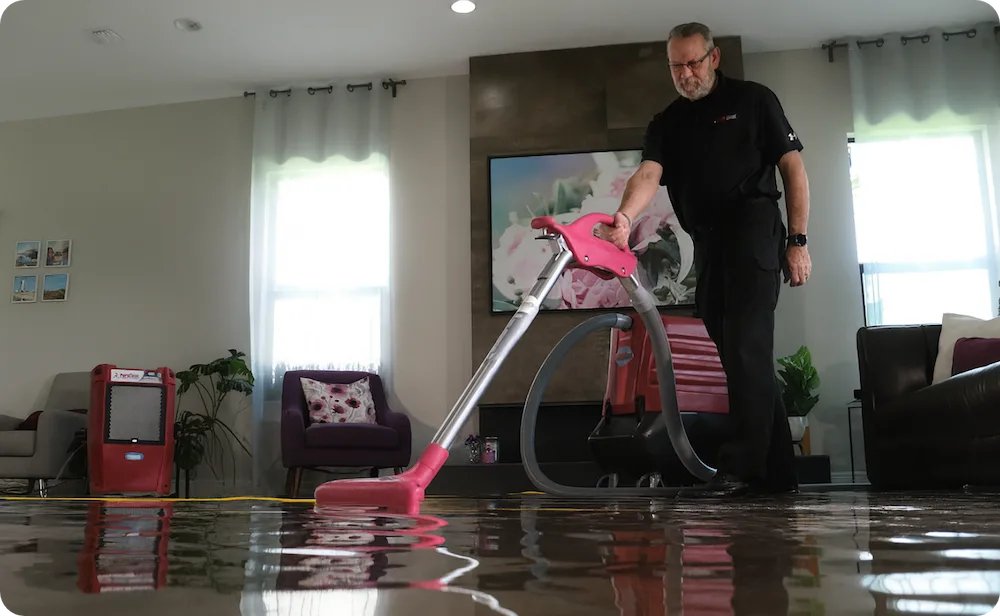
Water damage can result from unexpected leaks, flooding from storms, plumbing failures, or appliance malfunctions. Our certified teams focus on rapid water removal, drying, and stabilization to help prevent further damage and mold growth.
 Explore Our Water Damage Mitigation Services
Even after a fire is extinguished, smoke, soot, and odor can continue to affect your home. Fire damage restoration services address visible damage while also helping reduce lingering effects that impact indoor air quality and surfaces.
Explore Our Fire and Smoke Damage Restoration Services
Mold often develops as a result of unresolved moisture or hidden water damage. Professional mold remediation helps identify affected areas, contain growth, and restore healthy indoor conditions.
Explore Our Mold Removal and Remediation Services
Biohazard situations, including crime scene cleanup and virus decontamination, require specialized cleaning and handling to protect health and safety. Biohazard cleanup services address contamination using proper protocols and professional care.
Explore Our Biohazard Cleanup Services
In some cases, property damage requires repairs beyond cleanup and mitigation. Reconstruction services help restore damaged areas of the home after water, fire, or other incidents, supporting a smoother transition from damage to recovery.
Explore Our Reconstruction Services Services
PuroClean provides 24/7 commercial property damage restoration services for businesses and facilities across the United States.
Explore Our Commercial Services
Water damage can result from unexpected leaks, flooding from storms, plumbing failures, or appliance malfunctions. Our certified teams focus on rapid water removal, drying, and stabilization to help prevent further damage and mold growth.
Explore Our Water Damage Mitigation Services
Oak Hills, IL — Water Damage Restoration, Mold Remediation & Emergency Services
Water entry through a walkout basement door during a rain event can be covered under a standard HO-3 policy if it is caused by a specific, sudden failure — such as a door sweep that gave way, a failed threshold seal, or a window well that drained improperly — rather than general surface flooding. The key distinction your adjuster will apply is whether the water entered through a building envelope failure versus overland surface flow. PuroClean documents the exact entry point, the condition of the door assembly and threshold, and the weather conditions at the time of the event, giving your adjuster a complete evidence record to support a covered determination rather than a blanket surface-water exclusion.
A blocked or leaking HVAC condensate drain is one of the most common hidden moisture sources in finished basements from the 1960s through 1980s, and it is frequently the culprit behind musty odors with no obvious water origin. A condensate line that has developed a slow drip inside a wall cavity or drop ceiling plenum can deposit moisture into insulation and drywall consistently over weeks or months without producing visible surface staining. PuroClean uses FLIR thermal imaging to identify temperature differentials in finished basement walls and ceilings that indicate concealed moisture, and pin-type moisture meters to confirm elevated readings at depth. We locate the source before any demolition decisions are made.
On the Belleville limestone bluff, foundation wall seepage unrelated to surface rain or plumbing is frequently caused by subsurface drainage through fractures in the underlying limestone bedrock. Groundwater moving through those fracture pathways can emerge at foundation wall interfaces days or weeks after a rainfall event, well after surface conditions have dried. This type of intrusion is classified as a groundwater seepage event and is typically excluded under a standard HO-3 policy. PuroClean’s assessment documents the entry pathway and moisture distribution with FLIR imaging and moisture meters, which is useful both for insurance documentation and for informing a licensed waterproofing contractor about the specific source driving the event.
Determining moisture duration in a concealed wall assembly requires a combination of physical evidence and measurement. FLIR thermal imaging reveals the spatial pattern of moisture migration, and pin-type moisture meter readings at different depths in the assembly indicate how thoroughly the materials are saturated. Visible indicators — staining patterns, efflorescence on masonry, paint bubbling, or early mold surface growth — provide supporting timeline evidence. Mold colonization that is visible and established typically indicates moisture exposure of at least one to two weeks. PuroClean documents all of these indicators in the job file, which supports your insurance claim and establishes the basis for restorability versus replacement decisions on each affected material.
Even a contained chimney fire that produces limited smoke exposure in the living area warrants professional assessment. Smoke from a chimney fire contains creosote particulates, carbon compounds, and combustion byproducts that bond to painted surfaces, fabrics, and HVAC filter media — and the HVAC system itself may have circulated smoke residue throughout the home via the return air pathway before the fire was suppressed. What appears to be light smoke exposure at the fireplace can represent broader distribution through ductwork. PuroClean assesses the full extent of smoke migration with air quality sampling, cleans all affected surfaces by material type, and documents the scope for your homeowners insurance claim.
Water entry through a walkout basement door during a rain event can be covered under a standard HO-3 policy if it is caused by a specific, sudden failure — such as a door sweep that gave way, a failed threshold seal, or a window well that drained improperly — rather than general surface flooding. The key distinction your adjuster will apply is whether the water entered through a building envelope failure versus overland surface flow. PuroClean documents the exact entry point, the condition of the door assembly and threshold, and the weather conditions at the time of the event, giving your adjuster a complete evidence record to support a covered determination rather than a blanket surface-water exclusion.
A blocked or leaking HVAC condensate drain is one of the most common hidden moisture sources in finished basements from the 1960s through 1980s, and it is frequently the culprit behind musty odors with no obvious water origin. A condensate line that has developed a slow drip inside a wall cavity or drop ceiling plenum can deposit moisture into insulation and drywall consistently over weeks or months without producing visible surface staining. PuroClean uses FLIR thermal imaging to identify temperature differentials in finished basement walls and ceilings that indicate concealed moisture, and pin-type moisture meters to confirm elevated readings at depth. We locate the source before any demolition decisions are made.
On the Belleville limestone bluff, foundation wall seepage unrelated to surface rain or plumbing is frequently caused by subsurface drainage through fractures in the underlying limestone bedrock. Groundwater moving through those fracture pathways can emerge at foundation wall interfaces days or weeks after a rainfall event, well after surface conditions have dried. This type of intrusion is classified as a groundwater seepage event and is typically excluded under a standard HO-3 policy. PuroClean’s assessment documents the entry pathway and moisture distribution with FLIR imaging and moisture meters, which is useful both for insurance documentation and for informing a licensed waterproofing contractor about the specific source driving the event.
Determining moisture duration in a concealed wall assembly requires a combination of physical evidence and measurement. FLIR thermal imaging reveals the spatial pattern of moisture migration, and pin-type moisture meter readings at different depths in the assembly indicate how thoroughly the materials are saturated. Visible indicators — staining patterns, efflorescence on masonry, paint bubbling, or early mold surface growth — provide supporting timeline evidence. Mold colonization that is visible and established typically indicates moisture exposure of at least one to two weeks. PuroClean documents all of these indicators in the job file, which supports your insurance claim and establishes the basis for restorability versus replacement decisions on each affected material.
Even a contained chimney fire that produces limited smoke exposure in the living area warrants professional assessment. Smoke from a chimney fire contains creosote particulates, carbon compounds, and combustion byproducts that bond to painted surfaces, fabrics, and HVAC filter media — and the HVAC system itself may have circulated smoke residue throughout the home via the return air pathway before the fire was suppressed. What appears to be light smoke exposure at the fireplace can represent broader distribution through ductwork. PuroClean assesses the full extent of smoke migration with air quality sampling, cleans all affected surfaces by material type, and documents the scope for your homeowners insurance claim.
What Our Customers Say:
When you need water damage restoration services near you, call the experts at PuroClean. We are here day or night, 24/7, to help remove any standing water quickly and begin your water restoration service. We monitor the drying process so you can rest assured that your property is dried thoroughly. We offer commercial water restoration services for businesses and residential water damage restoration for homeowners.
Contact Us for 24/7 Emergency Response
(618) 206-7055
Contact Us
PuroClean Emergency Restoration Services
(618) 206-7055
1934 North 81 Street, Caseyville, IL 62232


© 2026 PuroClean. All Rights Reserved.