PuroClean of Caseyville — 1934 North 81st Street, Caseyville, IL 62232
Dupo, Illinois is a small, tight-knit village of approximately 3,800 residents situated along the Mississippi River in the southwestern corner of St. Clair County, directly south of Cahokia and just a few miles north of the Kaskaskia River’s confluence with the Mississippi. The village was formally incorporated in 1905, though settlement in the area dates back considerably further, shaped by the same river trade and agricultural activity that defined communities throughout the Metro-East bottomlands. Dupo’s identity was forged in large part by the railroad industry — the community grew up around the Chicago and North Western Railway classification yard, and the industrial character that came with that heritage still shapes the economic and physical fabric of the village today. Main Street, which runs north-south through the heart of Dupo, anchors a modest commercial corridor surrounded by a residential grid of streets including Falling Springs Road to the north, Dupo-Waterloo Road to the east, and the older blocks along Prairie Street and Jefferson Avenue that make up the historic residential core.
The homes in Dupo’s established neighborhoods were predominantly built between the 1920s and 1960s, reflecting the village’s railroad-era growth period. Many are single-story frame and brick structures with full basements or crawl spaces, original cast-iron and galvanized plumbing, and foundation assemblies that were designed for a simpler era of groundwater management. The proximity of these homes to the Mississippi River floodplain — and to the Kaskaskia River drainage basin just to the south — means that seasonal groundwater fluctuations, hydrostatic pressure events, and storm-driven surface flooding are recurring realities for Dupo property owners rather than rare exceptions. Several residential streets in the lower-lying western portions of the village, closer to the river, fall within FEMA-designated flood zones and carry the insurance and mitigation implications that come with that designation.
PuroClean of Caseyville provides 24/7 emergency water damage restoration, mold remediation, fire and smoke damage restoration, and full reconstruction services throughout Dupo. Our IICRC-certified technicians are familiar with the building types, flood risk dynamics, and insurance landscape specific to this community, and we arrive on every call ready to assess, document, and begin mitigation without delay.
Damage events we handle in Dupo include:
From our base at 1934 North 81st Street in Caseyville, our team reaches Dupo in approximately 15 to 20 minutes under normal driving conditions. Our primary routing takes us south on IL-159 through Cahokia, picking up IL-3 South at the IL-3 and Falling Springs Road interchange and continuing directly into Dupo along IL-3, which runs through the center of the village as the main north-south arterial. This route is well-maintained, consistently passable in all seasons, and delivers us to the residential core of Dupo — including the blocks along Prairie Street, Jefferson Avenue, and Main Street — with direct access from a single primary corridor. The IL-3 approach also gives us quick access to the river-adjacent properties in the western neighborhoods closest to the Mississippi floodplain.
For clients in the eastern portions of Dupo near Dupo-Waterloo Road and the residential streets that border the Canadian National rail corridor, we route via IL-159 to Falling Springs Road and then south to Dupo-Waterloo Road, which provides efficient east-side access without threading through the village interior. During storm events that generate the highest call volume in Dupo — and that can produce temporary surface flooding on the lower-lying streets west of Main Street — our dispatchers know to route via IL-3 from the north to avoid compromised intersections near the river.
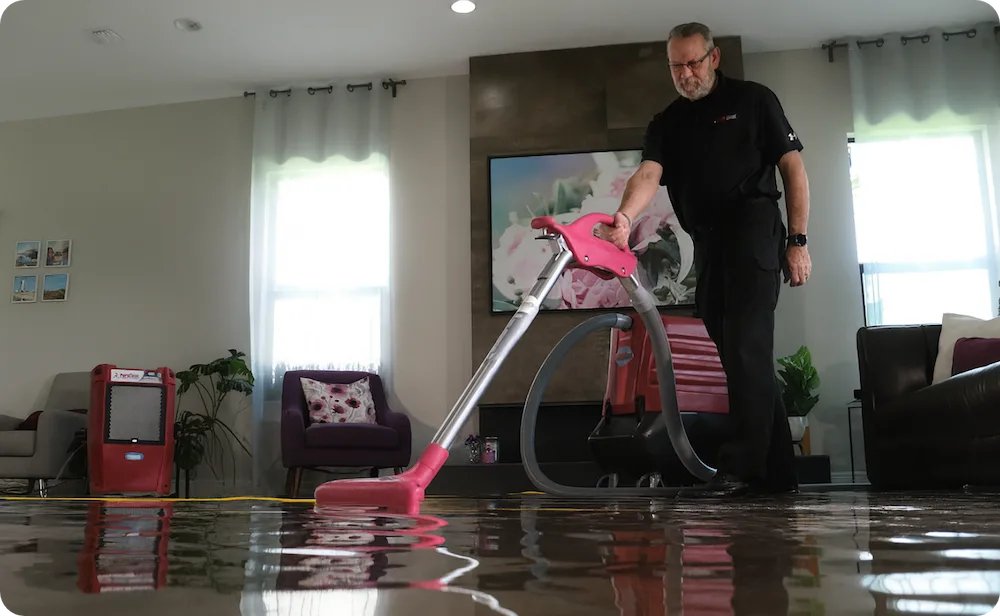
Every vehicle dispatched to Dupo carries truck-mounted water extraction, portable units for tight basement and crawl space access, LGR dehumidifiers, high-velocity air movers, a FLIR thermal imaging camera, and calibrated moisture meters. Dupo clients receive a live answered intake call, a confirmed technician arrival window before we hang up, and a named IICRC-certified technician who calls ahead when five minutes out.
Dupo’s position at the junction of two major river drainage systems — the Mississippi River to the west and the Kaskaskia River basin to the south — creates a water damage risk profile that is shaped as much by regional hydrology as by local weather. During periods of elevated Mississippi River stage, which occur most commonly in the spring months of March through May and again following significant autumn rainfall events, the water table beneath Dupo can rise substantially even in the absence of local precipitation. This hydrostatic groundwater pressure pushes upward against basement floors and inward against foundation walls throughout the western and central sections of the village, causing water intrusion events that homeowners often misattribute to plumbing failures rather than groundwater dynamics. Properties in FEMA-designated Special Flood Hazard Areas along the river-facing edge of the village face National Flood Insurance Program (NFIP) coverage requirements and claims processes that differ from standard HO-3 homeowners policies.
The soils underlying Dupo compound this hydrostatic risk. Like most communities in the Mississippi River bottomlands of southwestern Illinois, Dupo sits on deep alluvial deposits of low-permeability silts and clays that drain poorly and retain moisture near the surface for extended periods following wet weather. During the Metro-East region’s typical spring storm season — which can deliver multi-inch rainfall totals in a matter of hours during severe convective events — these soils saturate quickly, surface runoff accumulates against foundations, and aging municipal storm sewers in older portions of the village can be overwhelmed. When the storm sewer system backs up, it can reverse flow into residential drain lines, introducing Category 3 contaminated water into basements through floor drains and laundry tub connections.
The structural characteristics of Dupo’s older housing stock add a third layer of vulnerability. Full basements in the railroad-era homes along Prairie Street and Jefferson Avenue were constructed with poured concrete or concrete block foundation walls that are now 60 to 100 years old. Mortar joint deterioration, shrinkage cracking, and the lateral soil pressure that accumulates against aging foundation walls create multiple potential water entry pathways that worsen with each freeze-thaw cycle. Galvanized water supply lines in these homes — which corrode progressively from the interior outward — are a leading cause of sudden pipe failure events, particularly in the winter months when IL-3 corridor temperatures regularly fall below 15°F and water lines in unheated utility spaces or attached garages are vulnerable to freezing. When pipes fail inside wall cavities in these homes, the combination of older organic building materials and Dupo’s naturally humid bottomland climate creates near-ideal conditions for mold colonization within 24 to 48 hours.
Owned & Operated by Paul Reiss
1934 North 81 Street, Caseyville, IL, 62232
(618) 206-7055
Water damage can result from unexpected leaks, flooding from storms, plumbing failures, or appliance malfunctions. Our certified teams focus on rapid water removal, drying, and stabilization to help prevent further damage and mold growth.
 Explore Our Water Damage Mitigation Services
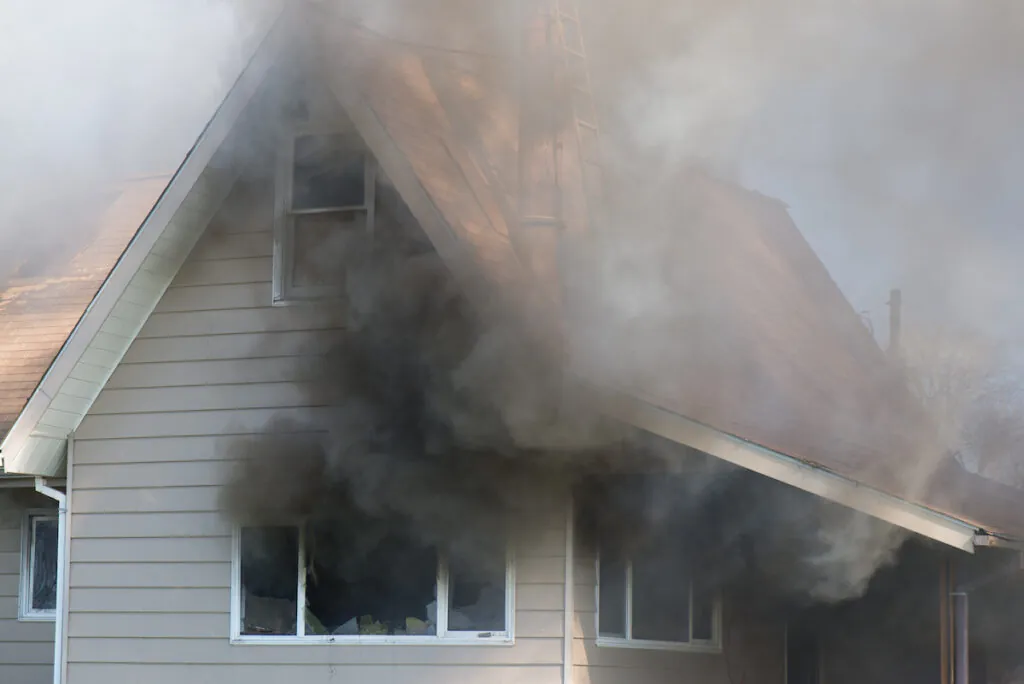
Even after a fire is extinguished, smoke, soot, and odor can continue to affect your home. Fire damage restoration services address visible damage while also helping reduce lingering effects that impact indoor air quality and surfaces.
Explore Our Fire and Smoke Damage Restoration Services
Mold often develops as a result of unresolved moisture or hidden water damage. Professional mold remediation helps identify affected areas, contain growth, and restore healthy indoor conditions.
Explore Our Mold Removal and Remediation Services
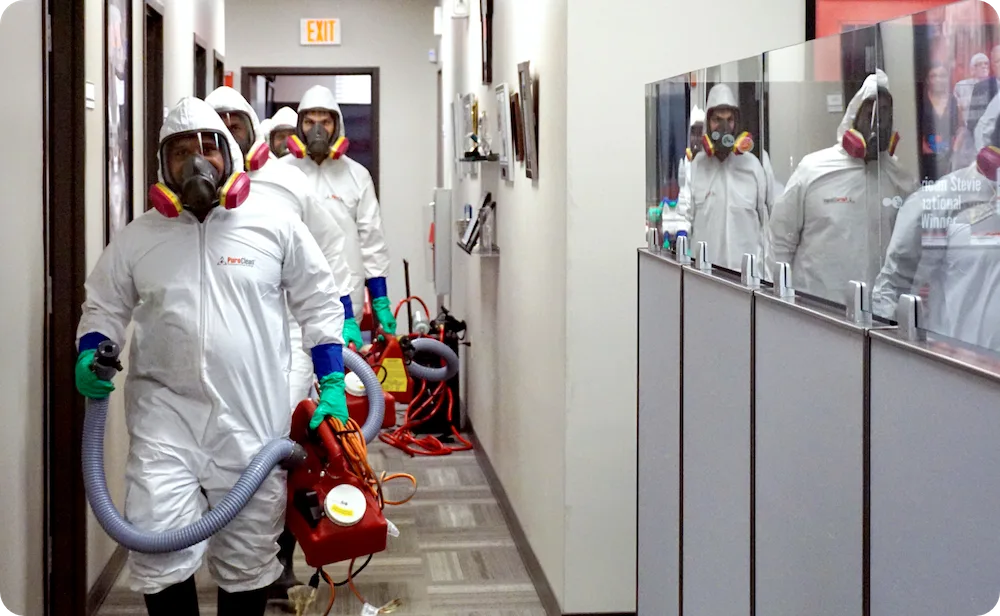
Biohazard situations, including crime scene cleanup and virus decontamination, require specialized cleaning and handling to protect health and safety. Biohazard cleanup services address contamination using proper protocols and professional care.
Explore Our Biohazard Cleanup Services
In some cases, property damage requires repairs beyond cleanup and mitigation. Reconstruction services help restore damaged areas of the home after water, fire, or other incidents, supporting a smoother transition from damage to recovery.
Explore Our Reconstruction Services Services
PuroClean provides 24/7 commercial property damage restoration services for businesses and facilities across the United States.
Explore Our Commercial Services
Water damage can result from unexpected leaks, flooding from storms, plumbing failures, or appliance malfunctions. Our certified teams focus on rapid water removal, drying, and stabilization to help prevent further damage and mold growth.
Explore Our Water Damage Mitigation Services
Dupo, IL — Water Damage Restoration, Mold Remediation & Emergency Services
What you are describing is almost certainly hydrostatic groundwater intrusion driven by elevated Mississippi River stage rather than local precipitation. When the river runs high in spring, the water table beneath Dupo rises in response, and that pressure pushes groundwater upward through basement floor joints, wall cracks, and utility penetrations regardless of local rainfall. Standard HO-3 homeowners insurance policies exclude flooding and groundwater intrusion, so this type of event is typically not covered under your primary policy. An NFIP flood policy or a private flood endorsement may provide coverage depending on how your entry point is classified. PuroClean documents the source and pathway of every intrusion event so your adjuster has the information needed to apply the correct coverage determination.
A persistent musty odor in a basement is a reliable indicator of active mold growth even when no visible colonies are present. In the older full-basement homes common along Prairie Street and Jefferson Avenue in Dupo, mold frequently colonizes in concealed locations: behind paneling and drywall, within the framing bays of finished basement walls, on the back face of insulation batts, and on wood joist faces and sill plates where chronic moisture exposure has created favorable conditions. These hidden colonies produce microbial volatile organic compounds (MVOCs) that create the odor you are detecting well before surface growth becomes visible. PuroClean’s inspection includes FLIR thermal imaging to locate moisture differentials behind finished surfaces and air quality sampling to quantify airborne spore concentrations — giving you an accurate picture of what is actually present rather than a guess.
Two days is not too long to call — but it does change the scope of what mitigation is likely to involve. Under the IICRC S500 standard, water that has been in contact with building materials for 24 to 48 hours has typically migrated beyond surface materials into wall assemblies, subfloor components, and insulation. Category 1 clean water from a supply pipe can also begin transitioning toward Category 2 classification as it contacts building materials and organic debris over time, which affects both the mitigation protocol and the insurance documentation. What a two-day exposure does not change is the importance of acting immediately from this point forward. PuroClean will assess the full extent of moisture migration with thermal imaging and moisture meters, document the timeline for your insurance adjuster, and deploy the drying configuration appropriate to the actual scope — which is likely more involved than a same-day response would have required.
If your Dupo property falls within a FEMA-designated Special Flood Hazard Area — which you can verify on the FEMA Flood Map Service Center using your address — your mortgage lender may already require you to carry an NFIP policy. If you are not in a mandatory purchase zone but are near the river, a voluntary NFIP policy is still worth serious consideration given Dupo’s documented flood exposure history. Key things to understand before a loss occurs: NFIP policies have a standard 30-day waiting period before coverage takes effect, so they cannot be purchased reactively when a flood is forecast. NFIP building coverage and contents coverage are separate policies with separate limits. And NFIP claims require specific documentation that differs from standard carrier Xactimate packages — PuroClean produces both formats so you are covered regardless of which policy responds.
Yes, and the treatment required for the main structure depends heavily on the type of materials that burned in the garage, the wind direction and velocity during the fire, and how long smoke was in contact with your home’s exterior and interior surfaces before the fire was suppressed. Smoke from a garage fire commonly involves burning rubber, petroleum products, wood, and synthetic materials — a combination that produces dense, wet smoke residues with a strong penetrating odor. If smoke entered your home through windows, vents, or the HVAC system, interior surfaces and ductwork will require professional cleaning using appropriate chemical sponge and wet cleaning methods by surface type, followed by hydroxyl or thermal fog odor treatment. Your homeowners policy typically covers smoke damage to the primary structure from a fire on your property, and PuroClean produces separate Xactimate documentation for the garage and the house so each structure’s claim is handled cleanly.
What you are describing is almost certainly hydrostatic groundwater intrusion driven by elevated Mississippi River stage rather than local precipitation. When the river runs high in spring, the water table beneath Dupo rises in response, and that pressure pushes groundwater upward through basement floor joints, wall cracks, and utility penetrations regardless of local rainfall. Standard HO-3 homeowners insurance policies exclude flooding and groundwater intrusion, so this type of event is typically not covered under your primary policy. An NFIP flood policy or a private flood endorsement may provide coverage depending on how your entry point is classified. PuroClean documents the source and pathway of every intrusion event so your adjuster has the information needed to apply the correct coverage determination.
A persistent musty odor in a basement is a reliable indicator of active mold growth even when no visible colonies are present. In the older full-basement homes common along Prairie Street and Jefferson Avenue in Dupo, mold frequently colonizes in concealed locations: behind paneling and drywall, within the framing bays of finished basement walls, on the back face of insulation batts, and on wood joist faces and sill plates where chronic moisture exposure has created favorable conditions. These hidden colonies produce microbial volatile organic compounds (MVOCs) that create the odor you are detecting well before surface growth becomes visible. PuroClean’s inspection includes FLIR thermal imaging to locate moisture differentials behind finished surfaces and air quality sampling to quantify airborne spore concentrations — giving you an accurate picture of what is actually present rather than a guess.
Two days is not too long to call — but it does change the scope of what mitigation is likely to involve. Under the IICRC S500 standard, water that has been in contact with building materials for 24 to 48 hours has typically migrated beyond surface materials into wall assemblies, subfloor components, and insulation. Category 1 clean water from a supply pipe can also begin transitioning toward Category 2 classification as it contacts building materials and organic debris over time, which affects both the mitigation protocol and the insurance documentation. What a two-day exposure does not change is the importance of acting immediately from this point forward. PuroClean will assess the full extent of moisture migration with thermal imaging and moisture meters, document the timeline for your insurance adjuster, and deploy the drying configuration appropriate to the actual scope — which is likely more involved than a same-day response would have required.
If your Dupo property falls within a FEMA-designated Special Flood Hazard Area — which you can verify on the FEMA Flood Map Service Center using your address — your mortgage lender may already require you to carry an NFIP policy. If you are not in a mandatory purchase zone but are near the river, a voluntary NFIP policy is still worth serious consideration given Dupo’s documented flood exposure history. Key things to understand before a loss occurs: NFIP policies have a standard 30-day waiting period before coverage takes effect, so they cannot be purchased reactively when a flood is forecast. NFIP building coverage and contents coverage are separate policies with separate limits. And NFIP claims require specific documentation that differs from standard carrier Xactimate packages — PuroClean produces both formats so you are covered regardless of which policy responds.
Yes, and the treatment required for the main structure depends heavily on the type of materials that burned in the garage, the wind direction and velocity during the fire, and how long smoke was in contact with your home’s exterior and interior surfaces before the fire was suppressed. Smoke from a garage fire commonly involves burning rubber, petroleum products, wood, and synthetic materials — a combination that produces dense, wet smoke residues with a strong penetrating odor. If smoke entered your home through windows, vents, or the HVAC system, interior surfaces and ductwork will require professional cleaning using appropriate chemical sponge and wet cleaning methods by surface type, followed by hydroxyl or thermal fog odor treatment. Your homeowners policy typically covers smoke damage to the primary structure from a fire on your property, and PuroClean produces separate Xactimate documentation for the garage and the house so each structure’s claim is handled cleanly.
What Our Customers Say:
When you need water damage restoration services near you, call the experts at PuroClean. We are here day or night, 24/7, to help remove any standing water quickly and begin your water restoration service. We monitor the drying process so you can rest assured that your property is dried thoroughly. We offer commercial water restoration services for businesses and residential water damage restoration for homeowners.
Contact Us for 24/7 Emergency Response
(618) 206-7055
Contact Us
PuroClean Emergency Restoration Services
(618) 206-7055
1934 North 81 Street, Caseyville, IL 62232


© 2026 PuroClean. All Rights Reserved.