PuroClean of Caseyville — 1934 North 81st Street, Caseyville, IL 62232
East Carondelet, Illinois is one of the smallest and most distinctly river-shaped communities in all of St. Clair County. Sitting directly on the eastern bank of the Mississippi River in the far southwestern corner of the county, this compact village of fewer than 500 residents occupies a sliver of bottomland terrain where the river’s presence is not a backdrop — it is the defining fact of daily life. Incorporated in 1907 and named for the historic Carondelet neighborhood directly across the river in south St. Louis, Missouri, East Carondelet developed as a working waterfront community tied to river commerce, barge traffic, and the industrial economy of the upper Mississippi corridor. The Carondelet Bridge — a swing bridge that once connected the Illinois shore to the Missouri side — was a physical symbol of that cross-river relationship, and while the bridge is long gone, the geographic and historical bond between the two communities remains part of East Carondelet’s identity.
The village’s residential stock is anchored along a small grid of streets running parallel to the river, including Front Street, which traces the Mississippi shoreline, and the interior blocks along Mulberry Street, Elm Street, and Market Street. These homes are among the oldest in St. Clair County’s river communities, with a significant portion of the housing inventory dating to the early twentieth century and some structures predating World War I. That age is reflected in the building systems: stone and brick foundation construction, cast-iron plumbing, coal-converted heating systems, and roof assemblies that have been patched and re-patched across multiple generations. The narrow lot configurations and dense block spacing characteristic of old river towns mean that when one property experiences a moisture event, adjacent structures are rarely insulated from its effects.
PuroClean of Caseyville serves East Carondelet homeowners and property owners with 24/7 emergency response, IICRC-certified technicians, and the full range of water damage mitigation, mold remediation, and reconstruction services. We understand the age and character of this community’s building stock, the flood dynamics of its Mississippi River setting, and the insurance complexities that river-adjacent properties routinely face.
Damage events we handle in East Carondelet include:
From our base at 1934 North 81st Street in Caseyville, our team reaches East Carondelet in approximately 18 to 24 minutes under normal driving conditions — one of our longer response windows within St. Clair County, which makes the efficiency of our routing all the more important. Our primary route takes us south on IL-159 through Cahokia, connecting to IL-3 South at the Falling Springs Road interchange and continuing south through Dupo. Just past the center of Dupo, we turn west toward the river, following the local road network down to Front Street and the riverfront blocks that form the heart of East Carondelet. IL-3 is the primary state route serving the river communities in this part of the county, and it remains the fastest and most reliable corridor for reaching East Carondelet regardless of time of day.
The geography of East Carondelet presents a specific routing consideration: the village is compressed between the Mississippi River levee system to the west and IL-3 to the east, meaning there is limited internal street redundancy. During the storm events that most commonly generate emergency calls in East Carondelet — heavy rain combined with elevated river stage — low-lying intersections near Front Street can experience temporary surface flooding. In those situations, our dispatchers route technicians to approach from IL-3 and enter the village from the east side rather than attempting the river-adjacent streets until conditions allow.
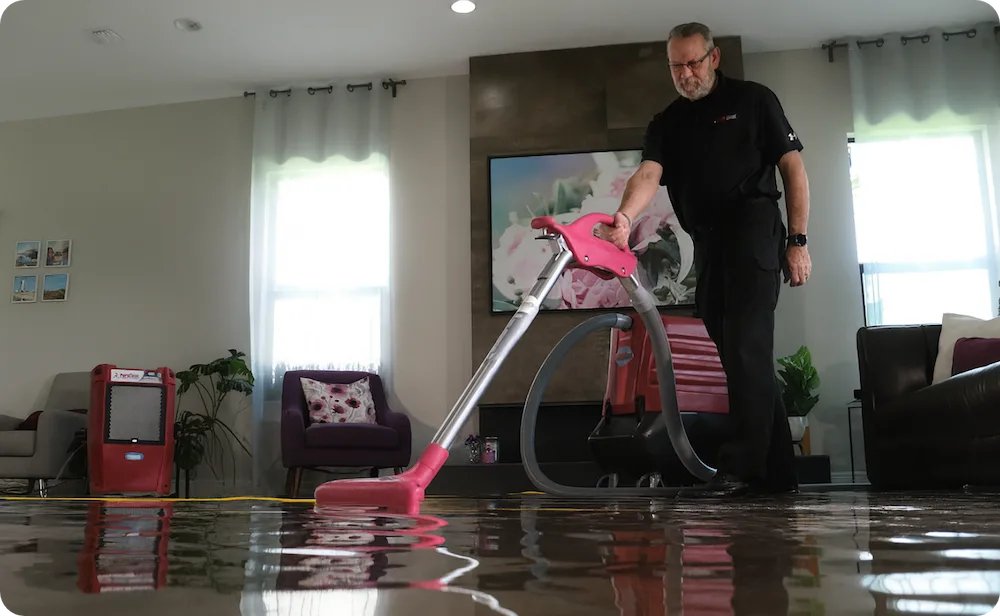
Every vehicle dispatched to East Carondelet carries truck-mounted extraction equipment, portable units suited to the tight basement configurations common in river-community homes, LGR dehumidifiers, high-velocity air movers, a FLIR thermal imaging camera, and moisture meters calibrated for both masonry and wood assemblies. East Carondelet clients receive a live intake call, a confirmed arrival window, and a named IICRC-certified technician who calls ahead when five minutes out.
East Carondelet carries arguably the most concentrated flood risk of any residential community in St. Clair County. The village sits directly on the Mississippi River floodplain with no significant geographic buffer, and its position at river mile 165 — near the confluence of the Kaskaskia River to the south — places it in a zone where multiple river systems interact during high-water periods. FEMA flood zone designations cover the majority of East Carondelet’s land area, and a meaningful portion of the village’s residential and commercial properties are in Zone AE, the highest-risk designation for riverine flooding with established base flood elevations. Homeowners in these zones who carry mortgages are required by federal law to maintain National Flood Insurance Program (NFIP) coverage, and those who have owned their properties outright for decades may carry legacy NFIP policies with grandfathered rating structures that will be affected by FEMA’s Risk Rating 2.0 methodology.
The levee infrastructure along the Illinois side of the river in this reach provides a degree of structural flood protection, but it does not eliminate the hydrostatic groundwater risk that elevated river stages create beneath the village. When the Mississippi runs at or above flood stage — which at the St. Louis gauge means readings above 30 feet — groundwater beneath East Carondelet responds by rising toward the surface. This pressure manifests as seepage through basement floors, inward weeping through foundation wall joints, and water emerging through floor drain assemblies in homes that have no other apparent source of intrusion. These are not plumbing failures; they are hydrogeologic responses to river conditions, and they require mitigation approaches specific to hydrostatic intrusion rather than standard water damage protocols.
The age and construction type of East Carondelet’s housing stock layers significant structural vulnerability onto these environmental risks. Homes built before 1940 in river communities like East Carondelet commonly feature rubble stone or unreinforced brick foundation walls, lime mortar joints that have degraded significantly over a century of wet-dry cycling, and wood sill plates resting directly on masonry without the moisture barriers that modern construction requires. These foundation assemblies are highly susceptible to chronic moisture infiltration, and the organic materials within them — old-growth wood framing, horsehair plaster, and cellulose-based insulation — provide favorable substrates for mold colonization whenever moisture content in the assembly rises above safe thresholds. Older knob-and-tube or early aluminum wiring found in some of these pre-war homes also elevates fire risk, particularly where water intrusion has reached electrical components.
Owned & Operated by Paul Reiss
1934 North 81 Street, Caseyville, IL, 62232
(618) 206-7055
Water damage can result from unexpected leaks, flooding from storms, plumbing failures, or appliance malfunctions. Our certified teams focus on rapid water removal, drying, and stabilization to help prevent further damage and mold growth.
 Explore Our Water Damage Mitigation Services
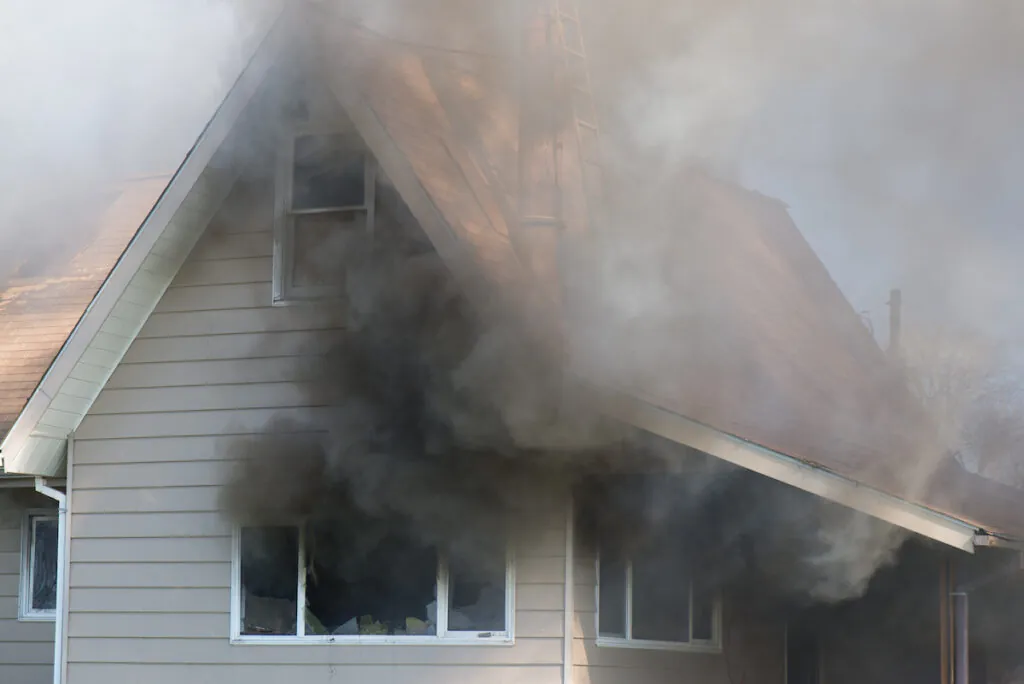
Even after a fire is extinguished, smoke, soot, and odor can continue to affect your home. Fire damage restoration services address visible damage while also helping reduce lingering effects that impact indoor air quality and surfaces.
Explore Our Fire and Smoke Damage Restoration Services
Mold often develops as a result of unresolved moisture or hidden water damage. Professional mold remediation helps identify affected areas, contain growth, and restore healthy indoor conditions.
Explore Our Mold Removal and Remediation Services
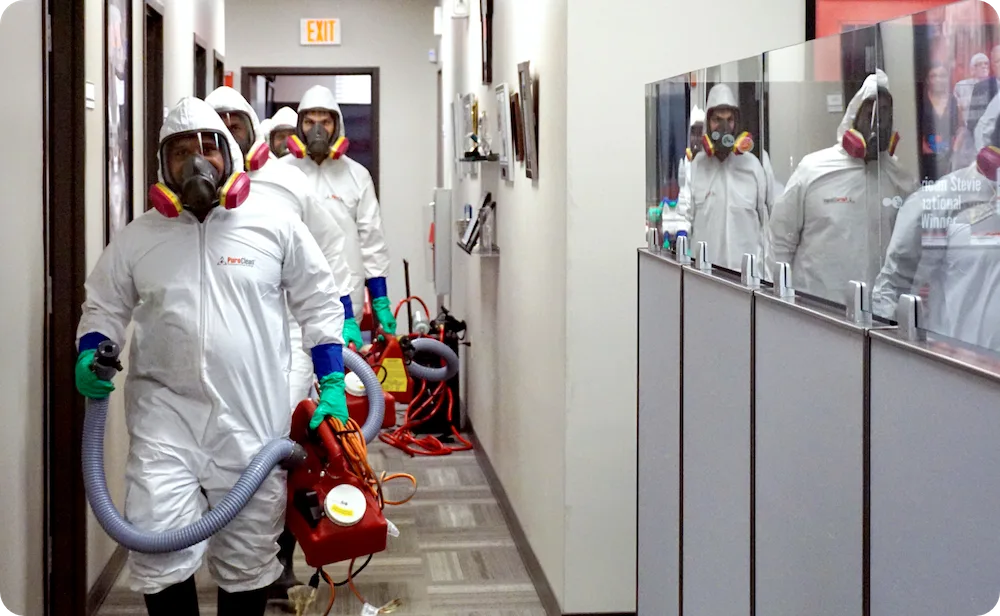
Biohazard situations, including crime scene cleanup and virus decontamination, require specialized cleaning and handling to protect health and safety. Biohazard cleanup services address contamination using proper protocols and professional care.
Explore Our Biohazard Cleanup Services
In some cases, property damage requires repairs beyond cleanup and mitigation. Reconstruction services help restore damaged areas of the home after water, fire, or other incidents, supporting a smoother transition from damage to recovery.
Explore Our Reconstruction Services Services
PuroClean provides 24/7 commercial property damage restoration services for businesses and facilities across the United States.
Explore Our Commercial Services
Water damage can result from unexpected leaks, flooding from storms, plumbing failures, or appliance malfunctions. Our certified teams focus on rapid water removal, drying, and stabilization to help prevent further damage and mold growth.
Explore Our Water Damage Mitigation Services
East Carondelet, IL — Water Damage Restoration, Mold Remediation & Emergency Services
Zone AE designation means your property has a mapped base flood elevation (BFE) and carries the highest standard flood risk classification under FEMA’s National Flood Insurance Program. For restoration purposes, this affects your claim in several important ways. NFIP building coverage pays for direct physical loss to your structure up to the policy limit, but applies its own depreciation schedule and does not cover the same line items as a standard HO-3 Xactimate estimate. Contents coverage under NFIP is a separate policy with separate limits. If your home sustained damage both from flooding and from a separate covered peril — such as a burst pipe during the same event — those claims must be documented separately. PuroClean produces documentation formatted specifically for NFIP adjuster review alongside standard carrier Xactimate packages, so the correct policy responds to each damage category.
Whether historic plaster can be preserved depends on how long it has been wet, the category of water involved, and the condition of the wood lath substrate behind it. Plaster itself is a relatively non-porous material and can tolerate brief moisture exposure better than modern drywall, but the wood lath and the lime-based scratch coat behind it are highly susceptible to swelling, delamination, and mold colonization if moisture is not removed promptly. PuroClean’s approach to pre-war plaster walls begins with FLIR thermal imaging and pin-type moisture meter readings to map the actual moisture distribution throughout the assembly. Where the lath and substrate are within restorable moisture content ranges, we deploy injectidry wall cavity drying systems to draw moisture out without demolition. Where the lath has swollen and the plaster has separated from its keys, targeted removal is the appropriate call — and we document that determination clearly for your insurance adjuster.
Hydrostatic groundwater seepage through a basement floor is specifically excluded under standard HO-3 homeowners policies as a form of flood or earth movement, so your insurer’s denial on that basis is likely contractually correct. Your coverage options for this type of event are an NFIP flood policy — which covers flooding from external water sources including groundwater in some circumstances — or a private flood endorsement that your agent may be able to add to your existing policy. What PuroClean can do regardless of coverage is mitigate the damage quickly and thoroughly to limit the total loss scope, document everything in the event that a coverage dispute or appeal is warranted, and provide the moisture logs and drying reports that any future insurer or home buyer will want to see. Addressing the recurring intrusion source with a sump system upgrade is also worth discussing with a licensed waterproofing contractor.
A comprehensive mold inspection is the appropriate starting point for a home with your history. In a pre-war river community home that has experienced periodic flooding over decades, the most likely locations for established mold colonies are the basement rim joist area and sill plates, the interior faces of foundation walls behind any paneling or finished surfaces, and the underside of first-floor framing in crawl space or basement areas. PuroClean’s inspection combines FLIR thermal imaging — which identifies moisture differentials in building assemblies without requiring demolition — with air quality spore trap sampling that is analyzed by an accredited laboratory. The lab results tell you what species are present and at what concentrations, giving you an objective baseline rather than a visual estimate. If remediation is warranted, we produce a full scope under IICRC S520 Applied Microbial Remediation protocols.
Both, working in the correct sequence. The immediate priority after a fire involving an electrical panel is confirming that the structure is safe to enter and that power to the affected area has been disconnected — that determination belongs to a licensed electrician or the local fire marshal, not a restoration company. Once electrical safety is confirmed, PuroClean handles the fire and smoke damage restoration: assessing the full extent of smoke and soot penetration throughout the structure, cleaning all affected surfaces by material type, deploying HEPA air scrubbers and hydroxyl generators for air quality restoration, and documenting everything with Xactimate for your homeowners insurance claim. The electrician then handles panel replacement and any wiring affected by the fire or the water intrusion event. We coordinate directly with your adjuster so both scopes — restoration and electrical repair — are captured in your claim.
Zone AE designation means your property has a mapped base flood elevation (BFE) and carries the highest standard flood risk classification under FEMA’s National Flood Insurance Program. For restoration purposes, this affects your claim in several important ways. NFIP building coverage pays for direct physical loss to your structure up to the policy limit, but applies its own depreciation schedule and does not cover the same line items as a standard HO-3 Xactimate estimate. Contents coverage under NFIP is a separate policy with separate limits. If your home sustained damage both from flooding and from a separate covered peril — such as a burst pipe during the same event — those claims must be documented separately. PuroClean produces documentation formatted specifically for NFIP adjuster review alongside standard carrier Xactimate packages, so the correct policy responds to each damage category.
Whether historic plaster can be preserved depends on how long it has been wet, the category of water involved, and the condition of the wood lath substrate behind it. Plaster itself is a relatively non-porous material and can tolerate brief moisture exposure better than modern drywall, but the wood lath and the lime-based scratch coat behind it are highly susceptible to swelling, delamination, and mold colonization if moisture is not removed promptly. PuroClean’s approach to pre-war plaster walls begins with FLIR thermal imaging and pin-type moisture meter readings to map the actual moisture distribution throughout the assembly. Where the lath and substrate are within restorable moisture content ranges, we deploy injectidry wall cavity drying systems to draw moisture out without demolition. Where the lath has swollen and the plaster has separated from its keys, targeted removal is the appropriate call — and we document that determination clearly for your insurance adjuster.
Hydrostatic groundwater seepage through a basement floor is specifically excluded under standard HO-3 homeowners policies as a form of flood or earth movement, so your insurer’s denial on that basis is likely contractually correct. Your coverage options for this type of event are an NFIP flood policy — which covers flooding from external water sources including groundwater in some circumstances — or a private flood endorsement that your agent may be able to add to your existing policy. What PuroClean can do regardless of coverage is mitigate the damage quickly and thoroughly to limit the total loss scope, document everything in the event that a coverage dispute or appeal is warranted, and provide the moisture logs and drying reports that any future insurer or home buyer will want to see. Addressing the recurring intrusion source with a sump system upgrade is also worth discussing with a licensed waterproofing contractor.
A comprehensive mold inspection is the appropriate starting point for a home with your history. In a pre-war river community home that has experienced periodic flooding over decades, the most likely locations for established mold colonies are the basement rim joist area and sill plates, the interior faces of foundation walls behind any paneling or finished surfaces, and the underside of first-floor framing in crawl space or basement areas. PuroClean’s inspection combines FLIR thermal imaging — which identifies moisture differentials in building assemblies without requiring demolition — with air quality spore trap sampling that is analyzed by an accredited laboratory. The lab results tell you what species are present and at what concentrations, giving you an objective baseline rather than a visual estimate. If remediation is warranted, we produce a full scope under IICRC S520 Applied Microbial Remediation protocols.
Both, working in the correct sequence. The immediate priority after a fire involving an electrical panel is confirming that the structure is safe to enter and that power to the affected area has been disconnected — that determination belongs to a licensed electrician or the local fire marshal, not a restoration company. Once electrical safety is confirmed, PuroClean handles the fire and smoke damage restoration: assessing the full extent of smoke and soot penetration throughout the structure, cleaning all affected surfaces by material type, deploying HEPA air scrubbers and hydroxyl generators for air quality restoration, and documenting everything with Xactimate for your homeowners insurance claim. The electrician then handles panel replacement and any wiring affected by the fire or the water intrusion event. We coordinate directly with your adjuster so both scopes — restoration and electrical repair — are captured in your claim.
What Our Customers Say:
When you need water damage restoration services near you, call the experts at PuroClean. We are here day or night, 24/7, to help remove any standing water quickly and begin your water restoration service. We monitor the drying process so you can rest assured that your property is dried thoroughly. We offer commercial water restoration services for businesses and residential water damage restoration for homeowners.
Contact Us for 24/7 Emergency Response
(618) 206-7055
Contact Us
PuroClean Emergency Restoration Services
(618) 206-7055
1934 North 81 Street, Caseyville, IL 62232


© 2026 PuroClean. All Rights Reserved.