PuroClean of Caseyville — 1934 North 81st Street, Caseyville, IL 62232
Brooklyn, Illinois carries a history unlike any other municipality in St. Clair County. Incorporated in 1837, it holds the distinction of being the first town in the United States to be incorporated by and governed by Black Americans, a legacy that runs deep in the identity of this small but significant Metro-East community. Situated along the eastern bank of the Mississippi River just north of the Poplar Street Bridge and directly across from St. Louis, Missouri, Brooklyn occupies one of the most geographically consequential positions in the entire Metro-East Illinois region. The historic commercial stretch along Illinois Route 111 — once a lively corridor serving residents and travelers alike — reflects the layered economic and social history of this compact village of roughly 600 residents.
The neighborhoods of Brooklyn, including the older residential blocks concentrated near 9th Street and Broadway, and the housing stock that lines Mississippi Avenue and Missouri Avenue, tell the story of a community built close to the water and close to one another. Many of the homes here were constructed between the 1920s and 1960s, a period during which aging clay sewer lines, cast-iron plumbing, and uninsulated crawl spaces became embedded features of the local housing stock. Today, those aging systems are among the primary drivers of emergency water damage and mold remediation calls in Brooklyn. The Mississippi River floodplain dynamics that define life in Brooklyn also mean that during periods of heavy rainfall or high river stages, the village faces surface water intrusion, overwhelmed storm sewers, and sump pump failures that can turn a finished basement into a flooded one overnight.
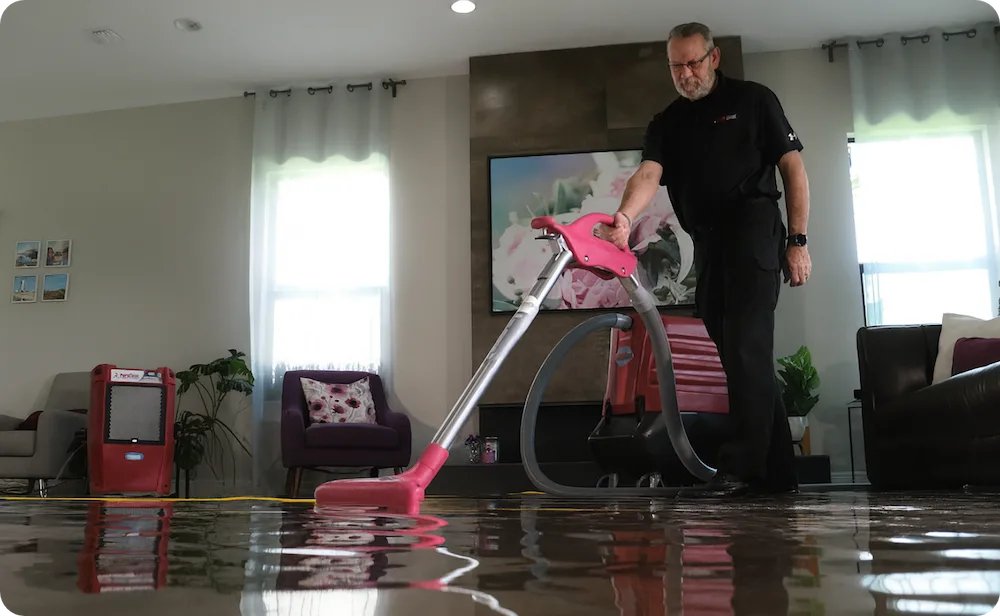
PuroClean of Caseyville responds to the full spectrum of property damage events in Brooklyn, from residential water emergencies to commercial fire restoration. Our IICRC-certified technicians understand the specific structural and environmental challenges that Brooklyn’s older housing inventory and river-adjacent geography create. When a homeowner on Ohio Street finds standing water in their basement at 2 a.m., or a small business owner on Route 111 discovers smoke damage from an electrical fire, PuroClean is the local team that arrives quickly, assesses thoroughly, and documents everything required for a successful insurance claim.
Damage events we handle in Brooklyn include:
From our base at 1934 North 81st Street in Caseyville, our team reaches Brooklyn in approximately 10 to 15 minutes under normal driving conditions — a response window that matters enormously when every hour of active water damage expands the mitigation scope and drives up restoration costs. Our primary routing takes us west on Caseyville Road to IL-159 South, continuing through Fairmont City and merging onto IL-111 North into Brooklyn. This route keeps us on well-maintained arterials through the heart of the Metro-East corridor and allows us to reach the northern residential blocks near 9th Street and Illinois Avenue, as well as the commercial properties along Route 111, without navigating surface streets that can become congested during storm events.
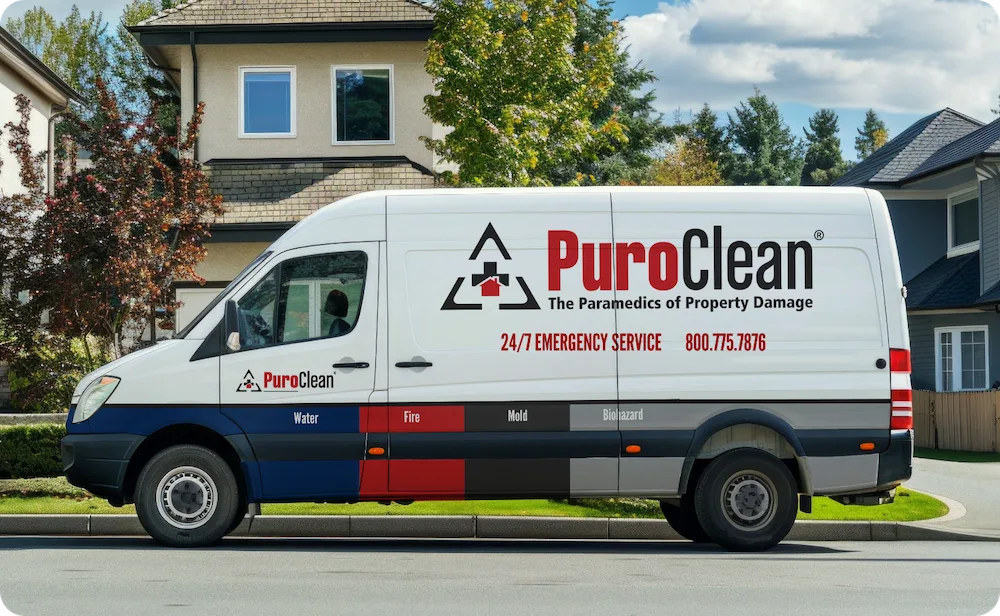
For clients in the southern residential sections near Missouri Avenue or the blocks adjacent to the Poplar Street Bridge approach, we adjust routing to come in from the south via IL-3 and Illinois Avenue, which provides direct access to that part of the village. Emergency dispatches after hours follow the same primary route, where traffic volume is negligible and our technicians can arrive within the target window regardless of the time of call. We carry moisture meters, a FLIR thermal imaging camera, LGR dehumidifiers, and high-velocity axial air movers on every emergency vehicle, so we arrive prepared to assess and begin work immediately.
Brooklyn clients can expect a live intake call to be answered promptly, a confirmed technician arrival window communicated before the call ends, and a uniformed, credentialed technician on-site ready to begin the damage assessment. We do not subcontract emergency response in Brooklyn — our own IICRC-certified team handles every initial call.
Brooklyn’s position on the eastern bank of the Mississippi River is the defining environmental factor shaping its property damage risk profile. The village sits within the Mississippi River floodplain, and while levee infrastructure along the Metro-East Illinois bank provides a degree of flood protection, subsurface hydrostatic pressure during high river stages can force groundwater upward through foundation cracks, sump pits, and floor drains in basements throughout the village. The FEMA flood zone mapping that covers portions of Brooklyn reflects this persistent risk — homeowners in designated Special Flood Hazard Areas (SFHAs) who carry National Flood Insurance Program (NFIP) policies face specific claims processes that differ meaningfully from standard HO-3 homeowners policies, and PuroClean’s documentation practices account for those requirements.
The age of Brooklyn’s housing stock introduces a second layer of structural risk. Homes built between the 1920s and 1960s commonly feature basement construction with poured concrete or block foundations that are susceptible to lateral water infiltration as mortar joints age and crack. Cast-iron and galvanized steel plumbing found in these homes corrodes from the inside out over decades, creating pinhole leaks and eventual pipe failures that may go undetected behind walls for months. When those failures occur, Category 1 clean water quickly becomes Category 2 grey water as it contacts building materials and organic debris — requiring a more thorough mitigation response and more rigorous documentation for insurance adjustment.
The regional climate compounds these structural vulnerabilities. The Metro-East Illinois region averages approximately 40 inches of annual precipitation, with intense summer convective storms capable of dropping two or more inches of rain in under an hour — a volume that overwhelms older storm sewer infrastructure and produces rapid surface ponding in low-lying areas. Winter freeze-thaw cycles are particularly damaging to water supply lines in poorly insulated attics, crawl spaces, and exterior wall cavities of older Brooklyn homes. January average lows regularly drop below 20°F, and pipes in unheated or underinsulated spaces in these structures are prime candidates for freeze-and-burst events. Following any moisture intrusion event, the combination of Brooklyn’s humid continental climate and the organic materials present in older building assemblies creates conditions where mold colonization can begin within 24 to 48 hours if professional drying is not initiated quickly.
Owned & Operated by Paul Reiss
1934 North 81 Street, Caseyville, IL, 62232
(618) 206-7055
Water damage can result from unexpected leaks, flooding from storms, plumbing failures, or appliance malfunctions. Our certified teams focus on rapid water removal, drying, and stabilization to help prevent further damage and mold growth.
 Explore Our Water Damage Mitigation Services
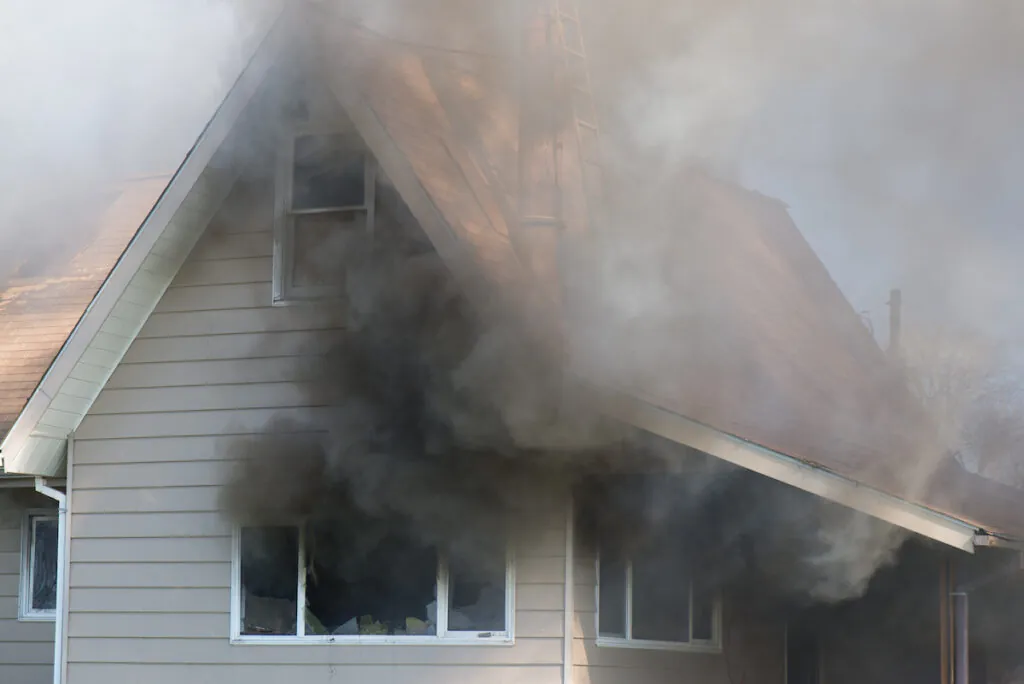
Even after a fire is extinguished, smoke, soot, and odor can continue to affect your home. Fire damage restoration services address visible damage while also helping reduce lingering effects that impact indoor air quality and surfaces.
Explore Our Fire and Smoke Damage Restoration Services
Mold often develops as a result of unresolved moisture or hidden water damage. Professional mold remediation helps identify affected areas, contain growth, and restore healthy indoor conditions.
Explore Our Mold Removal and Remediation Services
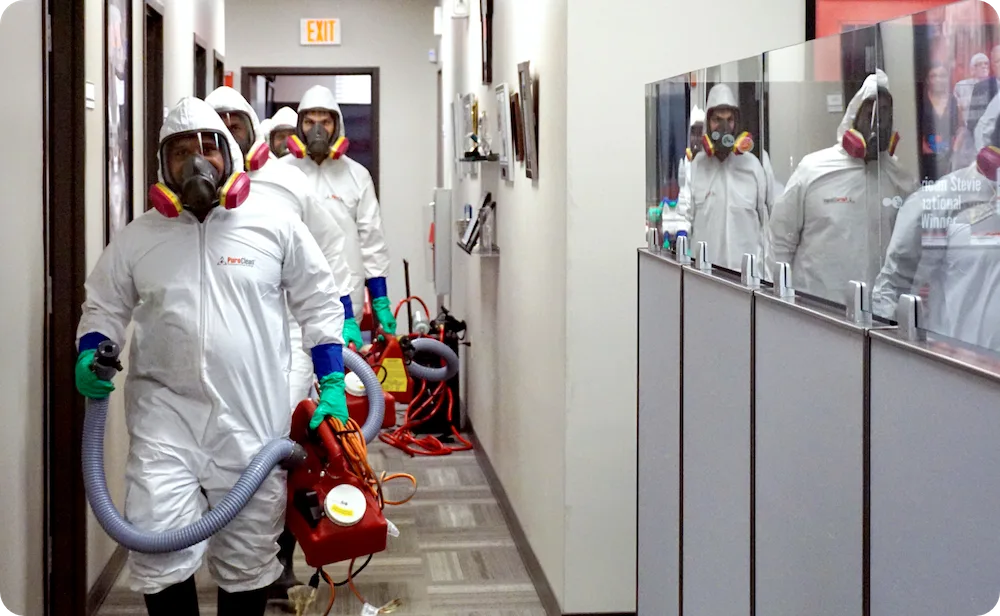
Biohazard situations, including crime scene cleanup and virus decontamination, require specialized cleaning and handling to protect health and safety. Biohazard cleanup services address contamination using proper protocols and professional care.
Explore Our Biohazard Cleanup Services
In some cases, property damage requires repairs beyond cleanup and mitigation. Reconstruction services help restore damaged areas of the home after water, fire, or other incidents, supporting a smoother transition from damage to recovery.
Explore Our Reconstruction Services Services
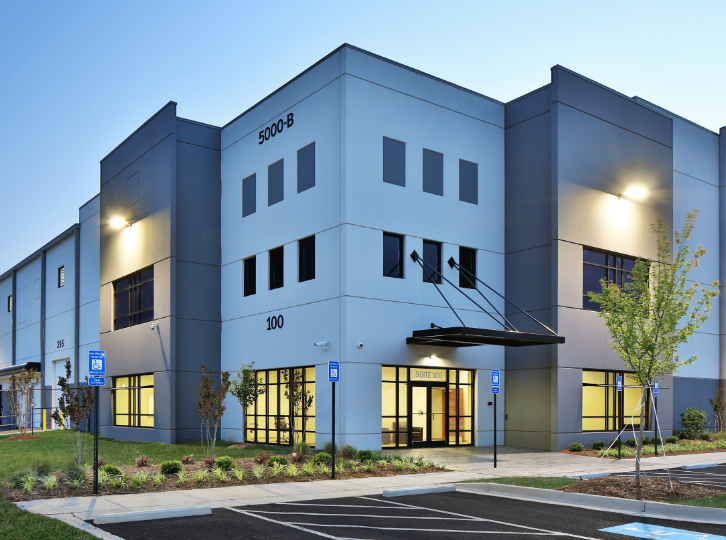
PuroClean provides 24/7 commercial property damage restoration services for businesses and facilities across the United States.
Explore Our Commercial Services
Water damage can result from unexpected leaks, flooding from storms, plumbing failures, or appliance malfunctions. Our certified teams focus on rapid water removal, drying, and stabilization to help prevent further damage and mold growth.
Explore Our Water Damage Mitigation Services
Brooklyn, IL — Water Damage Restoration, Mold Remediation & Emergency Services
Yes, it can significantly affect your claims process. Homeowners in Brooklyn’s designated Special Flood Hazard Areas who carry NFIP flood insurance policies through FEMA’s program are subject to different coverage terms than a standard HO-3 homeowners policy. NFIP policies separate building coverage from contents coverage and apply their own depreciation schedules. PuroClean of Caseyville produces Xactimate-based documentation that meets the evidentiary requirements for both NFIP flood claims and standard carrier claims simultaneously, which is essential if you have both policies. We can also communicate directly with your adjuster — whether they are a FEMA-appointed write-your-own (WYO) carrier representative or an independent adjuster — to support your claim from the first notice of loss through final settlement.
It warrants immediate professional attention, particularly in a pre-1950 Brooklyn home where building materials like horsehair plaster, old-growth wood framing, and cellulose insulation provide ideal organic substrates for mold colonization. While not all dark-colored mold is Stachybotrys chartarum (the species commonly called “black mold”), a mold inspection with air quality sampling — including spore trap cassettes analyzed by an accredited laboratory — is the only reliable way to identify the species present and the airborne spore count. If results indicate Stachybotrys, Aspergillus, or elevated Cladosporium levels, Applied Microbial Remediation (AMR) under IICRC S520 protocols is required. PuroClean’s inspections include FLIR thermal imaging to identify the moisture source driving the growth — because remediating mold without addressing the source guarantees recurrence.
Sewage backup is classified as Category 3 water — the most serious classification under the IICRC S500 standard — because it introduces gross contamination including bacteria, viruses, and parasites into your living environment. This is a biohazard event, not a standard water damage call. Brooklyn’s older clay tile sewer laterals are prone to root intrusion and joint separation, particularly during the heavy storm events that strain the municipal system. Category 3 mitigation requires PPE-equipped technicians, EPA-registered disinfectants, the removal and disposal of all porous materials that contacted sewage (carpet, drywall, insulation), and documented clearance testing before the space can be considered safe for re-occupancy. Standard homeowners insurance policies often include sewage backup endorsements — PuroClean will help you confirm your coverage before work begins.
Call PuroClean first. Emergency mitigation — water extraction, drying equipment deployment, and stopping active damage progression — does not require prior insurance approval under the vast majority of HO-3 policies. In fact, most policies include a duty-to-mitigate clause that actually requires you to take reasonable steps to stop further damage. Waiting for adjuster approval before beginning mitigation can result in Category 1 clean water escalating to Category 2 or 3 contamination, mold growth beginning within 24 hours, and potential claim complications if the insurer determines that delay worsened the loss. PuroClean contacts your insurer on your behalf, files the first notice of loss (FNOL) with you, and coordinates the adjuster visit — so you make one call and we handle the rest.
The timeline depends on the size of the fire, the materials affected, and the extent of smoke and soot penetration into your building’s surfaces and HVAC system. Soot from a commercial structure fire contains volatile organic compounds (VOCs), carbon particulates, and acidic residues that can etch metal fixtures, stain porous materials permanently, and contaminate air circulation systems within 24 to 48 hours if not treated. PuroClean’s fire restoration process for Route 111 commercial properties begins with a full structure assessment, content inventory and pack-out if needed, structural cleaning, odor control using hydroxyl generators and thermal fogging, and HEPA air filtration. We document everything with Xactimate for your commercial property insurance claim and coordinate directly with your carrier’s adjuster to support the fastest possible scope approval and reconstruction timeline. Reopening depends on scope — we give you a realistic timeline on day one.
Yes, it can significantly affect your claims process. Homeowners in Brooklyn’s designated Special Flood Hazard Areas who carry NFIP flood insurance policies through FEMA’s program are subject to different coverage terms than a standard HO-3 homeowners policy. NFIP policies separate building coverage from contents coverage and apply their own depreciation schedules. PuroClean of Caseyville produces Xactimate-based documentation that meets the evidentiary requirements for both NFIP flood claims and standard carrier claims simultaneously, which is essential if you have both policies. We can also communicate directly with your adjuster — whether they are a FEMA-appointed write-your-own (WYO) carrier representative or an independent adjuster — to support your claim from the first notice of loss through final settlement.
It warrants immediate professional attention, particularly in a pre-1950 Brooklyn home where building materials like horsehair plaster, old-growth wood framing, and cellulose insulation provide ideal organic substrates for mold colonization. While not all dark-colored mold is Stachybotrys chartarum (the species commonly called “black mold”), a mold inspection with air quality sampling — including spore trap cassettes analyzed by an accredited laboratory — is the only reliable way to identify the species present and the airborne spore count. If results indicate Stachybotrys, Aspergillus, or elevated Cladosporium levels, Applied Microbial Remediation (AMR) under IICRC S520 protocols is required. PuroClean’s inspections include FLIR thermal imaging to identify the moisture source driving the growth — because remediating mold without addressing the source guarantees recurrence.
Sewage backup is classified as Category 3 water — the most serious classification under the IICRC S500 standard — because it introduces gross contamination including bacteria, viruses, and parasites into your living environment. This is a biohazard event, not a standard water damage call. Brooklyn’s older clay tile sewer laterals are prone to root intrusion and joint separation, particularly during the heavy storm events that strain the municipal system. Category 3 mitigation requires PPE-equipped technicians, EPA-registered disinfectants, the removal and disposal of all porous materials that contacted sewage (carpet, drywall, insulation), and documented clearance testing before the space can be considered safe for re-occupancy. Standard homeowners insurance policies often include sewage backup endorsements — PuroClean will help you confirm your coverage before work begins.
Call PuroClean first. Emergency mitigation — water extraction, drying equipment deployment, and stopping active damage progression — does not require prior insurance approval under the vast majority of HO-3 policies. In fact, most policies include a duty-to-mitigate clause that actually requires you to take reasonable steps to stop further damage. Waiting for adjuster approval before beginning mitigation can result in Category 1 clean water escalating to Category 2 or 3 contamination, mold growth beginning within 24 hours, and potential claim complications if the insurer determines that delay worsened the loss. PuroClean contacts your insurer on your behalf, files the first notice of loss (FNOL) with you, and coordinates the adjuster visit — so you make one call and we handle the rest.
The timeline depends on the size of the fire, the materials affected, and the extent of smoke and soot penetration into your building’s surfaces and HVAC system. Soot from a commercial structure fire contains volatile organic compounds (VOCs), carbon particulates, and acidic residues that can etch metal fixtures, stain porous materials permanently, and contaminate air circulation systems within 24 to 48 hours if not treated. PuroClean’s fire restoration process for Route 111 commercial properties begins with a full structure assessment, content inventory and pack-out if needed, structural cleaning, odor control using hydroxyl generators and thermal fogging, and HEPA air filtration. We document everything with Xactimate for your commercial property insurance claim and coordinate directly with your carrier’s adjuster to support the fastest possible scope approval and reconstruction timeline. Reopening depends on scope — we give you a realistic timeline on day one.
What Our Customers Say:
When you need water damage restoration services near you, call the experts at PuroClean. We are here day or night, 24/7, to help remove any standing water quickly and begin your water restoration service. We monitor the drying process so you can rest assured that your property is dried thoroughly. We offer commercial water restoration services for businesses and residential water damage restoration for homeowners.
Contact Us for 24/7 Emergency Response
(618) 206-7055
Contact Us
PuroClean Emergency Restoration Services
(618) 206-7055
1934 North 81 Street, Caseyville, IL 62232


© 2026 PuroClean. All Rights Reserved.