PuroClean of Caseyville — 1934 North 81st Street, Caseyville, IL 62232
Cahokia, Illinois is one of the oldest European settlements in the entire Mississippi River valley. Founded by French missionaries and traders in 1699 — more than 75 years before the United States existed as a nation — the village carries centuries of river history in its streets, its soil, and its building stock. Situated in the southwestern corner of St. Clair County along the Mississippi River bottomlands, Cahokia sits at the confluence of geographic forces that define property risk in this part of the Metro-East: the river to the west, the Cahokia Creek watershed running through the heart of the community, and the broad, low-lying floodplain that has shaped how and where people have built here for more than 300 years. The community’s roughly 13,000 residents live in a dense residential grid anchored by major corridors including Camp Jackson Road, Range Line Road, and the historic alignment of IL-3, which traces the old river road through the village.
The neighborhoods that line streets like Jerome Lane, Lower Cahokia Road, and the blocks surrounding Cahokia High School and the historic Church of the Holy Family — the oldest church building in continuous use in the United States — feature a housing stock dominated by post-World War II construction: modest ranch homes, brick bungalows, and slab-on-grade structures built between the 1940s and 1970s. These homes are well-loved and deeply rooted in community life, but their age creates a predictable pattern of deferred maintenance, aging infrastructure, and moisture vulnerability. Galvanized plumbing, original-era cast iron drain lines, and slab foundations without functional vapor barriers are routine features of Cahokia’s residential inventory. Commercial properties along Camp Jackson Road and near the Cahokia Commons area face their own challenges: flat-roof commercial construction, aging HVAC systems, and the water intrusion risks that come with properties that have been through multiple tenants and ownerships over the decades.
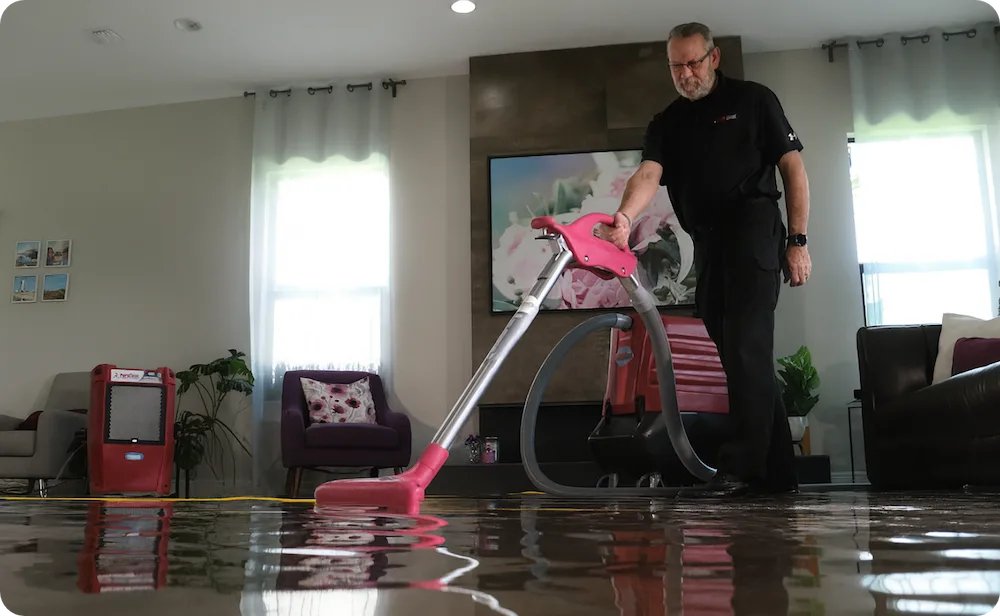
PuroClean of Caseyville responds to the full range of property damage emergencies in Cahokia. Our IICRC-certified technicians are familiar with the specific structural characteristics of Cahokia’s housing stock and the environmental dynamics of the Cahokia Creek floodplain. Whether a homeowner on Jerome Lane wakes to a flooded living room from a burst pipe, or a business on Camp Jackson Road suffers a Category 3 sewage event after a main drain collapses, our team arrives with the equipment, credentials, and documentation capability to handle the job completely.
Damage events we handle in Cahokia include:
From our base at 1934 North 81st Street in Caseyville, our team reaches most Cahokia neighborhoods in 12 to 18 minutes under normal driving conditions. Our primary routing takes us south on IL-159 to IL-157 (aka Falling Springs Road), continuing south and west through Centreville before connecting to Camp Jackson Road — the main commercial and residential artery running through central Cahokia. From Camp Jackson Road, we have direct access to the residential neighborhoods east of IL-3 as well as the blocks closer to the riverfront along Lower Cahokia Road and the streets that border Cahokia Creek. This routing keeps us on well-maintained state routes and county roads for the majority of the drive, avoiding the surface street congestion that can slow response in the denser residential grids closer to the river.
For clients in the southeastern portions of Cahokia, including the neighborhoods near Range Line Road and the areas bordering Alorton, we route south on IL-159 to IL-3 South, providing efficient access to those sections without threading through the residential interior. During heavy rain events — precisely the conditions that generate the most emergency calls in Cahokia — our drivers are familiar with the surface flooding patterns along Camp Jackson Road near Cahokia Creek and know alternate approaches that keep response times reliable even when low-lying intersections are temporarily impassable.
Every emergency vehicle dispatched to Cahokia carries moisture meters, a FLIR thermal imaging camera, truck-mounted and portable water extraction equipment, LGR dehumidifiers, and high-velocity air movers. We arrive ready to assess and begin mitigation immediately — not on a second trip. Cahokia clients receive a live intake call, a confirmed arrival window before we hang up, and a named technician who calls ahead when five minutes out.
Cahokia’s water damage risk profile is shaped by three overlapping forces: its position within the Mississippi River floodplain, the Cahokia Creek watershed that bisects the community, and the age and construction type of its housing stock. Together, these factors create a property damage environment that is among the most complex in St. Clair County, and one that PuroClean of Caseyville is specifically equipped to address.
Cahokia Creek, which flows westward through the community before discharging into the Mississippi River, is a federally studied waterway with a documented history of flooding events that affect residential and commercial properties along its banks. During significant rainfall events — which in the Metro-East region can deliver two to three inches of precipitation in a matter of hours during summer convective storms — Cahokia Creek can rise rapidly and inundate low-lying properties along Lower Cahokia Road and the residential streets that back up to its banks. FEMA flood zone designations cover meaningful portions of Cahokia’s footprint, and many homeowners in these zones carry National Flood Insurance Program (NFIP) policies in addition to, or instead of, standard HO-3 homeowners coverage. The distinction matters: NFIP policies apply different coverage terms, depreciation schedules, and documentation requirements than private carrier policies, and PuroClean’s Xactimate documentation is structured to satisfy both.
The geology beneath Cahokia compounds the surface water risk. The village is built on alluvial bottomland soils — deep deposits of river-laid sand, silt, and clay that have poor drainage characteristics and high water table proximity in many areas. During prolonged wet periods, hydrostatic pressure against slab-on-grade foundations and below-grade walls can force water inward through expansion joints, utility penetrations, and floor-to-wall interfaces even in homes that have no visible cracks. This type of intrusion is often misidentified by homeowners as a plumbing failure and is easy to underestimate without professional moisture mapping.
Illinois winters add the freeze-thaw variable. Cahokia’s older housing stock frequently has water supply lines running through uninsulated or underheated spaces — garage walls, attic knee walls, and the exterior wall cavities of 1950s-era additions. January and February temperatures in St. Clair County regularly drop below 15°F during cold snaps, and pipe freeze events spike sharply during these periods. When pipes burst in these locations, water can flow undetected into wall assemblies, under flooring, and through ceiling joists for hours before a homeowner notices. The combination of hidden moisture pathways, organic building materials, and Cahokia’s naturally humid climate means secondary mold growth can begin within 24 hours of an undetected pipe failure.
Owned & Operated by Paul Reiss
1934 North 81 Street, Caseyville, IL, 62232
(618) 206-7055
Water damage can result from unexpected leaks, flooding from storms, plumbing failures, or appliance malfunctions. Our certified teams focus on rapid water removal, drying, and stabilization to help prevent further damage and mold growth.
 Explore Our Water Damage Mitigation Services
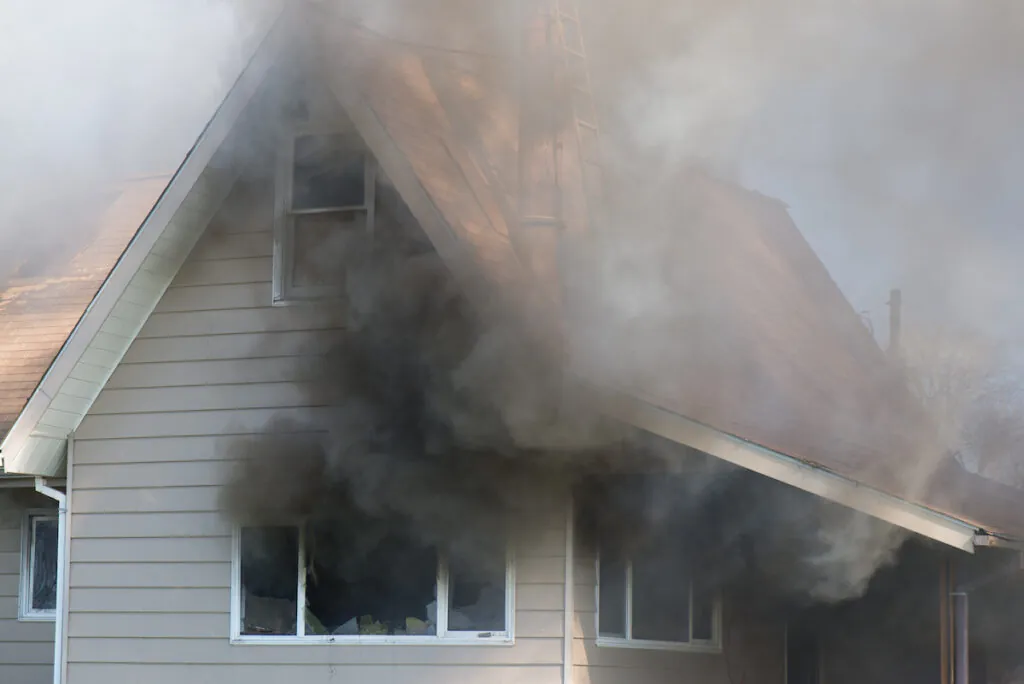
Even after a fire is extinguished, smoke, soot, and odor can continue to affect your home. Fire damage restoration services address visible damage while also helping reduce lingering effects that impact indoor air quality and surfaces.
Explore Our Fire and Smoke Damage Restoration Services
Mold often develops as a result of unresolved moisture or hidden water damage. Professional mold remediation helps identify affected areas, contain growth, and restore healthy indoor conditions.
Explore Our Mold Removal and Remediation Services
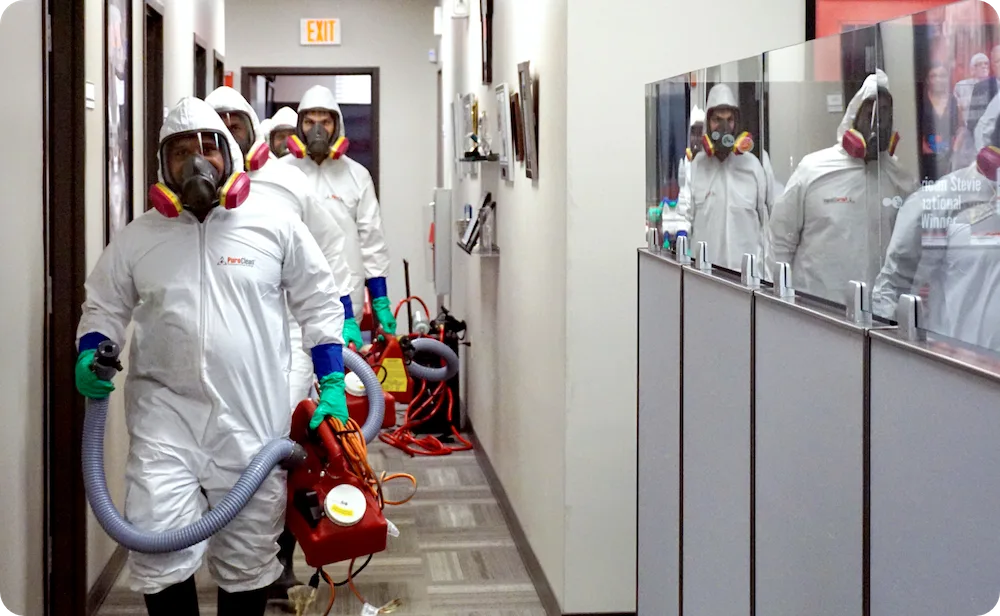
Biohazard situations, including crime scene cleanup and virus decontamination, require specialized cleaning and handling to protect health and safety. Biohazard cleanup services address contamination using proper protocols and professional care.
Explore Our Biohazard Cleanup Services
In some cases, property damage requires repairs beyond cleanup and mitigation. Reconstruction services help restore damaged areas of the home after water, fire, or other incidents, supporting a smoother transition from damage to recovery.
Explore Our Reconstruction Services Services
PuroClean provides 24/7 commercial property damage restoration services for businesses and facilities across the United States.
Explore Our Commercial Services
Water damage can result from unexpected leaks, flooding from storms, plumbing failures, or appliance malfunctions. Our certified teams focus on rapid water removal, drying, and stabilization to help prevent further damage and mold growth.
Explore Our Water Damage Mitigation Services
Cahokia, IL — Water Damage Restoration, Mold Remediation & Emergency Services
This is one of the most important coverage questions Cahokia homeowners face, and the answer depends on the source of the water. Standard HO-3 homeowners insurance policies explicitly exclude flooding from surface water, overflowing bodies of water, and storm surge — which means a Cahokia Creek overbank event that sends water across your yard and into your home is typically not covered under your homeowners policy. Coverage for that type of event requires a separate NFIP flood policy or a private flood endorsement. However, if water entered through a backed-up drain line, a failed sump pump, or a ruptured water supply pipe — even during the same storm — that portion may be covered under your HO-3. PuroClean documents each source of intrusion separately so your adjuster can apply the correct coverage to each damage category.
Slab-on-grade homes present a specific drying challenge because moisture that wicks into flooring systems — hardwood, tile underlayment, or vinyl plank — can become trapped between the flooring surface and the concrete slab below. Standard air movers positioned on the surface floor are often insufficient to dry this assembly completely, and apparent surface dryness can mask ongoing moisture at the slab interface. PuroClean uses FLIR thermal imaging and Tramex concrete moisture meters to map moisture levels at and below the flooring surface. Where necessary, we deploy injectidry mat systems — low-profile drying mats that create a sealed, pressurized drying environment at the slab surface — and monitor with daily psychrometric readings until moisture content returns to IICRC S500 standard levels. This prevents the mold colonization that develops under flooring when slab moisture is left unaddressed.
A real estate transaction involving documented mold or moisture damage in Cahokia requires professional remediation followed by a clear, verifiable paper trail that a buyer’s agent, lender, and home inspector can all review and rely on. PuroClean produces a complete job file for every remediation: a pre-remediation mold assessment with air quality sampling results, a written scope of work, daily moisture logs documenting the drying process, post-remediation clearance test results from an independent Certified Industrial Hygienist (CIH), and final Xactimate documentation of all work performed. This package satisfies the disclosure requirements under Illinois real estate law and gives the buyer’s inspector and lender the documentation they need to move forward with confidence. Without a professional clearance report, many lenders will not fund a mortgage on a property with a known prior mold condition.
Under the right conditions — which Cahokia’s climate readily provides — mold colonization can begin within 24 to 48 hours of a moisture intrusion event. The combination of warm indoor temperatures, the naturally humid air of the Mississippi River bottomlands, and the organic materials present in older Cahokia homes (wood framing, drywall paper facing, cellulose insulation) creates near-ideal conditions for rapid fungal growth. This is why the first 24 hours after a water event are the most critical window for professional intervention. LGR dehumidifiers and high-velocity air movers deployed within that window can achieve the atmospheric dryness targets specified in IICRC S500 — typically 30 to 50 percent relative humidity — that prevent spore germination. Box fans and consumer-grade shop vacuums do not achieve these targets. A home that appears surface-dry after a DIY attempt may still have moisture content in wall assemblies that will produce visible mold within two to four weeks.
Grease fire smoke and soot require specialist restoration, not general cleaning. Protein-based smoke residue — the type produced by a cooking fire — is particularly difficult to address because it bonds tightly to surfaces, is nearly invisible on many materials, and produces a persistent, penetrating odor that general cleaning products cannot neutralize. In a commercial kitchen environment, protein smoke residue contaminates not only the fire origin area but also HVAC ductwork, ceiling tiles, exhaust systems, and any porous surfaces throughout the affected space. PuroClean’s fire restoration process for commercial kitchens includes HEPA vacuuming of loose soot, application of appropriate chemical sponge and wet cleaning methods by surface type, thermal fogging and hydroxyl treatment for odor control, and coordination with your commercial property insurer for Xactimate-based scope documentation. Attempting to reopen before professional clearance risks health code violations and persistent odor complaints from customers and staff.
This is one of the most important coverage questions Cahokia homeowners face, and the answer depends on the source of the water. Standard HO-3 homeowners insurance policies explicitly exclude flooding from surface water, overflowing bodies of water, and storm surge — which means a Cahokia Creek overbank event that sends water across your yard and into your home is typically not covered under your homeowners policy. Coverage for that type of event requires a separate NFIP flood policy or a private flood endorsement. However, if water entered through a backed-up drain line, a failed sump pump, or a ruptured water supply pipe — even during the same storm — that portion may be covered under your HO-3. PuroClean documents each source of intrusion separately so your adjuster can apply the correct coverage to each damage category.
Slab-on-grade homes present a specific drying challenge because moisture that wicks into flooring systems — hardwood, tile underlayment, or vinyl plank — can become trapped between the flooring surface and the concrete slab below. Standard air movers positioned on the surface floor are often insufficient to dry this assembly completely, and apparent surface dryness can mask ongoing moisture at the slab interface. PuroClean uses FLIR thermal imaging and Tramex concrete moisture meters to map moisture levels at and below the flooring surface. Where necessary, we deploy injectidry mat systems — low-profile drying mats that create a sealed, pressurized drying environment at the slab surface — and monitor with daily psychrometric readings until moisture content returns to IICRC S500 standard levels. This prevents the mold colonization that develops under flooring when slab moisture is left unaddressed.
A real estate transaction involving documented mold or moisture damage in Cahokia requires professional remediation followed by a clear, verifiable paper trail that a buyer’s agent, lender, and home inspector can all review and rely on. PuroClean produces a complete job file for every remediation: a pre-remediation mold assessment with air quality sampling results, a written scope of work, daily moisture logs documenting the drying process, post-remediation clearance test results from an independent Certified Industrial Hygienist (CIH), and final Xactimate documentation of all work performed. This package satisfies the disclosure requirements under Illinois real estate law and gives the buyer’s inspector and lender the documentation they need to move forward with confidence. Without a professional clearance report, many lenders will not fund a mortgage on a property with a known prior mold condition.
Under the right conditions — which Cahokia’s climate readily provides — mold colonization can begin within 24 to 48 hours of a moisture intrusion event. The combination of warm indoor temperatures, the naturally humid air of the Mississippi River bottomlands, and the organic materials present in older Cahokia homes (wood framing, drywall paper facing, cellulose insulation) creates near-ideal conditions for rapid fungal growth. This is why the first 24 hours after a water event are the most critical window for professional intervention. LGR dehumidifiers and high-velocity air movers deployed within that window can achieve the atmospheric dryness targets specified in IICRC S500 — typically 30 to 50 percent relative humidity — that prevent spore germination. Box fans and consumer-grade shop vacuums do not achieve these targets. A home that appears surface-dry after a DIY attempt may still have moisture content in wall assemblies that will produce visible mold within two to four weeks.
Grease fire smoke and soot require specialist restoration, not general cleaning. Protein-based smoke residue — the type produced by a cooking fire — is particularly difficult to address because it bonds tightly to surfaces, is nearly invisible on many materials, and produces a persistent, penetrating odor that general cleaning products cannot neutralize. In a commercial kitchen environment, protein smoke residue contaminates not only the fire origin area but also HVAC ductwork, ceiling tiles, exhaust systems, and any porous surfaces throughout the affected space. PuroClean’s fire restoration process for commercial kitchens includes HEPA vacuuming of loose soot, application of appropriate chemical sponge and wet cleaning methods by surface type, thermal fogging and hydroxyl treatment for odor control, and coordination with your commercial property insurer for Xactimate-based scope documentation. Attempting to reopen before professional clearance risks health code violations and persistent odor complaints from customers and staff.
What Our Customers Say:
When you need water damage restoration services near you, call the experts at PuroClean. We are here day or night, 24/7, to help remove any standing water quickly and begin your water restoration service. We monitor the drying process so you can rest assured that your property is dried thoroughly. We offer commercial water restoration services for businesses and residential water damage restoration for homeowners.
Contact Us for 24/7 Emergency Response
(618) 206-7055
Contact Us
PuroClean Emergency Restoration Services
(618) 206-7055
1934 North 81 Street, Caseyville, IL 62232


© 2026 PuroClean. All Rights Reserved.