PuroClean of San Rafael — 3095 Kerner Boulevard, Suite T, San Rafael, CA 94901
Muir Beach is one of the most remote and geographically distinctive residential communities in Marin County, a small unincorporated enclave of approximately one hundred households nestled at the mouth of Redwood Creek where it flows from the slopes of Mount Tamalpais through the Golden Gate National Recreation Area and into the Pacific Ocean. Named in honor of naturalist and conservationist John Muir, the community sits at the end of Muir Beach Road off Pacific Way, reachable only via the single winding access road that descends from Muir Woods Road through the coastal hills. The Pelican Inn on Pacific Way — a replica English country pub built in 1979 that has become one of the most recognizable lodging destinations in western Marin County — marks the entry point to the residential community that extends along Green Gulch Road and the surrounding lots tucked against the hillside above the beach.
The residential fabric of Muir Beach is modest in scale but substantial in property value. The homes here — primarily built between the 1950s and 1980s, with some more recent construction — sit on lots that range from the relatively flat creek-adjacent ground near Redwood Creek to steeply terraced hillside parcels climbing above the community toward the open space of the GGNRA. The construction types are varied: wood-framed homes on crawl space foundations are most common, with some slab construction on the flatter lots near the creek. What unites virtually every property in Muir Beach is its extraordinary exposure to the coastal environment — Pacific fog, salt-laden onshore wind, Redwood Creek flooding in the rainy season, and the chronic ambient humidity of a coastal canyon that rarely fully dries out between winter storm cycles.
For PuroClean of San Rafael, Muir Beach represents the most geographically remote community in our service territory and arguably the most environmentally demanding from a property damage standpoint. The combination of active creek flooding, direct Pacific coastal moisture exposure, road access limitations, and a housing stock built in and around a working coastal canyon creates restoration scenarios that require both technical IICRC-certified expertise and operational adaptability. We respond to Muir Beach calls with the same urgency and documentation standards we bring to any community in our territory — IICRC S500 and S520 protocols, full psychrometric logging, and Xactimate-format insurance coordination — with additional planning for the specific access and logistics that this community requires.
Types of damage calls we handle in Muir Beach:
Muir Beach is the most distant community from our San Rafael base in our service territory, and the route requires specific planning that differs meaningfully from any other community we serve. From 3095 Kerner Boulevard, we travel south on US-101 to the Stinson Beach / Highway 1 exit at Mill Valley, then west on Shoreline Highway through the Tennessee Valley corridor and over the Marin Headlands ridge before descending toward the coast. At the junction of Shoreline Highway and Muir Woods Road, we turn south briefly before taking Pacific Way and the final descent on Muir Beach Road into the community. Under normal conditions, total drive time from our San Rafael location to Muir Beach runs between thirty-five and fifty minutes — placing the community at the outer edge of our sixty-minute emergency response commitment and one that we meet by dispatching immediately upon call receipt.
The road access to Muir Beach is the single most significant operational factor shaping how we respond to this community. Muir Beach Road and the approach via Pacific Way are narrow, winding, two-lane coastal roads with limited passing and turnout opportunities. They are shared with recreational visitors heading to Muir Beach and Muir Woods, and weekend and holiday traffic can extend transit times by fifteen to twenty minutes above the weekday baseline. During winter storm events — precisely the conditions most likely to generate a water damage emergency in this community — the approach roads can be affected by fallen branches, slide debris, and in some cases temporary closures, and we maintain real-time awareness of road conditions on this corridor when dispatching during storm periods.
For the practical logistics of equipment staging at Muir Beach, we carry portable equipment configurations suited to properties where large vehicle access may be constrained by narrow private roads, site grade, and lot orientation. Many Muir Beach properties have driveways that are steep, narrow, or positioned in ways that limit what a full-size service vehicle can reach directly. Our technicians assess access specifics with clients during the initial call and arrive configured for the actual site conditions — whether that means a standard vehicle approach to the door or portable equipment staged from the nearest accessible point and hand-carried to the work area.
Redwood Creek is the dominant and most acute water risk for the Muir Beach residential community. The creek originates on the slopes of Mount Tamalpais and descends through Muir Woods National Monument before entering the residential zone at the head of the valley and flowing across the community’s lower lots to its mouth at the Pacific. In its lower reach through Muir Beach, the creek occupies a broad, flat-bottomed valley floor that becomes its natural floodplain during high-flow events. Redwood Creek has a documented history of significant flooding during major storm years — during the atmospheric river events that affected Marin County in the winters of 2022–23 and 2023–24, the creek overflowed its banks and inundated portions of the lower residential lots and the beach access parking area. FEMA flood mapping designates the creek’s lower reach and adjacent residential lots as a Special Flood Hazard Area, and properties in this zone carry genuine, recurring flood exposure that no amount of structural improvement fully eliminates given the creek’s natural floodplain geometry.
The Pacific coastal environment that surrounds Muir Beach on its western face introduces moisture dynamics that have no parallel in our inland Marin County service communities. Pacific fog — the dense marine layer that rolls in from the ocean most evenings and persists through morning — keeps ambient relative humidity at or above 90 percent for extended overnight periods throughout the year, not just in winter. This perpetual coastal humidity means that any wood-framed building assembly in Muir Beach is in a state of chronic moisture exposure with no dry-out cycle between wet periods. Coastal salt air carried on the prevailing onshore winds accelerates the deterioration of every ferrous metal component in these buildings — roofing fasteners, supply line fittings, exterior door hardware, and the metal components of window frames — while simultaneously degrading the sealants, caulking, and weatherstripping that are the first line of defense against wind-driven rain penetration.
The topography of the Muir Beach valley creates a stormwater concentration dynamic that affects the hillside properties above the creek floor in ways that are distinct from the direct creek flooding risk of the lower lots. The steep coastal hills surrounding the community on three sides generate rapid surface runoff during rain events, and that runoff converges toward the valley floor from multiple directions simultaneously. Terraced hillside properties above Green Gulch Road receive concentrated drainage from the slope above them, while the valley-floor properties receive the accumulated runoff from the entire surrounding hillside perimeter. The limited soil permeability of the coastal clay soils common in this area means that once the soil column saturates during an extended rain period, all subsequent precipitation becomes surface runoff rather than percolating downward, dramatically increasing both the volume and the velocity of drainage reaching the residential lots.
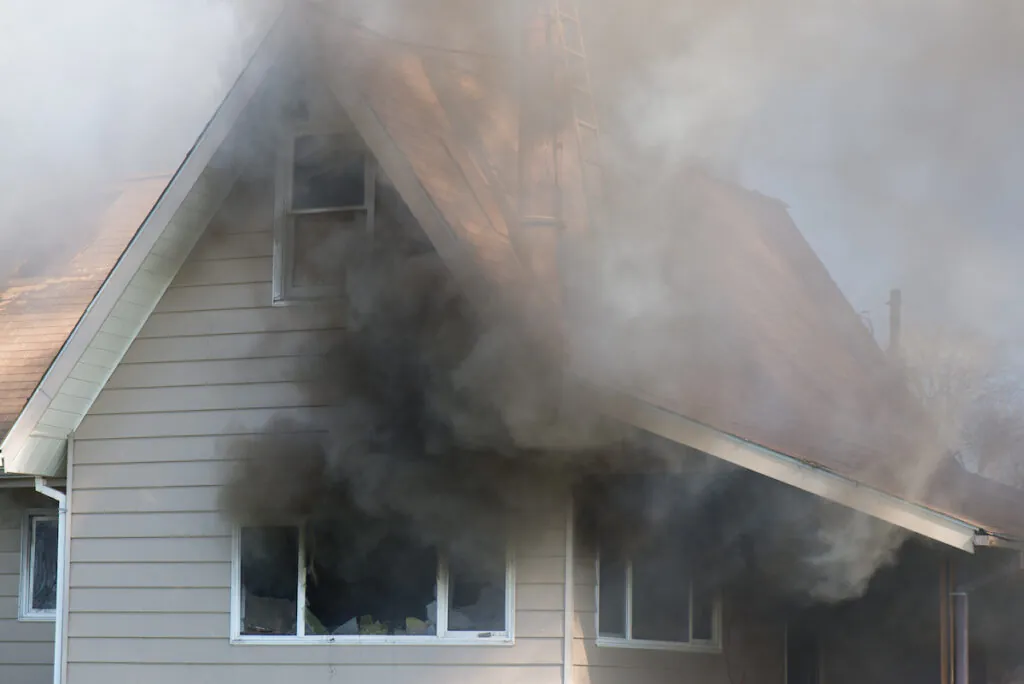
Fire risk at Muir Beach, while perhaps counterintuitive given the community’s coastal fog exposure, is nonetheless significant. The GGNRA hillsides surrounding the community carry dense coastal scrub vegetation — coyote brush, coastal sage, and dried grasses during the late summer and fall — that becomes highly combustible during extended dry periods. The community’s single access road creates an evacuation and fire apparatus access constraint that the Marin County Fire Department has specifically identified in wildfire planning documents. A fire originating on the surrounding hillsides during a wind event could affect the residential community with limited advance warning and restricted suppression access, making fire restoration a realistic service category for this community alongside the more frequent water and mold scenarios.
Owned & Operated by Nicholas Ondrejka
3095 Kerner Boulevard, San Rafael, CA, 94901
(628) 888-2911
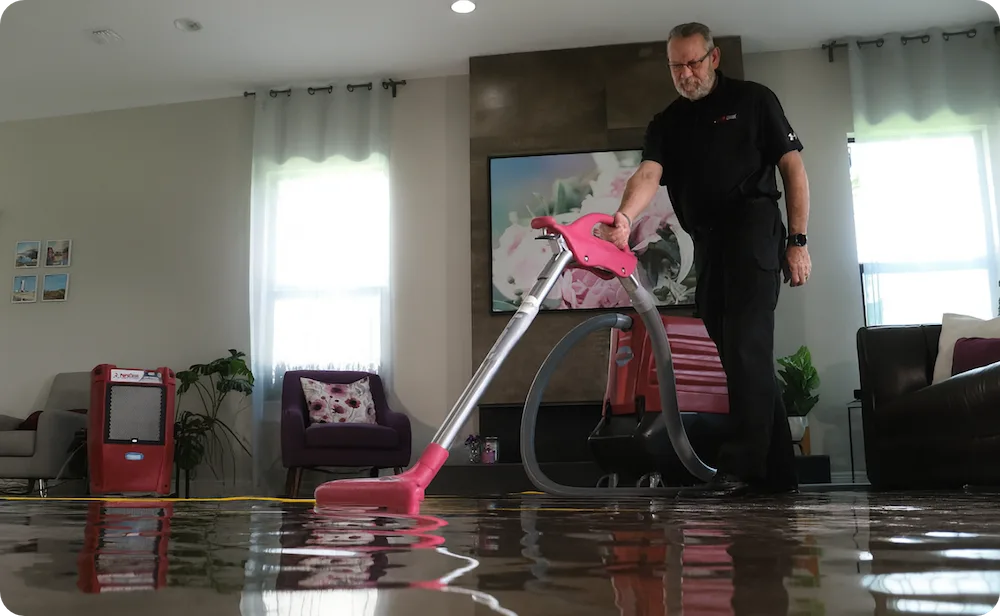
Water damage can result from unexpected leaks, flooding from storms, plumbing failures, or appliance malfunctions. Our certified teams focus on rapid water removal, drying, and stabilization to help prevent further damage and mold growth.
 Explore Our Water Damage Mitigation Services
Even after a fire is extinguished, smoke, soot, and odor can continue to affect your home. Fire damage restoration services address visible damage while also helping reduce lingering effects that impact indoor air quality and surfaces.
Explore Our Fire and Smoke Damage Restoration Services
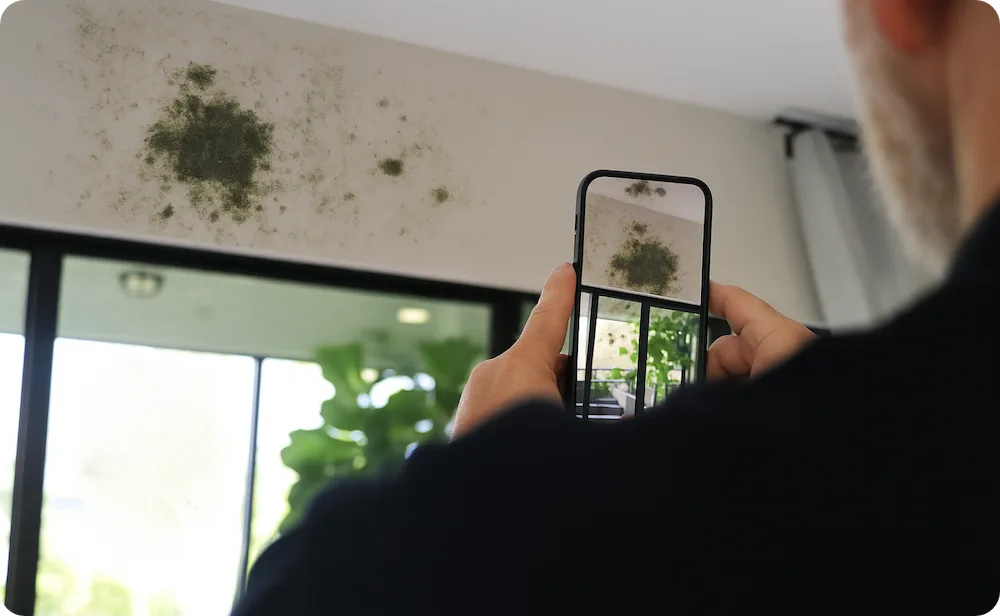
Mold often develops as a result of unresolved moisture or hidden water damage. Professional mold remediation helps identify affected areas, contain growth, and restore healthy indoor conditions.
Explore Our Mold Removal and Remediation Services
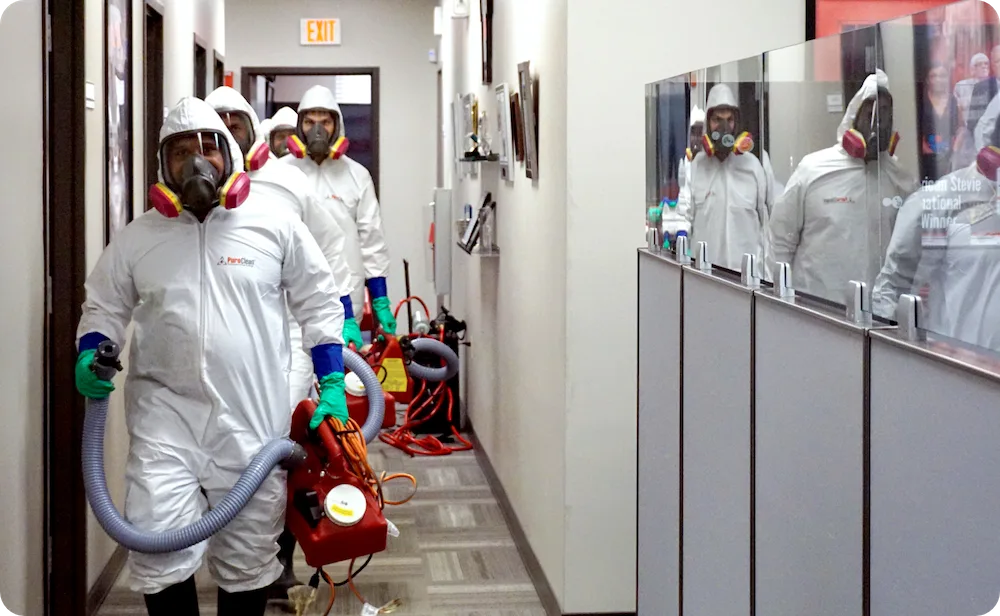
Biohazard situations, including crime scene cleanup and virus decontamination, require specialized cleaning and handling to protect health and safety. Biohazard cleanup services address contamination using proper protocols and professional care.
Explore Our Biohazard Cleanup Services
PuroClean provides 24/7 commercial property damage restoration services for businesses and facilities across the United States.
Explore Our Commercial Services
Water damage can result from unexpected leaks, flooding from storms, plumbing failures, or appliance malfunctions. Our certified teams focus on rapid water removal, drying, and stabilization to help prevent further damage and mold growth.
Explore Our Water Damage Mitigation Services
Specific answers for Muir Beach homeowners and property owners
Creek overflow entering a home from outside is classified as flooding under standard insurance definitions, which means it falls outside the coverage of a typical HO-3 homeowners policy regardless of how the water entered the structure. To be covered for Redwood Creek overflow flooding, you need a separate NFIP or private flood insurance policy. If your property sits within the FEMA Special Flood Hazard Area designation along the lower Redwood Creek corridor, your mortgage lender may have required flood insurance as a loan condition — worth confirming with your agent if you are uncertain whether you carry it. For Muir Beach properties in the Zone AE designation, NFIP coverage is the most accessible flood insurance option, though the $250,000 residential building limit may fall short of replacement cost for higher-value coastal properties. Private flood carriers offer higher limits and in some cases broader coverage terms. We document the intrusion source and pathway precisely during our assessment, providing the written evidence your flood adjuster needs to process the claim accurately and completely.
A persistent musty odor in a coastal canyon home is almost never just the ocean air — it is almost always a sign of active mold colonization somewhere in the building assembly, and in a Muir Beach home the most likely locations are the crawl space, the attic, and any wall cavity on the ocean-facing or hillside-facing exterior walls. The coastal humidity environment at Muir Beach is one of the most mold-permissive in our entire service territory — overnight relative humidity above 90 percent means that any wood structural member with any moisture entry pathway, however minor, will support mold growth continuously rather than cyclically. We assess all three high-risk zones using calibrated moisture meters, thermal imaging, and visual inspection. If the findings suggest significant colonization, we coordinate air quality sampling with an independent industrial hygienist before committing to a remediation scope — confirming the extent and species of the mold problem before scoping the work protects you from both over-scoping and under-scoping the remediation. In our experience with coastal canyon homes, the actual mold extent is almost always larger than the homeowner expected.
This is a legitimate operational concern and one we plan for when dispatching to Muir Beach during storm conditions. Before dispatch during a major weather event, our team checks current road conditions on Muir Beach Road, Pacific Way, and the Shoreline Highway approach for closures, debris, or slide activity reported by Caltrans or the Marin County Department of Public Works. If the road is passable, we proceed immediately. If a closure is in effect, we maintain contact with you by phone, advise on immediate protective actions you can take yourself — moving contents to higher surfaces, placing towels to slow water entry, shutting off the water main if a pipe is the source — and dispatch as soon as access reopens. We do not treat road-access communities as lower priority; we treat them as requiring additional pre-dispatch coordination. When we can reach you, we will — and we communicate honestly when we temporarily cannot.
Private septic systems introduce a category of sewage event that differs from a municipal sewer backup in both cause and response. A septic backup at a Muir Beach property can originate from a full or failing septic tank, a blocked or collapsed drain field, a crushed distribution line, or — during heavy rain events — from a waterlogged drain field that cannot accept additional effluent because the surrounding soil is already saturated. In any of these cases, the Category 3 sewage cleanup inside the home follows the same IICRC protocol as any other black water event: physical containment of the affected area, removal of all porous materials in contact with sewage, HEPA vacuuming and EPA-registered antimicrobial treatment of all structural surfaces, commercial drying to confirmed psychrometric goals, and post-remediation clearance testing by an independent industrial hygienist. The septic system repair itself requires a licensed septic contractor — we coordinate referrals in our trade partner network. Marin County Environmental Health Services regulates septic system repair and may require permits and inspection before the repaired system can be returned to service.
A property at the intersection of creek flood exposure and GGNRA adjacency in Muir Beach warrants the most thorough pre-purchase assessment we offer. Our evaluation covers the full moisture and mold profile of the structure: calibrated moisture metering of all crawl space structural members, thermal imaging of the subfloor assembly and exterior-facing wall cavities, attic moisture assessment, and visual inspection for visible mold colonization in all accessible spaces. We identify the FEMA flood zone designation for the specific lot and note whether the structure’s lowest finished floor elevation appears to place it within meaningful flood inundation depth during a Redwood Creek overflow event. We assess the building envelope for wind-driven rain entry points — roofline flashings, window seals, exterior cladding condition — that are the primary ongoing vulnerability in the coastal environment. If any findings suggest active mold, we coordinate IH air quality sampling as part of the assessment. Written findings report within one business day, remediation scope if indicated within one additional business day. In a community as unique and as limited in inventory as Muir Beach, knowing exactly what you are buying before you close is worth every dollar the assessment costs.
Creek overflow entering a home from outside is classified as flooding under standard insurance definitions, which means it falls outside the coverage of a typical HO-3 homeowners policy regardless of how the water entered the structure. To be covered for Redwood Creek overflow flooding, you need a separate NFIP or private flood insurance policy. If your property sits within the FEMA Special Flood Hazard Area designation along the lower Redwood Creek corridor, your mortgage lender may have required flood insurance as a loan condition — worth confirming with your agent if you are uncertain whether you carry it. For Muir Beach properties in the Zone AE designation, NFIP coverage is the most accessible flood insurance option, though the $250,000 residential building limit may fall short of replacement cost for higher-value coastal properties. Private flood carriers offer higher limits and in some cases broader coverage terms. We document the intrusion source and pathway precisely during our assessment, providing the written evidence your flood adjuster needs to process the claim accurately and completely.
A persistent musty odor in a coastal canyon home is almost never just the ocean air — it is almost always a sign of active mold colonization somewhere in the building assembly, and in a Muir Beach home the most likely locations are the crawl space, the attic, and any wall cavity on the ocean-facing or hillside-facing exterior walls. The coastal humidity environment at Muir Beach is one of the most mold-permissive in our entire service territory — overnight relative humidity above 90 percent means that any wood structural member with any moisture entry pathway, however minor, will support mold growth continuously rather than cyclically. We assess all three high-risk zones using calibrated moisture meters, thermal imaging, and visual inspection. If the findings suggest significant colonization, we coordinate air quality sampling with an independent industrial hygienist before committing to a remediation scope — confirming the extent and species of the mold problem before scoping the work protects you from both over-scoping and under-scoping the remediation. In our experience with coastal canyon homes, the actual mold extent is almost always larger than the homeowner expected.
This is a legitimate operational concern and one we plan for when dispatching to Muir Beach during storm conditions. Before dispatch during a major weather event, our team checks current road conditions on Muir Beach Road, Pacific Way, and the Shoreline Highway approach for closures, debris, or slide activity reported by Caltrans or the Marin County Department of Public Works. If the road is passable, we proceed immediately. If a closure is in effect, we maintain contact with you by phone, advise on immediate protective actions you can take yourself — moving contents to higher surfaces, placing towels to slow water entry, shutting off the water main if a pipe is the source — and dispatch as soon as access reopens. We do not treat road-access communities as lower priority; we treat them as requiring additional pre-dispatch coordination. When we can reach you, we will — and we communicate honestly when we temporarily cannot.
Private septic systems introduce a category of sewage event that differs from a municipal sewer backup in both cause and response. A septic backup at a Muir Beach property can originate from a full or failing septic tank, a blocked or collapsed drain field, a crushed distribution line, or — during heavy rain events — from a waterlogged drain field that cannot accept additional effluent because the surrounding soil is already saturated. In any of these cases, the Category 3 sewage cleanup inside the home follows the same IICRC protocol as any other black water event: physical containment of the affected area, removal of all porous materials in contact with sewage, HEPA vacuuming and EPA-registered antimicrobial treatment of all structural surfaces, commercial drying to confirmed psychrometric goals, and post-remediation clearance testing by an independent industrial hygienist. The septic system repair itself requires a licensed septic contractor — we coordinate referrals in our trade partner network. Marin County Environmental Health Services regulates septic system repair and may require permits and inspection before the repaired system can be returned to service.
A property at the intersection of creek flood exposure and GGNRA adjacency in Muir Beach warrants the most thorough pre-purchase assessment we offer. Our evaluation covers the full moisture and mold profile of the structure: calibrated moisture metering of all crawl space structural members, thermal imaging of the subfloor assembly and exterior-facing wall cavities, attic moisture assessment, and visual inspection for visible mold colonization in all accessible spaces. We identify the FEMA flood zone designation for the specific lot and note whether the structure’s lowest finished floor elevation appears to place it within meaningful flood inundation depth during a Redwood Creek overflow event. We assess the building envelope for wind-driven rain entry points — roofline flashings, window seals, exterior cladding condition — that are the primary ongoing vulnerability in the coastal environment. If any findings suggest active mold, we coordinate IH air quality sampling as part of the assessment. Written findings report within one business day, remediation scope if indicated within one additional business day. In a community as unique and as limited in inventory as Muir Beach, knowing exactly what you are buying before you close is worth every dollar the assessment costs.
What Our Customers Say:
When you need water damage restoration services near you, call the experts at PuroClean. We are here day or night, 24/7, to help remove any standing water quickly and begin your water restoration service. We monitor the drying process so you can rest assured that your property is dried thoroughly. We offer commercial water restoration services for businesses and residential water damage restoration for homeowners.

PuroClean of San Rafael
(628) 888-2911
3095 Kerner Boulevard, Suite T, San Rafael, CA 94901


© 2026 PuroClean. All Rights Reserved.