PuroClean of San Rafael — 3095 Kerner Boulevard, Suite T, San Rafael, CA 94901
San Quentin is one of the smallest and most geographically distinctive communities in Marin County, occupying a compact peninsula that juts into San Francisco Bay at the point where the Richmond–San Rafael Bridge makes landfall on the Marin shore. The community is defined almost entirely by two landmark features: the California State Prison San Quentin, one of the oldest and most historically significant correctional institutions in the United States, established on this peninsula in 1852, and the small residential community that grew up alongside it — a tight cluster of homes and streets tucked between the prison grounds, the bay shoreline, and the steep hillside rising toward Point San Quentin. Main Street and the residential streets branching off it — including the historically named blocks that predate most of Marin County’s suburban development by several decades — form the entirety of the civilian residential footprint in this unusual community.
The residential properties of San Quentin village are among the older civilian homes in Marin County, with several dating to the late nineteenth and early twentieth centuries when the area developed as housing for prison staff and their families. The building stock reflects that era’s construction norms: wood-framed homes on pier-and-post or crawl space foundations, with original or substantially original plumbing systems that have been maintained and patched over generations rather than comprehensively replaced. The proximity to San Francisco Bay on multiple sides and the community’s low elevation relative to the waterfront creates a moisture exposure environment that is among the most persistent in the county. Salt air from the bay accelerates the deterioration of metal components throughout these homes, and the tidal influence on groundwater beneath the peninsula keeps crawl space moisture levels elevated throughout the year.
In 2023, Governor Newsom announced plans to convert the San Quentin State Prison into a rehabilitation and education center — the California Model — transforming the historic facility into a new kind of correctional institution with expanded programming and a changed residential and operational footprint. That transition, as it develops, will shape the future character of this peninsula community in ways that may affect the property types and ownership structures we serve here over time. For now, PuroClean of San Rafael serves the civilian residential community of San Quentin with the same IICRC-certified process, Xactimate-format documentation, and direct insurance coordination that we bring to every community in our territory — responding to water damage, mold, and fire restoration needs in a community that rarely makes anyone’s service area list but that has real property owners with real damage events who deserve a professional response.
Types of damage calls we handle in San Quentin:
From our base at 3095 Kerner Boulevard in San Rafael, San Quentin is one of our most direct response routes in the entire service territory. We travel east on Kerner Boulevard and connect south toward Point San Quentin Road, which runs along the bay shoreline directly to the San Quentin village residential community. The total drive from our location to most San Quentin residential addresses runs between eight and fourteen minutes under normal conditions — making San Quentin one of the fastest response windows anywhere in our service area despite being a community that most Marin County residents have never visited. The Richmond–San Rafael Bridge approach on I-580 passes directly overhead as it makes its Marin County landfall at the San Quentin peninsula, and the interchange connecting I-580 to Point San Quentin Road is immediately adjacent to the community, providing an alternative approach from the freeway when surface street routing is preferred.
The residential streets within San Quentin village are compact and tightly spaced, with the community’s small footprint meaning that virtually every civilian residential address is reachable within two to three minutes of entering the village from Point San Quentin Road. There are no significant internal access constraints — the streets are paved and accessible to standard service vehicles, and the community’s modest scale eliminates the navigation complexity that larger communities in our territory require. For properties immediately adjacent to the bay shoreline, we are aware of the tidal cycle timing and coordinate access with clients for lower-tide windows when work in or around below-grade spaces during active tidal periods would be counterproductive.
One operational consideration specific to San Quentin is the presence of the state prison facility, which occupies the majority of the peninsula and has its own security perimeter and access controls. The civilian residential community is in a clearly defined separate area accessible without any interaction with the facility’s security protocols, and our technicians navigate to and from civilian residential addresses without any access complexity related to the prison operations. For any job that might require proximity to the facility perimeter, we confirm address specifics with the client before dispatch to ensure appropriate routing.
San Quentin’s position as a low-elevation bayfront peninsula exposed to San Francisco Bay on its eastern, southern, and partial northern faces creates a moisture and flood exposure environment that is among the most direct and persistent in all of Marin County. The bay-facing elevations of the residential community sit at or very near sea level, and the tidal influence on groundwater beneath the peninsula means that crawl spaces and below-grade building components in San Quentin are in contact with moisture-saturated soil for substantial portions of the tidal cycle throughout the year — not just during storm events. This chronic groundwater proximity is the baseline condition against which any additional water intrusion event — a pipe failure, a roof leak, a storm surge — is added, and the cumulative moisture loading on the structural assemblies of older San Quentin homes is among the highest we encounter in any community we serve.
Storm surge and bay flooding represent the most acute episodic water risk for the San Quentin residential community. The peninsula’s direct bay exposure on multiple faces, combined with its low elevation and the lack of significant topographic protection from bay wave action during wind-driven storm events, means that significant storm conditions can push water across the lower portions of the residential community. King tide events — the exceptionally high tides that occur several times per year when tidal cycles align with perigean lunar proximity — can bring bay water to or above the level of some residential lots even without storm conditions present, and when king tides combine with the elevated bay water levels of a major storm, the inundation risk for the lowest-elevation properties is meaningful.
The salt air environment that pervades San Quentin year-round introduces a building envelope deterioration dynamic that compounds the moisture intrusion risk in ways that are less visible than direct flooding but equally consequential over time. Salt air accelerates the oxidation of ferrous metal components throughout a building — including galvanized steel supply lines that are already aging from internal corrosion, iron drain line hardware, roof fasteners, and the metal components of window frames and door thresholds. This accelerated corrosion reduces the effective service life of these components below the already-reduced baseline of homes of this age, meaning that supply line failures, roof fastener failures, and window seal deterioration all occur sooner and more frequently in San Quentin’s salt air environment than they would in a more sheltered inland community with comparable building stock.
The age of San Quentin’s residential building stock — with several homes dating to the late 1800s and the majority predating World War II — means that pre-demolition material testing is a standard requirement for virtually any water damage mitigation that involves opening wall assemblies or removing flooring. Asbestos-containing materials in original floor tile adhesives, plaster formulations, and pipe insulation are common in construction of this era, and lead paint in original decorative layers is essentially universal in pre-1940 structures. We flag these requirements clearly at the initial assessment and coordinate testing before any demolition proceeds — a non-negotiable step that protects both the occupants and our crew from exposure to materials that were not recognized as hazardous when these homes were built.
Owned & Operated by Nicholas Ondrejka
3095 Kerner Boulevard, San Rafael, CA, 94901
(628) 888-2911
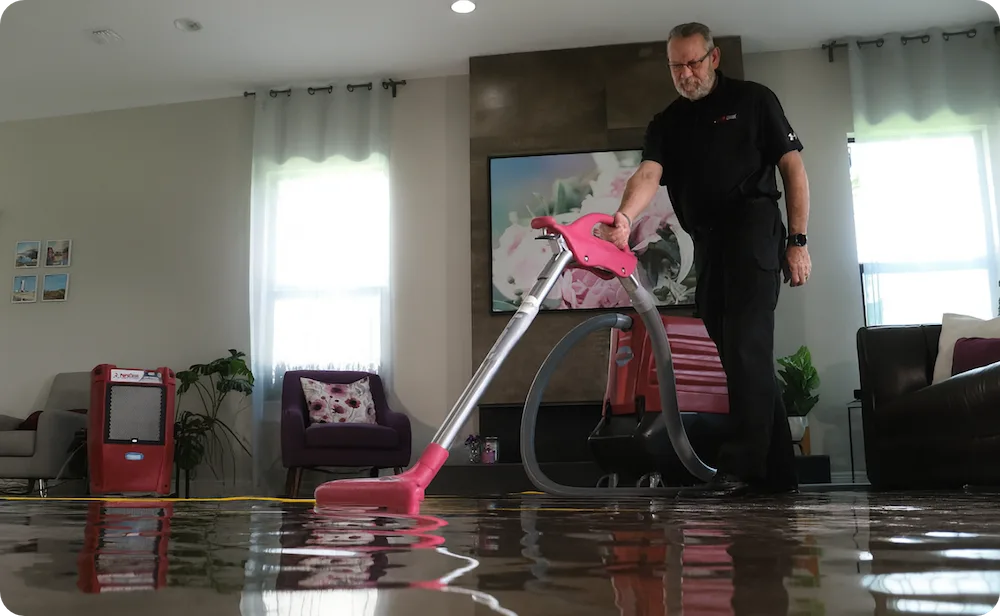
Water damage can result from unexpected leaks, flooding from storms, plumbing failures, or appliance malfunctions. Our certified teams focus on rapid water removal, drying, and stabilization to help prevent further damage and mold growth.
 Explore Our Water Damage Mitigation Services
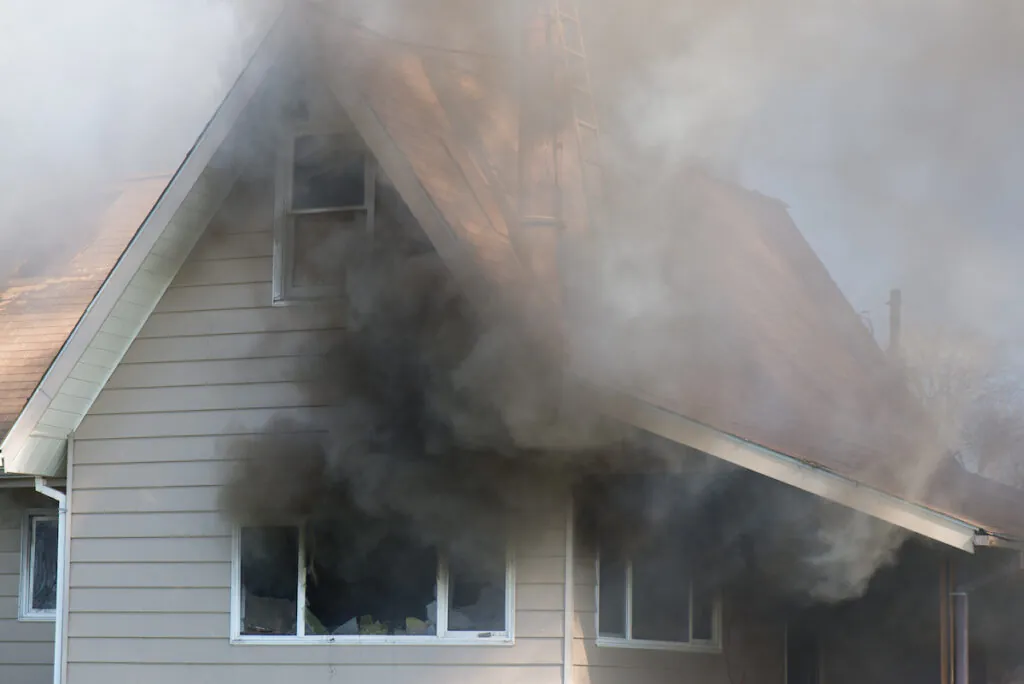
Even after a fire is extinguished, smoke, soot, and odor can continue to affect your home. Fire damage restoration services address visible damage while also helping reduce lingering effects that impact indoor air quality and surfaces.
Explore Our Fire and Smoke Damage Restoration Services
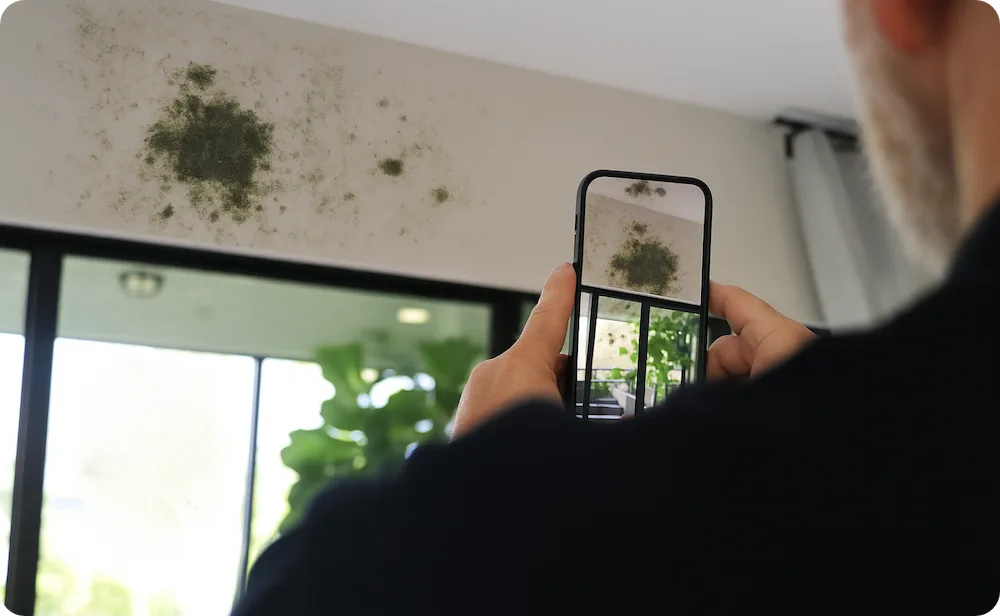
Mold often develops as a result of unresolved moisture or hidden water damage. Professional mold remediation helps identify affected areas, contain growth, and restore healthy indoor conditions.
Explore Our Mold Removal and Remediation Services
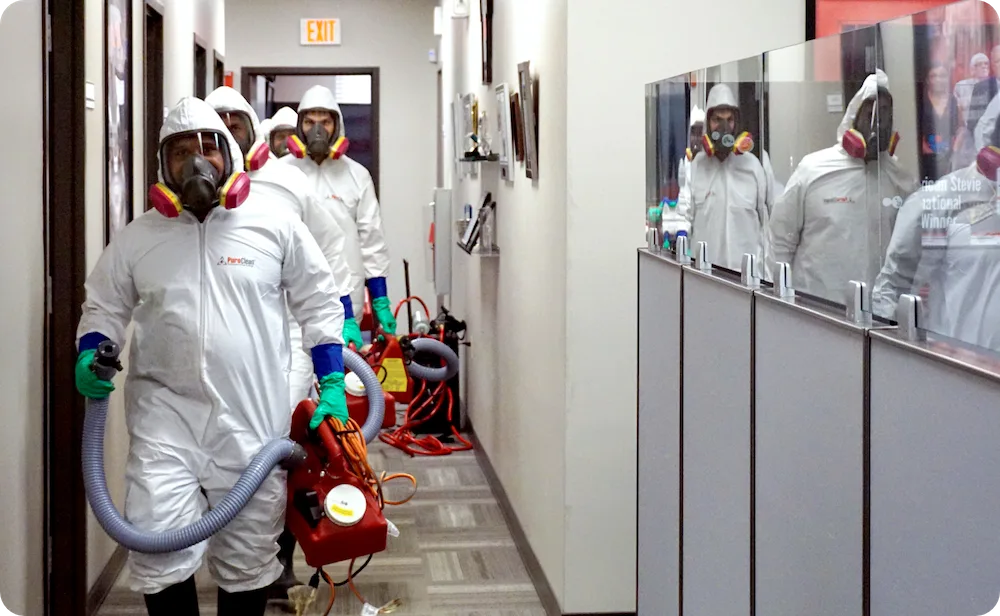
Biohazard situations, including crime scene cleanup and virus decontamination, require specialized cleaning and handling to protect health and safety. Biohazard cleanup services address contamination using proper protocols and professional care.
Explore Our Biohazard Cleanup Services
PuroClean provides 24/7 commercial property damage restoration services for businesses and facilities across the United States.
Explore Our Commercial Services
Water damage can result from unexpected leaks, flooding from storms, plumbing failures, or appliance malfunctions. Our certified teams focus on rapid water removal, drying, and stabilization to help prevent further damage and mold growth.
Explore Our Water Damage Mitigation Services
Specific answers for San Quentin village homeowners and property owners
Chronic tidal and storm surge water entry into a crawl space from the bay is almost certainly classified as flooding under standard insurance definitions, placing it outside the coverage of a typical HO-3 homeowners policy. Coverage for this type of recurring bay-related water intrusion requires a separate NFIP or private flood insurance policy. Given the San Quentin peninsula’s documented exposure to bay flooding and the near-sea-level elevation of the residential community, an NFIP flood policy or a private flood policy through a surplus lines carrier is a meaningful financial protection tool for any homeowner here — particularly for higher-value properties whose structural replacement cost exceeds the NFIP’s $250,000 residential building coverage ceiling. Even without insurance coverage for the flood event itself, the remediation work is necessary regardless — untreated crawl space moisture at the levels generated by regular tidal intrusion will produce mold colonization in subfloor framing and eventually structural wood rot that is far more expensive to address than the original drying and treatment would have been.
Yes, and those checks are non-negotiable before any demolition or material removal in a home of this age. Pre-1940 construction in San Quentin universally contains lead paint in original decorative layers — in some cases multiple generations of lead-containing paint beneath later coatings. Pre-1980 construction commonly contains asbestos in floor tile adhesives, drywall joint compound, pipe insulation, and in some original plaster formulations. Before any wall opening, flooring removal, or material demolition, we flag all suspect materials and coordinate with a licensed testing firm for sampling. If testing confirms the presence of regulated materials, we integrate abatement coordination into the project timeline and the insurance scope before proceeding. We also photograph and document all original finish materials, architectural details, and pre-existing conditions before beginning work — both for insurance documentation purposes and to inform the reconstruction contractor who will need to address period-appropriate material matching in a home with genuine historic character.
Both concerns are legitimate and worth addressing directly. For documentation, the key is establishing that each failure was a distinct sudden and accidental event rather than a gradual deterioration — which is exactly the distinction most HO-3 policies use to determine coverage. We provide written scope documentation that identifies the failure point, the water category, and the affected area for each event, and that documentation creates a clear record of separate covered losses rather than a pattern that could be characterized as a maintenance failure. On the repeated claim concern — insurance carriers do monitor claim frequency, and multiple claims within a short period can affect policy renewal and premium terms. The most durable solution for a San Quentin home in a salt air environment is a comprehensive plumbing assessment and repipe rather than continued repair of individual failures, which both eliminates the ongoing claim risk and removes the primary source of water damage events in the home. We can refer you to licensed plumbers in our trade partner network who have experience with the specific challenges of older bay-adjacent construction.
That is a thoughtful question and one that goes beyond our expertise as a restoration contractor — we are not real estate advisors and cannot project how the California Model transition will affect property values or community character in San Quentin village. What we can say is that regardless of the institutional changes happening on the larger peninsula, the residential properties in San Quentin village are real assets with real replacement costs, and the decision to invest in proper professional restoration following a water or mold damage event is grounded in the same logic that applies to any property: deferred or improperly executed restoration leads to secondary damage, mold recurrence, reduced insurability, and disclosure obligations that complicate any future sale. We recommend treating each restoration event on the merits of the property’s current condition and the cost of doing the work correctly — not on speculative assessments of what the neighborhood may become.
Yes on all counts. PuroClean of San Rafael carries active California Contractors State License Board licensing, full general liability insurance, and workers compensation coverage — the standard credentials required for licensed contractor work anywhere in California, including Marin County communities adjacent to state facilities. Our technicians work in the civilian residential community of San Quentin village, which is a standard residential neighborhood with no access restrictions, security clearance requirements, or operational constraints related to the adjacent prison facility for work performed at civilian addresses. We confirm address specifics before dispatch to ensure we are routing to the civilian residential area, and our crews are professional, uniformed, and experienced in working in a wide variety of community contexts throughout Marin County and San Francisco. If a future project scope ever required work within a facility-controlled area for any reason, we would address credentialing requirements directly with the relevant facility management — but for civilian residential addresses in San Quentin village, standard contractor credentials are all that apply.
What Our Customers Say:
When you need water damage restoration services near you, call the experts at PuroClean. We are here day or night, 24/7, to help remove any standing water quickly and begin your water restoration service. We monitor the drying process so you can rest assured that your property is dried thoroughly. We offer commercial water restoration services for businesses and residential water damage restoration for homeowners.

PuroClean of San Rafael
(628) 888-2911
3095 Kerner Boulevard, Suite T, San Rafael, CA 94901


© 2026 PuroClean. All Rights Reserved.