PuroClean of San Rafael — 3095 Kerner Boulevard, Suite T, San Rafael, CA 94901
Ross is one of the smallest incorporated municipalities in California, covering just over one square mile in the heart of the Corte Madera Creek valley between Kentfield to the east and San Anselmo to the west. Incorporated as a town in 1908, Ross developed as a retreat for San Francisco’s most prominent families during the late Victorian and Edwardian eras, and the character established during that founding period — large wooded lots, substantial homes set well back from quiet residential streets, and an almost total absence of commercial development — has been deliberately maintained ever since. The town has no downtown, no shopping district, and no commercial corridor. What it has instead are some of the most architecturally distinguished residential properties in Marin County, set among mature coast live oaks, bay laurels, and redwoods along streets like Lagunitas Road, Sir Francis Drake Boulevard, Bolinas Avenue, and Shady Lane.
The residential fabric of Ross is defined by the exceptional age and quality of its housing stock. Estates and substantial homes built in the late 1800s and early 1900s — many designed by notable Bay Area architects of their era — are common throughout the town, alongside craftsman bungalows, colonial revivals, and mid-century homes built through the 1950s and 1960s by later generations of Marin County families who sought the same combination of privacy, creek access, and proximity to the Corte Madera Creek greenbelt that has made Ross desirable for well over a century. The Ross Common, the town’s central open space along Sir Francis Drake Boulevard, and the Natalie Coffin Greene Park at the head of Phoenix Lake Road anchor the community’s relationship with the natural landscape that defines it.
For PuroClean of San Rafael, Ross is a service community that demands a high standard of care, discretion, and technical accuracy. The combination of century-old estate homes with irreplaceable architectural detail, direct Corte Madera Creek frontage on many properties, the persistent creek corridor humidity that keeps moisture levels elevated throughout the year, and the complex plumbing and drainage systems that older large-lot properties accumulate over generations creates a property damage environment where incomplete assessment and hurried work create lasting harm. We bring IICRC-certified technicians, full psychrometric documentation, Xactimate-format insurance estimates, and the material sensitivity that high-value historic restoration demands to every job we take on in Ross.
Types of damage calls we handle in Ross:
From our base at 3095 Kerner Boulevard in San Rafael, we reach Ross by heading south on US-101 to the Sir Francis Drake Boulevard exit at Greenbrae, then traveling west on Sir Francis Drake Boulevard through Kentfield and directly into Ross. Sir Francis Drake Boulevard is the primary spine connecting these communities along the Corte Madera Creek corridor, and from the freeway exit to the center of Ross the drive runs approximately four miles through a series of well-maintained two-lane roads with light to moderate traffic through most of the day. Under normal conditions, total response time from our San Rafael location to most Ross addresses runs between eighteen and twenty-five minutes — comfortably within our sixty-minute emergency response commitment for any acute event.
Ross’s residential street network branches off Sir Francis Drake Boulevard to the north and south, with Lagunitas Road running along the creek’s north bank providing access to the estate properties closest to the water, and Bolinas Avenue, Shady Lane, and the various private lanes and easement roads serving the hillside and interior residential properties. Several Ross addresses are accessed via private roads or shared easements that are not always apparent from a standard mapping application, and our technicians confirm access details directly with clients during the initial call to avoid any delay on arrival. Gate codes, private road access, and dog or security protocols at large estate properties are all noted before dispatch.
Sir Francis Drake Boulevard carries commute traffic in both directions during morning and afternoon peak hours as Ross and Kentfield residents travel to and from the US-101 interchange at Greenbrae. For emergency response this is a known variable, and our real-time routing accounts for it. For non-emergency assessment scheduling in Ross, mid-morning windows after the eastbound commute clears typically offer the cleanest transit through the Drake corridor. We do not subcontract Ross response to outside crews — the same IICRC-certified team that serves San Rafael and the surrounding communities responds directly to every Ross call.
Corte Madera Creek defines Ross’s most significant and most historically documented environmental water risk. The creek runs along the northern boundary of Ross near Lagunitas Road, and in its natural — largely unchanneled — state through the town it retains the capacity to spread laterally across its historic floodplain during high-flow events. Ross has experienced meaningful creek flooding during several major rain years in the past two decades, with water reaching across Lagunitas Road and onto the grounds of the estate properties that border the creek in some events. FEMA flood mapping designates portions of the Ross creek corridor as Zone AE, the high-risk flood designation, and several Lagunitas Road properties carry NFIP flood insurance as a result. The creek’s behavior in Ross is also influenced by what happens upstream — high flows originating in the Phoenix Lake and Lagunitas Lake watershed above the town can arrive at Ross with significant velocity during an atmospheric river event, compressing the time residents have to respond before water reaches their property.
The structural characteristics of Ross’s historic housing stock introduce restoration challenges that are genuinely distinct from those of newer construction communities. Estate homes built in the late 1800s and early 1900s were constructed with materials and techniques that were high quality for their era but present specific vulnerabilities from a moisture management standpoint. Original redwood framing — dense, resin-rich, and remarkably rot-resistant compared to modern dimensional lumber — can nonetheless harbor concealed mold in the interior of large timbers where surface treatment cannot reach and where moisture has been present for extended periods. Original plaster wall systems, while durable and historically significant, are vapor-permeable in ways that modern drywall is not, and they can transmit and retain moisture from structural wetting events in ways that require moisture mapping and drying management approaches tailored to the specific material.
The large wooded lots that characterize Ross properties contribute to a property-level moisture environment that is significantly more elevated than in more open Marin communities. Mature coast live oak and bay laurel canopy shades homes for most of the day, reducing solar drying of exterior surfaces and keeping soil moisture elevated even during dry periods. Leaf and organic debris accumulation in gutters on large-footprint estate homes with complex rooflines is a persistent maintenance challenge — debris-blocked gutters on a Ross estate home can redirect substantial water volume toward the building’s fascia, soffit, and wall assemblies, generating water intrusion pathways that develop slowly and invisibly until they manifest as interior staining, softened plaster, or discovered mold during a renovation.
Many Ross properties also include detached structures — guest cottages, carriage houses, pool houses, and garden structures — that receive less regular monitoring and maintenance attention than the primary residence. These secondary structures are among the most common locations for undiscovered mold colonization in the Ross residential market, because they may go unoccupied and uninspected for weeks or months at a time while moisture from a roof leak, a failed hose bib, or rising crawl space humidity develops into a significant mold condition inside. When we assess a primary residence in Ross for water or mold damage, we always ask about ancillary structures on the property and recommend a concurrent inspection of those spaces as well.
Owned & Operated by Nicholas Ondrejka
3095 Kerner Boulevard, San Rafael, CA, 94901
(628) 888-2911
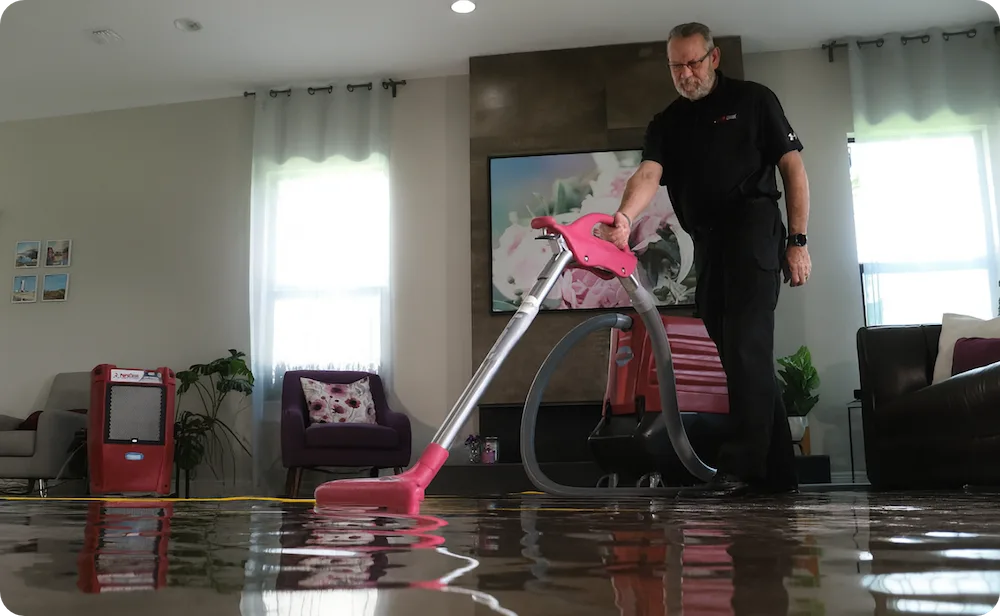
Water damage can result from unexpected leaks, flooding from storms, plumbing failures, or appliance malfunctions. Our certified teams focus on rapid water removal, drying, and stabilization to help prevent further damage and mold growth.
 Explore Our Water Damage Mitigation Services
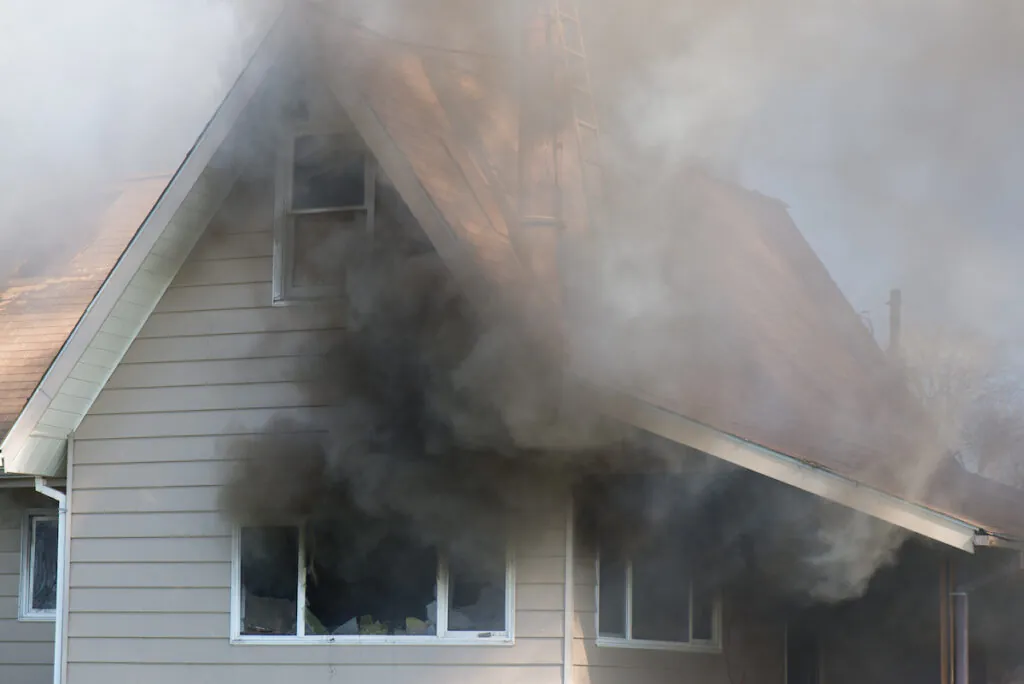
Even after a fire is extinguished, smoke, soot, and odor can continue to affect your home. Fire damage restoration services address visible damage while also helping reduce lingering effects that impact indoor air quality and surfaces.
Explore Our Fire and Smoke Damage Restoration Services
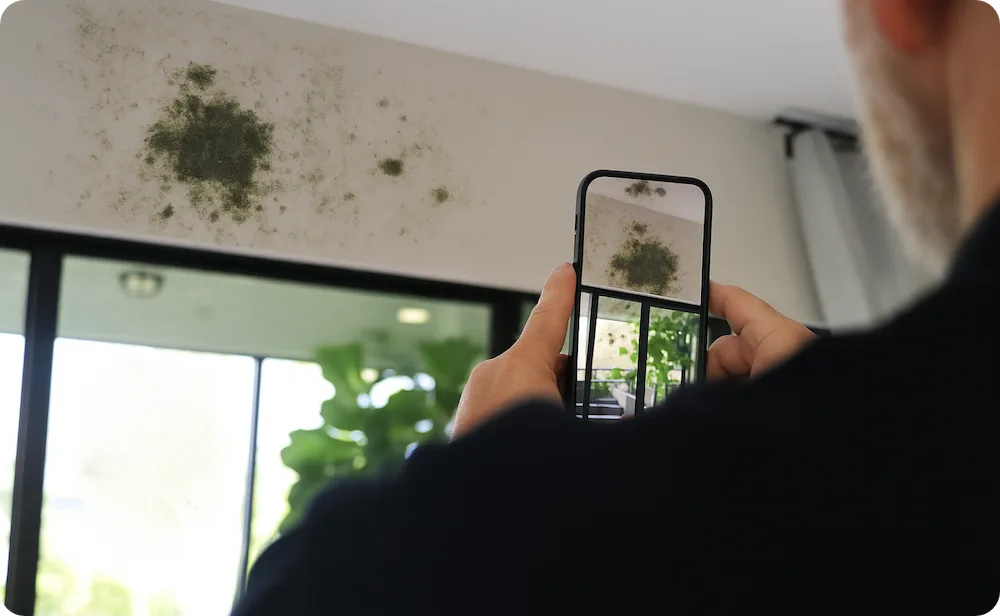
Mold often develops as a result of unresolved moisture or hidden water damage. Professional mold remediation helps identify affected areas, contain growth, and restore healthy indoor conditions.
Explore Our Mold Removal and Remediation Services
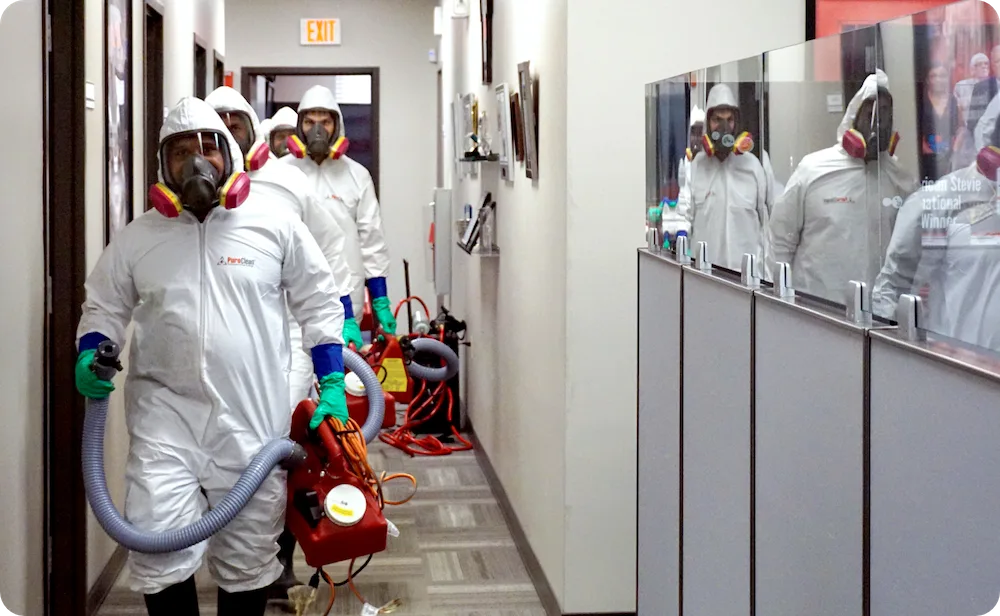
Biohazard situations, including crime scene cleanup and virus decontamination, require specialized cleaning and handling to protect health and safety. Biohazard cleanup services address contamination using proper protocols and professional care.
Explore Our Biohazard Cleanup Services
PuroClean provides 24/7 commercial property damage restoration services for businesses and facilities across the United States.
Explore Our Commercial Services
Water damage can result from unexpected leaks, flooding from storms, plumbing failures, or appliance malfunctions. Our certified teams focus on rapid water removal, drying, and stabilization to help prevent further damage and mold growth.
Explore Our Water Damage Mitigation Services
Specific answers for Ross homeowners and estate property managers
Homes of this age and significance require a restoration approach that prioritizes material preservation at every decision point. Before any demolition or material removal, we conduct a thorough pre-work documentation session — photographing and describing every finish surface, architectural element, and detail in the affected area so that the pre-loss condition is fully documented for insurance purposes and for the reconstruction contractor who will need to match or restore those elements. We use low-moisture drying techniques where invasive opening of wall assemblies would damage historic plaster, original millwork, or irreplaceable finish materials, deploying desiccant or specialty drying equipment where conventional LGR dehumidifiers and air movers would require destructive access. We also flag every material in the demolition zone for lead and asbestos testing before any work begins — both are standard finds in pre-1940 Ross construction — and coordinate with preservation-aware contractors and plaster restoration specialists for the reconstruction phase.
NFIP flood insurance under the standard residential policy covers the building structure and its foundation systems, essential mechanical equipment such as HVAC, electrical panels, and water heaters, and certain built-in appliances — but it does not cover landscaping, lawns, trees, shrubs, septic systems, decks, patios, fences, or any outdoor improvements. Contents coverage under an NFIP policy is available as a separate endorsement and covers personal belongings, but with significant category exclusions and depreciation schedules that differ from replacement cost value coverage. Private flood insurance policies, which are available through surplus lines carriers for high-value Ross properties, often offer broader coverage terms and higher limits than the NFIP’s $250,000 structural ceiling — a meaningful consideration for estate properties whose structural replacement cost may be multiples of that figure. Your independent insurance agent is the right resource to evaluate the specific coverage options available for your property.
Eight months of an unoccupied, unventilated crawl space in the Corte Madera Creek corridor is a meaningful mold development window, and in our experience with Ross ancillary structures, the scope of colonization in these situations is often more extensive than a homeowner expects. Without regular occupancy creating incidental ventilation from door and window use, moisture that enters the crawl space — from the surrounding soil, from a failed vapor barrier, or from any minor plumbing issue — has nowhere to go and feeds mold colonization that spreads across subfloor joists, rim joists, and foundation sill plates over the course of weeks and months. Our assessment starts with a full moisture mapping of the crawl space using calibrated metering and thermal imaging, followed by air quality sampling coordinated with an independent industrial hygienist to characterize the airborne spore load. The remediation scope is built from those findings and follows IICRC S520 protocols — physical containment, HEPA filtration, material removal where warranted, antimicrobial application, and post-remediation clearance verification before we close the scope.
This is one of the most common points of friction we manage on behalf of Ross clients, and it is a legitimate concern. Xactimate pricing is regionally adjusted, but the regional averages it uses for labor and materials are calibrated to the broader Bay Area market — not to the specific costs of working in a historic Ross estate home where plaster repair, period-appropriate millwork matching, and specialty subcontractors carry premiums that standard Xactimate line items do not capture. We address this through a detailed supplemental claim package that documents every material specification, obtains written bids from specialty subcontractors for work that falls outside standard Xactimate categories, and submits a scope narrative that explains to the adjuster why the actual replacement cost of each damaged element exceeds the generic line item pricing. Supplemental claims are a standard part of the restoration process on high-value historic properties, and a well-documented supplement significantly improves the final approved scope.
We can assess the moisture and water damage consequences of both conditions, though the remediation of each involves different specialties. For gutter blockage leading to roof-source water intrusion, our assessment includes thermal imaging of all potentially affected roof-adjacent wall assemblies, attic spaces, and ceiling surfaces to identify any existing moisture migration from past overflow events. If we find active mold or structural moisture from a gutter-related entry, we scope and execute the remediation. For suspected root intrusion into cast-iron or clay drain lines, we work with licensed plumbers who perform camera inspection of the drain laterals — a service we can coordinate referrals to from our trusted trade partner network. If a drain camera confirms root intrusion or line collapse and a subsequent sewage backup occurs, the Category 3 mitigation and sewage cleanup that follows is absolutely within our scope, and we respond to those events as priority emergency calls.
What Our Customers Say:
When you need water damage restoration services near you, call the experts at PuroClean. We are here day or night, 24/7, to help remove any standing water quickly and begin your water restoration service. We monitor the drying process so you can rest assured that your property is dried thoroughly. We offer commercial water restoration services for businesses and residential water damage restoration for homeowners.

PuroClean of San Rafael
(628) 888-2911
3095 Kerner Boulevard, Suite T, San Rafael, CA 94901


© 2026 PuroClean. All Rights Reserved.