PuroClean of San Rafael — 3095 Kerner Boulevard, Suite T, San Rafael, CA 94901
Santa Venetia is an unincorporated community in northeastern Marin County, situated between the North San Pedro Road corridor and the Las Gallinas Valley, with its eastern boundary defined by the tidal marshes and sloughs of San Pablo Bay. The neighborhood takes its name from the Italian city of Venice — a fitting reference, as Santa Venetia was developed in the 1940s and 1950s with a network of tidal channels and sloughs running alongside and beneath its residential streets, a design intended to give the community a waterfront character unique in the North Bay. The streets closest to the Las Gallinas Creek estuary and the adjacent sloughs — including Venetia Avenue, Mar East Street, Riviera Drive, and the blocks feeding toward the bay margin — were built on low-lying filled tidal land at elevations that place them among the most flood-exposed residential addresses in all of Marin County.
The residential fabric of Santa Venetia is defined almost entirely by postwar construction. The neighborhood was developed rapidly during the late 1940s and through the 1950s to meet the housing demand of postwar Marin County, and the homes built during that era — single-family wood-framed houses on slab and crawl space foundations, many on lots with direct or near-direct frontage on the community’s tidal channel network — are now approaching or past the seventy-five-year mark in age. Original galvanized plumbing in these homes is at or past the end of its service life, original vapor barriers in crawl spaces have degraded, and the roofing systems on homes that have not been comprehensively updated are reaching the end of their second or third replacement cycle. The streets behind Venetia Avenue and along Mar East Street represent the older and lower-elevation portions of the community, while the blocks above North San Pedro Road on the hillside edge of the neighborhood sit on higher ground with a different but related set of drainage and moisture vulnerabilities.
For PuroClean of San Rafael, Santa Venetia is one of the highest-flood-risk residential communities in our service territory and one of the most consistently active for water damage and mold remediation calls. The combination of near-sea-level elevation throughout most of the residential grid, direct tidal channel frontage on many lots, the aging postwar housing stock, and the bay-adjacent humidity that keeps ambient moisture levels elevated year-round creates conditions where professional water mitigation and mold remediation are recurring realities for many Santa Venetia homeowners. We bring IICRC-certified technicians, full psychrometric documentation, and Xactimate-format insurance coordination — including direct NFIP flood adjuster experience — to every Santa Venetia call.
Types of damage calls we handle in Santa Venetia:
From our base at 3095 Kerner Boulevard in San Rafael, Santa Venetia is a straightforward and efficient drive north and east. We take Andersen Drive east from our location, connecting to Francisco Boulevard East and then heading north on the Las Gallinas Avenue corridor toward North San Pedro Road, which forms the primary spine connecting central San Rafael to the Santa Venetia community. From North San Pedro Road we enter the neighborhood via Venetia Avenue or Mar East Street depending on the specific address. Under normal traffic conditions, total drive time from our Kerner Boulevard base to most Santa Venetia addresses runs between twelve and eighteen minutes — well within our sixty-minute emergency response commitment for any acute event in the community.
North San Pedro Road is the primary arterial serving both Santa Venetia and the China Camp State Park corridor to the east, and it carries commute traffic in both directions during morning and afternoon peak hours. The road is two lanes through most of its Santa Venetia-adjacent stretch, with limited passing opportunities, and during peak periods the transit time from central San Rafael to the neighborhood can extend somewhat. For emergency response we dispatch immediately and communicate real-time ETAs. For non-emergency assessment scheduling, mid-morning windows after the morning commute clears offer the cleanest transit time on the North San Pedro corridor.
Within Santa Venetia, the residential street network is relatively compact and grid-like in the flat lower sections near the tidal channels, which makes navigation and equipment staging straightforward for most addresses. Properties directly on or immediately adjacent to the tidal channel network — those with lot lines that abut Las Gallinas Creek sloughs — may require awareness of tidal cycle timing for access to crawl spaces and below-grade areas during active remediation, and we coordinate with clients about optimal access windows when tidal conditions are a relevant factor. During active flood events on the lower streets, we assess road and access conditions in real time and communicate our approach to clients before arrival, staging equipment at accessible points when vehicle access to the immediate address is temporarily restricted by standing water.
Las Gallinas Creek and its associated tidal slough network form the defining environmental risk factor for Santa Venetia’s residential community. The creek drains the Las Gallinas Valley watershed to the north and west before entering its tidal reach through the Santa Venetia community and discharging into San Pablo Bay to the east. In its tidal reach through and adjacent to the neighborhood, the creek is subject to both upstream stormwater surge during rain events and the daily tidal fluctuations of San Pablo Bay — and when a major storm arrives at high tide, the combined pressure from both directions simultaneously can push water across the lowest-elevation residential streets and into the crawl spaces, garages, and lower-level entries of properties built at or near the channel margins. FEMA flood mapping designates substantial portions of Santa Venetia as Zone AE and Zone X, with the Zone AE designation — the high-risk category — covering the streets and lots closest to the Las Gallinas Creek tidal corridor. Many Santa Venetia homeowners with mortgages on Zone AE properties are required by their lenders to carry NFIP flood insurance.
The filled tidal land on which most of Santa Venetia was built introduces a specific groundwater dynamic that compounds the creek flooding risk. The bayfront fill soils beneath the neighborhood have relatively low permeability and high water retention capacity, which means that groundwater rises quickly during extended wet periods and remains elevated for days after a storm has passed. During the wet season, the water table beneath the lower Santa Venetia streets can sit within inches of the surface — close enough that any crawl space floor without an intact, well-sealed vapor barrier is in direct contact with near-surface moisture. This chronic groundwater proximity is the baseline condition against which every other moisture intrusion event — a pipe failure, a roof leak, a flood event — is layered, and it explains why mold colonization in Santa Venetia crawl spaces is so consistently prevalent even in homes that have not experienced a dramatic water damage event.
The age and construction type of Santa Venetia’s housing stock interacts with these environmental factors in compounding ways that make even moderate water intrusion events more consequential than they would be in newer construction. Homes built in the late 1940s and 1950s on slab-on-grade foundations have original or early-replacement under-slab plumbing that has been in service for sixty-five to seventy-five years — well past the expected service life of galvanized steel supply lines and approaching the end of useful life for early copper installations, particularly where the copper is in contact with the aggressive soil chemistry common in bay-margin fill areas. Crawl space homes in the same era have original or degraded vapor barriers, original wood framing that has been subject to chronic moisture exposure for the full life of the structure, and in many cases original cast-iron drain lines with accumulated scale, root intrusion, and corrosion that generates Category 3 sewage backup risk independent of any external flooding event.
San Pablo Bay’s influence on Santa Venetia’s ambient moisture environment extends beyond the periodic flood events to create a year-round elevated humidity baseline that affects how quickly structural moisture dries out following any intrusion event. The bay surface generates persistent evaporation that keeps relative humidity elevated in the flatland neighborhoods adjacent to the water margin, particularly overnight and during the morning hours before afternoon breezes develop. In the IICRC S500 drying framework, elevated ambient humidity directly extends the psychrometric drying timeline by reducing the moisture gradient between wet structural materials and the surrounding air — and in Santa Venetia’s bay-adjacent environment, that extension is measurable and consistent across every job we work in this neighborhood.
Owned & Operated by Nicholas Ondrejka
3095 Kerner Boulevard, San Rafael, CA, 94901
(628) 888-2911
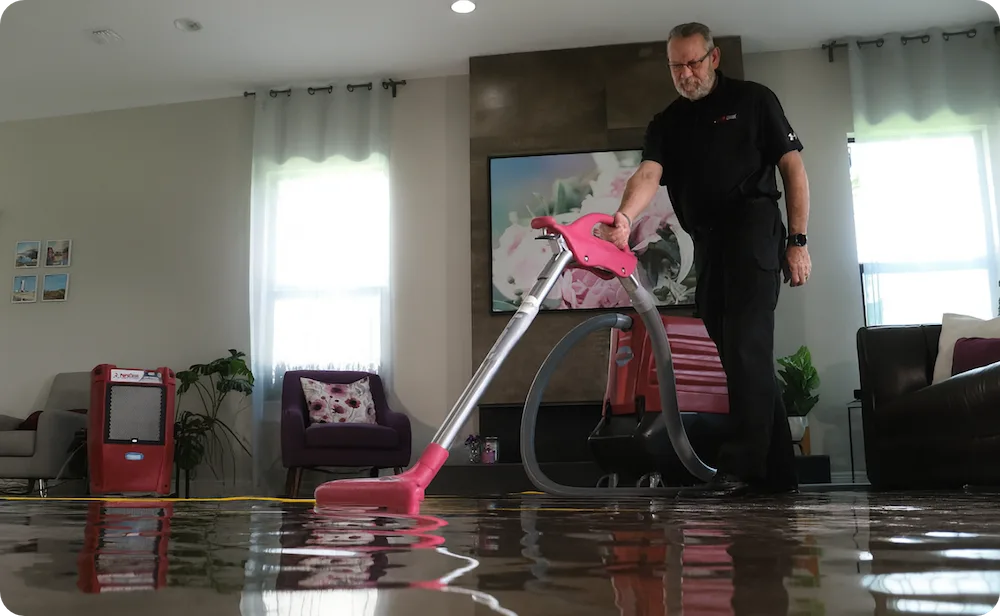
Water damage can result from unexpected leaks, flooding from storms, plumbing failures, or appliance malfunctions. Our certified teams focus on rapid water removal, drying, and stabilization to help prevent further damage and mold growth.
 Explore Our Water Damage Mitigation Services
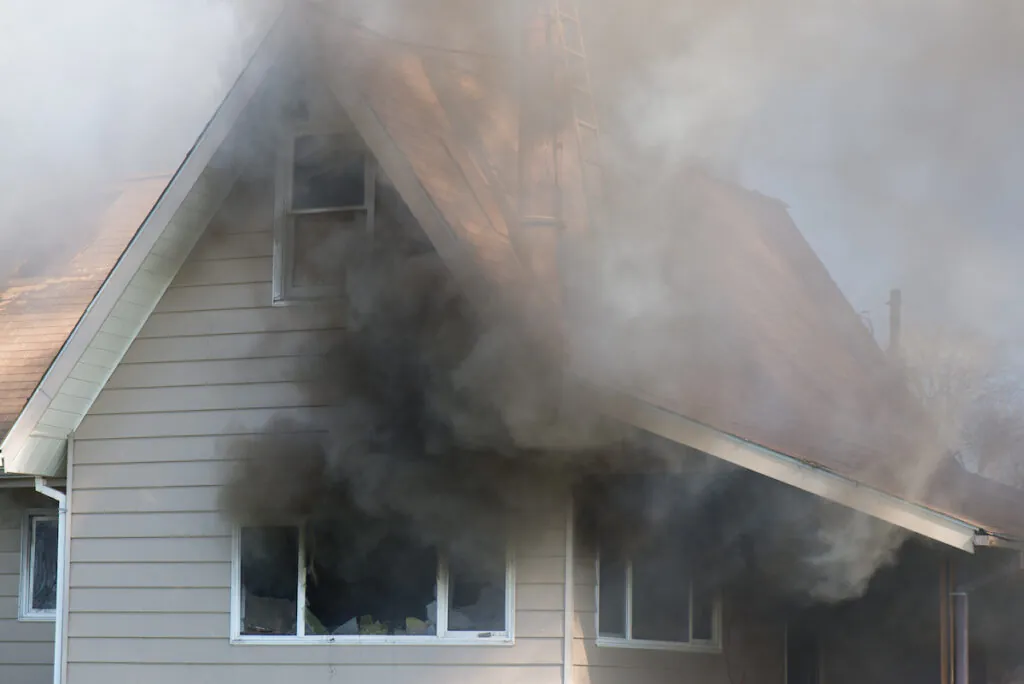
Even after a fire is extinguished, smoke, soot, and odor can continue to affect your home. Fire damage restoration services address visible damage while also helping reduce lingering effects that impact indoor air quality and surfaces.
Explore Our Fire and Smoke Damage Restoration Services
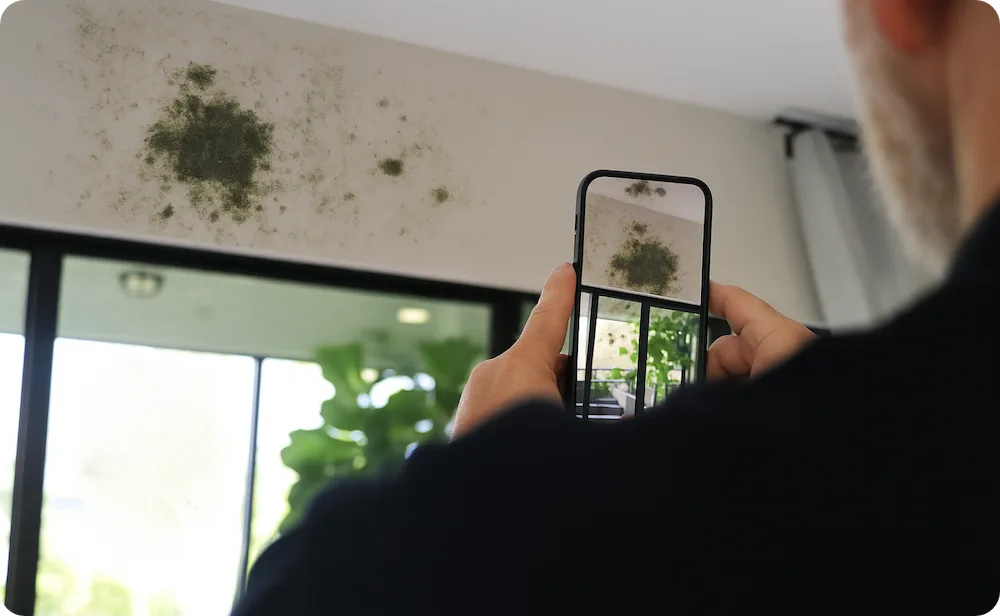
Mold often develops as a result of unresolved moisture or hidden water damage. Professional mold remediation helps identify affected areas, contain growth, and restore healthy indoor conditions.
Explore Our Mold Removal and Remediation Services
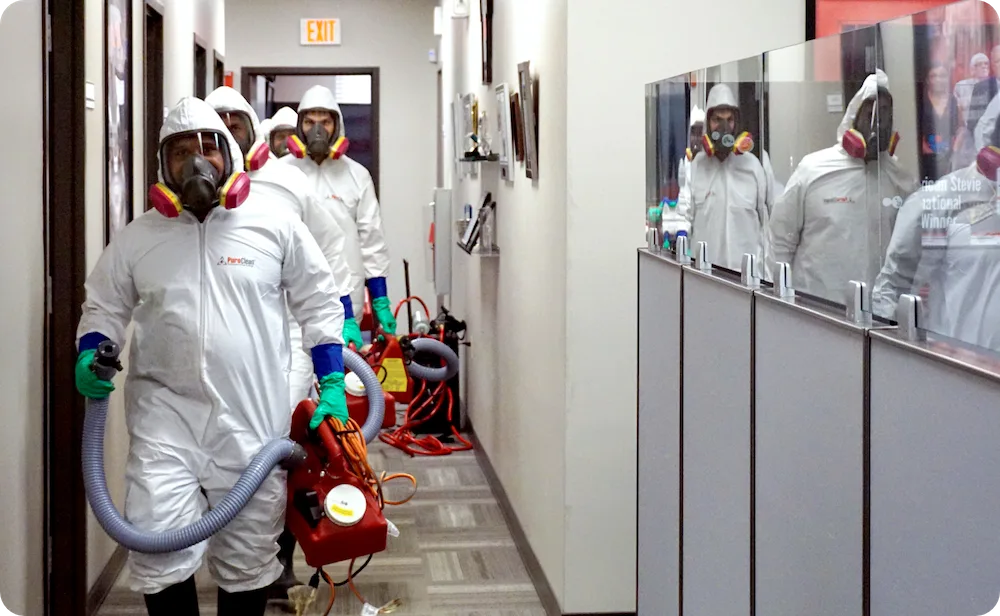
Biohazard situations, including crime scene cleanup and virus decontamination, require specialized cleaning and handling to protect health and safety. Biohazard cleanup services address contamination using proper protocols and professional care.
Explore Our Biohazard Cleanup Services
PuroClean provides 24/7 commercial property damage restoration services for businesses and facilities across the United States.
Explore Our Commercial Services
Water damage can result from unexpected leaks, flooding from storms, plumbing failures, or appliance malfunctions. Our certified teams focus on rapid water removal, drying, and stabilization to help prevent further damage and mold growth.
Explore Our Water Damage Mitigation Services
Specific answers for Santa Venetia homeowners and property owners
NFIP adjuster scopes are a known point of friction in flood claims, and underpayment on initial assessments is common enough that supplemental claims are a routine part of the NFIP process rather than an exception. NFIP policies have specific coverage categories and sub-limits — building coverage for structural elements, contents coverage for personal property, and no coverage for certain categories like landscaping, outdoor improvements, or finished basement spaces below the Base Flood Elevation in some policy types. When the initial adjuster scope misses covered elements or applies incorrect depreciation, we prepare a detailed supplemental package that documents every affected material with photographs, specifications, and Xactimate-format line items that align with NFIP-accepted scope categories. We communicate directly with the Write Your Own carrier adjuster handling your claim and have experience working through NFIP supplement processes for Santa Venetia flood events specifically. The key is acting promptly — NFIP supplement requests have timelines, and delays in submitting additional documentation can affect your ability to recover the full covered scope.
Under-slab leak investigation in a 1950s Santa Venetia home starts with non-invasive assessment before any flooring is touched. We use calibrated pinless moisture meters across the slab surface to map areas of elevated moisture content, and thermal imaging of the floor surface can identify temperature differentials that indicate wet zones beneath the flooring material. If a leak source is confirmed or strongly suggested, a licensed plumber performs a pressure test and, if needed, acoustic listening or tracer gas detection to locate the specific failure point. The targeted repair approach — opening the slab at the confirmed failure point rather than across a broad area — is far less disruptive and less expensive than exploratory demolition. Once the plumber has completed the repair, we dry the slab using floor mat drying systems that draw moisture up through the concrete surface, monitor daily psychrometric readings until the slab reaches IICRC drying goals, and remove only the flooring directly above the affected area rather than the entire floor. We coordinate the plumber and drying scope as a unified project so the repair and the drying proceed in the correct sequence without gaps.
Recurring crawl space mold after self-treatment almost always traces to one of two causes, and in Santa Venetia it is most often both operating simultaneously. The first is incomplete source control — if the moisture entering the crawl space is not fully interrupted, any treatment of the existing mold is temporary because the conditions that support regrowth remain present. In Santa Venetia, that moisture source is typically a combination of bay-adjacent groundwater proximity, inadequate or failed vapor barrier coverage on the crawl space floor, and potentially foundation vent configuration that allows humid bay air to enter the space at night. The second cause is incomplete remediation — consumer-grade antifungal sprays applied to visible mold surface growth do not penetrate into the wood fiber where mold hyphae have colonized, and regrowth from that subsurface colonization resumes once conditions are again favorable. Professional remediation to IICRC S520 standards includes HEPA vacuuming, appropriate mechanical abrasion of affected wood surfaces where warranted, EPA-registered antimicrobial application, and installation of a new fully sealed vapor barrier — all of which address both the existing colonization and the primary moisture pathway that feeds it.
California real estate disclosure law requires sellers to disclose known material defects, and elevated moisture in a crawl space that has been identified in an inspection report is now a known condition — one you are obligated to disclose to any subsequent buyer regardless of whether you address it. The practical path forward is to have us assess the crawl space thoroughly, determine whether the elevated moisture has produced mold colonization, scope the remediation if it has, execute the work, and obtain post-remediation clearance from an independent industrial hygienist. That clearance documentation — combined with our written scope of work and completion record — converts the disclosed deficiency into a documented, professionally resolved condition, which is a far stronger position for your transaction than a disclosure with no follow-up. We can turn around an assessment and written findings within one business day of the inspection and, depending on the scope, complete remediation and obtain clearance within five to ten business days — timelines that are workable within most active Marin County escrow inspection contingency periods.
NFIP premium rates are determined in part by a property’s individual flood risk characteristics — its elevation relative to the Base Flood Elevation, its flood zone designation, and the construction type and date of the structure — not by the claims history of neighboring properties. The introduction of FEMA’s Risk Rating 2.0 methodology in 2021 moved the NFIP away from community-based rate tables toward property-specific risk assessments, which means your neighbor’s claims do not directly increase your premiums. What does affect your premiums are factors specific to your property: whether you have a current elevation certificate, whether your structure has been elevated or flood-proofed, and your own prior claims history. Professional restoration documentation — complete scope records, psychrometric logs, and clearance certifications — does not directly reduce NFIP premiums, but it creates a defensible record that the damage was properly addressed, which protects your insurability and supports future claims if additional events occur. Your insurance agent or a licensed public adjuster familiar with NFIP Risk Rating 2.0 can provide a property-specific premium analysis.
What Our Customers Say:
When you need water damage restoration services near you, call the experts at PuroClean. We are here day or night, 24/7, to help remove any standing water quickly and begin your water restoration service. We monitor the drying process so you can rest assured that your property is dried thoroughly. We offer commercial water restoration services for businesses and residential water damage restoration for homeowners.

PuroClean of San Rafael
(628) 888-2911
3095 Kerner Boulevard, Suite T, San Rafael, CA 94901


© 2026 PuroClean. All Rights Reserved.