We find the moisture source, remove mold safely, and help keep it from coming back — for homes and businesses across Marin County
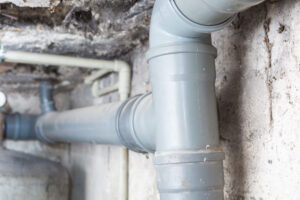
Mold is rarely the real problem. It is the symptom. Somewhere in the building, water is getting where it should not: a slow leak behind a wall, humidity trapped in a crawl space, a roof that let in last winter’s rain. Remove the mold without fixing that, and it grows back, which is why effective mold remediation fixes the source first.
PuroClean of San Rafael identifies the moisture source behind mold growth and safely removes mold from homes and businesses throughout San Rafael and Marin County. Our certified technicians locate hidden moisture with professional detection equipment, contain the affected area so spores do not spread, remove contaminated materials under HEPA air filtration, dry the structure, and confirm the space is ready before anything is rebuilt. You get a clear answer on what caused the mold, what was removed, and what will keep it from returning. Our work follows IICRC mold remediation standards.
Every mold project follows the same sequence. Skipping a step, especially the first one, is the most common reason mold comes back.
We start by finding where the water is coming from, not just where the mold is visible. Technicians use moisture meters, thermal imaging cameras, and other moisture-detection tools to trace moisture inside walls, under flooring, above ceilings, and in crawl spaces. Readings and photos are documented so you, your plumber or roofer, and your insurance adjuster can see exactly what was found. If the source needs a repair outside our scope, such as a plumbing leak or roof flashing, we tell you who to call and time our work so the repair happens before the rebuild.
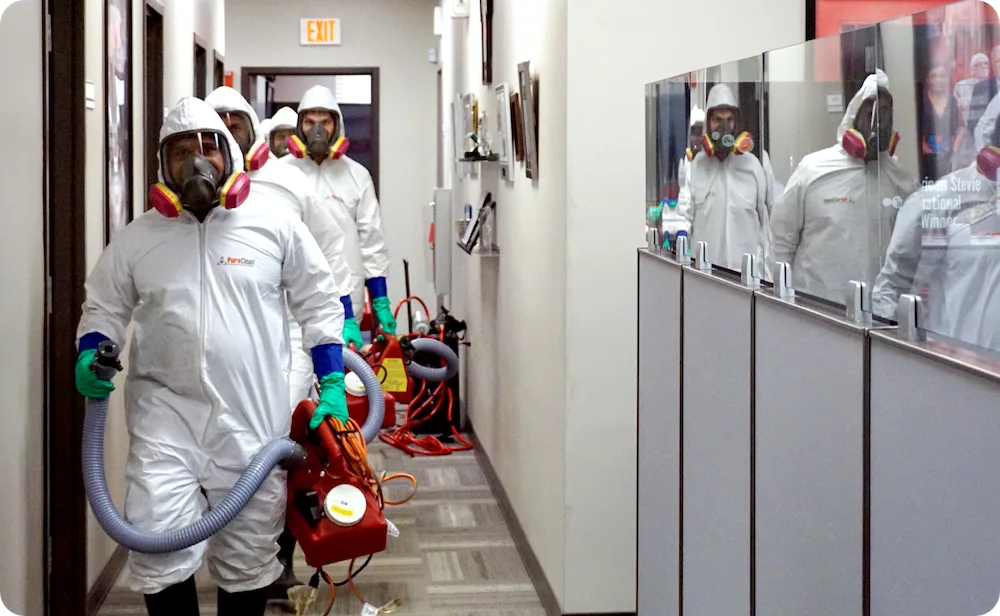
Disturbing mold releases spores. Before removal begins, we isolate the work area with polyethylene sheeting, close off doorways, cover HVAC vents, and set up negative air pressure so air flows into the containment rather than out into the rest of the building. The containment level is matched to the size and location of the growth.
HEPA air scrubbers run throughout the project to capture airborne spores and mold fragments released during removal. Filtration protects the rest of your home or business, and the people in it, while work is underway.
Porous materials with active mold growth, such as drywall, insulation, carpet pad, and ceiling tiles, cannot be reliably cleaned. They are removed, bagged inside containment, and documented with photos for your claim. Framing, subfloor, and other hard surfaces are cleaned rather than replaced whenever possible.
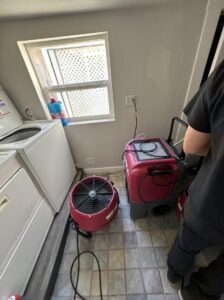
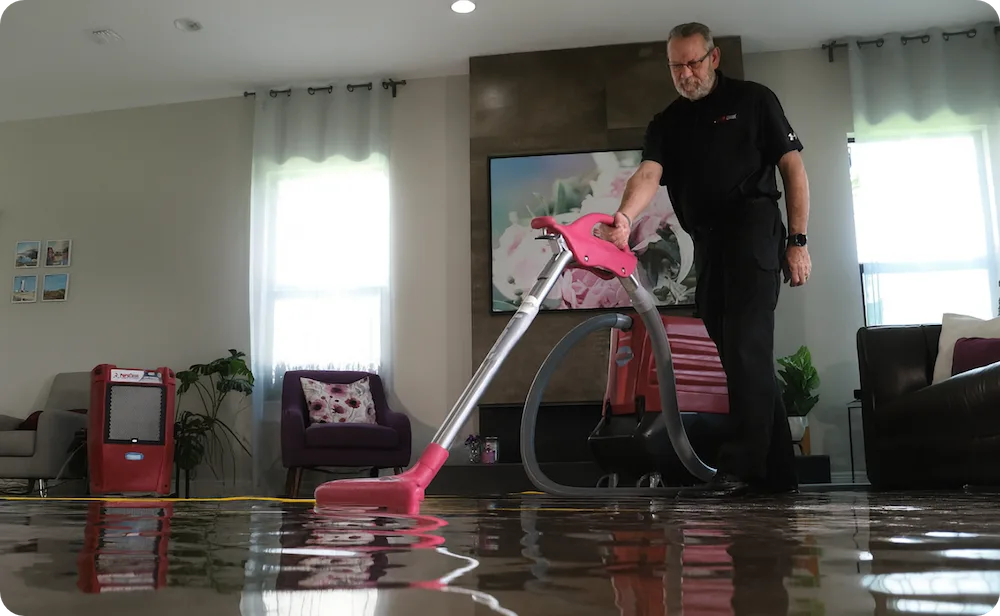
Once the moisture source is stopped, we dry the structure with commercial dehumidifiers and air movers and track moisture readings until materials reach drying goals. Rebuilding over damp framing or subfloor is one of the most common ways mold returns months later.
Remaining surfaces are HEPA vacuumed and damp wiped, and salvageable contents are cleaned. Antimicrobial treatment is applied where appropriate, and the area is deodorized to remove lingering musty odor.
Before containment comes down, the area is checked visually and with moisture readings. When clearance testing is needed, we coordinate post-remediation verification with an independent indoor environmental professional (IEP). You also receive recommendations for keeping moisture from returning, from ventilation and dehumidification to repair follow-up.
Most mold we are called to address starts with moisture no one could see. These are the sources we find most often and the signs that point to them.
| Moisture source | Where mold shows up | Warning signs |
|---|---|---|
| Slow plumbing leaks (supply lines, drains, water heaters) | Inside walls, under sinks, beneath flooring | Musty smell in one room, soft or stained drywall, warped baseboards |
| Roof and window leaks during the rainy season | Attics, ceilings, tops of exterior walls | Ceiling stains, peeling paint, damp insulation |
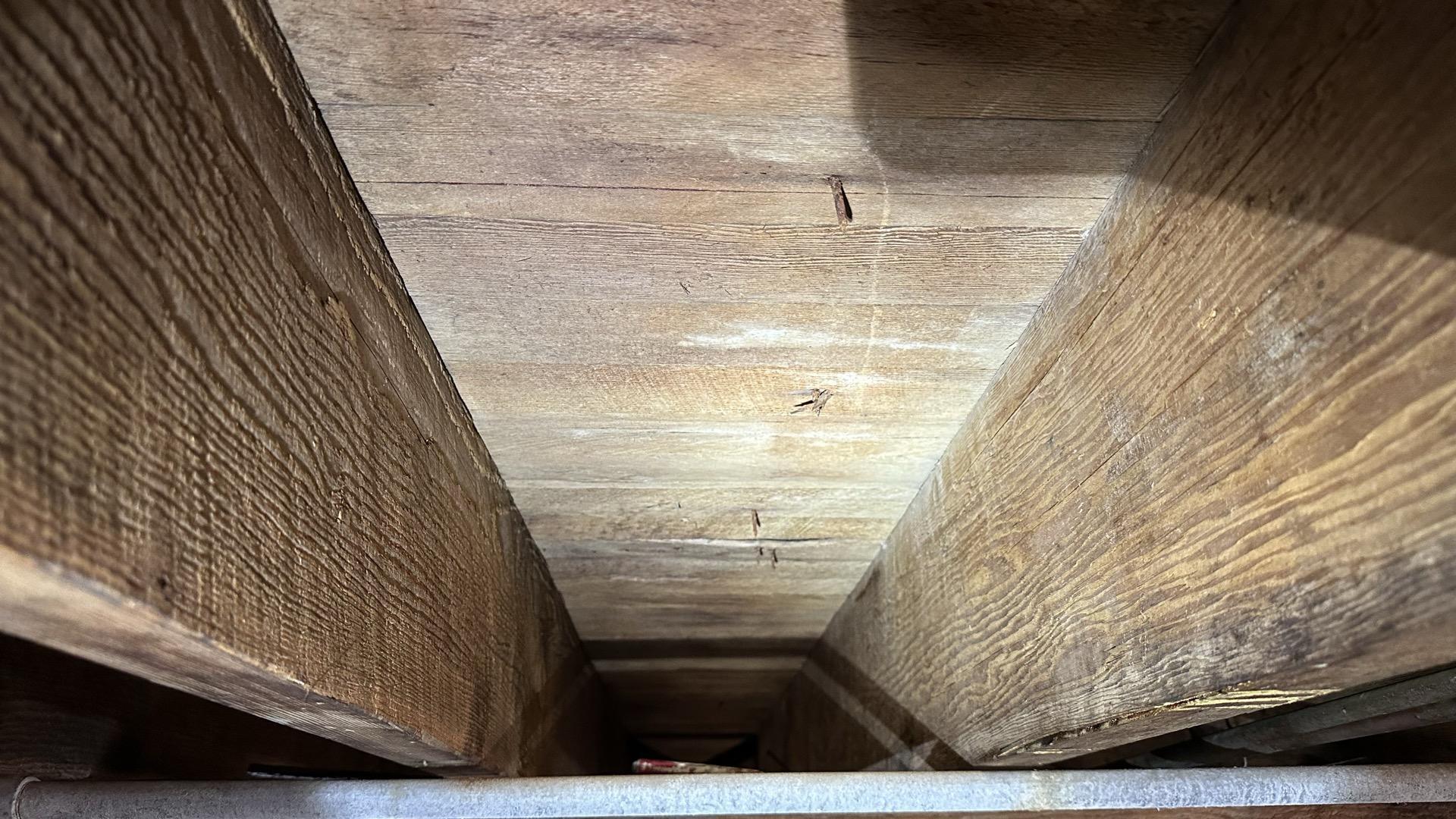
| Crawl space humidity and poor ventilation | Floor joists, subfloor, insulation | Musty odor rising through floors, cupping hardwood |
| Water damage that was never fully dried | Wall cavities, behind baseboards, under carpet pad | Mold appearing weeks after a leak or flood was “cleaned up” |
| Condensation in bathrooms, around HVAC, on cold exterior walls | Bathroom ceilings, around vents, closet corners | Spots that return after cleaning |
| Drainage and grading problems | Below-grade walls, garages, crawl spaces | Damp foundation walls or white mineral deposits after rain |
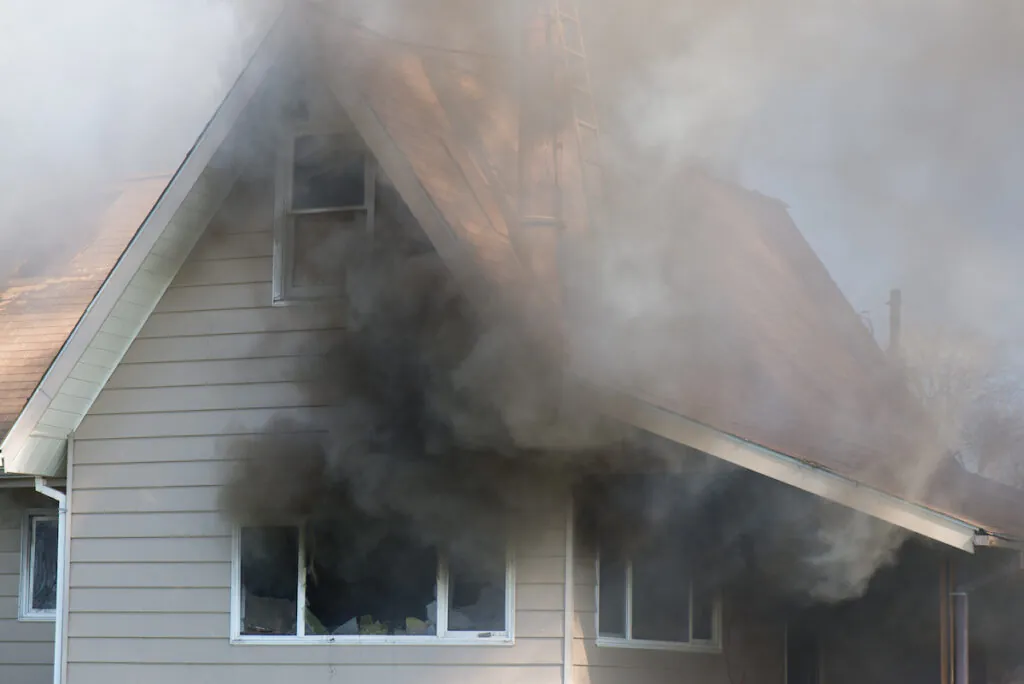
| Firefighting water after a house fire | Wall cavities and subfloors | Musty odor developing during fire restoration |
Mold can begin growing on wet building materials within 24 to 48 hours. If your home or business had a leak, overflow, or flood that was mopped up but not professionally dried, moisture may still be trapped in wall cavities, subfloors, or insulation. That hidden moisture is one of the most common causes of mold we find in Marin County homes.
If the water damage is recent, fast drying can prevent mold entirely. Learn more about our water damage mitigation services. If mold developed after a fire, our fire and smoke damage restoration team handles structural drying and cleanup together.
Not every mold problem requires testing, but some do. Here is how to tell.
| Your situation | Is testing usually needed? | Why |
|---|---|---|
| Visible mold with an obvious moisture source | Often not | The priority is fixing the moisture and removing the growth safely |
| Musty odor but no visible mold | Often helpful | Sampling alongside a moisture investigation can help locate hidden growth |
| Health concerns in the household, or a real estate transaction | Recommended | An independent assessment documents conditions for your records |
| Large area of growth or mold involving the HVAC system | Recommended | Helps define the full scope before remediation begins |
| After remediation, to confirm the area is clear | Recommended for larger projects | Post-remediation verification by an independent IEP confirms the work |
PuroClean of San Rafael works with independent indoor environmental professionals and accredited laboratories when testing is needed. Keeping assessment separate from remediation gives you an objective result. If you have health concerns related to mold exposure, talk with your doctor.
We fix the cause, not just the symptom. Every project starts with finding the moisture source, so the mold does not come back after we leave.
Certified, trained technicians. Our team follows IICRC mold remediation standards and PuroClean’s national training protocols for containment, removal, and drying.
Independent verification. We work with indoor environmental professionals and laboratories so you have objective confirmation when testing is needed.
Insurance documentation built in. We provide your insurance agent or adjuster with a complete estimate, including photos and moisture readings.
Ongoing communication. You receive regular updates and reporting from assessment through completion, with respect for your home and belongings.
Locally owned. PuroClean of San Rafael serves San Rafael, Novato, Mill Valley, San Anselmo, Corte Madera, Tiburon, Sausalito, and the rest of Marin County.
What Our Customers Say:
Mold keeps spreading as long as the moisture behind it remains. PuroClean of San Rafael is ready to find the source, remove the mold safely, and help make sure it does not come back. Call us 24/7 at (628) 888-2911 or request help online.
Request Immediate Mold Remediation Help →
Find answers to common questions about our services
We trace moisture with moisture meters, thermal imaging cameras, and other moisture-detection tools, checking walls, floors, ceilings, and crawl spaces around and beyond the visible growth. The goal is to find where water is entering or collecting so it can be stopped before mold is removed and the area is rebuilt.
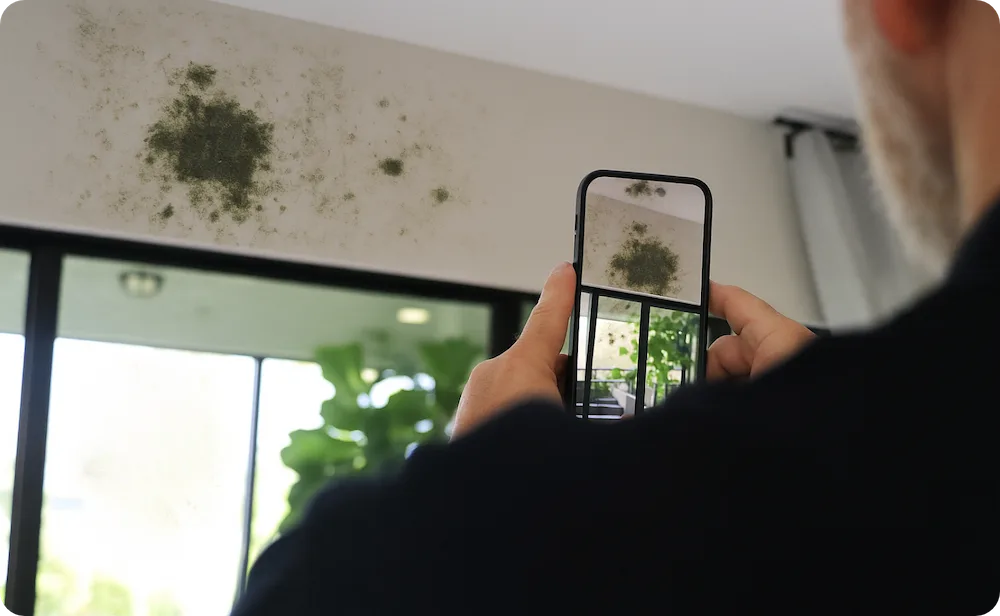
Yes. Slow leaks inside walls, humidity in crawl spaces, and water damage that was never fully dried are common causes of mold that is not visible from the room. A musty odor that won’t go away is often the first clue. Other early signs include discoloration or spots on walls or ceilings, peeling paint, warped flooring or baseboards, and increased humidity.
Mold can begin growing on wet materials within 24 to 48 hours. Professional drying soon after a leak or flood is the most effective way to prevent it.
Safe removal means containing the work area, running HEPA air filtration, removing contaminated porous materials inside containment, HEPA vacuuming and cleaning remaining surfaces, drying the structure, and confirming the area before containment comes down. This keeps spores from spreading to the rest of the building.
Not always. Visible mold with a known moisture source usually does not require testing. Testing is more useful when there is a musty odor but no visible growth, when someone in the home has health concerns, during a real estate transaction, or to confirm results after a larger project. An independent IEP is recommended for large or complex projects, suspected mold in HVAC systems, and post-remediation verification. PuroClean of San Rafael coordinates with independent IEPs and laboratories when their involvement is needed. See the table above.
Very small areas of surface mold on hard surfaces can sometimes be cleaned by a homeowner, as long as the moisture problem is fixed. Larger areas, mold inside walls or HVAC systems, or mold that returns after cleaning should be handled professionally, because disturbing it without containment can spread spores through the home.
Mold is likely to return if the underlying moisture problem is not corrected. That is why professional remediation includes moisture investigation, structural drying, and verification, which significantly reduce the risk of recurrence.
Small, contained projects can often be completed in a few days. Larger projects that involve structural drying, material removal, or verification testing take longer. We provide a timeline after the initial assessment.
Containment keeps the work isolated from the rest of the building, so many homeowners and businesses can use unaffected areas during the project. We discuss access, noise, and scheduling with you before work begins.
Each policy is different. Mold resulting from a sudden, covered event such as a burst pipe may be covered, while mold from long-term leaks or maintenance issues is often excluded. Contact your insurance provider to confirm your coverage. We provide complete documentation and estimates with photos to support your claim.
Our mold remediation team is trained, certified, and experienced in addressing a wide range of residential mold situations. We follow industry standards and proven remediation practices to support safe, effective results.
Mold concerns can be stressful and confusing. Our team works with insurance providers when applicable to help document mold-related damage and guide homeowners through next steps with clarity and transparency.
Certain mold situations require immediate attention, especially when linked to active water intrusion. Our team is available 24/7 to respond when mold or moisture concerns need prompt action.
Water damage can result from unexpected leaks, flooding from storms, plumbing failures, or appliance malfunctions. Our certified teams focus on rapid water removal, drying, and stabilization to help prevent further damage and mold growth.
 Explore Our Water Damage Mitigation Services
Even after a fire is extinguished, smoke, soot, and odor can continue to affect your home. Fire damage restoration services address visible damage while also helping reduce lingering effects that impact indoor air quality and surfaces.
Explore Our Fire and Smoke Damage Restoration Services
Mold often develops as a result of unresolved moisture or hidden water damage. Professional mold remediation helps identify affected areas, contain growth, and restore healthy indoor conditions.
Explore Our Mold Removal and Remediation Services
Biohazard situations, including crime scene cleanup and virus decontamination, require specialized cleaning and handling to protect health and safety. Biohazard cleanup services address contamination using proper protocols and professional care.
Explore Our Biohazard Cleanup Services
For property managers and commercial landlords, a biohazard situation is two problems at once: an exposure-controlled cleanup that must be done correctly, and a visibility problem that can escalate into tenant complaints, customer walkouts, and brand damage if the response looks chaotic. PuroClean of San Rafael provides access-controlled, safety-first biohazard cleanup designed to restore a clean, normal-appearing space—without turning your incident into a public spectacle.
Explore Our Commercial Biohazard Cleanup Services
For commercial operators, a fire loss becomes a risk-and-compliance decision immediately: what can be safely used, what must be isolated, and what rebuild work may have to meet current code. Fire, smoke, soot, and suppression water can affect electrical systems, fire-rated assemblies, and egress components—creating a scope that impacts budgets, permits, and your insurance timeline.
Explore Our Commercial Fire Damage Restoration Services
Commercial mold remediation rarely happens in a fully closed building. Operations leaders and property managers typically need hallways, offices, tenant suites, and shared systems functioning while affected areas are isolated and remediated. PuroClean of San Rafael focuses on source-driven remediation (not surface cleaning), strict containment with HEPA air management, and milestone-based documentation so you can make defensible re-entry decisions zone by zone.
Explore Our Commercial Mold Remediation Services
Commercial water damage restoration is more than an extraction job. For property managers and commercial landlords, a water event quickly becomes a documentation and coordination problem: notifying ownership, communicating with tenants, supporting an insurance claim, and making defensible re-entry decisions while the building is still in motion.
Explore Our Commercial Water Damage Restoration Services
Water damage can result from unexpected leaks, flooding from storms, plumbing failures, or appliance malfunctions. Our certified teams focus on rapid water removal, drying, and stabilization to help prevent further damage and mold growth.
Explore Our Water Damage Mitigation Services

PuroClean of San Rafael
(628) 888-2911
3095 Kerner Boulevard, Suite T, San Rafael, CA 94901