PuroClean of San Rafael — 3095 Kerner Boulevard, Suite T, San Rafael, CA 94901
San Rafael is the largest city in Marin County and its county seat, with a population of approximately sixty thousand residents spread across a diverse geography that stretches from the tidal flatlands of the Canal neighborhood along San Rafael Bay to the hillside residential communities climbing toward the Dominican Hills, Terra Linda, and the open space preserves of the Marin Municipal Water District above Lucas Valley Road. Established as Mission San Rafael Arcángel in 1817 — the twentieth and penultimate of California’s Spanish missions — San Rafael transitioned from mission settlement to county seat after California statehood in 1850, and it has served as the civic, commercial, and institutional center of Marin County ever since. Fourth Street, the city’s downtown main street, has operated as a retail and dining corridor for well over a century, lined with commercial buildings dating from the late 1800s through successive development eras, many of them carrying the accumulated water management vulnerabilities of their age.
San Rafael’s neighborhoods span nearly every residential type and construction era present in Marin County, often within a few blocks of each other. The Canal District in the city’s southeastern corner — a dense, predominantly renter-occupied neighborhood of multi-family buildings and older single-family homes built primarily in the 1950s through 1970s — is one of the most flood-exposed residential areas in Marin County, with San Rafael Creek and the tidal canal system that gives the neighborhood its name creating recurring inundation risk at the lowest-elevation addresses. Moving west and uphill, the downtown-adjacent neighborhoods of Gerstle Park and Forbes contain a rich stock of Victorian and Craftsman homes from the early 1900s, many with crawl space foundations and original galvanized plumbing approaching or past century-mark age. Terra Linda and the Northgate area in the city’s northern reaches represent the postwar suburban development of the 1950s and 1960s, with ranch-style tract homes on slab and crawl space foundations whose plumbing and roofing systems are now well into their second or third service cycle.
PuroClean of San Rafael operates out of 3095 Kerner Boulevard — we are a San Rafael company in every meaningful sense, and this city is our home territory. We know the Canal District’s flood exposure, the Dominican Hills’ drainage patterns, the Gerstle Park Victorian stock’s plumbing vulnerabilities, and the Terra Linda tract home’s slab foundation drying challenges from direct, repeated experience. Every call that comes in from a San Rafael address reaches a team that is already here, already familiar with the property type, and already on its way within minutes of dispatch. We bring IICRC-certified technicians, commercial-grade equipment, full psychrometric documentation, and Xactimate-format insurance coordination to every San Rafael job — from a Fourth Street commercial water event to a Dominican Drive hillside home mold remediation.
Types of damage calls we handle in San Rafael:
Because PuroClean of San Rafael is headquartered at 3095 Kerner Boulevard in the Kerner Industrial Park off Andersen Drive, our response times within San Rafael are the shortest anywhere in our service territory. For properties in the downtown area, the Canal District, the Andersen Drive corridor, and the neighborhoods immediately adjacent to US-101, our technicians are on-site in five to twelve minutes from dispatch under normal conditions — a response window that meaningfully reduces ongoing damage in active water events where every minute matters. For the Dominican Hills, Sun Valley, and the residential streets climbing toward the Marin Municipal Water District open space boundary, add five to ten minutes for the uphill transit on roads like Dominican Drive, Belle Avenue, and Vendola Drive. Terra Linda and Northgate addresses in the city’s northern reaches are accessible in ten to eighteen minutes via US-101 north and the Lucas Valley Road or Freitas Parkway exits.
The Canal District deserves specific attention in any discussion of San Rafael emergency response. The neighborhood’s street grid — with key residential addresses on Canal Street, Bellam Boulevard, and the streets feeding off them toward the bay — can become partially inaccessible during major tidal flooding events when street-level water depths exceed vehicle clearance. For flood events in the Canal District, we assess road conditions in real time during transit and, where necessary, stage equipment at the nearest accessible point and use portable extraction and drying equipment to reach properties that larger vehicles cannot access. We communicate directly with the client about our approach during transit so they know exactly what to expect on arrival.
San Rafael’s commercial corridors — Fourth Street downtown, Andersen Drive, Francisco Boulevard, and the Northgate shopping area — each have distinct access and staging considerations for commercial water damage response. Downtown Fourth Street has metered parking and loading zones that require coordination for equipment staging during business hours. The Francisco Boulevard and Andersen Drive industrial and commercial corridors offer easier vehicle staging for larger extraction equipment. For after-hours commercial response, we coordinate access directly with property managers or business owners and confirm building access protocols before dispatch. San Rafael’s diverse commercial building stock means no two commercial jobs look the same, and we size and configure our response appropriately for each address.
San Rafael Creek and the tidal canal system that runs through the Canal District represent the city’s most acute and recurring environmental flood risk. The Canal District sits at or near sea level on filled bayfront land, and the network of tidal channels that once defined this portion of San Rafael Bay now runs beneath and alongside the neighborhood’s streets and properties. During major storm events — particularly those that arrive at high tide — the canal system backs up, storm drains reverse flow, and water rises through the street infrastructure into the lowest-elevation residential and commercial properties. This happens repeatedly, not occasionally, and the Canal District’s flood exposure is documented in FEMA Special Flood Hazard Area mapping that designates significant portions of the neighborhood as Zone AE. Many Canal District property owners and landlords carry NFIP flood insurance as a direct result of lender requirements tied to this designation.
The Victorian and Craftsman housing stock of the Gerstle Park and Forbes neighborhoods carries a concentrated plumbing vulnerability profile that generates consistent water mitigation calls throughout the year. Homes built between 1895 and 1930 on the streets around D Street, E Street, Elm Avenue, and Bayview Street were plumbed with galvanized steel supply lines that have been corroding internally for ninety to one hundred twenty years. The corrosion process reduces interior pipe diameter over time and accelerates toward catastrophic failure at fittings, valves, and any location where the pipe transitions to a different material. Many of these homes have been partially repiped over the decades — a section here, a bathroom there — creating plumbing systems with mismatched materials and connection points that introduce their own failure risks at the junctions between old and new. A single fitting failure in a Gerstle Park craftsman at two in the morning can saturate a subfloor, two adjacent wall cavities, and a crawl space before the homeowner wakes up.
The Dominican Hills and Sun Valley neighborhoods above the downtown present the hillside drainage risk profile common to Marin County’s elevated residential communities, but with a specific characteristic worth noting: many of the homes on the steeper streets above Dominican Drive and Olive Avenue were built in the 1950s and 1960s on lots with significant cross-slope grade, where the uphill side of the home is partially embedded in the hillside and the downhill side is fully exposed. This split-level relationship with the terrain creates concentrated moisture entry points on the uphill-facing foundation walls and crawl space perimeters, where hillside drainage accumulates and finds its way into the building through foundation vents, cracks in the stem wall, and deteriorated waterproofing on the uphill-embedded wall surfaces.
Terra Linda and the Northgate area introduce the slab-on-grade foundation vulnerability that is specific to the postwar suburban development era. A significant portion of the 1950s and 1960s tract homes in these neighborhoods were built on concrete slab foundations with the supply and drain plumbing embedded directly in or below the slab — a construction approach that was efficient at the time but creates access and drying challenges when those under-slab lines fail decades later. Under-slab supply line pinhole leaks can run for months before manifesting as visible interior damage, saturating the concrete slab and the flooring system above it continuously. When the failure is finally identified, the drying scope includes not just the surface flooring but the concrete slab itself, which retains moisture for extended periods and requires floor mat drying systems and extended psychrometric monitoring to return to acceptable moisture content levels.
Owned & Operated by Nicholas Ondrejka
3095 Kerner Boulevard, San Rafael, CA, 94901
(628) 888-2911
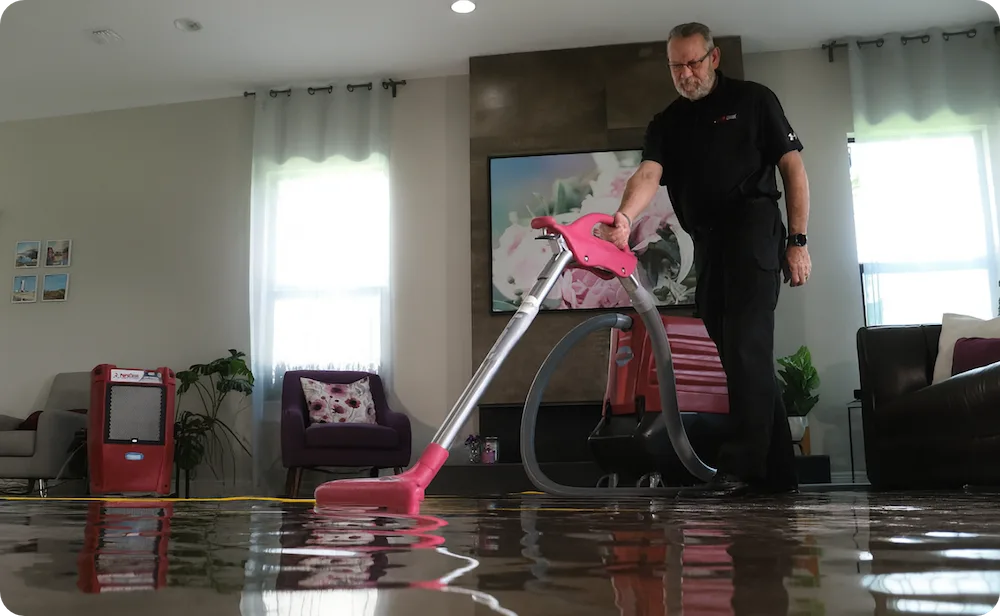
Water damage can result from unexpected leaks, flooding from storms, plumbing failures, or appliance malfunctions. Our certified teams focus on rapid water removal, drying, and stabilization to help prevent further damage and mold growth.
 Explore Our Water Damage Mitigation Services
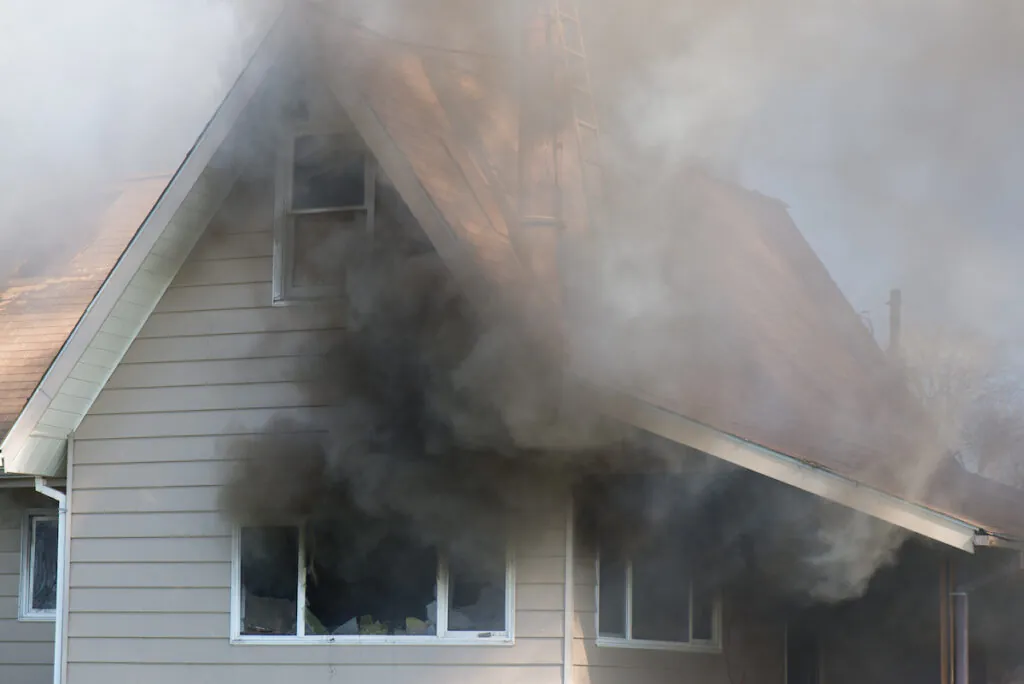
Even after a fire is extinguished, smoke, soot, and odor can continue to affect your home. Fire damage restoration services address visible damage while also helping reduce lingering effects that impact indoor air quality and surfaces.
Explore Our Fire and Smoke Damage Restoration Services
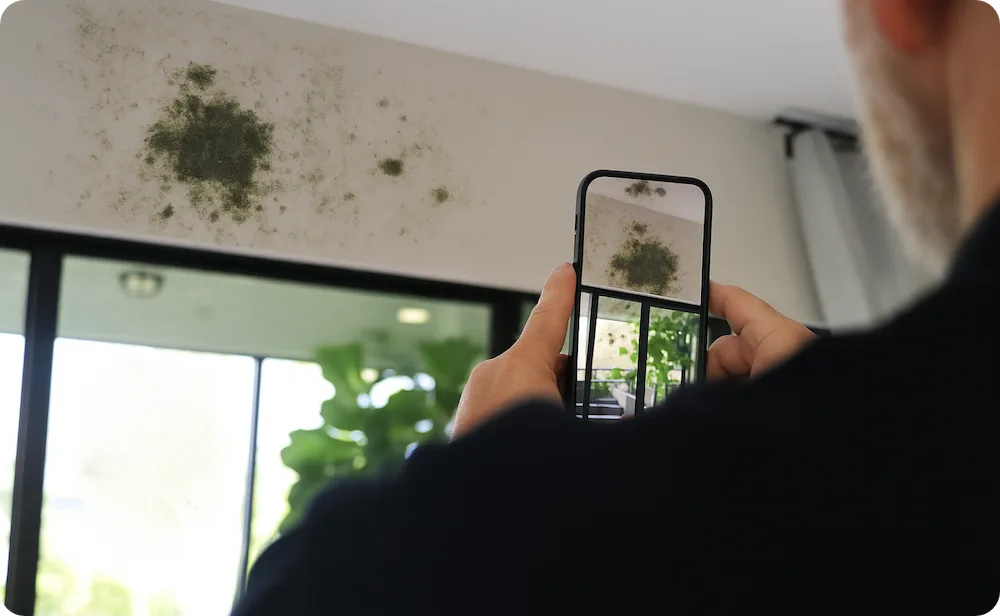
Mold often develops as a result of unresolved moisture or hidden water damage. Professional mold remediation helps identify affected areas, contain growth, and restore healthy indoor conditions.
Explore Our Mold Removal and Remediation Services
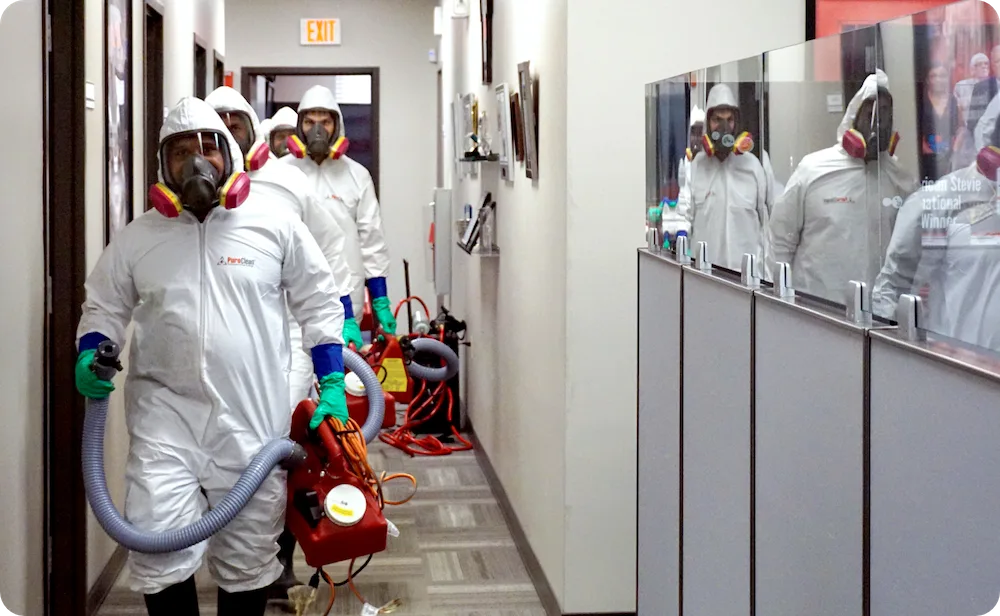
Biohazard situations, including crime scene cleanup and virus decontamination, require specialized cleaning and handling to protect health and safety. Biohazard cleanup services address contamination using proper protocols and professional care.
Explore Our Biohazard Cleanup Services
PuroClean provides 24/7 commercial property damage restoration services for businesses and facilities across the United States.
Explore Our Commercial Services
Water damage can result from unexpected leaks, flooding from storms, plumbing failures, or appliance malfunctions. Our certified teams focus on rapid water removal, drying, and stabilization to help prevent further damage and mold growth.
Explore Our Water Damage Mitigation Services
Specific answers for San Rafael homeowners, renters, landlords, and business owners
Under California Civil Code Section 1941, your landlord is legally required to maintain your rental unit in a habitable condition, which explicitly includes protection from water intrusion and dampness that endangers health. If your unit floods repeatedly and the landlord has not taken steps to address the underlying cause — whether that is inadequate flood barriers, failed drainage infrastructure, or a building sited below effective flood protection — you have grounds to escalate through several channels: written notice to the landlord documenting the condition and requesting remediation, a complaint to the Marin County Code Enforcement division if the landlord does not respond within a reasonable time, and in some cases rent withholding or repair-and-deduct remedies available under California habitability law. From a restoration standpoint, the landlord is responsible for engaging professional water damage mitigation for the structure and your affected living space — we work directly with landlords and their insurance carriers and can be on-site within minutes of a Canal District call given our proximity to the neighborhood.
We respond to damage events rather than perform pre-emptive plumbing work — the right resource for a proactive galvanized pipe assessment and replacement is a licensed plumber, and we can refer you to plumbers in our trade partner network who specialize in older Marin County residential construction. What we can do before a failure is document your home’s current moisture condition through a preventive moisture inspection — using thermal imaging and calibrated moisture metering to identify any existing moisture migration from slow leaks you may not have detected, any crawl space moisture conditions that warrant attention, and any areas of the building envelope where water intrusion is occurring without yet producing visible interior damage. That inspection establishes a baseline record that is genuinely useful both for proactive maintenance decision-making and for insurance documentation purposes if a pipe failure does occur later.
Multi-unit landlord flood events in the Canal District involve several simultaneous obligations. California habitability law requires prompt professional remediation — tenants cannot be left in flood-damaged, water-saturated units while coverage and liability questions are sorted out. We assess both units simultaneously, document the scope with separate written estimates for each, and coordinate directly with your commercial property insurer or NFIP flood insurer for the structural claim while advising on what tenant renter’s insurance, if any, may apply to their personal property. If the units are uninhabitable during remediation, additional living expense obligations to tenants under California law may apply — your attorney or property manager can advise on that specific question. Our role is to execute the mitigation professionally and document it completely so that every party — you, your tenants, and your insurers — has the objective record they need to resolve their respective interests in the event. We prioritize speed in Canal District flood events specifically because of how quickly mold develops in a low-elevation, high-humidity environment when drying is delayed.
Public infrastructure failure claims against a municipality require evidentiary documentation that meets a higher standard than a typical first-party insurance claim, because the city’s claims department and any involved legal counsel will scrutinize the record carefully before authorizing payment. Our documentation for a public infrastructure event includes a written scope narrative that precisely identifies the source and pathway of the water intrusion, photographic evidence of the point of entry and the progression of damage, timestamped moisture readings establishing the condition of the structure at the time of our arrival, and a complete Xactimate-format estimate of the mitigation and restoration scope with supporting material documentation. We retain all project records and can provide a complete documentation package to your attorney or directly to the city’s claims department. Filing a government tort claim against a California municipality has strict procedural requirements and timelines — typically a claim must be filed within six months of the incident — so engaging an attorney familiar with municipal liability alongside our technical documentation is the appropriate parallel track.
Crawl space staining in a Gerstle Park Craftsman is a flag worth investigating thoroughly before closing, given the age of the housing stock and the plumbing failure risk profile of original galvanized pipe construction in this neighborhood. Our pre-purchase assessment covers calibrated moisture metering of all accessible crawl space structural members — sill plates, floor joists, rim joists, and subfloor decking — thermal imaging of the subfloor assembly from below to identify active or residual moisture patterns, visual inspection for mold colonization on all accessible surfaces, and identification of the staining source where possible, distinguishing between historical water events that have fully dried and active ongoing moisture conditions. If mold is confirmed visually or suggested by elevated moisture readings, we coordinate air quality sampling with an independent industrial hygienist as an add-on. Written assessment report delivery runs one business day from the inspection date, and if remediation is indicated, a written scope and cost estimate follows within one additional business day — a timeline that works within the typical Marin County escrow inspection contingency window.
What Our Customers Say:
When you need water damage restoration services near you, call the experts at PuroClean. We are here day or night, 24/7, to help remove any standing water quickly and begin your water restoration service. We monitor the drying process so you can rest assured that your property is dried thoroughly. We offer commercial water restoration services for businesses and residential water damage restoration for homeowners.

PuroClean of San Rafael
(628) 888-2911
3095 Kerner Boulevard, Suite T, San Rafael, CA 94901


© 2026 PuroClean. All Rights Reserved.