PuroClean of San Rafael — 3095 Kerner Boulevard, Suite T, San Rafael, CA 94901
San Francisco is unlike any other city in PuroClean of San Rafael’s service territory — in scale, in structural complexity, in density, and in the sheer age and variety of its building stock. Founded during the Gold Rush era and rebuilt after the catastrophic 1906 earthquake and fire, the city’s residential and commercial fabric is defined by Victorian and Edwardian construction concentrated in neighborhoods like the Western Addition, the Haight-Ashbury, Noe Valley, the Castro, the Richmond District, and the Sunset District, where block after block of attached wood-framed flats, Edwardian apartment buildings, and row houses were built rapidly between the 1890s and the 1920s to house the city’s rapidly growing population. These structures — now anywhere from one hundred to one hundred thirty years old — carry the accumulated plumbing, drainage, and moisture management vulnerabilities of their age in ways that generate persistent and varied water and mold damage events throughout the year.
San Francisco’s neighborhoods each carry a distinct property character that shapes the water damage profile of the buildings within them. The Sunset and Richmond Districts, built primarily on former sand dunes in the western half of the city, contain dense blocks of 1920s through 1940s stucco-clad wood-frame homes and multi-unit buildings sitting on shallow foundations over sandy soil with historically high groundwater. Pacific Heights and Presidio Heights contain some of the city’s most significant Victorian and Edwardian estate properties, including Italianate and Queen Anne mansions on Broadway, Pacific Avenue, and Washington Street with complex original plumbing systems and irreplaceable interior finishes. SoMa, the Mission, and Dogpatch include a mix of converted industrial buildings, live-work lofts, and newer construction on filled bayfront land with its own set of moisture and drainage challenges.
For PuroClean of San Rafael, San Francisco represents an extension of our core Marin County service mission across the Golden Gate Bridge — bringing the same IICRC-certified process, Xactimate-format documentation, and direct insurance adjuster coordination that Marin property owners rely on to San Francisco homeowners, property managers, and commercial tenants who need a restoration partner with the credentials and experience to handle the city’s uniquely complex building stock. We respond to San Francisco calls with appropriately sized crews and equipment configurations for urban high-density environments, and we are experienced with the operational realities of city work — permit requirements, elevator access in multi-story buildings, parking logistics in dense neighborhoods, and the HOA and property management coordination that multi-unit buildings require.
Types of damage calls we handle in San Francisco:
From our base at 3095 Kerner Boulevard in San Rafael, we reach San Francisco via US-101 south across the Golden Gate Bridge, which connects directly to Doyle Drive and the Presidio approach into the city’s northern neighborhoods. Under normal traffic and toll plaza conditions, the drive from our San Rafael location to the northern San Francisco neighborhoods — the Marina, Pacific Heights, the Richmond District — runs between thirty and forty-five minutes. For neighborhoods deeper in the city — the Mission, SoMa, Noe Valley, the Castro — add an additional ten to twenty minutes depending on surface street conditions and time of day, placing total response time at forty-five to sixty-five minutes for most San Francisco addresses under non-peak conditions.
Golden Gate Bridge traffic is the primary transit variable for San Francisco response. Southbound morning commute traffic into the city and northbound evening return can extend bridge crossing times significantly during peak hours, and we account for this honestly when communicating ETAs for San Francisco calls. For genuine emergency response — active flooding, sewage backup, fire damage — we dispatch immediately regardless of bridge conditions and maintain real-time communication with the client about our estimated arrival. For non-emergency assessment appointments, we schedule San Francisco visits during mid-morning or early afternoon windows that avoid the peak bridge and city surface street congestion periods.
Within San Francisco, urban operational realities shape how we work in ways that differ from our Marin County service area. Parking for service vehicles in dense neighborhoods requires advance planning — we coordinate with clients about the closest available loading zone or parking structure for our equipment vehicles, and in some buildings we pre-arrange access to freight elevators for equipment movement to upper floors. In multi-unit buildings under HOA or property management control, we initiate contact with the building manager as part of our pre-arrival process so that access to affected units, mechanical rooms, and common areas is confirmed before our crew arrives. These logistical details are part of our standard San Francisco response protocol, not afterthoughts.
San Francisco’s distinctive microclimate — the fog, wind, and moisture that defines the western half of the city in particular — creates a year-round moisture loading environment for the wood-framed building stock that has no direct parallel in our Marin County service area. The Sunset District and the Outer Richmond, situated directly in the path of the Pacific fog belt, experience overnight and morning relative humidity that regularly exceeds 90 percent for extended periods, keeping wood building assemblies in a state of chronic moisture exposure that would accelerate mold colonization in any structure with existing moisture entry points. The combination of persistent fog-belt humidity and the shallow sandy foundations that characterize much of the western neighborhoods — where groundwater sits close to the surface and the original sand dune substrate provides limited drainage capacity — creates conditions where crawl space moisture management is an ongoing challenge rather than a solved problem.
The age of San Francisco’s primary residential building stock is the city’s most significant structural risk factor from a water damage standpoint. The Victorian and Edwardian flats and apartment buildings that define the city’s residential character were built rapidly during a reconstruction boom following the 1906 earthquake, using construction techniques and materials that were standard for the era but that are now well past their intended service life from a plumbing standpoint. Original galvanized supply lines in these buildings have been corroding internally for seventy to one hundred years, and the failure mode — progressive reduction in interior pipe diameter followed by pinhole leaks or catastrophic fitting failures — is well advanced in most structures that have not had full repiping. Original cast-iron drain lines running through the walls and floors of these buildings accumulate scale, develop root intrusion at joint connections, and eventually fail in ways that generate Category 3 sewage backup events inside occupied residential units.
Multi-unit building construction in San Francisco introduces a specific cascading water damage dynamic that is more common here than in the single-family residential communities of Marin County. In a stacked flat building — the classic San Francisco building type where two to six residential units occupy vertically stacked floors above a garage or commercial ground floor — a plumbing failure on an upper floor sends water cascading through the building’s floor and ceiling assemblies, potentially affecting every unit below before anyone in the building is aware of what is happening. By the time the source is identified and the water shut off, Category 2 water damage may have traveled through three or four floor and ceiling assemblies, saturating the structural framing of each unit it passed through. Scoping this type of loss requires systematic moisture mapping of every affected level and coordination with the building owner, HOA, and multiple unit owner insurance policies simultaneously.
San Francisco’s significant seismic retrofit requirements have also introduced a specific water damage risk factor in older buildings that have undergone soft-story retrofit work. Retrofit construction that opens wall cavities, modifies foundation connections, or disturbs original building materials can expose concealed mold colonization that was developing silently inside structural assemblies for years — and that disturbance requires professional remediation before reconstruction can proceed. We have been called to assess mold conditions uncovered during seismic retrofit work in San Francisco buildings on multiple occasions, and these projects require the same IICRC S520 protocols and independent IH clearance testing as any other mold remediation regardless of how the mold was discovered.
Owned & Operated by Nicholas Ondrejka
3095 Kerner Boulevard, San Rafael, CA, 94901
(628) 888-2911
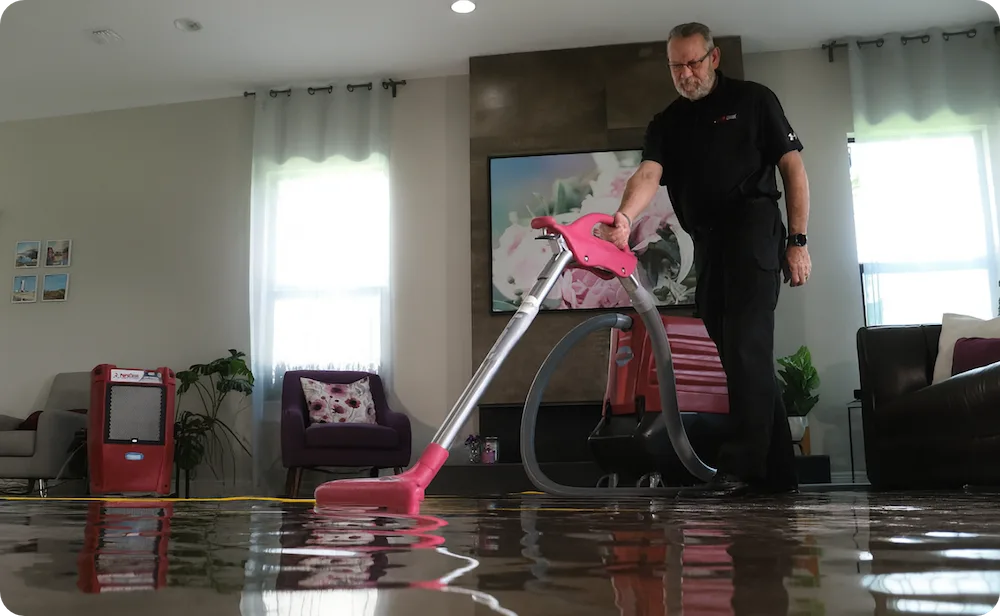
Water damage can result from unexpected leaks, flooding from storms, plumbing failures, or appliance malfunctions. Our certified teams focus on rapid water removal, drying, and stabilization to help prevent further damage and mold growth.
 Explore Our Water Damage Mitigation Services
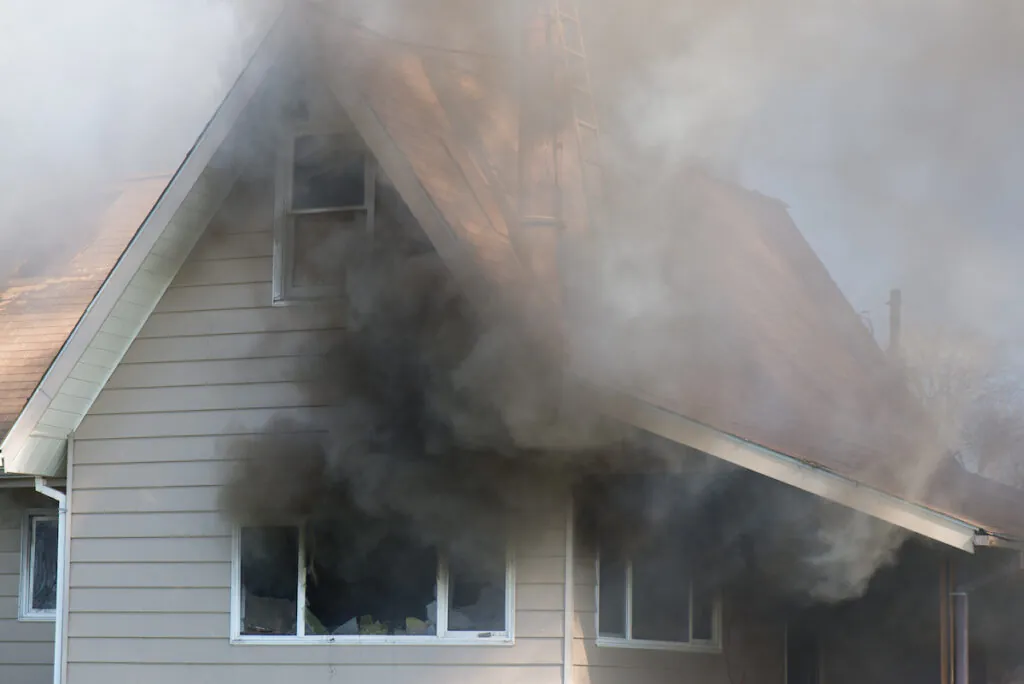
Even after a fire is extinguished, smoke, soot, and odor can continue to affect your home. Fire damage restoration services address visible damage while also helping reduce lingering effects that impact indoor air quality and surfaces.
Explore Our Fire and Smoke Damage Restoration Services
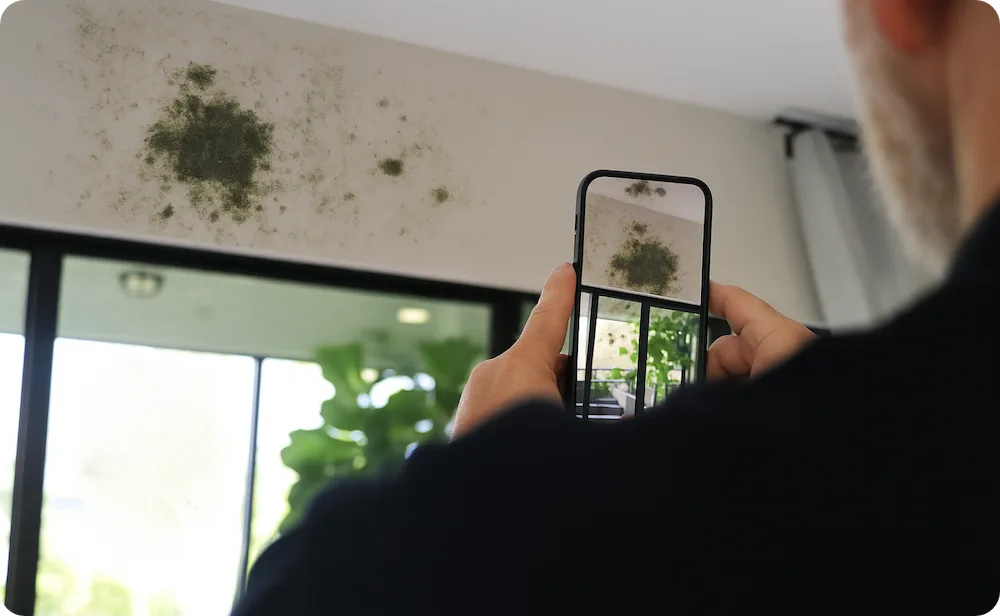
Mold often develops as a result of unresolved moisture or hidden water damage. Professional mold remediation helps identify affected areas, contain growth, and restore healthy indoor conditions.
Explore Our Mold Removal and Remediation Services
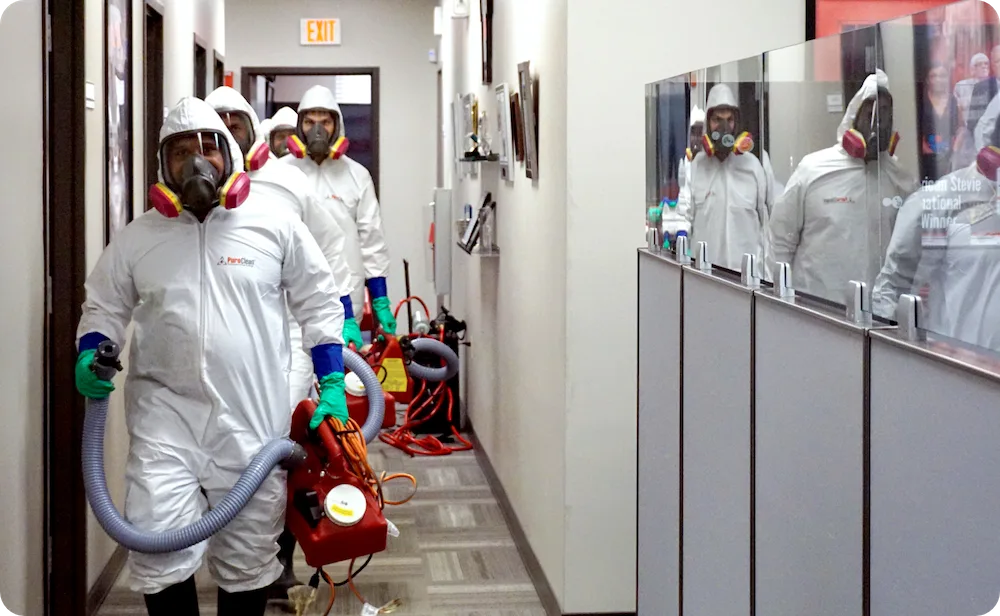
Biohazard situations, including crime scene cleanup and virus decontamination, require specialized cleaning and handling to protect health and safety. Biohazard cleanup services address contamination using proper protocols and professional care.
Explore Our Biohazard Cleanup Services
PuroClean provides 24/7 commercial property damage restoration services for businesses and facilities across the United States.
Explore Our Commercial Services
Water damage can result from unexpected leaks, flooding from storms, plumbing failures, or appliance malfunctions. Our certified teams focus on rapid water removal, drying, and stabilization to help prevent further damage and mold growth.
Explore Our Water Damage Mitigation Services
Specific answers for San Francisco homeowners, condo owners, property managers, and commercial tenants
Multi-unit water damage claims in San Francisco’s stacked flat buildings are among the more complex insurance coordination scenarios we manage, and they arise frequently given the building type and the age of the plumbing. The general framework in California condominiums and TIC buildings is that the HOA master policy covers structural elements — the building’s framing, subfloor, original fixtures, and common areas — while each individual unit owner’s HO-6 policy covers their interior finishes, personal property, and betterments. The source unit owner’s HO-6 liability coverage may apply to damage caused to neighboring units by a plumbing failure within their unit. We document the full scope of damage in every affected unit and identify the source and migration pathway with precision using thermal imaging — that documentation becomes the evidentiary foundation for each coverage layer’s claim. We communicate directly with all adjusters involved and provide separate Xactimate-format scope documentation for each coverage component, which is what makes multi-party claims resolvable efficiently rather than contentiously.
It is not simply a fact of life — it is a manageable moisture condition that, left unaddressed, becomes a restoration issue when mold colonization reaches structural framing and subfloor assemblies. The Outer Sunset’s fog-belt humidity is a fixed environmental factor, but its impact on a crawl space is largely determined by how well the crawl space is sealed and ventilated. An intact, properly installed vapor barrier covering the full crawl space floor significantly reduces ground moisture evaporation into the space. Sealed foundation vents with mechanical ventilation, or a full crawl space encapsulation system, can further reduce ambient humidity in the space to levels where mold colonization is not viable even given the exterior humidity environment. If mold has already established in the crawl space framing or subfloor, remediation to IICRC S520 standards is the necessary starting point before any vapor management improvements are installed. We assess both the existing condition and the underlying moisture source during our inspection and provide recommendations for both.
Category 3 sewage events in occupied multi-unit buildings require immediate and carefully sequenced response. The first priority is confirming that the affected units are vacated — sewage contamination from a backup event creates health hazards that make occupancy unsafe until remediation is complete and clearance testing confirms the space is sanitary. We establish physical containment barriers between the affected units and adjacent occupied spaces, deploy HEPA air scrubbers to maintain negative air pressure within the containment zone, and begin removal of all porous materials that contacted the sewage water — flooring, baseboards, lower drywall sections, and any affected insulation or cabinetry. All contaminated materials are bagged and removed under containment protocols. Structural surfaces are HEPA vacuumed and treated with EPA-registered antimicrobials. Drying equipment runs until structural moisture readings confirm drying goals are achieved. Post-remediation clearance testing by an independent industrial hygienist then confirms the space is safe for re-occupancy before reconstruction begins. For three ground-floor units, this full cycle typically runs seven to fourteen days from initial response to clearance, depending on the extent of material removal and drying timeline required.
Yes, we handle mold discovered during construction or renovation work regularly, and the protocol is the same regardless of how the mold was found. When mold is discovered inside a wall cavity during retrofit or renovation work, the general contractor should stop work in that area and avoid further disturbance of the affected materials — mechanical disturbance of active mold colonies releases spores into the air and can spread contamination to areas not yet affected. We assess the extent of the mold colonization using moisture metering and visual inspection of the newly opened area, coordinate with an independent industrial hygienist for air quality sampling if the extent is uncertain, and establish a remediation scope and containment plan that allows the general contractor to continue unaffected work in other areas of the building while we address the mold condition. We deliver the remediation and obtain IH clearance before the GC closes the wall, which is the only sequence that protects the building owner from reopening the same wall years later to address mold that was sealed in.
A water intrusion disclosure in an Edwardian-era TIC unit should be taken seriously and investigated thoroughly before closing, particularly given the building type and age. Our pre-purchase assessment includes calibrated moisture metering of all wall, floor, and ceiling assemblies in and around the disclosed intrusion area, thermal imaging to identify any residual moisture patterns, and visual inspection of the crawl space or basement if accessible. If the moisture investigation suggests mold is likely, we coordinate air quality sampling with an independent industrial hygienist before committing to a remediation scope — confirming the diagnosis before the work is scoped protects you from paying for remediation that may not be necessary, or from discovering after close that remediation is more extensive than a surface inspection suggested. We produce a written assessment report within one business day of the inspection, and if remediation is indicated, a written scope and timeline within one additional business day — a turnaround that keeps active San Francisco escrow timelines intact.
What Our Customers Say:
When you need water damage restoration services near you, call the experts at PuroClean. We are here day or night, 24/7, to help remove any standing water quickly and begin your water restoration service. We monitor the drying process so you can rest assured that your property is dried thoroughly. We offer commercial water restoration services for businesses and residential water damage restoration for homeowners.

PuroClean of San Rafael
(628) 888-2911
3095 Kerner Boulevard, Suite T, San Rafael, CA 94901


© 2026 PuroClean. All Rights Reserved.