


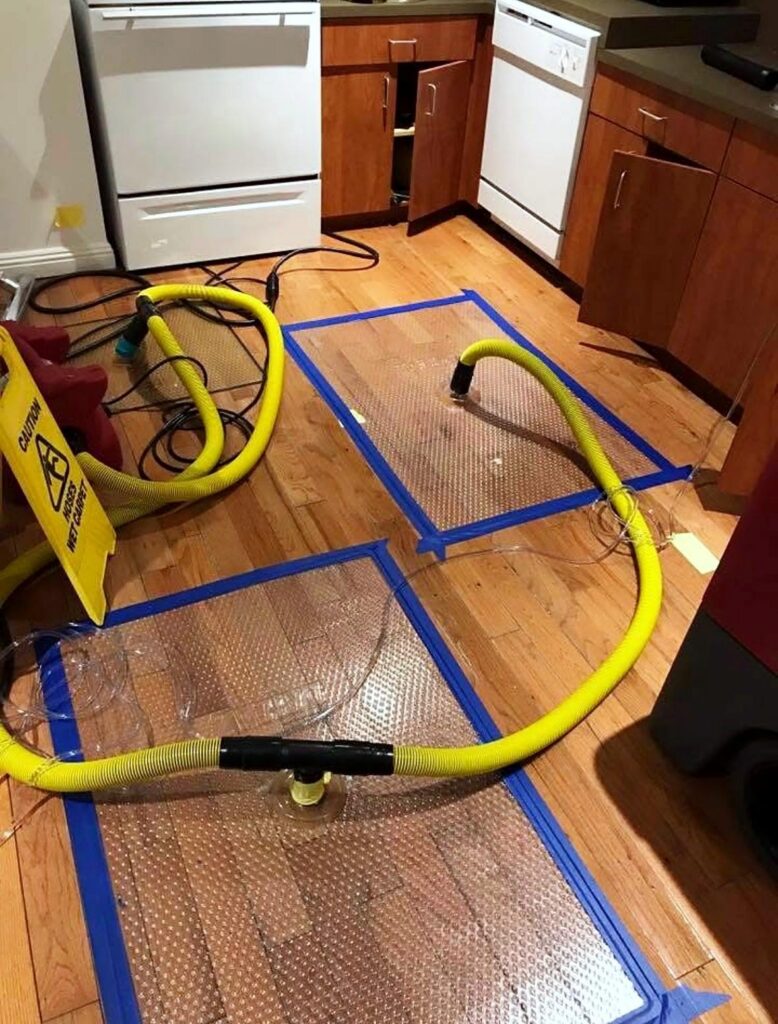
Example: Imagine opening the cabinet under your kitchen sink for a trash bag and finding the bottom shelf warped. Moments later, a neighbor downstairs knocks because water is dripping near their ceiling light. Kitchen supply-line failures in North San Rafael can turn a hidden hose leak into a multi-unit drying job fast. Stay away from wet electrical outlets, shut off the water only when safe, and book a moisture check.
At PuroClean of San Rafael, we work with condo owners, tenants, and HOA boards facing water damage and mold issues. When your kitchen sits above another residence or shares a plumbing chase, pressure surges raise urgent concerns. Why did a braided hose give way without warning? Who inside your complex needs a heads-up? Can hardwood planks and cabinet boxes dry in place, or do they need removal?
This walkthrough covers practical next steps for multi-unit condos. It helps you organize your response, though it cannot replace an in-unit assessment.
Why do pressure spikes break kitchen supply lines in condos?
Thin supply lines stay under constant street or building water pressure around the clock, even when nobody runs a faucet. A sudden pressure spike pushes against the weakest joint. Often that means an aging crimp, rubber washer, or plastic nut under your sink, behind your dishwasher, or behind your fridge.
Pressure surges happen for several everyday reasons. Fast-closing valves inside dishwashers and ice makers create sudden water hammer when flow stops cold. Thermal expansion from a water heater without a working expansion tank can also drive pressure up. So can a failing pressure-reducing valve (PRV) on the building or unit line.
Small fittings fail out of sight
Kitchen supply lines sit tucked inside dark toe-kicks and behind heavy appliances. A pinhole spray or slow seam weep can run inside a cabinet base for days before water reaches the hallway.
EPA WaterSense leak guidance recommends checking pipe fittings and gaskets for moisture on the outside of pipes. Always shut off the water line before working on connections. Flow-monitoring devices can also alert residents to unusual water use before a quiet drip becomes a soak.
Under Marin Water’s leak detection guidance, customers can check their meter when every tap is off. You can verify meter locations through Engineering Records at (415) 945-1530, or use wireless water-use meters and Flume monitors to catch unexpected flow. Because condo complexes vary between shared meters and individual submeters, ask your HOA or a licensed plumber how pressure and flow are tracked in your building.
Why North San Rafael condo layouts carry extra risk
Federal housing records illustrate how common multi-unit living is across this area. According to the U.S. Census Bureau’s 2020–2024 American Community Survey 5-Year Estimates, the City of San Rafael holds an estimated 23,909 housing units (margin of error 721). Roughly 43% of them—about 10,229 units—are in multi-unit buildings with two or more homes, and half the city’s housing dates from 1968 or earlier.
Across northern San Rafael’s ZIP code 94903, that same 2020–2024 dataset estimates 12,665 total housing units (margin of error 539), with roughly 4,017 inside multi-unit structures. Roughly 72% of all units in 94903 date to 1979 or earlier, also with a median build year of 1968.
Those estimates describe general structure counts and ages rather than condo ownership or kitchen pipe updates. Even so, construction era directly affects how cleanup crews open wet finishes.
Materials installed before roughly 1980—such as drywall mud, textured ceilings, and older vinyl sheet backing—can contain asbestos. Following EPA asbestos safety rules, suspect finishes require accredited sampling before anyone cuts or removes them, and homeowners should leave damaged material undisturbed. Likewise, painted cabinets, baseboards, or walls from before 1978 may hold lead paint; EPA lead guidelines call for proper testing and certified work practices before disturbing older paint.
What should you do right after a kitchen supply-line leak?
Your top priority is electrical safety and stopping the water without snapping an old shutoff valve. Keep out of standing water if a dishwasher, garbage disposal cord, floor outlet, or wall receptacle sits near the spill.
When your breaker box is dry and clear to reach, shut off power to kitchen appliances and wet wall circuits. Then move through these steps:
- Close the local angle-stop valve under the sink or behind the fridge if you can reach it from dry flooring.
- Leave stiff or corroded shutoffs untouched and call a licensed plumber. Forcing a seized valve can snap the copper or galvanized stub inside the wall.
- Shut your unit’s main water valve if the sink valve keeps dripping. Where a shared building riser feeds your kitchen, alert HOA management or maintenance right away.
- Move dry rugs, stools, and counter items away from the spill, and snap photos of the split hose before towels or fans move anything.
- Contact your HOA and any downstairs or next-door neighbors the same day. Water trapped under a cabinet base drops straight down pipe cutouts into the ceiling below.
Plumber first, restoration crew next
A licensed plumber swaps out the burst hose, fixes any leaking shutoff valve, and checks static water pressure—including whether a worn pressure regulator needs service. Restoration crews do not repair pressurized plumbing lines.
As soon as water is off or a plumber is dispatched, reach PuroClean of San Rafael at (628) 888-2911. We take calls 24/7 for water extraction, cabinet and floor mapping, and structural drying in multi-unit buildings.
How are kitchen supply-line failures in North San Rafael dried?
Handling kitchen supply-line failures in North San Rafael condos means drying closed cavities, not just mopping visible tile or wood. Water hides behind dishwasher panels, inside hollow cabinet toe-kicks, under fridge rollers, and across the subfloor above another unit.
Potable water from a kitchen angle stop usually begins as Category 1 (clean) water. Yet as water settles into particleboard boxes, wall insulation, subfloor seams, or dust-coated ceiling cavities below, its condition can worsen over time, sometimes quickly. An on-site inspection—never a phone guess—determines the contamination category and drying class for your kitchen and any affected neighbor.
At PuroClean of San Rafael, our technicians and project leads carry IICRC credentials (Institute of Inspection, Cleaning and Restoration Certification) and apply recognized restoration practices such as ANSI/IICRC S500. That training helps crews verify hidden layers rather than judging dryness by how the floor feels underfoot.
Moisture mapping inside cabinets, toe-kicks, and ceilings below
Our water damage mitigation service traces hidden dampness across your kitchen and shared walls using thermal imaging alongside pin and pinless moisture meters. Thermal cameras spot cooler zones behind drywall, under cabinet boxes, and along a downstairs ceiling that deserve closer testing.
Meters then read actual moisture inside wood planks, subfloors, cabinet gables, and studs. Technicians benchmark wet spots against dry framing in unaffected rooms to establish a target dry goal.
Saving hardwood floors and cabinets when possible
Condo owners often fear every cabinet box and hardwood plank is ruined. Whether materials stay or come out depends on construction type, water cleanliness, and how soon extraction starts.
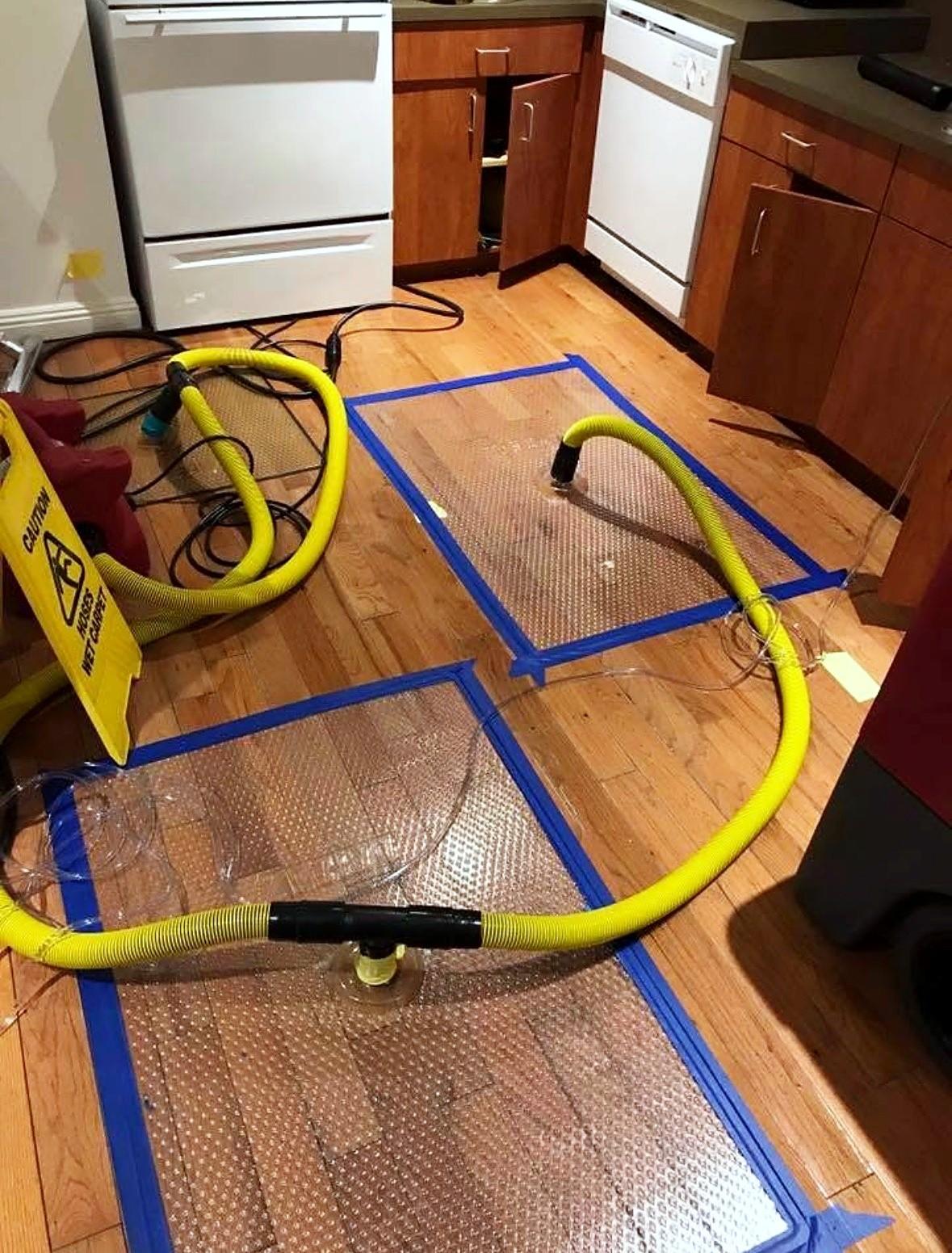
After vacuuming up standing water, crews frequently pull off kick-plates or open discreet airflow vents below the toe-kick so dry air circulates under the cabinet. On hardwood floors reached early, technicians may seal vacuum-assisted floor drying mats over the boards to draw trapped moisture up through plank seams—helping limit cupping when conditions allow.
Swollen particleboard bottoms, drenched wall insulation, or sagging ceiling drywall downstairs usually require controlled removal once any needed asbestos or lead clearance passes. Your crew should walk you through each removal step before cutting begins.
Controlled drying and daily checks
Commercial dehumidifiers pull excess vapor out of kitchen air while air movers and cavity hoses circulate dry air across damp framing and subfloors. Every day, technicians log indoor temperature, relative humidity, grains per pound (airborne moisture), and wood moisture readings.
Equipment runs until readings reach the dry goal set by unaffected rooms in the condo. Residential drying typically spans several days, though multi-layer hardwood, tight cabinet chases, or two-unit ceiling drying can extend the schedule.
How do you stop mold after a hidden supply-line drip?
Hidden dampness behind a dishwasher or under a sink lets mold develop whenever porous materials stay wet. As EPA’s brief guide to mold and moisture notes, drying wet materials within 24 to 48 hours helps prevent mold growth, and stopping the leak is essential so growth does not come back.
If a slow supply-line weep ran unseen for weeks, dark spotting or musty air may already appear on drywall or cabinet backs. Wiping household bleach or painting over stained wood leaves hidden wall-chase growth behind.
For active mold—especially patches larger than about 10 square feet or close to shared HVAC paths—our mold removal and remediation service uses plastic containment, negative air machines with HEPA filters, physical removal of affected porous materials, and HEPA vacuuming. On larger or multi-unit mold scopes, an independent indoor environmental professional (IEP) often completes post-remediation verification before barriers come down.
If someone in your home or a neighboring condo has asthma, allergies, or health symptoms linked to dampness, consult a physician. Restoration crews evaluate building materials; they cannot diagnose health conditions.
How do condo HOAs and insurance handle a kitchen supply-line leak?
A condo kitchen spill frequently brings two insurance policies into play: your personal condo policy (HO-6) and your association’s building policy. Exactly who handles original drywall, shared subfloors, cabinetry, wood planks, or a neighbor’s ceiling hinges on your HOA’s CC&Rs and bylaws.
Most policies separate sudden, accidental supply-line bursts from slow seepage caused by worn parts or deferred upkeep. Policies also expect homeowners to limit ongoing damage reasonably—calling a plumber and drying crew quickly protects your unit and your documentation trail.
Coverage depends on your policy terms and your association’s governing rules, so loop in your agent, adjuster, and HOA manager early. Ask your restoration crew for clear, unit-by-unit records:
- Time-stamped photos of the split supply line, cabinet bases, kitchen flooring, and any ceiling spots downstairs
- Moisture maps and daily drying logs comparing wet readings against dry baseline targets
- Equipment run logs tracking dehumidifiers and floor drying mats
- Itemized Xactimate estimates that keep emergency drying distinct from plumbing repairs and cabinet or drywall rebuilds
Frequently asked questions about North San Rafael condo supply-line leaks
Can a water pressure spike really burst a braided kitchen supply line?
Yes, especially when a hose is old, kinked, or corroded near its crimped end. Repeated pressure surges from a failing pressure regulator, thermal expansion, or appliance valves strain weak fittings until they leak or split. Having a licensed plumber test your pressure and inspect aging lines helps catch worn hoses early.
Should I replace a leaking supply line myself or call a plumber in a condo?
If you can safely shut off the angle stop and swap an exposed hose, a simple replacement may work for some owners—just shut off the water first and check closely for drips afterward. In a condo where an old valve could break or a PRV needs testing, calling a licensed plumber protects your unit and the homes below.
What if water from my kitchen supply-line failure leaked into the condo below?
Notify your HOA or property manager and your downstairs neighbor the same day. Even when your kitchen floor looks mostly dry, water drops through pipe openings into ceiling drywall and insulation below. Shared moisture mapping lets one coordinated drying plan cover both units.
Can kitchen cabinets and hardwood floors be saved after a supply-line leak?
Sometimes, depending on how fast water is extracted and how long moisture sat. Solid wood cabinets, sound wall framing, and hardwood planks can often dry in place with cavity airflow and floor drying mats. Swollen particleboard toe-kicks and wet drywall usually need controlled removal so hidden framing can dry.
How do condo HOAs and HO-6 policies handle kitchen supply-line failures in North San Rafael?
Responsibility splits based on your HOA’s governing documents and the exact wording of the association building policy and your HO-6 policy. Many associations insure original drywall and subfloors while owners insure cabinets, upgraded flooring, and personal belongings. Check with your HOA manager, agent, and adjuster before work beyond emergency drying starts.
How long does drying take after a condo kitchen supply-line leak?
Most residential drying takes several days once the plumbing fix is finished and equipment is running. Wood flooring, cabinet toe-kicks, and multi-unit ceiling cavities can add time. Crews confirm dryness with daily moisture readings against unaffected materials rather than promising a fixed finish date.
Need help with kitchen supply-line failures in North San Rafael?
Call PuroClean of San Rafael 24/7 at (628) 888-2911 to talk through what happened in your condo and schedule a moisture inspection. From our office on Kerner Boulevard, we serve North San Rafael, San Rafael, and surrounding communities.
A licensed plumber handles supply-line, valve, and PRV repairs, while our crew focuses on fast water extraction, cabinet and floor drying, and clear documentation for you and your HOA.
PuroClean of San Rafael
3095 Kerner Boulevard, Suite T, San Rafael, CA 94901
(628) 888-2911