PuroClean of San Rafael — 3095 Kerner Boulevard, Suite T, San Rafael, CA 94901
San Anselmo is an incorporated town of approximately twelve thousand residents in central Marin County, occupying the creek valley and surrounding hillsides at the junction of San Anselmo Creek and Ross Creek, where the two waterways meet near the heart of the downtown before flowing east as Corte Madera Creek toward Kentfield and the bay. The town incorporated in 1907, developed along the Northwestern Pacific Railroad corridor that ran through the valley, and built its commercial identity around the retail stretch of Sir Francis Drake Boulevard known widely as Antique Row — a concentration of antique shops, galleries, and independent restaurants that has defined downtown San Anselmo’s character for decades and made it a regional destination. The San Anselmo Avenue and Tunstead Avenue corridors branch off Sir Francis Drake to form the town’s residential street network, extending into the hillside neighborhoods above the creek valley on streets like Creek Road, Scenic Avenue, and the residential lanes climbing toward the Fairfax border.
The housing stock of San Anselmo spans nearly the full range of Marin County construction eras. The oldest homes along the valley floor and the lower residential streets date to the early 1900s — craftsman bungalows, Victorian cottages, and simple wood-framed working-class homes built for the families of railroad workers and small business owners who settled the town in its first decades. Moving up the hillsides and into the neighborhoods built through the 1940s, 1950s, and 1960s, the stock transitions to ranch-style homes on crawl space foundations, with the characteristic plumbing and roof vulnerabilities of that era. Pockets of more recent construction exist throughout the town, but San Anselmo is overwhelmingly a community of older homes whose owners have invested in maintaining them rather than replacing them — which means aging infrastructure beneath well-maintained exteriors is the norm rather than the exception.
For PuroClean of San Rafael, San Anselmo is one of the most flood-active communities in our entire service territory. San Anselmo Creek has a documented and well-publicized history of significant downtown flooding — the creek runs in a channeled culvert beneath portions of Sir Francis Drake Boulevard and emerges to flow through the center of the downtown commercial district, and when storm flows exceed the culvert’s capacity, the creek backs up and floods the street-level businesses and residential properties in the lowest-lying portions of the town. We respond to San Anselmo water events with IICRC-certified technicians, full psychrometric logging, Xactimate-format insurance documentation, and the experience to manage both residential and commercial flood scope simultaneously when a major event affects multiple properties at once.
Types of damage calls we handle in San Anselmo:
From our base at 3095 Kerner Boulevard in San Rafael, we reach San Anselmo via two reliable routes depending on the specific address and real-time traffic conditions. The most direct path for downtown and valley floor addresses is west on Mission Avenue or Fourth Street from central San Rafael, connecting to San Anselmo Avenue and arriving in the downtown area in approximately fourteen to twenty minutes under normal conditions. For addresses in the upper hillside neighborhoods above the creek valley or near the Fairfax border, we alternatively take Sir Francis Drake Boulevard west from its intersection with the US-101 corridor at Greenbrae, traveling through Kentfield and Ross and into San Anselmo from the east — a route that adds a few miles but avoids the surface street congestion through central San Rafael during peak commute periods.
San Anselmo Avenue is the primary surface street connecting San Rafael and San Anselmo, and it carries meaningful two-way traffic through the residential neighborhoods of both towns throughout the day. The narrower portions of San Anselmo Avenue through the older residential blocks can slow transit time during school drop-off and pickup hours, a factor we account for when communicating ETAs for non-emergency appointments. For emergency dispatch, we use real-time routing and communicate directly with the client about our estimated arrival, adjusting as conditions change between dispatch and arrival.
Within San Anselmo, the compact geography of the downtown and valley floor means that once we are in town, almost every address is within three to five minutes of the Sir Francis Drake and San Anselmo Avenue intersection. Hillside residential streets above the valley floor — particularly those on the north-facing slopes above Creek Road and the south-facing slopes above Scenic Avenue — require navigation on narrower residential roads, and our technicians confirm specific access routes with clients before arrival when the address suggests potential access constraints. We do not hand off San Anselmo response to subcontractors — the same IICRC-certified team covers this community directly from our San Rafael base.
San Anselmo Creek is the dominant and most consequential environmental risk factor in this community, and it behaves in ways that directly affect the downtown commercial district in a manner unlike anything else we encounter in our service territory. A significant portion of the creek’s channel through the downtown runs underground in a culvert beneath Sir Francis Drake Boulevard — a infrastructure design that was practical when the town was developing but that creates a hydraulic bottleneck when storm flows exceed the culvert’s capacity. When that threshold is crossed during a major rain event, water backs up upstream of the culvert and floods the street-level businesses, parking areas, and adjacent residential properties on the lowest blocks of the downtown. This has happened repeatedly over the decades, including during several major rain years in the past two decades that caused significant commercial losses to Antique Row retailers and downtown property owners.
The confluence of San Anselmo Creek and Ross Creek near the center of town compounds this risk by concentrating the combined drainage of two separate upstream watersheds into a single channel at a point immediately adjacent to the commercial core. When both watersheds are producing high flows simultaneously during a significant storm — which is exactly what happens during the atmospheric river events that have affected Marin County repeatedly in recent years — the combined volume arriving at the downtown culvert system exceeds its design capacity by a substantial margin. FEMA flood mapping designates the lowest portions of downtown San Anselmo as Zone AE, and the town has been actively engaged in creek restoration and flood mitigation planning for years, though the underlying hydraulic constraints of an underground culvert through a developed downtown are not easily or quickly resolved.
Outside the downtown flood zone, the hillside neighborhoods above the creek valley have their own distinct water damage risk profile. The north and south-facing slopes above San Anselmo are steep enough that stormwater runoff from upper residential streets moves quickly downhill and concentrates at the base of the slope, where properties on streets like Creek Road and the lower reaches of Scenic Avenue receive cumulative drainage from all the lots above them. French drain systems, perimeter drains, and retaining wall drainage infrastructure installed during original construction in the 1940s through 1960s are aging, frequently undersized for current storm intensities, and in many cases have never been inspected or maintained since installation.
The structural vulnerability of San Anselmo’s older housing stock interacts with these environmental risks in compounding ways. Homes built in the early decades of the twentieth century along the valley floor were constructed during an era when crawl space moisture management was minimal, vapor barriers were not standard practice, and plumbing supply lines were galvanized steel that has been corroding internally for six or seven decades. When creek flooding or hillside drainage enters one of these homes, it enters a building assembly that is already carrying chronic moisture loading from inadequate vapor management — and the resulting damage scope is consistently broader than the same volume of water would produce in a newer, better-protected structure.
Owned & Operated by Nicholas Ondrejka
3095 Kerner Boulevard, San Rafael, CA, 94901
(628) 888-2911
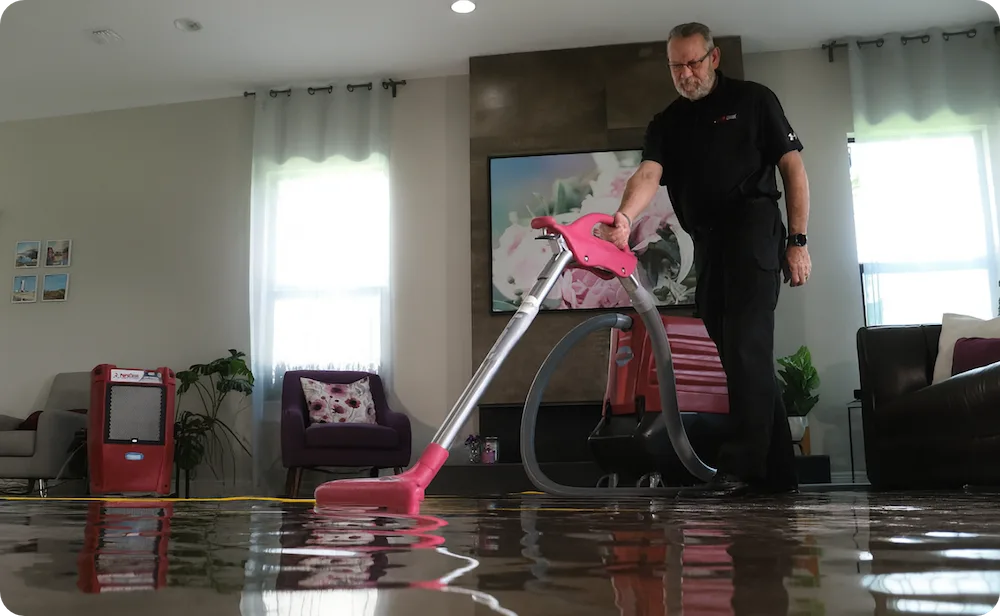
Water damage can result from unexpected leaks, flooding from storms, plumbing failures, or appliance malfunctions. Our certified teams focus on rapid water removal, drying, and stabilization to help prevent further damage and mold growth.
 Explore Our Water Damage Mitigation Services
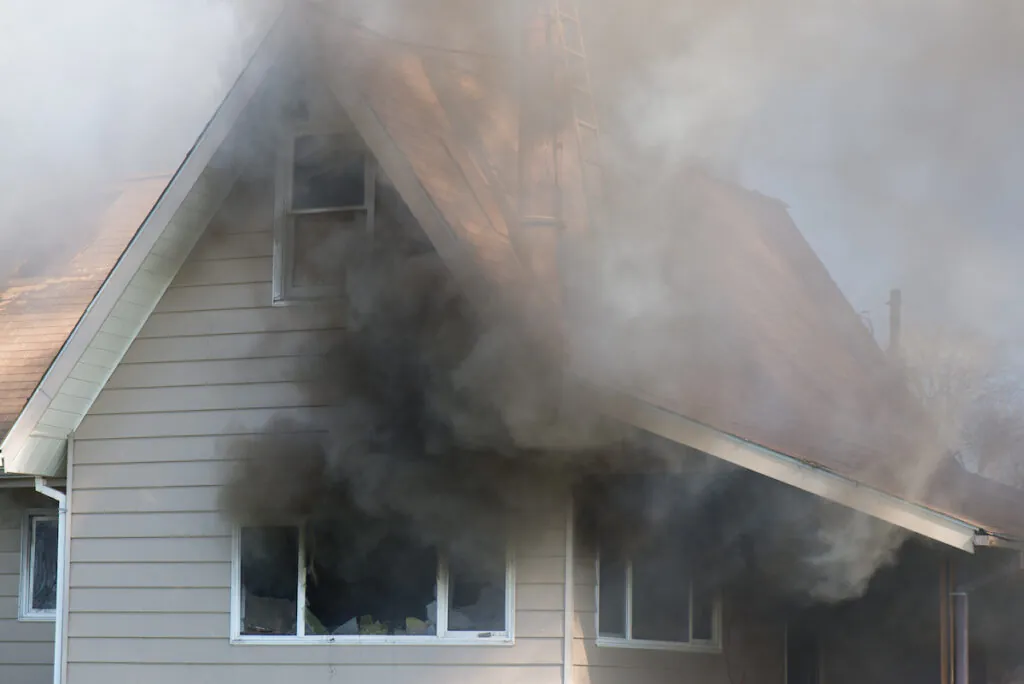
Even after a fire is extinguished, smoke, soot, and odor can continue to affect your home. Fire damage restoration services address visible damage while also helping reduce lingering effects that impact indoor air quality and surfaces.
Explore Our Fire and Smoke Damage Restoration Services
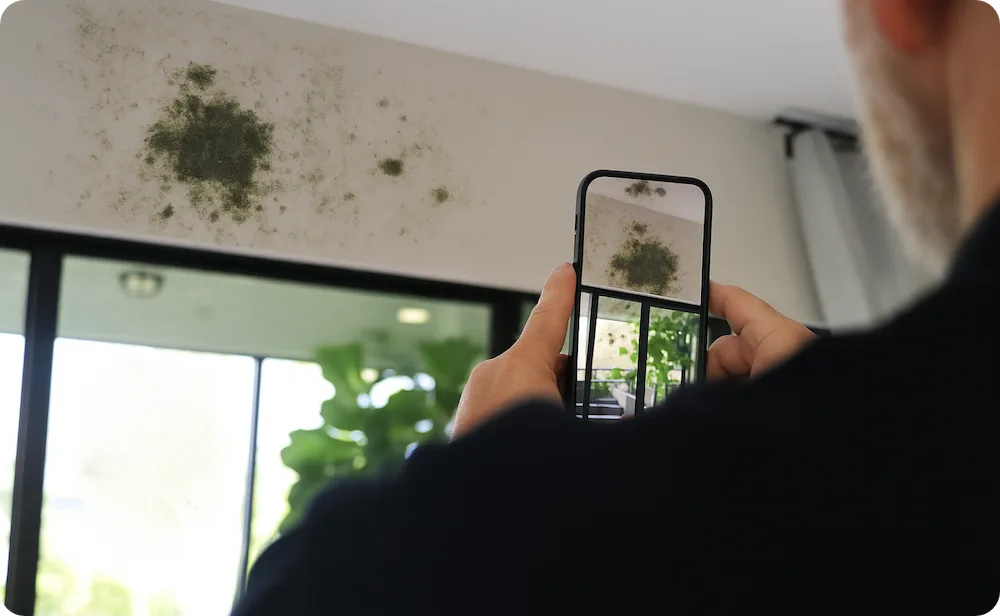
Mold often develops as a result of unresolved moisture or hidden water damage. Professional mold remediation helps identify affected areas, contain growth, and restore healthy indoor conditions.
Explore Our Mold Removal and Remediation Services
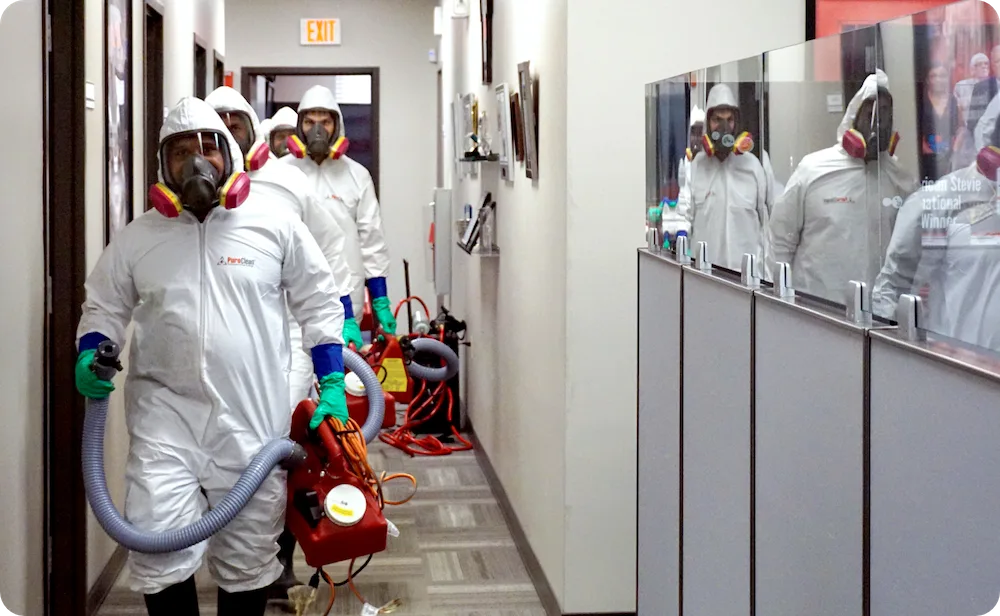
Biohazard situations, including crime scene cleanup and virus decontamination, require specialized cleaning and handling to protect health and safety. Biohazard cleanup services address contamination using proper protocols and professional care.
Explore Our Biohazard Cleanup Services
PuroClean provides 24/7 commercial property damage restoration services for businesses and facilities across the United States.
Explore Our Commercial Services
Water damage can result from unexpected leaks, flooding from storms, plumbing failures, or appliance malfunctions. Our certified teams focus on rapid water removal, drying, and stabilization to help prevent further damage and mold growth.
Explore Our Water Damage Mitigation Services
Specific answers for San Anselmo homeowners and business owners
Commercial flood restoration in a retail environment involves several simultaneous workstreams. Water extraction and structural drying of the building itself proceeds as a priority to stop ongoing damage to the structure and prevent mold development — we deploy commercial-grade extraction equipment and LGR dehumidifiers sized for the square footage of the affected space, and we document daily psychrometric readings that your adjuster will need to validate the drying scope. Simultaneously, we assess and document damage to tenant improvements, fixtures, inventory, and business personal property, providing the photographic and written documentation your commercial property insurer needs to process those claims separately. For creek overflow into a commercial space, the flood insurance question applies — standard commercial property policies generally exclude rising water, so coverage depends on whether you carry a commercial flood policy. Business income coverage for lost revenue during the restoration period is a separate claim component that we help document with timeline records and scope narratives.
Slow chronic leaks in older homes are frequently the most damaging category of water event we see, precisely because the extended duration allows moisture to migrate far beyond the immediate leak point before anyone notices. In a 1923 craftsman with original or early-replacement plumbing, a slow supply line seep beneath a bathroom fixture will first saturate the cabinet interior and surrounding subfloor, then wick upward into the wall framing and outward along the subfloor assembly in multiple directions, and eventually reach the crawl space below where it contacts the soil and creates the conditions for mold colonization in the floor joists and sill plates. By the time an interior stain or odor appears, the moisture plume is typically much larger than the visible damage suggests. We map the full extent using thermal imaging and calibrated moisture meters, which determines the actual remediation scope — and often reveals that what appeared to be a contained bathroom issue has affected two or three adjacent rooms and the crawl space below.
Preparation and documentation before an event can significantly reduce both the damage scope and the complexity of a subsequent insurance claim. We can perform a pre-event moisture and vulnerability assessment of your commercial space that identifies the specific entry points most likely to allow water intrusion — threshold heights, floor drain locations, wall penetrations — and documents the current condition of your structure and its contents with date-stamped photographs and written notes. That pre-event documentation establishes a clear baseline that simplifies the loss measurement process after a flood event and reduces the likelihood of coverage disputes over what was damaged by the flood versus what was pre-existing. We can also advise on emergency response measures — sandbag placement, inventory elevation, critical equipment relocation — that can reduce damage scope during the hours before creek waters arrive. The response after the event is the same IICRC-standard process regardless, but preparation makes everything faster and cleaner.
Almost certainly yes, and the sequence matters. The grading and drainage issue your contractor identified is the cause — it needs to be corrected to prevent recurrence. But the discoloration on the interior drywall is telling you that moisture has already entered the wall assembly, and depending on how long it has been happening, mold colonization inside the wall cavity is a realistic finding. Our role is to assess and address the existing moisture damage — we map the full extent of the moisture intrusion with thermal imaging and moisture metering, determine whether mold is present and what remediation scope is required, dry the affected assemblies to IICRC S500 standards, and document everything for your insurance adjuster. The general contractor then corrects the exterior drainage condition and performs the reconstruction after we have completed remediation and clearance. Running both scopes concurrently where possible is the most time-efficient path, and we are accustomed to coordinating our work schedule around the contractor’s exterior access needs.
We work directly with every major insurance carrier active in Marin County, including State Farm, Farmers, USAA, Travelers, AAA, Allstate, and the various surplus lines carriers that write high-value homeowner policies in communities like San Anselmo. The carrier does matter in practice, though not in terms of the quality of restoration work we perform — that is consistent regardless of who is paying. Where the carrier matters is in the claims process itself. Different carriers have different internal protocols for adjuster communication, preferred documentation formats, and timelines for scope approval. We know the expectations and communication preferences of the adjusters at each major carrier from years of working with them in Marin County, and we tailor our documentation and communication approach accordingly to avoid unnecessary delays in scope approval. For flood claims specifically, if you carry NFIP coverage, the adjuster is a Write Your Own carrier representative or a direct NFIP adjuster, and the documentation requirements are more standardized and structured than for a standard homeowners claim — we are equally experienced with that process.
What Our Customers Say:
When you need water damage restoration services near you, call the experts at PuroClean. We are here day or night, 24/7, to help remove any standing water quickly and begin your water restoration service. We monitor the drying process so you can rest assured that your property is dried thoroughly. We offer commercial water restoration services for businesses and residential water damage restoration for homeowners.

PuroClean of San Rafael
(628) 888-2911
3095 Kerner Boulevard, Suite T, San Rafael, CA 94901


© 2026 PuroClean. All Rights Reserved.