


Imagine walking into the hallway after a rainy night. The sky has cleared, but there’s a musty smell near the floor that wasn’t there before. If you’re worried about crawl space moisture in San Rafael, you don’t need to go underneath to take the next step. Stay out and arrange an assessment.
At PuroClean of San Rafael, we help homeowners and property managers deal with water damage and mold. If your older ranch home has a raised floor, we’ll start with the questions you’re probably asking: Where did the water come from? What’s wet? How will we know it’s dry?
Not every ranch-style house has a crawl space; some have a slab. This guide is for homes with a space below the floor. It can help you understand the next steps, but it isn’t an assessment of your house.
What causes crawl space moisture in San Rafael after rain?
Rainwater getting in, wet soil, a pipe leak or condensation can leave moisture below your floor. Finding which one is responsible matters more than guessing from the weather.
NOAA’s explanation of atmospheric rivers describes long, narrow regions of atmospheric water vapor that can produce rain when they reach land. Strong systems can bring heavy rainfall, but not every atmospheric river causes damaging flooding.
You may have heard “atmospheric river” in a weather report. That doesn’t tell you how water reached your house. It could enter through a low opening or collect against the foundation when drainage can’t keep up. A pipe can leak during a storm without the storm causing the leak.
Follow the water path, not an assumption
Start with what you’ve noticed. Did the smell arrive after rain? Does it fade and then return? Share that pattern with the person assessing your home. It’s useful information, even though it doesn’t prove where the water started.
The next question is how to stop it happening again. Drying can’t fix an active leak or a drainage problem. PuroClean handles restoration; a plumber, drainage contractor or another qualified professional may need to make the source repair.
Wet soil and wet wood are different findings
A damp patch of soil doesn’t tell you how much moisture is in the wood above it. And a dry-looking ground covering doesn’t mean the underside of your floor is dry. Those are separate things to check.
The pieces of wood supporting the floor are called joists. The subfloor is the structural sheet material under your finished flooring. Both may need moisture measurements, even if the hallway looks and feels normal from upstairs.
What should you do before anyone goes below the house?
Keep people and pets away from the opening, and don’t enter a wet crawl space yourself. Electrical hazards, contamination and limited room to move can make a small-looking problem unsafe.
You can still help without going under the house. From a safe, dry spot, gather what you already know:
- Note when the rain occurred and when you first noticed an odor or flooring change.
- Photograph visible interior staining or outside pooling only where access is safe.
- Locate prior inspection reports and records of leaks or drainage repairs.
- Tell the restoration team about electrical equipment, ducts or plumbing below the floor if you know they are there.
- Tell them whether water appears to be rising, whether sewage is suspected and whether anyone has health concerns.
Leave extension cords, household vacuums and fans out of the space. Shut off a utility only if you can do it safely from a dry location. If you can’t, contact the utility or an appropriate licensed professional instead. Getting a closer look isn’t worth stepping into a hazard.
Do not treat all water as clean rainwater
Water can pick up contaminants as it crosses the ground or comes into contact with waste. You can’t judge its safety just by looking at it or noticing whether it smells.
The team needs to assess the source and contamination before choosing cleanup and drying methods. If sewage might be involved, avoid contact. Keep children, older adults and anyone with a weakened immune system away. Pulling on gloves doesn’t make a quick trip underneath safe.
Watch the living space without opening materials
Tell the team about a new odor, damp baseboards, flooring that has begun to cup, or a soft area underfoot. These changes deserve a closer look, but none proves mold or structural failure on its own.
Don’t pull up flooring, remove insulation or scrape growth to investigate. Older buildings can contain hazardous materials. Suspect materials need evaluation and any required testing before they’re disturbed. You can point out a concern without opening the building yourself.
Why does an older raised-floor ranch need a below-floor assessment?
In a raised-floor home, the wood, insulation and other parts below your feet matter as much as the ground. Access, ducts and past alterations can affect where water collects and how the space can be dried.
Your home’s age and roofline won’t tell the whole story. Here in San Rafael, the useful starting point is the house at your address: its foundation, the changes made over time and what’s wet now. The inspection should follow those findings, not assumptions about its style.
Give the team the building’s history
Think about past leaks, replaced flooring, added rooms or earlier repairs. If you have records, share them. An old stain may already be dry, while wood nearby with no obvious stain may still hold moisture.
A previous drainage report can help, too. It isn’t a substitute for looking at today’s conditions. Later work, changed soil levels or a different source of water may mean an old recommendation needs another look.
Separate drying from permanent repairs
You may hear the word mitigation. It means limiting further damage through work such as water extraction, cleaning and drying. It doesn’t mean redesigning your drainage or fixing a foundation.
Our water damage mitigation service includes finding hidden moisture and monitoring drying. Ask which source repairs belong to a plumber, drainage contractor or another specialist, and how their work should be coordinated.
Before work starts, ask who is handling each part. You shouldn’t have to wonder whether the equipment below the house is drying wet wood, stopping water from entering, or both. Clear responsibilities make that distinction easier to understand.
How is moisture below the floor assessed and dried?
The team first needs safe access and a picture of the source, contamination and wet materials. From there, measurements guide the drying plan and show whether it’s working.
Our project managers and technicians are IICRC-certified. That stands for the Institute of Inspection, Cleaning and Restoration Certification. Your work plan still needs to fit your property. A credential doesn’t turn every crawl space into the same job.
Map what is wet
Moisture mapping means recording where materials are wet and comparing those areas with other parts of the building. A meter measures moisture in a material. A thermal camera shows temperature differences that can point to places worth checking; it doesn’t prove water is there.
When we assess crawl space moisture in San Rafael, the records need to say what was measured and where. A humidity reading in the room above can’t tell you whether the framing below has dried. Ask the team to explain the readings in terms of your floor, not just numbers.
Remove water and decide what can remain
Standing water may need to come out before drying begins. Then the decisions turn to materials: Are they contaminated or damaged? Can they be cleaned and dried? Not every wet item has the same answer.
Some sound wood may stay after cleaning and drying. Wet insulation or damaged porous materials may need removal. Soft, deteriorated or visibly damaged framing may need a qualified building professional’s evaluation. A stain alone isn’t a reason to remove every joist, and being wood isn’t a reason to keep every wet piece.
Dry under controlled conditions
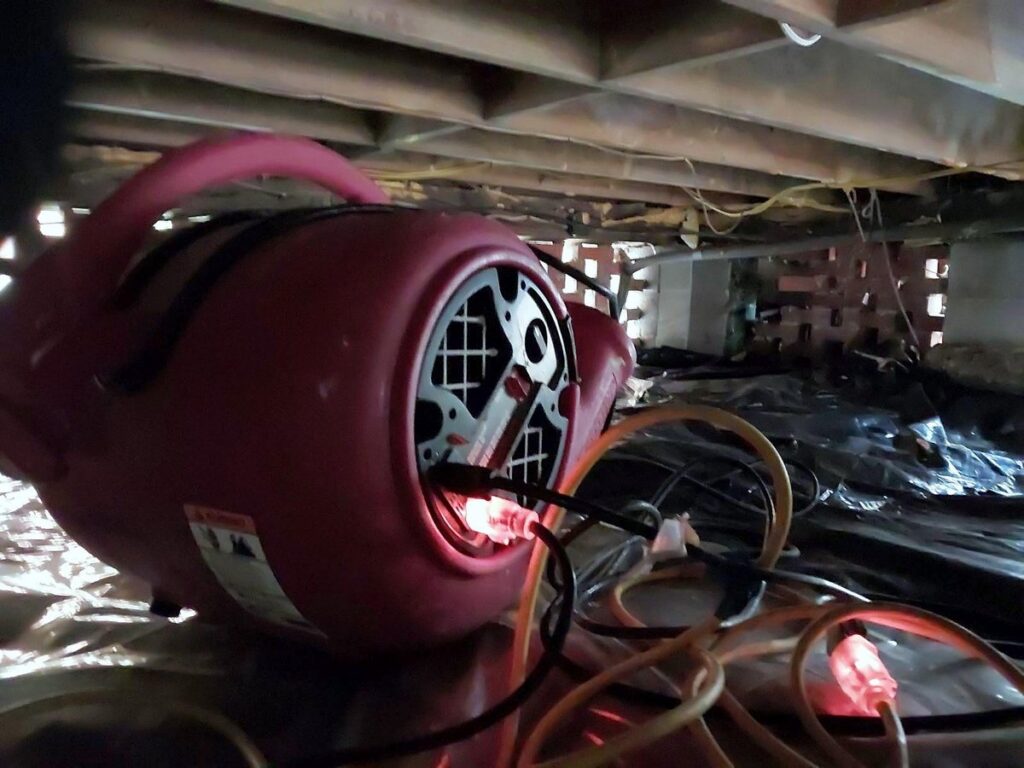
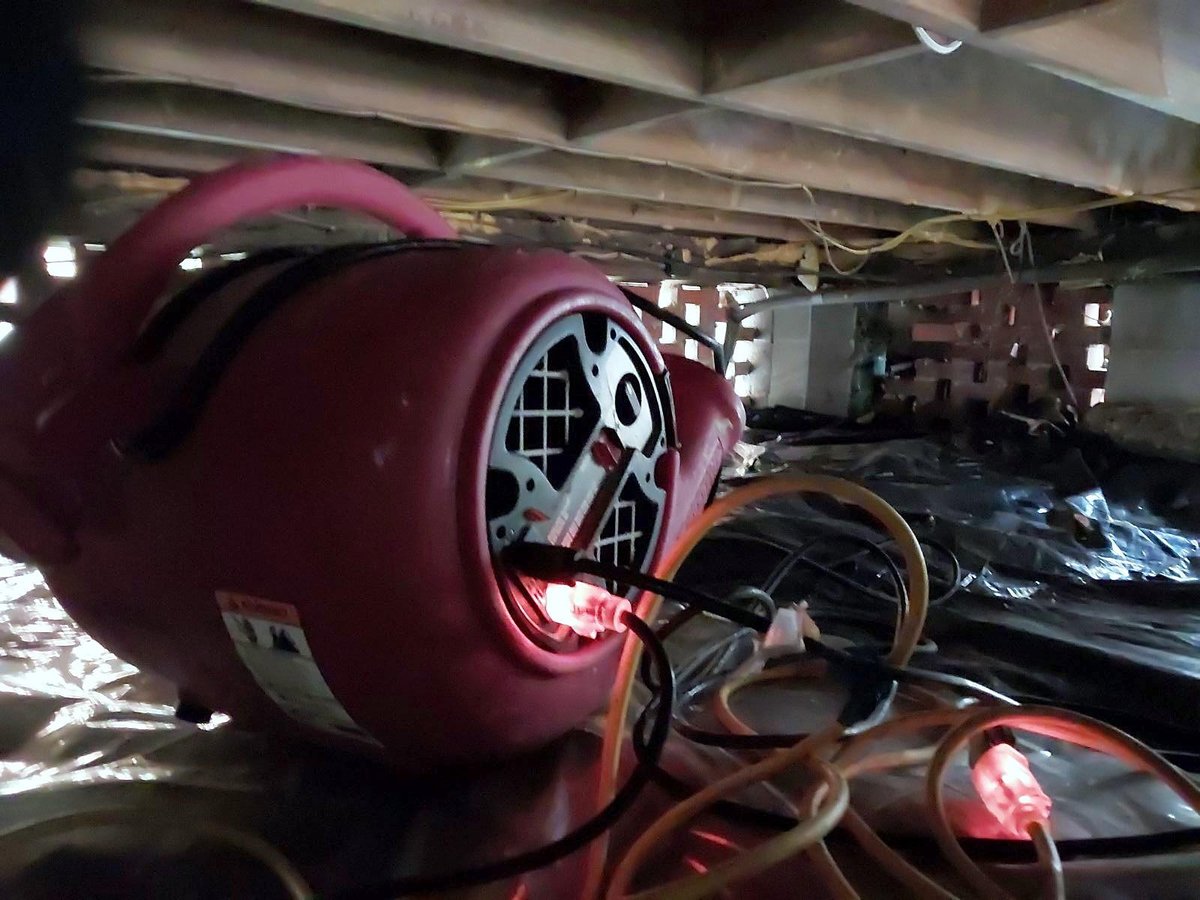
Dehumidifiers take water vapor out of the air. Air movers move air across suitable wet surfaces. Where they go depends on the contamination assessment and work plan, not simply where a fan will fit.
The team tracks material readings, air temperature and relative humidity. Relative humidity compares the moisture in the air with what it could hold at that temperature. Readings from unaffected areas help set drying goals for the materials in your home.
Before insulation or finishes cover the work, ask to see the results. It’s understandable to feel relieved when the floor seems dry again. But how it feels from upstairs doesn’t measure the wood underneath.
Does a musty smell mean mold remediation is needed?
A musty smell is a reason to investigate, not a diagnosis of mold. If growth is found, both the moisture and the growth need attention. Getting rid of an odor isn’t the same as removing the problem.
The EPA’s guide to mold and moisture explains that moisture control is central to mold control. Cleaning mold without fixing the water problem can allow it to return.
Removal is different from killing mold
Our mold removal and remediation service describes source investigation, containment, filtration, material removal where needed and drying. Containment separates the work area to limit the spread of disturbed particles.
HEPA filtration uses high-efficiency filters to capture small airborne particles. It’s one part of the work, not a replacement for cleaning or removing affected materials. Painting over growth or spraying a product under the floor doesn’t do the job of a remediation plan.
Ask whether independent verification fits the project
An independent indoor environmental professional may evaluate conditions or check the results after cleanup. That later check is called post-remediation verification. Whether it’s needed, and what it should cover, depends on the project. A damp patch or odor doesn’t always call for testing.
If you’re worried about health, talk with a medical professional. A blog, photo or moisture reading can’t diagnose illness. Nor can it decide whether staying in the home is appropriate for someone in your household.
What affects cost, drying time and insurance?
The estimate depends on access, contamination, wet materials and how drying progresses. Your insurance questions belong in a separate conversation about your policy, rather than being answered by the size of a puddle.
Ask what the estimate includes
Ask the team to walk you through water removal, cleaning, material removal, equipment, monitoring and any mold work in the scope. Then ask what’s separate, including repairs or an independent evaluation. You don’t need to know every trade term to ask what’s included.
Low clearance, things blocking access and moisture beyond the opening can change the work. That’s why the house’s square footage or a phone description can’t give you a reliable price for the space below it.
Expect progress checks, not a guaranteed finish date
Residential drying often takes several days. The materials, access and any continuing water entry can make it take longer. Ask what readings will show the drying goal has been reached and how you’ll hear about changes along the way.
If the smell improves, keep following the equipment instructions. Don’t turn machines off just because the room feels better. Contact the team if another storm brings water back or if equipment stops running.
Keep coverage separate from the cause investigation
The word “rain” alone doesn’t settle whether damage is covered. Coverage depends on your policy and the facts. Ask your agent or adjuster how the reported source and any mold limits apply to your situation.
Keep photos you can take safely, repair receipts, the written scope and moisture records together. They show conditions and work performed, but they don’t promise payment. Nobody needs to enter an unsafe crawl space to get a better claim photo.
Frequently asked questions about San Rafael crawl spaces
Your next step depends on the source, safe access and whether building materials are wet. These are questions you can talk through with the team without going under the house yourself.
Should I wait until the next dry week to call?
No. Tell the team about new water entry or an unexplained musty odor when you notice it. Clear weather doesn’t tell you that wet wood has dried or explain how water got in. The team can work out when safe access and cleanup can begin.
Does every older San Rafael ranch have a crawl space?
No. Building records, a prior inspection or a qualified professional can help you confirm your foundation type. The roofline and age don’t settle it. This guide applies to raised-floor homes with a space below them that professionals can access.
Can opening vents fix crawl space moisture in San Rafael?
Not by itself. Changing ventilation won’t remove standing water, fix a leak or tell you whether wet framing is dry. Outdoor conditions and the building’s design matter. Before changing the setup, ask for a plan that addresses the source and the drying.
Will a new ground covering solve the problem?
Not necessarily. A covering may have a place in a moisture-control plan, but it doesn’t fix every entry route or dry wet wood. Have the conditions assessed before covering evidence or leaving wet debris under a new layer.
Can I stay upstairs during the work?
That depends on contamination, structural and electrical safety, the work area and your household’s needs. Talk about access, noise and health concerns with the team. A room that looks unaffected doesn’t tell you whether the whole house is suitable to occupy.
Need help with crawl space moisture in San Rafael?
Call PuroClean of San Rafael to talk about what you’ve noticed and arrange the next safe step for a water damage or mold assessment. We provide 24/7 emergency service. Repairs outside restoration scope may need another qualified trade.
Our base is on Kerner Boulevard, and we serve San Rafael and surrounding communities. You don’t have to diagnose the problem before you call; start with what has changed in your home.
Call PuroClean of San Rafael at (628) 888-2911.