24/7 Emergency Services For Water, Fire, Mold and Biohazard in NewField, NJ
Serving Newfield Borough on Route 40 in Southern Gloucester County
Newfield is the closest community in PuroClean of Vineland’s service area — and in some ways the most distinctly itself. A borough of roughly 1,800 people packed into 1.74 square miles in the southern corner of Gloucester County, it sits directly north of Vineland on Route 40 and has about 12 miles of roads total. Newfield is not a shore town, not a Pinelands preserve community, and not a county seat. It is a tight, close-knit working-class borough that incorporated in 1924 after 240 residents rode a train to Trenton to lobby the New Jersey Legislature for the right to govern themselves — a founding story that tells you a great deal about the character of the people who live here.
The name itself comes from its origins as a new-field development, carved out of Franklin Township at a time when the borough’s economy ran on rug mills, furniture factories, and feed stores. McClellon’s Rug Mill on East Boulevard and the Frank Morrell Rattan Furniture Mill on Catawba Avenue were the industrial anchors of early Newfield. The Hotel and Stage Coach Stop on Pearl and East Boulevard served the travelers who passed through on the old road corridor. The first schoolhouse went up in 1917 at the corner of Catawba and Church Street — donated by General Edgarton, a prominent local landowner — and that building now houses the Newfield Historical Society.
Today, Newfield’s identity is defined by an unlikely combination of things. On Pearl Street, the Matchbox Road Museum houses more than 50,000 pieces of Matchbox memorabilia — concept cars, miniature models, board games — assembled by Everett Marshall, a former mayor and volunteer firefighter who ran a petroleum trucking company in the borough and turned a lifelong collection into one of the more surprising museums in South Jersey. On Harding Highway (Route 40), Sweet Amalia Market and Kitchen earned a spot on The New York Times’ 2024 list of the 50 best restaurants in the United States — a distinction that prompted more than one national food writer to describe the experience of finding a James Beard–nominated seafood destination on what one called “a barren country road” in a tiny South Jersey borough that most people have never heard of. Newfield is a place that surprises people.
PuroClean of Vineland serves Newfield’s homeowners and small businesses with 24/7 emergency water damage restoration, mold remediation, fire damage cleanup, and sewage decontamination. Because Newfield is directly on our Route 40 corridor, it is one of the fastest-response communities in our entire service area. The clients here are year-round homeowners — working families, tradespeople, small business operators — whose homes represent their primary financial asset and who need a contractor that responds fast, works honestly, and communicates clearly.
The water damage calls we handle in Newfield reflect a compact working-class borough with older housing stock and the specific vulnerabilities that come with it:
Word-of-mouth is the most powerful referral channel in a borough this size. Newfield’s 12 miles of roads and fewer than 2,000 residents means that when a neighbor has a water damage or mold event, the whole street usually knows about it within a day. A PuroClean crew that shows up fast, works cleanly, communicates honestly, and leaves the home better than they found it becomes the go-to recommendation the next time someone on Catawba Avenue or Rosemont Avenue needs emergency restoration service.
Newfield is the fastest drive in our service area. Route 40 — the Harding Highway — connects Vineland directly to Newfield, and from our Weymouth Road location we can be pulling into a Newfield driveway in under 15 minutes. Sweet Amalia sits right on Route 40 in the borough, and that landmark is a useful reference point for anyone orienting themselves: if you’re at Sweet Amalia, you’re in Newfield, and we are very close.
Here is how we navigate to different parts of the borough:
Because Newfield is this close to our Vineland location, our response time here is genuinely different from what we can offer communities farther out in the service area. A pipe that bursts on West Boulevard at 1 a.m. on a Tuesday is a call we can reach in 10 to 12 minutes. That speed matters in a borough where the nearest big-box home improvement store is a 20-minute drive and the nearest competing restoration contractor may not be based as close. We are the local option for Newfield, in the most literal geographic sense.
Newfield sits at a geographic transition point in South Jersey that shapes how water behaves in and around the borough’s homes. To the west and north, the soils of Gloucester County shift toward heavier clay-based compositions that drain more slowly and hold surface water longer after a rain event. To the east, the soil transitions toward the sandier, more permeable Pinelands-adjacent composition that characterizes the Atlantic County communities in our service area. Newfield sits in the middle of that transition. The practical effect is variable drainage across the borough — some blocks shed surface water quickly after a storm while others retain it, and homeowners on lower-lying lots near the east side of the borough may find their yards holding standing water for hours after a downpour that their neighbor on the west side barely noticed.
The housing stock is the more significant factor in Newfield’s water damage profile. The borough’s core was built in the 1920s through the 1950s, and much of that housing remains occupied by working families who have owned their homes for decades. These are solid, modest structures — frame construction, full basements, older roof systems — that have been maintained and modified over the years in layers. A home on Catawba Avenue that was built in 1935 may have its original cast-iron waste lines still in the walls, a water heater replaced five years ago sitting in a basement that last saw a plumber in 1987, and a sump pump that was installed by the previous owner. The pipe failure risk in this vintage of housing is real and unpredictable. Galvanized steel supply lines that look intact on the outside can be nearly completely corroded through on the inside, carrying reduced flow for years before they fail catastrophically at a fitting or valve seat.
Basement moisture is a persistent issue in Newfield’s older housing stock. Many homes were built without the interior drainage systems and vapor barriers that are standard in post-1990s construction. Ground moisture migrates through poured concrete walls and block foundations continuously, keeping basement humidity elevated year-round. Combined with South Jersey’s hot, humid summers — when ambient relative humidity outdoors sits above 70% for weeks at a time — a Newfield basement without a working dehumidifier and adequate vapor management can develop mold conditions on the rim joists, subfloor framing, and lower wall sections independent of any specific water event. We see this throughout the older housing in the borough, and the discovery usually comes when someone finishes the basement or installs new flooring and finds what’s been growing behind the walls.
The borough’s modest household income — with a median around $51,000 — is a practical factor in how water damage plays out here. Many Newfield homeowners carry standard HO-3 policies with modest dwelling coverage limits, and some are underinsured relative to actual replacement cost. When a significant water event occurs — a burst main supply line that runs for hours before being discovered, or a washing machine supply hose failure that soaks a finished basement — the gap between the insurance payout and the actual restoration cost can put families in a difficult position. PuroClean works with clients in this situation by providing accurate, itemized Xactimate documentation that supports the strongest possible claim recovery, and by having an honest conversation about scope and options when the insurance proceeds do not cover everything.
Fire damage risk in Newfield is shaped by the same aging housing stock that drives the water damage profile. Older electrical systems in homes from the 1930s and 1940s — knob-and-tube wiring in some cases, early panel upgrades in others — carry elevated fire risk compared to modern electrical standards. When a fire occurs in a Newfield home, the smoke and soot penetrate the older construction materials — plaster walls, wood lath, original hardwood floors — more deeply than they would in a modern structure. Complete deodorization and proper soot removal from these materials requires the same professional protocols we apply everywhere in our service area, calibrated to what those specific materials hold and release.
Owned & Operated by Rita & Sal Gaetano
, Vineland, NJ, 08360
(888) 598-1441
Water damage can result from unexpected leaks, flooding from storms, plumbing failures, or appliance malfunctions. Our certified teams focus on rapid water removal, drying, and stabilization to help prevent further damage and mold growth.
 Explore Our Water Damage Mitigation Services
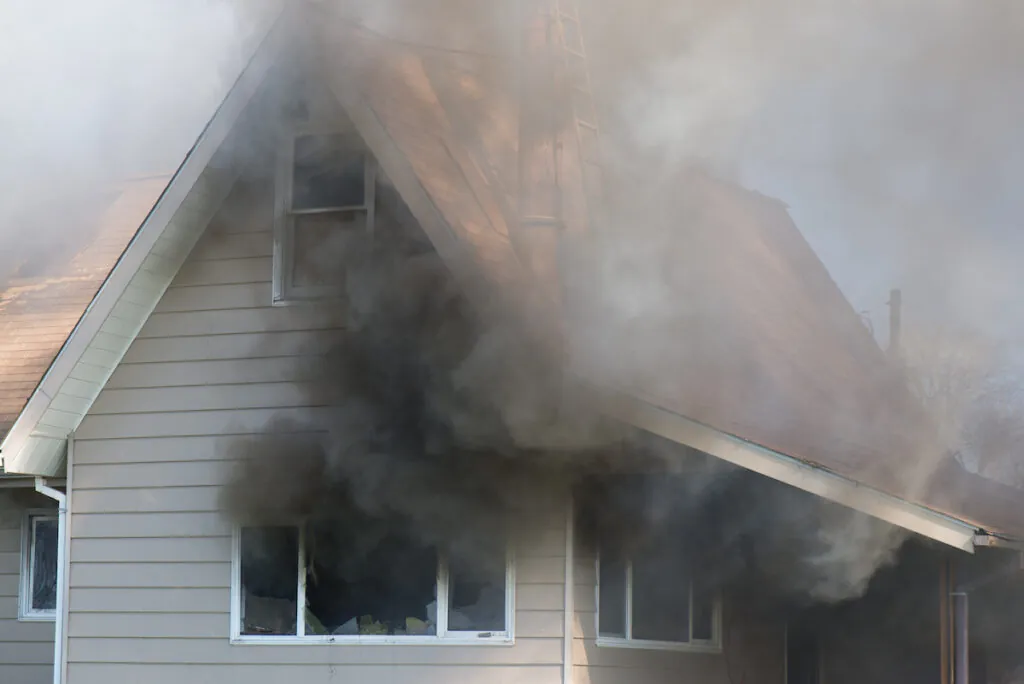
Even after a fire is extinguished, smoke, soot, and odor can continue to affect your home. Fire damage restoration services address visible damage while also helping reduce lingering effects that impact indoor air quality and surfaces.
Explore Our Fire and Smoke Damage Restoration Services
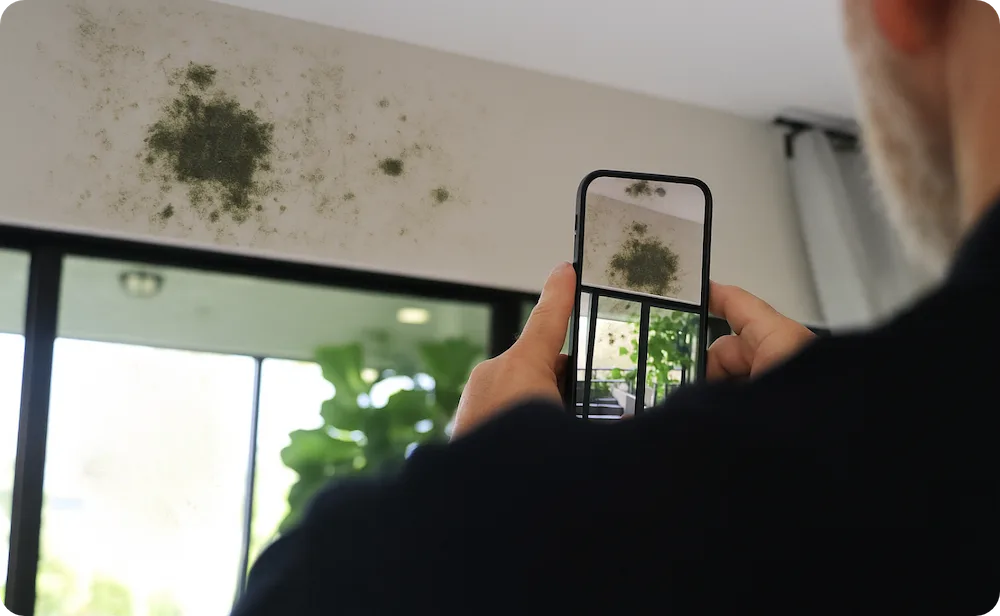
Mold often develops as a result of unresolved moisture or hidden water damage. Professional mold remediation helps identify affected areas, contain growth, and restore healthy indoor conditions.
Explore Our Mold Removal and Remediation Services
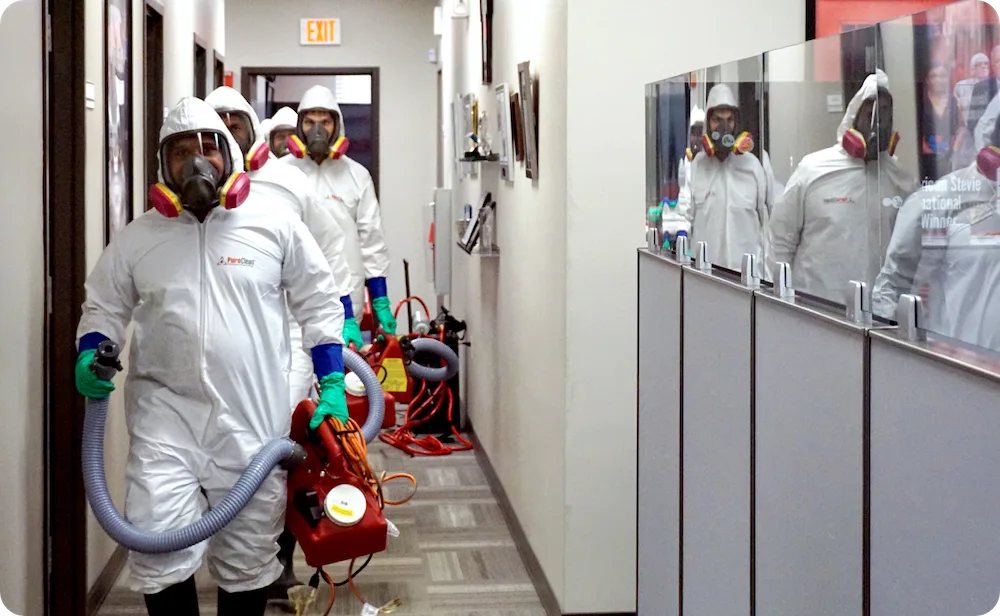
Biohazard situations, including crime scene cleanup and virus decontamination, require specialized cleaning and handling to protect health and safety. Biohazard cleanup services address contamination using proper protocols and professional care.
Explore Our Biohazard Cleanup Services
In some cases, property damage requires repairs beyond cleanup and mitigation. Reconstruction services help restore damaged areas of the home after water, fire, or other incidents, supporting a smoother transition from damage to recovery.
Explore Our Reconstruction Services Services
PuroClean provides 24/7 commercial property damage restoration services for businesses and facilities across the United States.
Explore Our Commercial Services
Water damage can result from unexpected leaks, flooding from storms, plumbing failures, or appliance malfunctions. Our certified teams focus on rapid water removal, drying, and stabilization to help prevent further damage and mold growth.
Explore Our Water Damage Mitigation Services

Answers to the questions Newfield homeowners and small business owners ask most about water, mold, and fire damage restoration.
Yes. A septic backup is classified as Category 3 black water under IICRC S500 standards regardless of how clear the water looks, which means affected porous materials like carpet, pad, and lower drywall typically need to be removed rather than dried in place, with antimicrobial treatment applied before rebuild. Newfield has a mix of municipal and private well-and-septic properties depending on the street, so we always confirm which system you’re on as part of our initial assessment rather than assuming.
Older industrial sections of small South Jersey towns like the railroad Y south of Newfield sometimes have fill soil, old foundation remnants, or drainage patterns that don’t match what you’d expect from the surface grading, which can affect how groundwater moves around a foundation during heavy rain. If you’re seeing recurring dampness in a crawlspace or basement near that area, we’ll check both the moisture source and whether site grading or an old foundation feature is redirecting water toward your property specifically.
An overnight leak that sits for several hours before discovery usually means moisture has spread further than it would in a residence where someone’s awake to notice immediately, so we check subflooring, display fixtures, and any storage areas thoroughly, not just the visibly wet floor. For small Pearl Street and Main Street businesses, we also prioritize getting you operational again quickly, since every closed day affects revenue, and we’ll talk through what can be addressed same-day versus what needs equipment running overnight.
It often does. Homes from Newfield’s original 1920s building boom, when the borough’s rug mills and furniture factories were still operating, frequently have balloon-frame construction, plaster walls, and renovations layered on top of original materials over the decades, which can hide moisture pathways that wouldn’t exist in newer construction. We rely on moisture meters and sometimes thermal imaging to trace water behind walls and under flooring rather than assuming the damage stopped where it’s visible.
A persistent musty smell is worth investigating rather than dismissing, especially in older structures where ventilation wasn’t designed with today’s moisture standards in mind. We start with a mold inspection that includes moisture mapping to determine whether the smell points to active growth, a hidden leak, or simply poor air exchange in an older building, and we’ll give you a clear written assessment before recommending any remediation work.
What Our Customers Say:
When you need water damage restoration services near you, call the experts at PuroClean. We are here day or night, 24/7, to help remove any standing water quickly and begin your water restoration service. We monitor the drying process so you can rest assured that your property is dried thoroughly. We offer commercial water restoration services for businesses and residential water damage restoration for homeowners.

PuroClean of Vineland
(888) 598-1441
Vineland, NJ

© 2026 PuroClean. All Rights Reserved.