Professional mold remediation services to safely address mold growth and restore healthy indoor conditions after moisture-related damage.
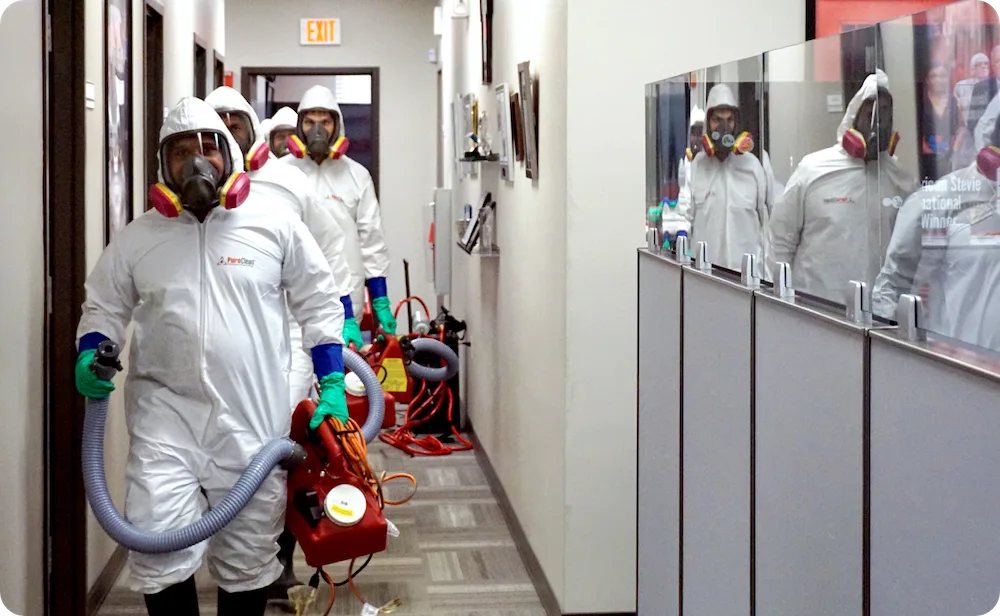
Mold remediation is a safety-first service that isolates the affected area, controls airborne spores with HEPA filtration, removes contaminated materials when necessary, and verifies the space is clean and dry before repairs. The goal is to correct the mold problem and prevent it from spreading through the rest of the home.
When you’re seeing mold—or smelling it—you’re not just dealing with stains on a surface. The immediate concern for most homeowners is whether spores are drifting into the rest of the house and what it means for children, older adults, or anyone with sensitivities. That’s why professional mold remediation starts with containment and isolation: controlling where air moves, separating “clean” and “work” areas, and keeping disturbed particles from spreading during cleanup. PuroClean of Vineland provides mold remediation designed to protect occupants while restoring healthy indoor conditions. We inspect to understand what’s actually affected (including hidden cavities), set up containment and HEPA air filtration, remove unsalvageable materials when required, and clean remaining surfaces using methods aligned with industry best practices. We also help you understand what needs to be corrected so mold doesn’t return—because remediation without moisture control is only a temporary fix. If you’re unsure what’s safe to touch, move, or throw away, that’s normal. We’ll guide you through the decisions, explain what to expect day-by-day, and keep communication clear from the first call through final verification.
If you suspect mold, focus on keeping the area isolated and preventing additional moisture.
1) Limit access: close doors to the affected room and keep kids and pets out. If possible, place a towel at the bottom of the door to reduce airflow into the rest of the home.
2) Stop the moisture: shut off water to a leaking fixture, pause humidifiers, and run bathroom/kitchen exhaust fans if they vent outdoors.
3) Avoid spreading spores: turn off the HVAC system if you suspect the return vents are pulling air from the affected area.
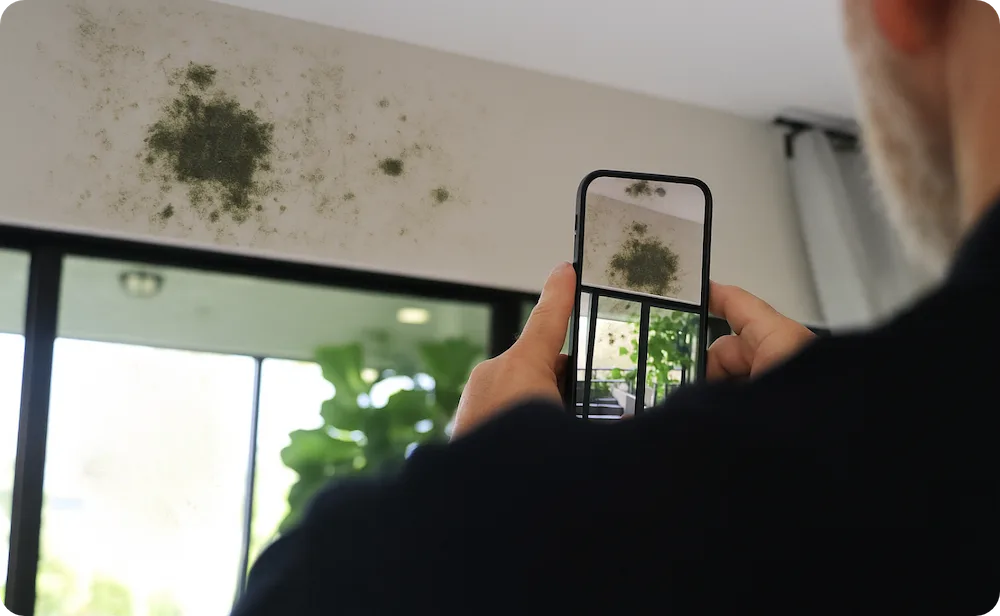
4) Document what you see: take clear photos of visible growth and any suspected moisture source.
5) Call for an assessment: the safest next step is a professional inspection to determine whether containment is needed and how far the mold extends behind finishes.
We assess visible growth, likely airflow pathways, and moisture conditions to determine the safest work boundaries. When needed, we use non-invasive methods to check adjacent rooms and building cavities for hidden impact.
What Our Customers Say:
The biggest risk with mold isn’t just what you can see—it’s what gets released into the air when contaminated materials are disturbed without isolation. Without proper containment and negative-pressure control, spores can migrate into adjacent rooms, settle in soft contents, and create recurring odor or regrowth. In New Jersey homes, we frequently find crawlspace and basement growth influencing upstairs air because of stack effect: air from lower levels is naturally pulled up through gaps around plumbing, chases, and floor penetrations. During humid stretches, that lower-level air can carry moisture and spores into living areas even when the visible mold stays “downstairs.” That’s why containment boundaries and airflow control are planned around how your home actually breathes—not just where the staining is.
Mold coverage often depends on what caused it and how quickly the moisture issue was addressed. If mold results from a sudden, accidental event (for example, a supply-line leak) your policy may provide some coverage, while long-term seepage or ongoing humidity problems may be limited or excluded. To support a claim, keep a timeline (when you noticed the issue, when water was stopped), save photos/videos, and don’t discard damaged materials until advised—those materials can help demonstrate the extent and cause. PuroClean of Vineland can provide documentation such as affected-area notes, moisture readings, and a summary of containment and remediation steps performed. If an adjuster or independent indoor environmental professional is involved, we can coordinate so the scope and any clearance expectations are aligned before repairs begin.
If you’re worried about mold spreading through the home, the next step is a safety-first inspection and a containment plan you can trust. Call PuroClean of Vineland at (888) 598-1441 to schedule an assessment. We’ll explain whether you can stay in the home, what needs to be isolated, and how we’ll verify conditions before you return the space to normal use.
Find answers to common questions about our services
It depends on the size and location of the affected area, whether containment can fully isolate the work zone, and whether anyone in the home is especially sensitive. Many projects can be completed with occupants staying out of the contained area only, but some situations (large areas, heavy disturbance, HVAC involvement) may justify temporarily relocating. We’ll review your layout and recommend the safest option before work begins.
Different molds behave differently, but the practical safety approach is similar: limit exposure, prevent spread, and remove contamination correctly. Visible growth and musty odor already indicate an indoor moisture problem that needs correction regardless of “type.” If testing is performed, it can help with clearance or medical/occupant concerns, but remediation decisions are primarily based on conditions and extent.
A strong baseline is passing post-remediation verification: the area is visibly clean, materials are dry to appropriate targets, and containment is removed without cross-contamination. If you want an extra layer of confirmation, independent third-party clearance testing can be arranged after cleanup and drying are complete. We can coordinate timing so sampling (if chosen) reflects the final condition, not an in-progress work zone.
We combine visible conditions (staining, odor patterns) with moisture measurements and targeted inspection of likely reservoirs such as wall cavities, subfloor edges, insulation, and crawlspace framing. The goal is to define a sensible containment boundary and avoid leaving “pockets” of growth that can re-seed the space later. When necessary, limited, controlled access openings are used to confirm conditions without unnecessary demolition.
Small, well-contained areas may take 1–2 days, while larger or multi-area projects can take several days, especially if drying or material removal is required. Timeline is most affected by the size of the impacted area, how porous the materials are (drywall, insulation, carpet), and whether the moisture source is still active. We’ll provide an expected schedule once the inspection confirms scope.
Sometimes—coverage depends on your policy and the cause of the moisture. Mold tied to a sudden, accidental water event may be partially covered, while gradual seepage, chronic humidity, or deferred maintenance is often excluded. If you plan to file a claim, start documenting early and ask your adjuster what proof they need to connect the mold to a covered event.
Our mold remediation team is trained, certified, and experienced in addressing a wide range of residential mold situations. We follow industry standards and proven remediation practices to support safe, effective results.
Mold concerns can be stressful and confusing. Our team works with insurance providers when applicable to help document mold-related damage and guide homeowners through next steps with clarity and transparency.
Certain mold situations require immediate attention, especially when linked to active water intrusion. Our team is available 24/7 to respond when mold or moisture concerns need prompt action.
Water damage can result from unexpected leaks, flooding from storms, plumbing failures, or appliance malfunctions. Our certified teams focus on rapid water removal, drying, and stabilization to help prevent further damage and mold growth.
 Explore Our Water Damage Mitigation Services
Even after a fire is extinguished, smoke, soot, and odor can continue to affect your home. Fire damage restoration services address visible damage while also helping reduce lingering effects that impact indoor air quality and surfaces.
Explore Our Fire and Smoke Damage Restoration Services
Mold often develops as a result of unresolved moisture or hidden water damage. Professional mold remediation helps identify affected areas, contain growth, and restore healthy indoor conditions.
Explore Our Mold Removal and Remediation Services
Biohazard situations, including crime scene cleanup and virus decontamination, require specialized cleaning and handling to protect health and safety. Biohazard cleanup services address contamination using proper protocols and professional care.
Explore Our Biohazard Cleanup Services
In some cases, property damage requires repairs beyond cleanup and mitigation. Reconstruction services help restore damaged areas of the home after water, fire, or other incidents, supporting a smoother transition from damage to recovery.
Explore Our Reconstruction Services Services
PuroClean provides 24/7 commercial property damage restoration services for businesses and facilities across the United States.
Explore Our Commercial Services
Water damage can result from unexpected leaks, flooding from storms, plumbing failures, or appliance malfunctions. Our certified teams focus on rapid water removal, drying, and stabilization to help prevent further damage and mold growth.
Explore Our Water Damage Mitigation Services


PuroClean of Vineland
(888) 598-1441
3003 N. Mill Road, Building 400, Suite 3, Vineland, NJ 08360

© 2026 PuroClean. All Rights Reserved.