24/7 Emergency Services For Water, Fire, Mold and Biohazard in Pleasantville, NJ
Serving Pleasantville — the Mainland Hub Where Three Highways Meet
Pleasantville is the largest community in PuroClean of Vineland’s service area by a significant margin — 20,629 residents as of the 2020 census, a figure the city has never exceeded and its highest ever recorded. Spread across 7.28 square miles, it is a genuinely urban city in the middle of South Jersey’s coastal plain, bordered by Absecon to the north, Atlantic City to the east, Ventnor City to the southeast, Northfield to the south, and Egg Harbor Township to the west. Three of the most-traveled highways in southern New Jersey — U.S. Route 40 (the Black Horse Pike), U.S. Route 322 (the White Horse Pike), and the Atlantic City Expressway — nearly converge in Pleasantville before crossing the salt marshes to Atlantic City seven miles away. The Garden State Parkway passes just to the west. There is no other mainland community in Atlantic County where more traffic, more commerce, and more people intersect.
The city’s name has a quietly famous origin. As the story goes, a local merchant named Daniel Lake needed a sign for his store and went to the wheelwright David Ingersoll to have one made. Ingersoll offered: “I’ll give you the board if you paint the sign.” Lake did, and he painted: “Lake’s Store, Pleasantville, New Jersey.” The name on that sign — a name the local area did not officially have before that board was painted — became the name of the community. Before that sign, the area went by a collection of hamlet names: Smith’s Landing, Risleytown, Adamstown, Lakestown, each named for early settler families. By 1889 they incorporated together as one borough, and by 1914 Pleasantville became a city.
The city has deep roots in American sporting history that most people do not know about. In 1945, wartime travel restrictions required the Boston Red Sox to hold spring training close to home. They chose Pleasantville. Ted Williams had just returned from military service. The Sox played exhibition games against the New York Yankees here, on this mainland South Jersey city’s fields. A decade or so earlier, Laoma Byrd’s Gym in Pleasantville had become one of the most respected boxing training facilities in the country. Ezzard Charles, Jersey Joe Walcott, and Sonny Liston all trained there. Three of the most significant heavyweight boxers of the mid-20th century prepared for their fights in a gym in Pleasantville. And from the local Lake family came Simon Lake, the U.S. engineer credited with inventing the first functional submarine. Pleasantville is not a community that announces itself with landmarks. Its history is in the people who passed through it.
PuroClean of Vineland serves all of Pleasantville with 24/7 emergency water damage restoration, mold remediation, fire damage cleanup, and sewage decontamination. Pleasantville’s size, diversity, and concentration of older residential and commercial properties make it one of the most active service areas in our territory. The clients here are year-round homeowners, renters in multi-family buildings, small business owners along Main Street and the highway corridors, and property managers with portfolios scattered across the city’s grid of prewar bungalows and mid-century homes.
The water damage calls we handle in Pleasantville reflect an urban city with an aging housing stock, tidal exposure in its southern sections, and a demographic that is often working with limited insurance resources:
Pleasantville’s Urban Enterprise Zone designation — in place since 1994, under which shoppers pay half the normal New Jersey state sales tax at participating businesses — reflects the city’s ongoing economic revitalization story. Main Street, with its sidewalk-lined blocks of early 20th-century commercial buildings, is the subject of statewide development investment. The Mount Pleasant neighborhood is seeing new home construction on double lots that remained undeveloped for decades. These are not abstract planning documents — they are visible signs of a community actively rebuilding its economic identity. When a water event hits a Main Street business or a recently renovated Mount Pleasant home, the restoration cost is real and the disruption is acute.
Route 40 — the Black Horse Pike — connects Vineland directly to Pleasantville, the same road that has linked these two South Jersey communities since the era of the stagecoach. We head east on Route 40 from our Weymouth Road location and we are in Pleasantville in approximately 25 to 30 minutes. Route 40 runs straight through the heart of the city, and because the Atlantic City Expressway, Route 322, and Route 9 all converge in or near Pleasantville as well, there are multiple approach routes into the city depending on traffic conditions and which part of the city the job is in.
Here is how we navigate to different parts of the city:
Pleasantville’s position as the convergence point of South Jersey’s major highway system means we are never more than a direct highway drive away from any address in the city. There are no narrow back roads to navigate, no bridge chokepoints, and no island access constraints. The city’s 68 miles of road network is the most extensive of any community in our service area, and we know the primary corridors and the residential grid well enough to move through them at any hour.
Pleasantville is a city with two distinct flood exposure zones separated by the Atlantic City Expressway. North of the Expressway, the city’s flood risk is primarily driven by stormwater drainage capacity and the internal plumbing and structural vulnerabilities of its aging housing stock — the same suburban and urban risk factors that apply across Atlantic County’s mainland communities. South of the Expressway, the picture changes. The City of Pleasantville’s own flood protection documentation states it directly: that section of the city experiences tidal flooding from Lakes Bay, east of South Main Street. Lakes Bay is the tidal body that separates the mainland from Absecon Island, and during coastal storm events and high-tide surge conditions, bay water pushes westward across the salt marshes and into the low-lying streets of the southern city. The households and properties in that zone are exposed to water from an external tidal source — a flood event, not a plumbing event — and the coverage implications, the water category, and the restoration protocol are all different as a result.
Pleasantville’s housing stock is among the oldest in our service area. The city’s explosive growth in the early 1920s — when the population roughly doubled from 5,887 to over 12,000 as trolley service connected the mainland to Atlantic City and Pleasantville became the hub of regional commerce — produced a large inventory of prewar bungalows, cottages, and small multi-family buildings that were constructed quickly to house a rapidly growing working population. Most of that housing is still standing and still occupied. The galvanized steel supply lines and cast-iron waste systems installed in those homes have been partially replaced over the decades, but rarely completely. A bungalow on a side street off Main Street that was built in 1922 may have its original cast-iron waste lines still running in the walls, whatever-era supply lines the last plumber put in, and a sump pump that was added by a previous owner at some point. That is the plumbing reality of a city that built most of its residential stock in a single concentrated decade a century ago.
The demographic profile of Pleasantville shapes the water damage response in a practical way. With a median home price around $247,000 — significantly below the Atlantic County average — and a population that includes substantial low-to-moderate-income households, many Pleasantville homeowners carry homeowner’s insurance with coverage limits that were set years ago and have not kept pace with actual replacement costs. A policy written when the home was purchased at $180,000 may carry a dwelling coverage limit that falls short of what it costs today to fully restore a kitchen, a basement, or a damaged structural component. Renters — who make up a significant share of Pleasantville’s occupied housing — often have renter’s insurance for contents but no recourse against a landlord’s inadequate structural coverage. We document every loss completely and advocate for the maximum available claim recovery, but we also have honest conversations with Pleasantville homeowners about what the documentation shows versus what the policy will cover.
The multi-family and rental property dimension of Pleasantville’s housing market introduces a coordination complexity that does not apply in the same way in communities like Northfield or Linwood. When a water event affects a two-family or three-unit building in Pleasantville, there may be a property owner who lives out of the city, a property manager who handles day-to-day operations, and multiple tenants whose belongings are at risk, whose living conditions are immediately compromised, and whose cooperation is needed for access. We navigate that structure on every multi-unit job: establishing contact with the responsible party, explaining what needs to happen, getting the access we need, and documenting the scope across every affected unit.
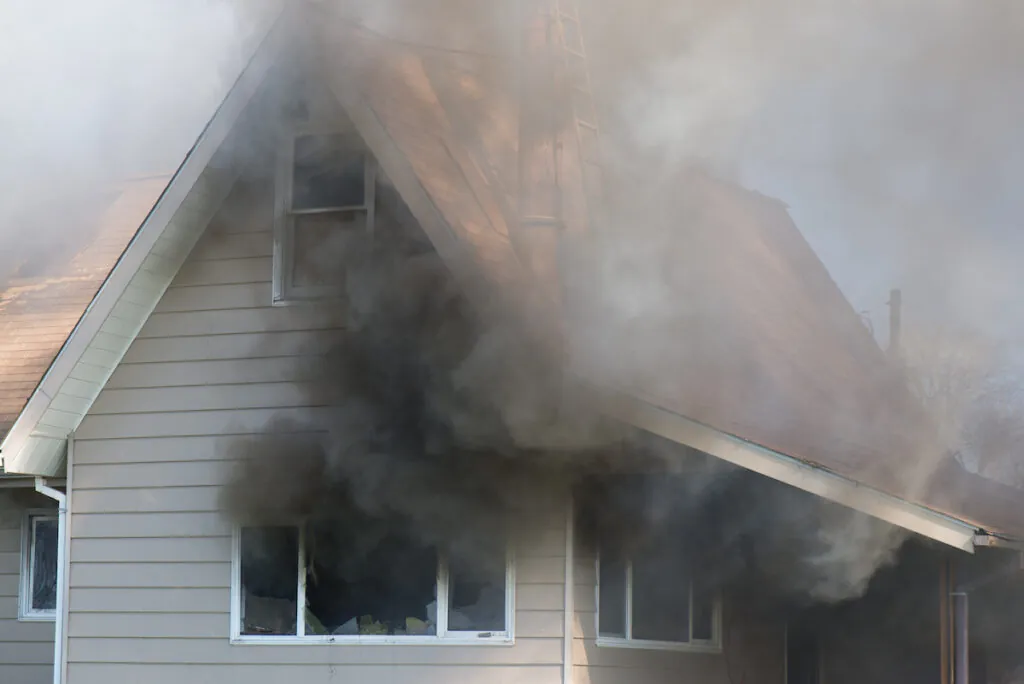
Fire damage in Pleasantville carries specific risk factors related to its building density and older electrical infrastructure. Prewar bungalows and attached or semi-attached housing in the city’s older residential sections were built at a time when electrical loads were a fraction of what modern households demand. Knob-and-tube wiring, early panel upgrades, and aluminum branch circuit wiring from 1960s-era updates are all found in Pleasantville’s older housing stock. When a fire occurs in this environment — whether from an electrical fault, a kitchen incident, or an overloaded circuit — smoke penetrates the plaster walls and older insulation materials of adjacent units and the structures around it. Smoke remediation in Pleasantville’s denser residential blocks frequently involves properties that did not experience the fire directly but absorbed its smoke through shared walls and connected utility chases.
If you own a home or business in Pleasantville, PuroClean of Vineland can help you understand the restoration process cand an help you act quickly and reduce long-term damage when disaster strikes. Call us today at (888) 598-1441.
Owned & Operated by Rita & Sal Gaetano
3003 N. Mill Road, Vineland, NJ, 08360
(888) 598-1441
Water damage can result from unexpected leaks, flooding from storms, plumbing failures, or appliance malfunctions. Our certified teams focus on rapid water removal, drying, and stabilization to help prevent further damage and mold growth.
 Explore Our Water Damage Mitigation Services
Even after a fire is extinguished, smoke, soot, and odor can continue to affect your home. Fire damage restoration services address visible damage while also helping reduce lingering effects that impact indoor air quality and surfaces.
Explore Our Fire and Smoke Damage Restoration Services
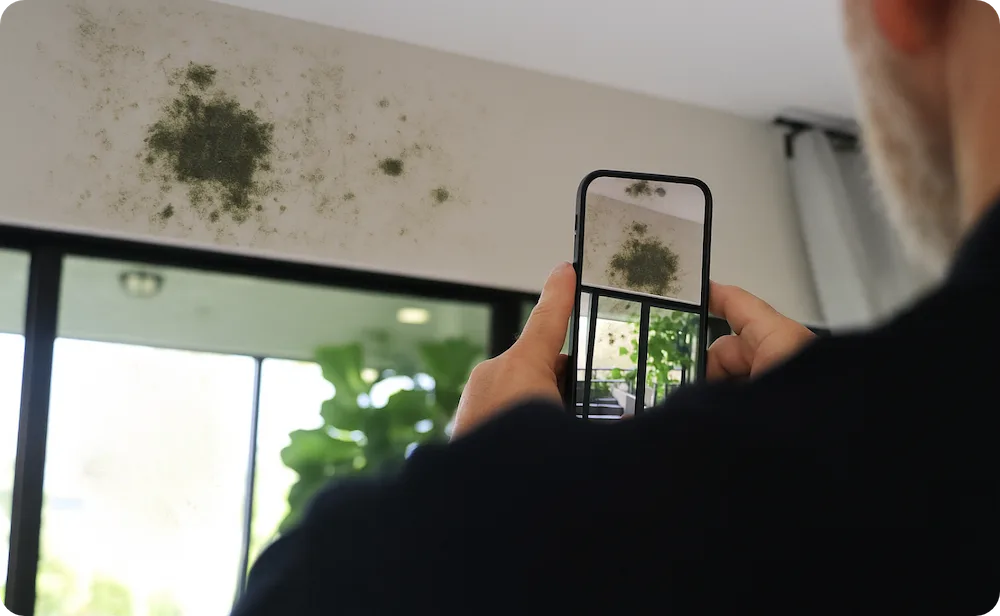
Mold often develops as a result of unresolved moisture or hidden water damage. Professional mold remediation helps identify affected areas, contain growth, and restore healthy indoor conditions.
Explore Our Mold Removal and Remediation Services
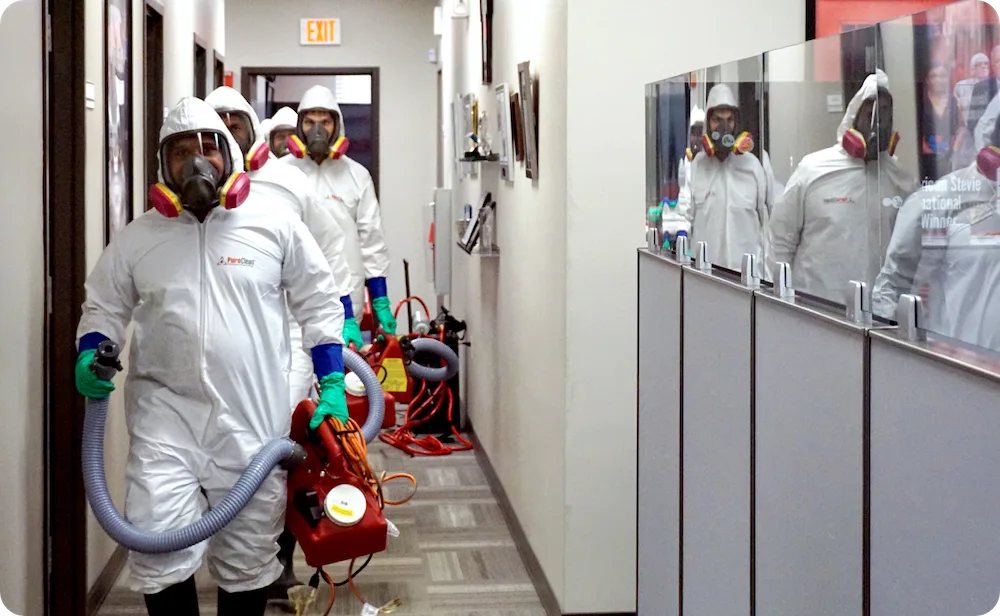
Biohazard situations, including crime scene cleanup and virus decontamination, require specialized cleaning and handling to protect health and safety. Biohazard cleanup services address contamination using proper protocols and professional care.
Explore Our Biohazard Cleanup Services
In some cases, property damage requires repairs beyond cleanup and mitigation. Reconstruction services help restore damaged areas of the home after water, fire, or other incidents, supporting a smoother transition from damage to recovery.
Explore Our Reconstruction Services Services
PuroClean provides 24/7 commercial property damage restoration services for businesses and facilities across the United States.
Explore Our Commercial Services
Water damage can result from unexpected leaks, flooding from storms, plumbing failures, or appliance malfunctions. Our certified teams focus on rapid water removal, drying, and stabilization to help prevent further damage and mold growth.
Explore Our Water Damage Mitigation Services

Answers to the questions Pleasantville homeowners and business owners ask most about water, mold, and fire damage restoration.
Yes, generally. The city’s own flood mapping identifies northern Pleasantville as being at risk from Conovers Creek, a tributary of Absecon Creek, and rising creek water is classified as flood damage rather than a standard water loss under a homeowner’s policy. That typically means NFIP flood insurance is the relevant coverage. We’ll document the water line, duration, and affected materials carefully, since that record matters whether the claim runs through NFIP or gets paid out of pocket.
It is a bit different. The section of Pleasantville south of the Atlantic City Expressway near South Main Street experiences tidal flooding from Lakes Bay itself, meaning the water comes from bay tide and storm surge rather than rainfall-driven creek overflow. Both are still classified as flood events for insurance purposes, but tidal flooding tends to bring brackish or salt water, which we factor into how we assess affected materials and whether they can be cleaned versus need replacement.
In many cases, yes, especially if the damage is contained to a back room, storage area, or single section of the store. After handling any emergency water extraction first, we can often schedule drying equipment placement and any demolition in phases that let you keep serving customers in unaffected areas, and we’ll talk through realistic options based on where the damage actually is and how contained we can keep the work area.
It often does. Pleasantville’s older housing stock, including prewar bungalows and cottages in neighborhoods like Mount Pleasant, frequently has original plaster, older electrical and plumbing that’s been partially updated over the decades, and sometimes additions that weren’t tied into the original drainage or grading plan. We use moisture meters to trace water through these layered renovations rather than assuming damage stopped at the most recently updated surface, and we’ll walk through what we find before recommending removal of any original material.
Multi-family properties require us to assess every affected unit individually, since smoke and soot don’t distribute evenly even within the same building, and shared walls or hallways can carry odor into units that weren’t anywhere near the fire itself. We coordinate with the property owner or manager on access and scheduling across units, document each unit’s damage separately for insurance purposes, and prioritize getting displaced families clear information about timelines as early as possible.
What Our Customers Say:
When you need water damage restoration services near you, call the experts at PuroClean. We are here day or night, 24/7, to help remove any standing water quickly and begin your water restoration service. We monitor the drying process so you can rest assured that your property is dried thoroughly. We offer commercial water restoration services for businesses and residential water damage restoration for homeowners.

PuroClean of Vineland
(888) 598-1441
3003 N. Mill Road, Building 400, Suite 3, Vineland, NJ 08360

© 2026 PuroClean. All Rights Reserved.