24/7 Emergency Services For Water, Fire, Mold and Biohazard in Ventnor City, NJ
Serving Ventnor City on Absecon Island — the Gateway to Downbeach
Ventnor City sits between Atlantic City to the northeast and Margate City to the southwest on Absecon Island, occupying the slice of the island that locals have long called the beginning of “Downbeach” — the stretch of barrier island communities that collectively run quieter, more residential, and more rooted than Atlantic City’s casino corridor. With a population of 9,210 and a land area of just under two square miles, Ventnor is a compact city, and it is denser with water than almost any other community in PuroClean of Vineland’s service area. Of the city’s 3.52 total square miles, 44.52 percent is water. The ocean is on one side. Beach Thoroughfare and the Intracoastal Waterway are on the other. The city’s own boardwalk — 1.7 miles of it, connected to Atlantic City’s boardwalk at the northeastern end and terminating at the Margate border to the southwest — is the city’s most direct relationship with the Atlantic, and the paid beach badge system that keeps the beach quieter than Atlantic City’s free-access shoreline is a reflection of what Ventnor values: a more settled, more residential shore experience.
The city’s name came from a moment of sentiment. In 1889, Mrs. S. Bartram Richards — wife of the secretary-treasurer of the Camden and Atlantic Land Company, which was developing this section of the island south of Atlantic City — suggested naming it after Ventnor, England, the seaside resort on the Isle of Wight that she and her husband remembered fondly from a visit. The name was formally adopted January 9, 1889. When the city held its first official meeting after incorporation in 1903, it gathered at the Carisbrooke Inn on Atlantic Avenue between Cambridge and Sacramento Avenues — a nod to Carisbrooke Castle, also on the Isle of Wight. The oldest standing house in the city is the Anita Metzer House at 6209 Ventnor Avenue. The first church built here was St. Johns by the Sea at Sacramento and Ventnor Avenues. The John Stafford Historic District, designed by architect Frank Seeburger and featuring well-preserved colonial revival homes, sits between South Vassar Square and South Austin Avenue just off Atlantic Avenue. Early residents of that district included the families who owned the Marlborough, Blenheim, and Dennis Hotels in Atlantic City — Ventnor as a quiet retreat from the resort city they operated.
A 1939 Federal Writers’ Project guide described Ventnor with a line that still rings accurate: “Ventnor might appear to some as a part of Philadelphia moved to the New Jersey shore. But beside the long rows of Philadelphia houses and bungalows are the beautiful estates that enable Ventnor to carry on the tradition of Cape May as the first blue blood of New Jersey resorts.” That dual character — the Philadelphia rowhouse vernacular alongside grand estates, the year-round working-family neighborhoods alongside summer homes of a different scale — remains visible in Ventnor’s housing stock today. Added to that mix are two prominent 1960s high-rise condominium buildings: 5000 Boardwalk, a 20-story structure completed in 1960 with 345 units, and Vassar Square Condominiums at 4800 Boardwalk, a 21-story building completed in 1963 with 211 units. These towers in the Lower Chelsea section of the city represent a third architectural era layered onto Ventnor’s historic fabric.
PuroClean of Vineland serves all of Ventnor City with 24/7 emergency water damage restoration, mold remediation, fire damage cleanup, and sewage decontamination. The city’s layered housing stock, its tidal exposure on two sides, and its specific flood vulnerability in the Ventnor Heights section all shape the restoration work we do here.
The water damage calls we handle in Ventnor City reflect a barrier island community where nearly half the total area is water and where tidal flooding has become part of the rhythm of daily life for many residents:
Ventnor Avenue, the commercial street running through the city, is lined with local boutique shops and casual restaurants that serve both year-round residents and summer visitors. It is the kind of commercial strip that reflects the city’s character — independent, local, unhurried. When water events affect commercial properties along Ventnor Avenue, the business interruption dimension is immediate and the restoration timeline matters directly to owners who are on-site daily, not managing from a distance.
Ventnor City is approximately 40 to 45 minutes from our Vineland location. The Atlantic City Expressway carries us east to the island, and from Atlantic City we head south on Atlantic Avenue directly into Ventnor — the same street the city’s City Hall sits on at number 6201. There are no Interstate, U.S., or state highways that serve Ventnor directly. County Route 629 is the only numbered route through the city, running along Dorset Avenue toward the Dorset Avenue Bridge over the Intracoastal Waterway. Atlantic Avenue is the primary navigational spine of the city from the Atlantic City border to the Margate border, and it is the road we use to move through the city efficiently.
Here is how we navigate to different parts of Ventnor City:
Ventnor’s position in the middle of Absecon Island gives us routing flexibility not available at Longport on the southern tip — we can approach from either the Atlantic City direction or, when conditions warrant, coordinate with the Margate entry from the south. During major storm events that affect Atlantic Avenue through the Atlantic City corridor, the Expressway-to-Ventnor routing remains the most reliable approach and the one we default to.
The statistic that defines Ventnor’s geographic situation better than any other is simple: 44.52 percent of the city’s total area is water. Nearly half of what constitutes Ventnor City is ocean, bay, Intracoastal Waterway, and tidal thoroughfare. The land that remains — less than two square miles of it — sits on a narrow barrier island strip with ocean on one side and Beach Thoroughfare on the other, and in the Ventnor Heights section the land narrows further still until the only connection to the rest of the island is the Dorset Avenue Bridge, a federally regulated double-leaf bascule drawbridge across the Intracoastal Waterway. When that bridge floods, Ventnor Heights does not flood — it is cut off. The neighborhood becomes an island within the island, accessible only by water. That is not a hypothetical. The city documents it. Residents in Ventnor Heights understand it as a fact of their address.
Beyond the Heights isolation scenario, Ventnor’s tidal flood exposure is documented in a specific and culturally embedded way. Bayfront residents in Ventnor keep track of the moon and the tides to anticipate nuisance flooding — not storm flooding, but the routine high-tide water intrusion that happens on the Intracoastal and bay-side streets during king tides and elevated tidal cycles, independent of any weather event. This is a community where the relationship between lunar cycles and street flooding has become practical knowledge. The city maintains anti-flood infrastructure including bulkheads along the bayfront, and is actively developing an eco-park on the bayfront that will serve simultaneously as a natural recreation area and a living flood barrier. A municipality investing in a living flood barrier is a municipality that understands the trajectory of its own tidal exposure.
The ocean side produces the more dramatic events. A significant nor’easter driving storm surge northward along the coastline can push waves over the Ventnor beach and into the oceanfront blocks in the same manner it does in Margate and Longport to the southwest and Atlantic City to the northeast. That water is Category 3 — saltwater mixed with sand, debris, and marine contaminants that cannot be treated as a drying problem. It requires extraction, full contaminated material assessment, removal of affected porous materials, decontamination, and documented clearance before any reconstruction begins. The IICRC S500 standard governs the technical protocol. The specific chemistry of Atlantic Ocean storm surge governs what those protocols require in practice.
The city’s layered housing stock creates restoration challenges that are specific to each era of construction. The pre-war Philadelphia-style rowhouses and bungalows that the 1939 Writers’ Project guide described are largely still standing, with original or partially updated plumbing, roofing systems at or past their service life, and construction details that predate modern moisture management. The mid-century and colonial revival homes in the historic district carry their own materials and drainage characteristics. And the two 1960s high-rise condominium towers on the Boardwalk are 60-year-old structures whose original mechanical systems, window seals, rooftop membranes, and HVAC infrastructure have been maintained and partially replaced over the decades in the layered way that large older buildings accumulate. Water damage in any of these building types requires an approach calibrated to what the structure actually is — not a one-size-fits-all extraction-and-drying protocol.
Ventnor’s identity — quieter than Atlantic City, residential in a way the casino district is not, boutique-commercial along Ventnor Avenue, year-round in a way that many purely seasonal shore communities are not — is built on a two-mile strip of barrier island where 44 percent of the total area is water. The people who choose Ventnor as a year-round home or a second home choose it knowing what it is. Our job, when the water comes in from the wrong direction, is to help them get back to what they chose.
For homeowners and business owners in Ventnor City, understanding restoration services is essential for protecting property value and responding quickly when damage occurs. Call PuroClean of Vineland today for all your emergency service needs at (888) 598-1441.
Owned & Operated by Rita & Sal Gaetano
3003 N. Mill Road, Vineland, NJ, 08360
(888) 598-1441
Water damage can result from unexpected leaks, flooding from storms, plumbing failures, or appliance malfunctions. Our certified teams focus on rapid water removal, drying, and stabilization to help prevent further damage and mold growth.
 Explore Our Water Damage Mitigation Services
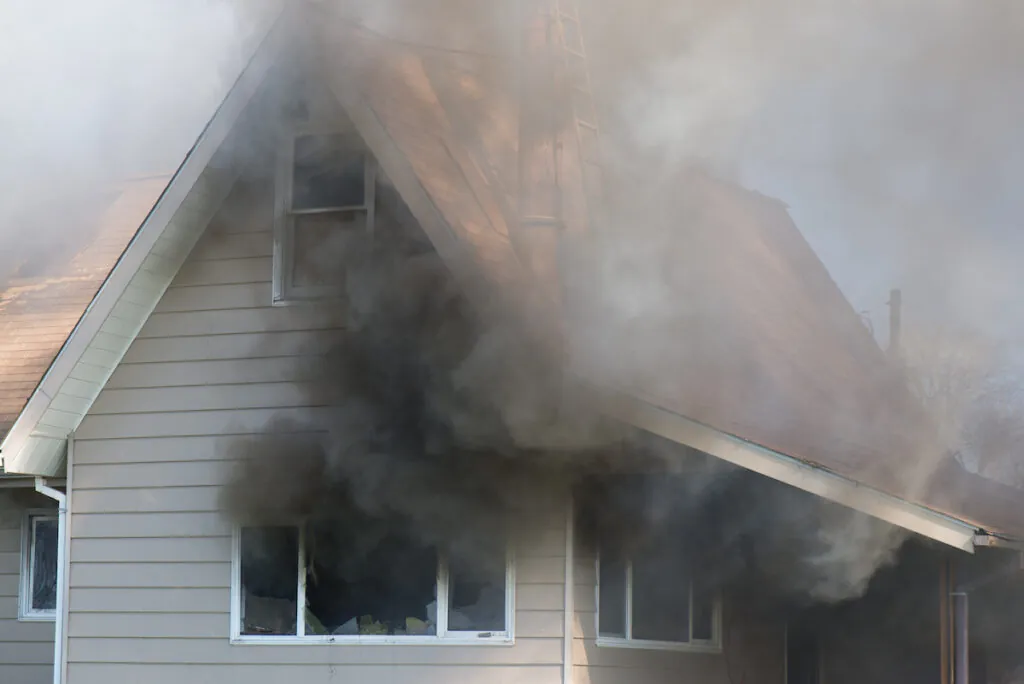
Even after a fire is extinguished, smoke, soot, and odor can continue to affect your home. Fire damage restoration services address visible damage while also helping reduce lingering effects that impact indoor air quality and surfaces.
Explore Our Fire and Smoke Damage Restoration Services
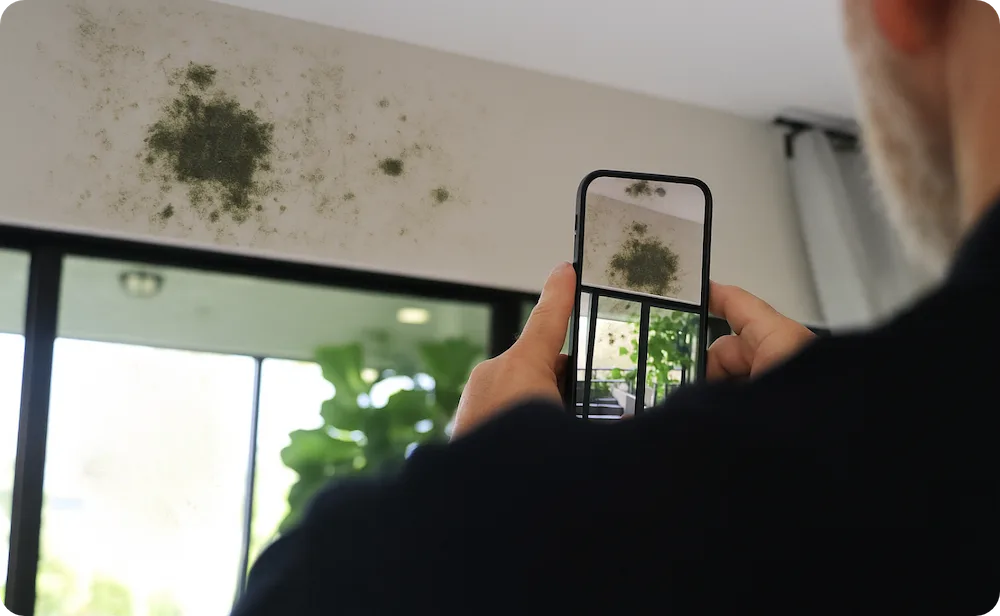
Mold often develops as a result of unresolved moisture or hidden water damage. Professional mold remediation helps identify affected areas, contain growth, and restore healthy indoor conditions.
Explore Our Mold Removal and Remediation Services
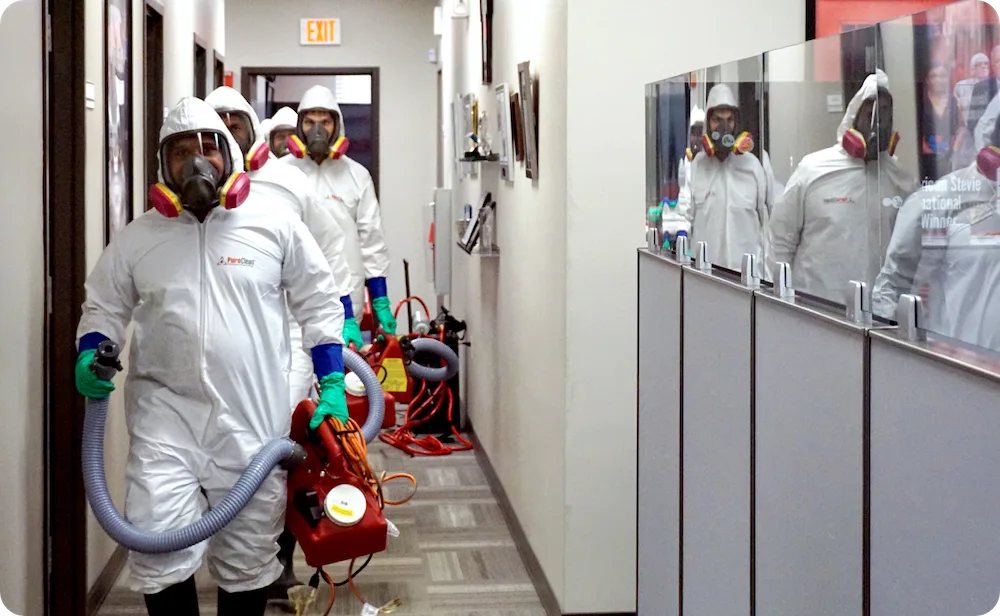
Biohazard situations, including crime scene cleanup and virus decontamination, require specialized cleaning and handling to protect health and safety. Biohazard cleanup services address contamination using proper protocols and professional care.
Explore Our Biohazard Cleanup Services
In some cases, property damage requires repairs beyond cleanup and mitigation. Reconstruction services help restore damaged areas of the home after water, fire, or other incidents, supporting a smoother transition from damage to recovery.
Explore Our Reconstruction Services Services
PuroClean provides 24/7 commercial property damage restoration services for businesses and facilities across the United States.
Explore Our Commercial Services
Water damage can result from unexpected leaks, flooding from storms, plumbing failures, or appliance malfunctions. Our certified teams focus on rapid water removal, drying, and stabilization to help prevent further damage and mold growth.
Explore Our Water Damage Mitigation Services

Answers to the questions Ventnor City homeowners and condo owners ask most about water, mold, and fire damage restoration.
Not necessarily. Ventnor’s entire footprint sitting within a mapped flood zone affects what flood insurance coverage you’re required or advised to carry, but it doesn’t change how an individual loss gets classified. A burst pipe, water heater failure, or roof leak is still an interior water event covered by your homeowner’s policy, while water that enters from tide, surge, or street-level flooding is what triggers NFIP flood coverage. We assess the actual source on-site rather than assuming based on your flood zone status alone.
It doesn’t change our documentation process, but good records matter either way. The CRS program rewards the city’s mitigation efforts with premium discounts for residents, but your individual claim still depends on clear evidence of the loss: water line height, duration of exposure, and which materials were affected. We document all of that thoroughly regardless of your specific policy discount tier, since that’s what your adjuster and the NFIP claims process actually need.
Not for an interior leak. The Absecon Island dune and berm system reduces storm surge risk at the shoreline, but it has no bearing on a plumbing failure happening inside a unit. We treat an interior leak in a beachfront condo exactly the way we would anywhere else: assess the source, extract any standing water, and use moisture meters to check whether it has traveled into neighboring units through shared plumbing stacks or flooring before proposing a scope.
Often, yes. Ventnor’s older beachfront housing stock has weathered repeated storm cycles and rebuilds over the decades, which means layered renovations, mixed-era plumbing, and sometimes materials that don’t match what you’d find in newer construction. We rely on moisture meters and, where needed, thermal imaging to trace water through these layered repairs rather than assuming the damage stopped at the most recently updated surface.
Closed-up units tend to hold smoke odor more stubbornly since there’s no regular air exchange to help it dissipate before we arrive, and salt air humidity common to beachfront properties can help odor bond to surfaces faster than it would inland. We check HVAC ductwork, closets, and soft furnishings throughout the unit, not just the room where the fire occurred, and use treatments like thermal fogging where testing shows the odor has settled into materials rather than just lingering in stagnant air.
What Our Customers Say:
When you need water damage restoration services near you, call the experts at PuroClean. We are here day or night, 24/7, to help remove any standing water quickly and begin your water restoration service. We monitor the drying process so you can rest assured that your property is dried thoroughly. We offer commercial water restoration services for businesses and residential water damage restoration for homeowners.

PuroClean of Vineland
(888) 598-1441
3003 N. Mill Road, Building 400, Suite 3, Vineland, NJ 08360

© 2026 PuroClean. All Rights Reserved.