


If your basement is flooded right now, the first call is usually a water-damage restoration company—unless there is an immediate electrical, gas, sewage, or plumbing emergency that has to be made safe first.
That sounds simple until you’re standing at the top of the basement stairs looking at two inches of water and wondering whether you need a plumber, electrician, insurance adjuster, waterproofing company, or somebody with a really big pump.
The answer depends on why the water is there and what it has reached.
A plumber fixes a broken pipe. An electrician deals with unsafe electrical equipment. A sump contractor repairs the failed pump. A drainage or foundation contractor deals with recurring groundwater problems.
A restoration company handles what the water did to the house.
In many flooded-basement jobs, you need more than one of them.
The 30-Second Answer: Who Should You Call?
| What Happened? | Who to Call |
|---|---|
| Water is already across the basement floor | Water-damage restoration company for extraction, moisture detection and drying |
| Burst or leaking pipe | Plumber + restoration company |
| Sump pump failed | Plumber/sump professional + restoration company if water escaped the pit |
| Sewage backed up | Plumber or sewer professional + qualified restoration company |
| Electrical outlets, panel or equipment got wet | Licensed electrician before entering unsafe water |
| Water comes in whenever it rains | Restoration company now; drainage, waterproofing or foundation professional to diagnose recurrence |
| Possible municipal water/sewer problem | Vineland Municipal Utilities plus restoration if your property is already damaged |
| You may have an insurance claim | Your insurer or agent—but don’t leave the basement wet waiting for an adjuster |
Before You Call Anyone: Is the Basement Safe to Enter?
This comes first.
If the water has reached electrical outlets, extension cords, appliances, a furnace, water heater, electrical panel, or wiring, do not wade through the basement just to investigate.
New Jersey emergency guidance warns residents to stay away from water around electrical systems, and state construction guidance recommends having flood-affected wiring, receptacles, switches and panels evaluated by a New Jersey-licensed electrical contractor.[1]
If you smell gas or hear a hissing sound, leave the building and contact the appropriate gas utility or emergency services from a safe location.
And if there is an immediate threat to life—fire, electrocution risk, structural collapse, serious gas leak—this is not a restoration-company-first situation. Call emergency services.
If There Is Water on the Floor, Call a Water-Damage Restoration Company
This is the call homeowners sometimes make too late.
They fix the pipe on Monday.
Replace the sump pump Tuesday.
Talk to the insurance company Wednesday.
Then on Thursday they realize the carpet pad, drywall and insulation are still wet.
The source of the water and the damage caused by the water are two separate problems.
A professional Basement Flood Cleanup company in Vineland should be able to deal with the building itself:
- Standing-water extraction
- Moisture inspection
- Wet carpet and padding
- Wet drywall
- Wet insulation
- Moisture beneath flooring
- Wood framing
- Structural drying
- Contaminated materials when applicable
- Documentation of affected areas
EPA guidance recommends removing standing water and drying flood-affected materials as quickly as practical because moisture left behind can lead to mold and additional damage.[2]
So if the water is already inside the basement, restoration belongs near the top of the call list—not at the end.
When Should You Call a Plumber?
Call a plumber when the water is coming from plumbing or when a plumbing-related system has failed.
Examples include:
- Burst supply pipe
- Leaking plumbing line
- Failed water heater connection
- Washing-machine supply line
- Drain backup
- Sewer backup
- Sump-pump or discharge-system problem, depending on the system
The plumber’s job is to stop or repair the source.
That does not necessarily mean the plumber is going to remove water from 800 square feet of carpet, measure moisture behind finished walls, dry the framing, or document the restoration.
That’s where the restoration company comes in.
A Simple Example: Burst Pipe in a Finished Basement
Imagine a pipe splits above the basement ceiling while you’re out for dinner.
You come home to water running through the ceiling, soaked carpet and standing water across half the room.
You probably need:
- A plumber to stop and repair the failed pipe.
- A restoration company to extract the water and determine what got wet.
- Your insurance carrier if you’re filing a claim.
- Possibly an electrician if electrical components were exposed.
There isn’t necessarily one company that replaces every professional on that list.
The trick is knowing which call solves which problem.
When Should You Call an Electrician?
If water reached electrical equipment, this call can move to the front of the line.
New Jersey Department of Community Affairs guidance recommends that when basement flooding compromises wiring, receptacles, switches or electrical panels, a New Jersey-licensed electrical contractor inspect the system and make necessary repairs or replacements.[3]
Call an electrician when you have concerns involving:
- Submerged outlets
- Wet electrical panels
- Water around wiring
- Submerged extension cords
- Wet electrical appliances
- Sparks
- Tripping breakers
- A burning or hot-insulation smell
Do not walk through standing water to reach the breaker panel.
If the only way to shut the electricity off requires stepping into the flooded area, stay out and get professional help.
What If the Furnace or Water Heater Was Underwater?
Do not assume that because the basement is dry again, submerged equipment is safe to restart.
New Jersey construction guidance recommends professional evaluation when a water heater or heating/cooling equipment has been submerged.[3]
Depending on the equipment, that may mean calling a licensed plumber, HVAC/mechanical contractor, electrician, or utility professional.
This is particularly important in Vineland homes where the mechanical systems are located in the basement—the same place the water is trying to occupy.
Who Do You Call When the Sump Pump Fails?
There are actually two questions:
1. Who fixes the sump system?
Usually a plumber, sump-pump contractor or other professional who works on that type of system.
2. Who cleans up the flooded basement?
A water-damage restoration company.
If the pump never let water leave the pit, you may only have a pump problem.
If the pit overflowed and the water is now under the carpet and against the drywall, you also have a building problem.
PuroClean provides professional Sump Pump Failure Cleanup in Vineland when a failed system has already caused basement water damage.
Who Should You Call for Sewage in the Basement?
This deserves more urgency than an ordinary puddle.
If toilets, floor drains or plumbing fixtures are backing sewage into the basement, stop unnecessary water use and call a plumber or sewer professional to identify the blockage or system failure.
At the same time, sewage-contaminated materials require a different cleanup approach than a small clean-water plumbing leak.
Floodwater and sewage can contain microorganisms, waste, chemicals and other contaminants. New Jersey and federal flood guidance both advise avoiding unnecessary contact with contaminated water.[1][2]
Once sewage has affected flooring, drywall, contents or other building materials, call a company equipped for professional Sewage Backup Cleanup in Vineland.
What If You Think the Problem Is on the City Side?
This is one situation where being in Vineland changes the answer.
If you suspect a public water or sewer utility problem rather than a failure entirely inside your home, contact Vineland Municipal Utilities.
As of October 2026, the City of Vineland lists:
- Municipal Utilities Water/Sewer Utility: (856) 794-4056
- Emergency utility water leak/electric outage line: (856) 794-4280
The city also accepts non-emergency reports involving public drainage and city-property issues through Public Works.
That does not replace calling a restoration company if the utility problem has already put water inside your house.
The municipality addresses the municipal problem. The restoration company addresses your wet basement.
What If the Basement Floods Only When It Rains?
You may eventually need a drainage, waterproofing, foundation or landscaping professional—but that doesn’t necessarily make them the first call while water is sitting downstairs.
First deal with the active loss.
Then diagnose why it keeps happening.
Common rain-related causes around Vineland homes include:
- Poor grading
- Downspouts releasing water too close to the foundation
- Clogged gutters
- Groundwater pressure
- Sump-pump problems
- Perimeter-drainage problems
- Foundation openings
- Basement-window or window-well drainage
Vineland reports approximately 47.6 inches of average annual rainfall, so drainage around a basement is not an academic issue here.[4]
If the same corner gets wet every time South Jersey gets a hard rain, document exactly where the water appears before calling somebody to sell you a solution.
Who Should Diagnose a Repeated Groundwater Problem?
That depends on what the evidence points toward.
| What You’re Seeing | Who May Need to Investigate |
|---|---|
| Water pooling beside house | Drainage / grading professional |
| Gutter overflow or bad downspout discharge | Gutter / drainage professional |
| Foundation crack leaking repeatedly | Qualified foundation / waterproofing professional |
| Water at wall-floor joint after prolonged rain | Drainage / waterproofing / foundation professional |
| Sump pit rises but pump can’t keep up | Sump / plumbing professional |
| Wet drywall, flooring or framing | Water-damage restoration company |
The person who dries the basement and the person who fixes why it flooded may be two different professionals.
When Should You Call Your Insurance Company?
Early.
If the loss may be covered, notify your insurer or agent promptly and document what happened.
New Jersey’s Department of Banking and Insurance advises homeowners to report losses promptly, photograph damage to the house and contents, and make a reasonable attempt to protect the property from additional damage.[5]
That last part matters.
Calling the insurance company does not mean you should let standing water remain in the basement for two days until somebody arrives with a clipboard.
Take photographs and video when conditions are safe. Document what is being removed. Keep invoices and records. Then take reasonable steps to prevent the damage from getting worse.
Should You Wait for the Adjuster Before Calling a Restoration Company?
Generally, no—not if the basement is actively wet and waiting would allow additional damage.
Your policy and coverage are questions for the carrier.
Water extraction and drying are time-sensitive physical problems.
EPA guidance emphasizes removing standing water and drying water-damaged materials promptly, with roughly 24–48 hours being an important target when possible for reducing the likelihood of mold growth.[2]
Document first when it is safe to do so, notify the insurer, and keep records of the mitigation work.
But don’t confuse waiting for a coverage decision with protecting the property from further damage.
What About a Public Adjuster?
A public adjuster represents the policyholder in preparing and presenting an insurance claim. That can be useful in some larger or disputed losses.
But a public adjuster is not the first person you need when water is actively pouring across the basement.
Stop the source. Make the property safe. Document the loss. Begin appropriate mitigation.
Then decide what claim assistance you need.
If you do hire a public adjuster in New Jersey, NJDOBI states that public adjusters must be licensed by the state.[5]
Do You Need to Call a Mold Company?
Not necessarily on day one.
If the basement just flooded, the first priority is controlling the water and drying the structure.
EPA guidance identifies moisture control as the key to preventing mold and recommends drying water-damaged areas and materials promptly.[6]
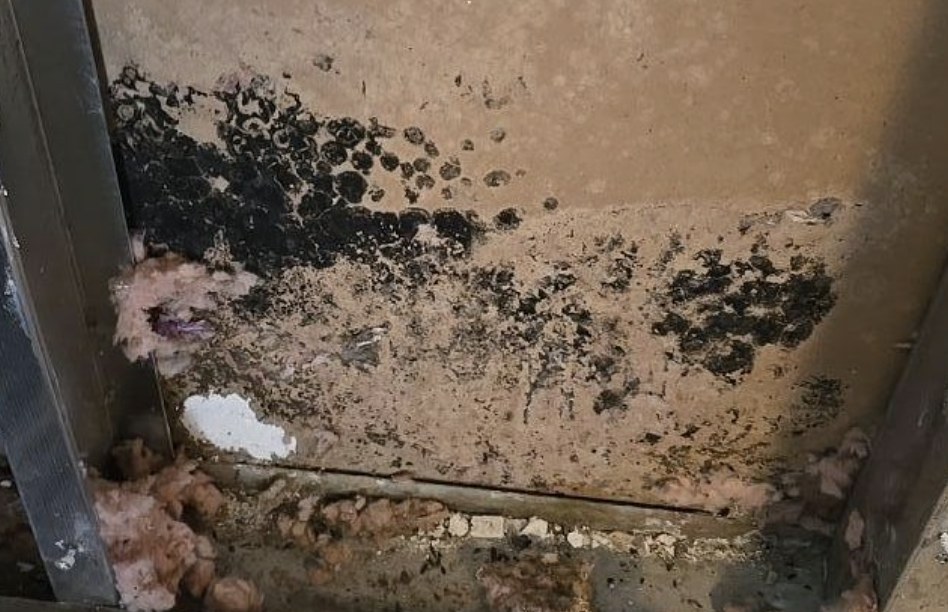
If the basement stayed wet for an extended period, already smells musty, or has visible growth, mold may become part of the restoration scope.
But ordering a mold test while three inches of water are still sitting on the floor is solving tomorrow’s question before today’s problem.
Do You Need a General Contractor?
Eventually, perhaps.
If drywall, flooring, trim, cabinetry or other finishes have to be rebuilt after the basement is dry, reconstruction may require a contractor.
But reconstruction comes after mitigation.
The sensible order is:
- Stop the source.
- Make the basement safe.
- Extract the water.
- Remove materials that cannot remain.
- Dry the structure.
- Confirm acceptable moisture conditions.
- Then rebuild.
New flooring over a wet slab is not restoration. It is hiding the next problem underneath the new floor.
The Most Useful Question to Ask Anyone You Call
Ask:
“Which part of this problem do you handle?”
A good professional should be able to answer that clearly.
The plumber should not pretend to be the electrician.
The restoration company should not pretend a dehumidifier fixes a broken sewer line.
The waterproofing contractor should not tell you that installing a drain tomorrow somehow dries the insulation that got wet yesterday.
A flooded basement is sometimes a team sport.
Who Should You Call First? Five Real-World Scenarios
Scenario 1: A Pipe Burst and Water Is Still Running
First: Shut off the water if it can be done safely and call a plumber.
Also call: A restoration company because water has already affected the house.
Then: Notify insurance if you’re making a claim.
Scenario 2: The Sump Pit Overflowed During a Thunderstorm
First: Make sure the area is electrically safe.
Then: Call a sump/plumbing professional to restore pumping capacity and a restoration company to remove escaped water.
Also: Document the loss and contact insurance if appropriate.
Scenario 3: Sewage Is Coming Up Through a Basement Drain
First: Stop unnecessary plumbing use and keep people and pets out of the affected area.
Then: Call a plumber/sewer professional and a restoration company qualified to handle contaminated water.
If evidence suggests a municipal sewer problem rather than a private plumbing blockage, contact Vineland’s Water/Sewer Utility.
Scenario 4: Water Appears Along the Basement Wall Every Time It Rains
Right now: Call a restoration company if building materials are wet.
After the immediate loss: Have drainage, grading, sump operation, gutters, foundation conditions and exterior water management investigated.
Scenario 5: The Basement Is Flooded and the Electrical Panel Is Downstairs
Do not wade to the panel.
Call a qualified electrician or utility professional to make the situation electrically safe before anyone enters the standing water.
Then proceed with water extraction and restoration.
What Should You Tell the Restoration Company When You Call?
You don’t need to diagnose the problem before calling. You can make the conversation much more useful by having a few observations ready.
Tell them:
- Your address in the Vineland area
- Where the water appears to be coming from
- Whether it is still entering
- Approximately how deep the water is
- How much of the basement is affected
- When you first noticed it
- Whether the basement is finished or unfinished
- Whether carpet, drywall or furniture is wet
- Whether sewage may be involved
- Whether electrical equipment is in the water
- Whether the sump pump is running
- Whether you’re planning to file an insurance claim
A useful restoration company should start asking questions like these anyway.
What Should a Professional Look for When They Arrive?
Getting the obvious water off the floor is only the first layer.
The inspection should consider whether water reached:
- Carpet padding
- Subflooring
- Concrete beneath finished floors
- Baseboards
- Drywall
- Insulation
- Wall cavities
- Wood framing
- Cabinet bases
- Utility areas
- Stored belongings
This is where professional Basement Water Extraction in Vineland and moisture detection become more useful than simply owning a wet vacuum.
When It Makes Sense to Call PuroClean
If there is already water inside the basement, this is the part PuroClean handles.
You may still need a plumber, electrician, sump technician or drainage contractor to correct the original cause. But once carpet, flooring, drywall, insulation, framing or contents become wet, somebody also needs to determine how far the moisture traveled and get the building dry.
That is especially important when the basement looks much better after the visible water is removed. Wet carpet padding, wall cavities and framing do not announce themselves from across the room.
PuroClean of Vineland provides professional Basement Flood Cleanup in Vineland, including standing-water removal, moisture detection, evaluation of affected materials and Structural Drying.
Who to Call for a Flooded Basement: FAQs
Do I call a plumber or a water-damage company first?
If water is actively coming from a broken plumbing line, stop the supply if possible and call a plumber. If water has already spread into the basement, call a restoration company as well. One stops the source; the other handles the damage.
Who pumps water out of a flooded basement?
A water-damage restoration company typically performs professional water extraction and then evaluates the structure for remaining moisture.
Who do I call if my sump pump failed?
A plumber or sump-pump professional can repair the system. If the pit overflowed and water entered the basement, call a restoration company for the resulting water damage.
Who do I call if sewage backed up into my basement?
A plumber or sewer professional should investigate the blockage or sewage source. A qualified restoration company should handle contaminated building materials and cleanup.
Who do I call if my basement floods whenever it rains?
For the current water damage, call a restoration company. For the recurring cause, you may also need a drainage, sump, grading, waterproofing or foundation professional depending on where the water is entering.
Do I call insurance before removing the water?
Notify your carrier promptly and photograph the loss when safe, but don’t unnecessarily allow standing water to remain and cause additional damage while waiting for an adjuster.
Who do I call if my electrical panel got wet?
Call a New Jersey-licensed electrical contractor. Do not walk through standing water to reach the electrical panel.
Who do I call for a possible Vineland water or sewer problem?
For a suspected municipal water or sewer issue, Vineland lists its Municipal Utilities Water/Sewer Utility at (856) 794-4056. The city’s utility emergency line for water leaks and electric outages is (856) 794-4280.
Should I call a mold company immediately?
Not necessarily. If the flood just happened, water removal and drying are the immediate priorities. If materials remained wet, a musty odor develops, or visible growth appears, mold remediation may become part of the work.
If You Remember Only One Thing
A flooded basement does not always need one phone call.
It may need three.
Call the person who stops the water. Call the person who makes the basement safe. And call the person who dries the building.
Sometimes one of those calls happens to solve two parts of the problem. Often it doesn’t.
What matters is that you don’t repair the pipe, replace the sump pump, or file the insurance claim and accidentally leave the house itself wet.
Related Vineland Water Damage Services
- Basement Flood Cleanup Vineland
- Basement Water Extraction Vineland
- Emergency Water Removal Vineland
- Sump Pump Failure Cleanup Vineland
- Sewage Backup Cleanup Vineland
- Structural Drying Vineland
- Mold Remediation Vineland
References
- New Jersey Office of Emergency Management — Floods & Flash Floods.
- U.S. Environmental Protection Agency — Flooded Home / Flood Cleanup Guidance.
- New Jersey Department of Community Affairs — Storm Repair Guidance for Flood-Damaged Homes.
- City of Vineland — Community and Climate Information.
- New Jersey Department of Banking and Insurance — Preparing for Extreme Weather and Property Claims.
- U.S. Environmental Protection Agency — A Brief Guide to Mold, Moisture and Your Home.
- City of Vineland — Municipal Utilities and Department Contact Directory.
Need Help With a Flooded Basement in Vineland?
If you’re trying to decide who to call because water is already downstairs, you don’t need to have the entire cause figured out before asking for help.
PuroClean of Vineland can handle the water-damage side of the problem: extraction, moisture detection, structural drying and evaluation of affected building materials. If the loss also requires a plumber, electrician or another trade, you’ll at least know which part of the problem still needs to be addressed.
The most expensive mistake is often not calling the wrong person first. It’s fixing the source and forgetting that the basement itself is still wet.