24/7 Emergency Attic Mold Cleanup Millville Services in Vineland, NJ
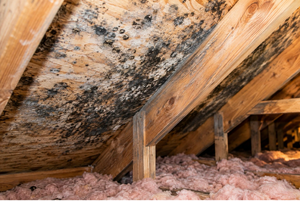
You open the attic and notice black spotting on the plywood. Maybe there is a musty smell. Maybe the insulation feels damp near a bathroom vent. Or maybe a roofer was the first person to point out that something does not look right.
The first question most homeowners ask is, “Is that mold?”
The better question is usually, “Why is this attic getting wet?”
PuroClean provides professional attic mold cleanup in Millville, NJ for homeowners dealing with visible mold growth, recurring attic moisture, wet insulation, condensation, or mold following a roof or ventilation problem.
We are not interested in simply spraying something over the surface and calling the job finished. The goal is to understand what happened, clean the affected materials appropriately, and make sure the moisture condition that allowed the problem to develop is being addressed.
Attic mold does not always look like the dramatic photos people see online.
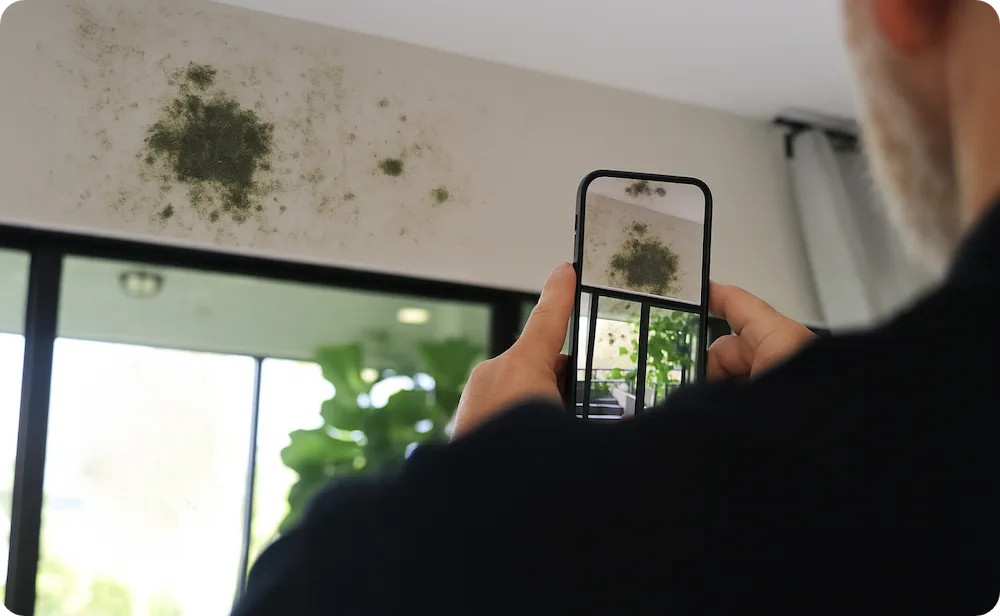
Sometimes it is obvious. Other times it looks like dark freckles across the underside of the roof deck, discoloration around roofing nails, white or gray patches on wood framing, or staining that is difficult to distinguish from old water damage.
Common things homeowners notice include:
Color alone cannot tell you exactly what you are looking at. Old staining, dirt, soot, wood tannins, and mold can sometimes look similar.
What matters is the combination of visible conditions, moisture history, and where the discoloration is occurring.
This is the part homeowners are often not told.
Cleaning the mold is only half the job.
If a bathroom fan is dumping humid air into the attic, flashing is leaking around a roof penetration, or warm household air is condensing against cold roof decking, that condition has to be corrected too.
Otherwise you can pay to have an attic cleaned and eventually find yourself looking at the same problem again.
A roof leak may leave a concentrated moisture pattern around flashing, vents, chimneys, fasteners, valleys, or another penetration.
Some roof leaks are obvious during heavy rain. Others only occur when rain is driven from a certain direction, which is why an attic can show repeated staining even though you have never seen water dripping into the room below.
This is one of the first things worth checking.
A bathroom fan is designed to move warm, humid air out of the house. If the duct ends inside the attic instead of exhausting outdoors, that moisture can collect on cold wood surfaces and insulation.
A clue is mold or dampness concentrated near an exhaust duct.
Cold weather can expose attic problems that were easy to miss during the rest of the year.
Warm indoor air naturally moves upward. When humid household air leaks into a cold attic through gaps around light fixtures, attic access panels, plumbing penetrations, ductwork, or other openings, moisture can condense on the underside of the roof deck.
You may see droplets on roofing nails, damp plywood, localized frost, or dark spotting without having an actual roof leak.
Insulation can hold moisture after a leak or condensation event. It can also hide staining on the ceiling or framing underneath it.
Wet insulation is not something we automatically assume must all be replaced. The condition, location, contamination level, and ability to dry it all matter.
| What You Notice | What May Be Happening | What to Check Next |
|---|---|---|
| Dark staining near one roof penetration | Possible roof leak | Flashing, vent boot, shingles, moisture in surrounding wood |
| Mold near a bathroom exhaust duct | Humid exhaust air entering attic | Where the duct terminates and whether it is disconnected or leaking |
| Widespread spotting across cold roof decking | Possible condensation or air leakage | Indoor humidity, air leakage, ventilation, insulation |
| Wet insulation below one area | Leak or concentrated condensation | Roof deck, pipes, vents, ceiling below |
| Ceiling stain inside the house | Water has moved beyond the attic | Attic moisture source and ceiling cavity |
If water has already reached the ceiling below the attic, our ceiling water damage cleanup in Millville service addresses the resulting water damage and drying needs.
Not necessarily.
This is one of the places where homeowners can spend considerably more money than the situation actually requires.
Surface mold on structurally sound roof decking does not automatically mean every sheet of plywood needs to be removed.
The decision depends on things such as:
If the decking is rotted, delaminated, or otherwise damaged, replacement may be necessary.
If the wood remains structurally sound, cleanup may be possible without rebuilding the entire roof.
No.
The presence of attic mold does not automatically mean every bag of insulation needs to be removed.
Insulation may need to come out when it is:
Clean, dry insulation outside the affected area may be able to remain.
We would rather make that decision based on what is actually happening in the attic than assume everything has to be discarded.
The first step is understanding the pattern.
Where is the growth? Where is the moisture? Is the problem concentrated around one leak, or does it cover a large portion of the roof deck? Is insulation wet? Is there evidence of condensation? Does a bathroom exhaust fan terminate where it should?
Those answers determine what happens next.
Different materials behave differently.
Solid framing or roof decking may sometimes be cleaned when it remains in serviceable condition. Heavily contaminated porous material may need to be removed.
The objective is not to tear out everything in sight. It is to remove what cannot reasonably be restored and properly clean what can.
If cleanup will disturb a significant amount of affected material, containment may be appropriate to reduce the movement of dust and particles into unaffected areas.
This becomes particularly important when the attic access is inside the living portion of the home.
Attics are full of irregular surfaces: rafters, trusses, roof decking, wiring, ducts, insulation, fasteners, and small cavities.
Cleaning is not simply wiping the obvious black spots.
Depending on conditions, the remediation process may involve HEPA vacuuming, detailed surface cleaning, removal of affected porous materials, and other methods appropriate for the materials involved.
A clean-looking attic that is still damp is not a finished attic.
Moisture conditions have to be corrected so the same surfaces are not repeatedly exposed to the environment that allowed growth in the first place.
Sometimes the restoration company does. Sometimes another trade needs to be involved.
PuroClean handles the mold, water-damage, cleanup, and restoration side of the job.
If the source is a roofing defect, a roofer may need to make the repair. If a bathroom exhaust duct is incorrectly installed, an HVAC or ventilation contractor may be appropriate. If the problem involves insulation or major air-sealing deficiencies, that may require another specialist.
We would rather tell you that than pretend mold treatment alone fixes every attic problem.
Homeowners use all three terms, and that is fine.
If you search for attic mold removal in Millville, you are probably looking for the same basic outcome: you want the mold dealt with correctly.
The industry term mold remediation simply recognizes that the job may involve more than removing something visible. It can include containment, cleaning, material removal, moisture management, and detailed cleaning of the affected area.
For mold affecting areas beyond the attic, PuroClean also provides broader mold remediation in Millville.
This is probably one of the most common attic mold questions.
Spraying a household cleaner over visible discoloration does not tell you why the attic became wet, how extensive the affected area is, whether porous material is contaminated, or whether moisture remains behind insulation or inside surrounding materials.
It may change the appearance of a surface without resolving the actual problem.
Before deciding what to put on the wood, ask:
Those answers matter more than finding the strongest bottle on the shelf.
If mold returns after previous cleaning, that is useful information.
It usually means the condition that supported the growth was not fully resolved.
Maybe the roof still leaks during wind-driven rain. Maybe humid air is still entering the attic. Maybe an exhaust duct is still terminating inside the space. Maybe wet insulation was left behind.
When mold returns, we would focus less on what product was previously used and more on what is continuing to supply moisture.
An attic is not completely isolated from the living area below it.
Air can move through attic hatches, light fixtures, duct penetrations, plumbing openings, wall cavities, and other pathways.
That does not mean finding attic mold automatically means the entire house is contaminated.
It does mean large areas should be handled carefully, particularly when cleanup involves disturbing insulation or heavily affected materials.
Different parts of the house can develop mold for completely different reasons.
An attic problem may involve roof leaks or condensation.
A basement problem is more likely to involve groundwater, plumbing losses, sump pump problems, flooding, or elevated basement humidity.
If you also have lower-level moisture problems, see our basement mold remediation in Millville service.
For moisture and mold below the home, we also provide crawl space mold cleanup in Millville.
The word “mold” may be the same, but the moisture source often is not.
You do not necessarily need a remediation company for every tiny discolored spot you find in an attic.
Professional help becomes much more reasonable when:
The practical question is not whether you can physically reach the mold.
It is whether you can confidently identify the moisture source, determine how far the problem extends, clean the affected materials appropriately, and know the attic is dry when you are finished.
Attic moisture does not always arrive dramatically.
A pipe bursting in a basement announces itself pretty quickly. Attic moisture can be much quieter.
A small roof leak may wet the same section of decking every few storms. A bathroom fan may discharge humid air into the attic every morning. Warm indoor air may reach cold roof decking for an entire winter before anyone opens the attic hatch.
By the time someone notices the mold, the moisture problem may have been there for quite a while.
That is why we approach attic mold as a building-moisture problem first and a cosmetic problem second.
Ask a few questions.
A good attic mold plan should make sense when someone explains it to you.
You should understand what is being cleaned, what is being removed, why it happened, and what has to change so it does not happen again.
No. Dark discoloration can come from mold, old water staining, dirt, soot, wood characteristics, or other causes. The moisture pattern and condition of the material matter just as much as its color.
No. If an active roof defect is causing moisture intrusion, that defect should be repaired. But attic mold can also result from condensation, air leakage, exhaust ventilation problems, or previous water damage. Finding mold does not automatically mean the roof needs replacement.
No. Structurally sound decking may sometimes be cleaned. Decking that is rotted, delaminated, severely deteriorated, or otherwise damaged may require replacement.
Not automatically. Wet, contaminated, damaged, or inaccessible insulation may need to come out. Clean, dry insulation outside the affected area may be able to remain.
Yes. If humid bathroom exhaust air is released into the attic instead of outdoors, it can contribute significant moisture to roof decking, framing, and insulation.
Cold roof surfaces make condensation more likely when warm, humid indoor air enters the attic. Winter can therefore reveal air leakage, ventilation, or humidity problems that were less obvious during warmer weather.
Not every visible mold condition requires testing first. Testing may be useful when conditions are unclear, documentation is required, the source is disputed, or a qualified professional recommends sampling for a specific reason.
There is no useful one-size-fits-all answer. A small localized area around a corrected leak is very different from widespread growth involving roof decking, framing, insulation, and an unresolved moisture problem. Access, material condition, drying needs, and repairs all affect the timeline.
Yes, if the moisture source remains. Successful cleanup and long-term moisture control go together.
It can. Odors can move through attic access points and other air pathways, although a musty smell by itself does not prove the attic is the source.
If you are dealing with widespread growth, wet insulation, recurring moisture, a previous roof leak, or an attic condition you cannot confidently diagnose, a restoration and mold remediation professional can help determine what is affected and what needs to happen next.
If you found mold in your attic, you do not need someone to make the situation sound scarier than it is.
You need to know three things:
Where is the moisture coming from? How much of the attic is actually affected? What needs to happen to fix it correctly?
PuroClean of Vineland provides attic mold cleanup and remediation services for homeowners in Millville and surrounding Cumberland County communities.
Call (888) 598-1441 if you have visible attic mold, wet insulation, recurring condensation, roof-leak damage, or simply are not sure what you are looking at.
What Our Customers Say:
Find answers to common questions about our services
We can reach most Vineland neighborhoods fast because we’re already based here. We know Delsea Drive, Landis Avenue, and the back streets without mapping them. A burst pipe off Wheat Road at 2 a.m. is not a problem. Every hour water sits in your walls, damage gets worse. Mold can start within 48 hours, so speed really does matter.
What are the first signs of a burst pipe?
Look for water spots, sounds of running water, and decreased pressure. Swift identification can prevent extensive damage. You may also notice damp spots on walls or ceilings.
How quickly should I respond to a burst pipe?
Immediate action is critical. Shut off the main water supply and power. This helps to control the situation and reduce water damage. The sooner you react, the less severe the aftermath.
What temporary measures can stabilize the situation?
Use pipe clamps or epoxy to seal leaks. These fixes are only temporary until professionals arrive. Have these materials in your emergency kit for quick response.
Can I prevent pipes from bursting in the future?
Yes, with regular maintenance and inspections. Insulate pipes and monitor high-risk areas. Investing in preventative care is key to avoiding recurring plumbing disasters.
Staying Calm and Proactive in a Water Pipe Crisis
Facing a burst pipe can be overwhelming, but keeping calm is vital. Remember, quick action minimizes damage and expenses. By understanding the emergency response steps, you’re better prepared for any plumbing crisis.
Long-term prevention, regular maintenance, and knowing when to call professionals will safeguard your home. Embrace these habits and make sure to educate family members too. A calm and informed approach will help you navigate and overcome any water pipe crisis confidently.
PuroClean of Vineland offers a full suite of commercial restoration services, including water, fire, mold, biohazard, and storm damage recovery. We also provide emergency board-up, structural drying, and reconstruction services.
Our teams are equipped to manage both local and large-loss commercial projects with consistent quality, safety, and communication.
PuroClean of Vineland regularly collaborates with insurance carriers, TPAs, and risk management teams to manage commercial property restoration claims. We provide detailed drying logs, scope documentation, and photo/video reporting for every project in Vineland, NJ.
Our Certified Priority Response (CPR) Program ensures fast contact, on-site inspection within hours, and rapid reporting, meeting the timelines insurers and clients expect for large-scale commercial losses.
PuroClean of Vineland handles nearly every commercial loss scenario, including commercial water damage restoration, fire and smoke damage, mold remediation, sewage cleanup, chemical spills, and biohazard decontamination.
We can also manage full reconstruction when structural repair is needed. Our national network allows us to scale from localized events to large-loss recovery, maintaining consistent quality and communication across every project.
Water damage can result from unexpected leaks, flooding from storms, plumbing failures, or appliance malfunctions. Our certified teams focus on rapid water removal, drying, and stabilization to help prevent further damage and mold growth.
 Explore Our Water Damage Mitigation Services
Even after a fire is extinguished, smoke, soot, and odor can continue to affect your home. Fire damage restoration services address visible damage while also helping reduce lingering effects that impact indoor air quality and surfaces.
Explore Our Fire and Smoke Damage Restoration Services
Mold often develops as a result of unresolved moisture or hidden water damage. Professional mold remediation helps identify affected areas, contain growth, and restore healthy indoor conditions.
Explore Our Mold Removal and Remediation Services
Biohazard situations, including crime scene cleanup and virus decontamination, require specialized cleaning and handling to protect health and safety. Biohazard cleanup services address contamination using proper protocols and professional care.
Explore Our Biohazard Cleanup Services
In some cases, property damage requires repairs beyond cleanup and mitigation. Reconstruction services help restore damaged areas of the home after water, fire, or other incidents, supporting a smoother transition from damage to recovery.
Explore Our Reconstruction Services Services
PuroClean provides 24/7 commercial property damage restoration services for businesses and facilities across the United States.
Explore Our Commercial Services
Water damage can result from unexpected leaks, flooding from storms, plumbing failures, or appliance malfunctions. Our certified teams focus on rapid water removal, drying, and stabilization to help prevent further damage and mold growth.
Explore Our Water Damage Mitigation Services


PuroClean of Vineland
(888) 598-1441
3003 N. Mill Road, Building 400, Suite 3, Vineland, NJ 08360

© 2026 PuroClean. All Rights Reserved.