


Table of Contents
A complete home fire safety checklist helps reduce the risk of house fires by addressing the most common causes: cooking accidents, electrical issues, heating equipment, and human error.
Fire safety also includes smart technology like connected smoke alarms and leak-detection devices. Reviewing and practicing this checklist at least once a year can save lives and significantly reduce property damage.
Why a Home Fire Safety Checklist Matters
Home fires remain one of the most common household emergencies. According to national fire safety data, cooking equipment, heating sources, and electrical failures continue to be the leading causes of residential fires.
A home fire safety checklist is a structured set of preventive actions designed to reduce ignition risks, improve early detection, and ensure safe evacuation during a fire.
Preparation must happen before an emergency—there is no time to plan once a fire starts. During construction or renovation, using fire-resistant building materials can provide an additional layer of protection and help slow the spread of flames.
Check out our Home Fire Safety Checklist PDF

Smoke and Carbon Monoxide Alarms
Early detection is the most effective life-saving measure.
- Install smoke alarms on every level of the home and outside sleeping areas
- Install carbon monoxide alarms near bedrooms and fuel-burning appliances
- Interconnect alarms so all sound at once
- Test alarms monthly
- Replace batteries twice a year
- Replace smoke alarms every 10 years
Smart smoke alarms can send alerts to your phone and notify emergency contacts if smoke is detected.
Fire Extinguishers
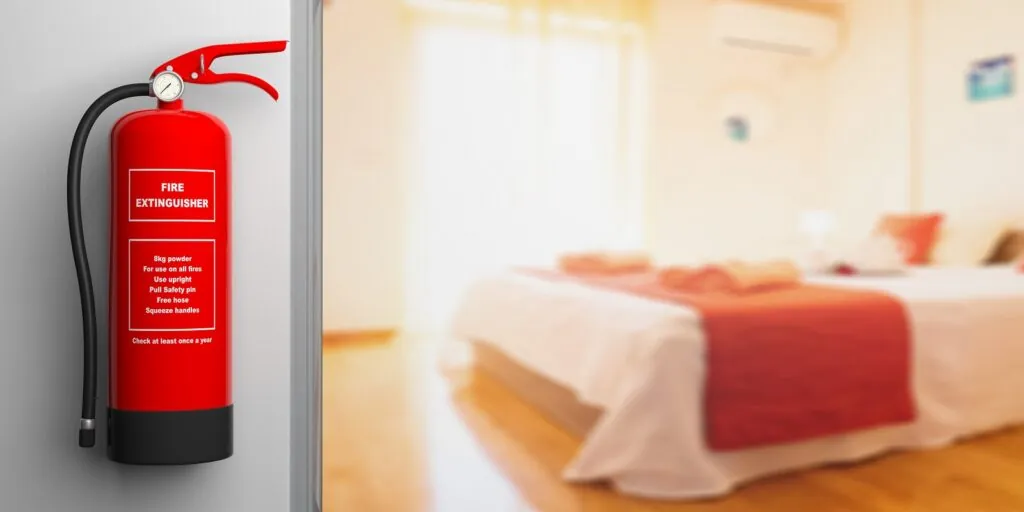
Fire extinguishers are for small, contained fires only.
- Place extinguishers on every floor and near exits
- Use multi-purpose (ABC-rated) extinguishers
- Teach all household members how to use them
- Never attempt to fight a growing or spreading fire
If a fire cannot be controlled immediately, evacuate and call emergency services.
Fire Escape Planning
Every household needs a practiced escape plan.
- Create a written escape plan
- Identify two exits from every bedroom
- Designate a meeting spot outside
- Practice fire drills at least twice a year
- Teach children stop, drop, and roll
Escape planning is a core part of any fire prevention checklist for homes.
Kitchen Fire Safety
The kitchen is the leading source of house fires.
- Never leave cooking unattended
- Stay alert and avoid cooking while tired or impaired
- Keep flammable items away from stovetops
- Roll up loose sleeves
- Remove stove knobs if pets or children are present
Grease fires should never be extinguished with water.
Smoking and Candle Safety
Open flames require constant attention.
Smoking Safety
- Smoke outdoors only
- Never smoke in bed or while drowsy
- Use deep ashtrays and extinguish butts fully
Candle Safety
- Never leave them unattended
- Use sturdy, heat-resistant holders
- Keep candles away from drafts
- Avoid candle use during power outages—use flashlights instead
Heating Equipment and Fireplaces
Heating devices are a major winter fire risk.
Fireplace Safety
- Have chimneys inspected and cleaned annually
- Use dry, seasoned wood
- Install metal fire screens
- Never leave fires unattended
Space Heater Safety
- Keep heaters at least 3 feet from combustibles
- Place on flat, stable surfaces
- Unplug heaters when sleeping or leaving the room
Electrical Safety Checklist
Electrical failures remain a common ignition source.
- Replace damaged cords immediately
- Avoid overloading outlets
- Use GFCI and AFCI breakers where required
- Keep cords out from under rugs or carpets
If outlets feel warm, have a professional inspect them.
Garage and Storage Fire Safety
Garages often store flammable materials.
- Store gasoline in approved containers
- Keep flammable liquids outside living spaces
- Avoid storing cardboard near ignition sources
- Clean up fuel spills immediately with absorbent material
Smart Technology for Fire Prevention
Modern technology adds an extra layer of protection.
- Smart smoke and CO alarms
- Smart plugs that shut off overheating appliances
- Leak detectors that prevent electrical + water hazards
- Home monitoring apps with emergency alerts
These tools support modern home fire prevention tips and reduce response time.
Frequently Asked Questions
How often should I review my home fire safety checklist?
At least once a year, and anytime you move, renovate, or add new appliances.
Are smart smoke alarms worth it?
Yes. They provide faster alerts, mobile notifications, and added redundancy.
What’s the most common cause of house fires?
Cooking equipment, followed by heating devices, and electrical failures.
Should every home have a fire extinguisher?
Yes, especially in kitchens, garages, and near exits.
What should I do after a house fire?
Ensure safety first, contact your insurance provider, and call a professional restoration company.
Fire Damage or Smoke Issues? Contact PuroClean
Even with prevention, fires can still happen. When they do, a fast professional response is critical. PuroClean provides fire damage restoration, smoke odor removal, and emergency mitigation services to help restore your property safely and efficiently. After the area has been declared safe, properly cleaning smoke off walls can also help prevent lingering stains and odors.
Contact your local PuroClean office for 24/7 fire and smoke damage restoration support.
Key Takeaways
- A home fire safety checklist saves lives
- Early detection is critical
- Escape planning must be practiced
- Kitchens and heating equipment are top risks
- Smart tech improves fire response
- Annual reviews prevent complacency
- Professional restoration is essential after a fire
Further Reading
- How to Avoid Fire Hazards in the Bedroom
- Tips to Prevent and Handle Grease Fires
- How to Keep Your Basement Safe from Fire
- How to Keep Your Backyard Safe from Fire
- Appliance Fire Safety Tips
- Dishwasher Fire Safety Guidelines
- Stove Top and Oven Fire Safety Tips
- Facts about Home Fire Sprinklers
- Fire Safety Preparation for Babysitters
- Avoid Water and Fire Disasters with These Smart Home Devices
- Fire Safety Tips for People with Disabilities
- Childproof Your Home – Protect Your Kids from Fires and Burns
- Fire Drills – Teach Your Kids a Skill They Can Take with Them for Life
- Sleepover Fire Safety For Kids
- Winter Fire Safety Tips
- Fire Safety Tips for the Holidays
- Christmas Tree Fire Safety Tips
- Be Proactive in Preventing Chimney Fires
- Have a Safe Thanksgiving with These Fire Prevention Tips
- Fire Safety Tips for Your Home During the Fall Season
- How to Safely Store and Handle Fireworks
- Spring Cleaning? Remember These Fire Safety Tips
- Apartment Fire Safety Tips
- Fire Safety Rules for Outdoor Parties
- 5 Unexpected Home Fire Causes
- 5 House Fire Myths Debunked
- Home Fire Safety for Older Adults
- How to Stay Safe During a Wildfire
- Portable Fireplace Safety Tips
- Clothes Dryer Fire Safety Tips
- Vehicle Fire Safety Tips
- The Do’s and Don’ts of Outdoor Grilling



