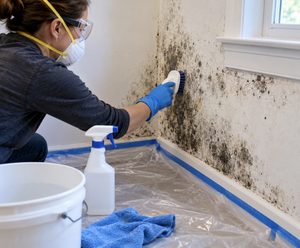
24/7 Emergency Emergency Water Removal Millville Services in Vineland, NJ
If water is actively entering your home, the first job is not cleaning the floor.
Stop more water from getting in.
A broken pipe, leaking appliance, failed sump pump, roof leak, or other water loss can keep feeding the damage while you are trying to mop up what you can see.
PuroClean provides professional emergency water removal in Millville, NJ for homes and businesses dealing with standing water, soaked flooring, wet drywall, ceiling leaks, plumbing failures, basement water, and moisture that has moved into areas you cannot easily see.
The puddle is only part of the problem. The more important question is often: where did the water go before you found it?
If you are standing in a wet room reading this on your phone, start with four things.
Water and electricity are a dangerous combination.
If water is near an electrical panel, outlets, appliances, extension cords, light fixtures, or other energized equipment, do not walk through the water just to reach a valve.
Also stay clear of badly sagging ceilings. Saturated drywall becomes heavy and can fail.
If sewage or wastewater may be involved, avoid unnecessary contact with the affected area.
If a supply line or plumbing pipe has failed, shut off the nearest appropriate valve or the home’s main water supply.
If you do not know where the main shutoff is, now is not the time to start taking the plumbing system apart. Call a plumber and explain that water is actively entering the building.
For water coming from rain, groundwater, a roof leak, or a failed sump system, there may not be one simple valve that stops the problem.
If a pipe is broken, you need a plumber.
If water has already entered flooring, drywall, insulation, cabinets, ceilings, or other building materials, you may also need a restoration company.
Those are not competing calls.
The plumber fixes the plumbing. PuroClean handles what the water did to the building.
If conditions are safe, photograph the apparent source, standing water, affected rooms, damaged belongings, and visible staining before major cleanup begins.
You do not need 100 photographs while water is still pouring into the house. Stop the damage first. A few clear images are enough to document what you found.
Two rooms can have almost identical standing water and still require very different responses.
The source matters.
| What You Notice | What May Be Happening | What to Do Next |
|---|---|---|
| Pipe spraying or water appearing from a wall | Burst or failed plumbing line | Shut off water, call a plumber, begin water-damage cleanup |
| Faucet stopped working during freezing weather, followed later by a leak | Possible frozen pipe that split before thawing | Control water, repair the pipe, inspect surrounding materials |
| Standing water in a basement | Plumbing failure, sump issue, groundwater, rain, or water from an upper floor | Identify the source before assuming the solution is simply pumping it out |
| Water dripping through a ceiling | Leak somewhere above the room | Stay clear of sagging drywall and investigate the source above |
| Water appearing around flooring with no obvious surface source | Possible concealed plumbing or subfloor moisture | Locate the source and determine how far moisture has traveled |
| Wastewater coming up through a drain or fixture | Possible sewage backup | Avoid contact and treat it differently from a clean plumbing leak |
You do not have to correctly diagnose the entire building before calling someone. But knowing whether the water appears to be coming from plumbing, weather, groundwater, an appliance, or wastewater helps everyone respond faster.
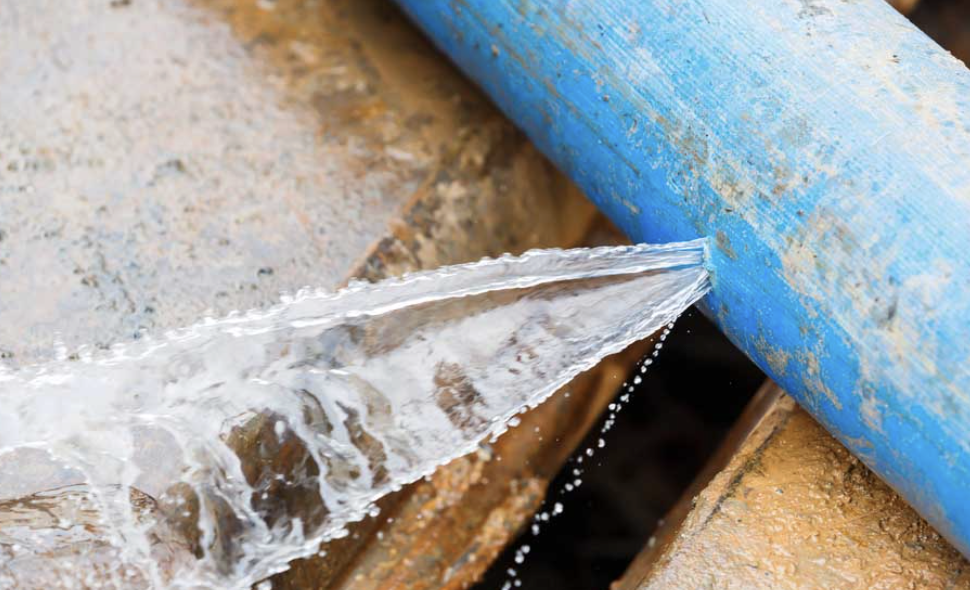
A broken pipe can release water faster than it looks like from the doorway.
Water may move underneath flooring, behind baseboards, into insulation, down wall cavities, through a ceiling, or into the basement before the source is controlled.
If a plumbing pipe has ruptured, see our burst pipe water damage cleanup in Millville service for the pipe-loss-specific side of the response.
A frozen pipe can be deceptive because the leak may not become obvious during the coldest part of the weather.
The ice can temporarily block the damaged section. When temperatures rise and the ice melts, household water pressure can begin feeding the split pipe again.
If the problem started during a freeze, our frozen pipe water damage cleanup in Millville page explains what to watch for during the freeze-and-thaw cycle.
It is more than putting a hose into the largest puddle.
Depending on the loss, emergency water removal may involve:
The water you can see is usually the easiest water to remove.
The water absorbed into the building is where restoration becomes more technical.
Water does not respect room boundaries.
Once it reaches porous materials, it can spread beyond the obvious wet area.
We commonly look for moisture:
A hallway floor can look nearly normal while the material underneath is still wet.
That is why “the puddle is gone” and “the building is dry” are not the same thing.
For a small, clean, immediately contained spill on an accessible surface, sometimes that is enough.
A larger building loss is different.
A shop vacuum becomes a much less complete solution when:
At that point, the job has moved from cleaning up water to drying a building.
Where did the water come from?
Is it still coming in?
When was the loss discovered?
Did it happen while someone was home, or could it have been running for hours?
Those basic facts help establish where we need to look.
The largest puddle does not necessarily identify the full affected area.
A supply line behind a bathroom vanity, for example, may wet the cabinet, drywall, flooring, hallway, ceiling below, and basement before someone notices the leak.
The scope should follow the water, not the doorway.
Standing water should generally be removed before drying equipment is expected to handle the remaining moisture load.
Mechanical extraction removes liquid water directly and can dramatically reduce the amount of moisture left for evaporation and dehumidification.
Wet does not automatically mean ruined.
But “looks okay” does not automatically mean salvageable either.
We look at:
The goal is not to tear out the most material.
The goal is to remove what actually needs to come out and dry what can reasonably remain.
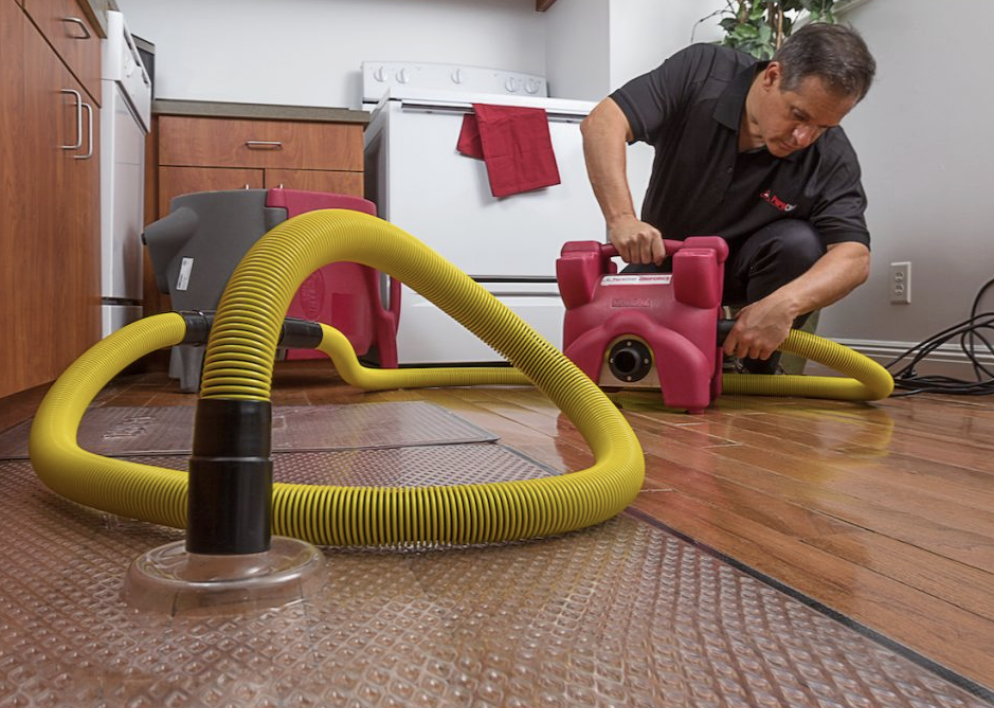
Once excess water has been removed and necessary access has been established, air movement and dehumidification can help move remaining moisture out of affected materials.
Equipment should be there for a reason.
More machines are not automatically better. The equipment and drying approach should fit the actual water loss.
A wall can feel dry on the painted surface while insulation behind it remains wet.
A carpet can feel much better while padding underneath is still holding moisture.
A hardwood floor can look normal while the subfloor has not returned to an acceptable moisture condition.
The calendar is not the drying instrument. Moisture measurements are.
No.
And automatically leaving all of it in place is not a good rule either.
The useful questions are:
Sometimes limited removal is necessary to reach trapped moisture.
Sometimes materials can be dried without turning the room into a reconstruction project.
Carpet is one of the easiest materials to misjudge by touch.
The surface can begin feeling dry while padding underneath remains wet.
Whether carpet can be saved depends on the water source, how saturated the carpet and padding became, how long they stayed wet, and their condition.
A clean-water plumbing loss is not handled the same way as a sewage backup.
Hardwood does not automatically have to be thrown away because it got wet.
But water can move through seams and reach the subfloor underneath.
You may eventually see cupping, swelling, lifted edges, or other changes as moisture moves through the wood.
The earlier the assembly is evaluated and drying begins, the better the opportunity to determine whether the floor can remain.
Be careful.
A badly saturated ceiling can become heavy and unstable. If the drywall is sagging significantly, do not stand underneath it.
Also use caution around recessed lights, fixtures, and other electrical components.
The source may be an upstairs bathroom, supply pipe, appliance, attic plumbing, or roof problem.
Even after the source is stopped, the ceiling cavity may still contain wet insulation, framing, or drywall.
Do not assume every basement water event has the same cause.
Standing basement water can result from:
The cleanup begins with water removal, but the long-term solution depends on identifying why the water entered the basement in the first place.
If the water came back through a sewer or drain, do not treat it like an ordinary supply-line leak.
Avoid unnecessary contact with the water and affected materials.
Contaminated water can change what can be cleaned, what may need to be removed, and what protective measures are appropriate during the job.
There is no useful countdown clock that says a building is fine at hour 47 and suddenly a mold problem at hour 48.
EPA and CDC guidance generally recommends drying wet materials promptly, often within approximately 24–48 hours when possible, to help reduce the likelihood of mold growth.
Temperature, humidity, material type, airflow, and the amount of water all influence what happens.
The useful takeaway is much simpler:
Do not leave wet building materials sitting because the visible water is gone.
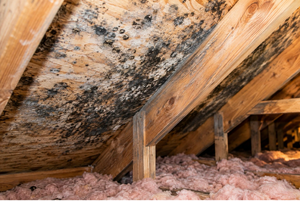
If a previous or hidden moisture problem has already resulted in mold, PuroClean also provides attic mold cleanup in Millville when the issue is located in the attic.
If the water loss may result in an insurance claim, notify your carrier or agent according to your policy requirements.
But do not assume that means an actively wet building should sit untouched until someone physically arrives to inspect it.
When practical:
Whether a particular loss is covered depends on the policy, cause of loss, exclusions, endorsements, and the insurer’s determination.
You do not need to know everything.
If you can answer some of these questions, it helps:
And if all you know is, “I don’t know what happened, but the hallway floor is wet,” tell us that.
That is still useful information.
Not every spill needs a restoration company.
Professional help becomes much more useful when:
The common thread is simple:
The water went somewhere a mop cannot reach.
We would not tell you every wet material automatically needs to be demolished.
We would not tell you a room is dry because the carpet feels dry.
We would not treat sewage like water from a clean supply pipe.
We would not pretend drying equipment fixes an active plumbing leak.
And we would not call the job complete just because the standing water disappeared.
The restoration scope should follow the water and the actual condition of the materials.
Start with the source. A broken pipe may require a plumber immediately. If water has already entered building materials, call a water-damage restoration company as well. If there is an electrical, structural, fire, or other immediate life-safety hazard, address that first.
As soon as it can be done safely. Water can continue spreading into porous materials even after the source has been stopped.
PuroClean handles water removal, moisture detection, drying, cleanup, and restoration. A qualified plumbing professional should make plumbing repairs.
Yes. Drywall, insulation, framing, and other concealed materials can remain wet without obvious surface signs. That is one reason moisture assessment matters after a larger leak.
No. The decision depends on the condition of the drywall, the water source, how wet it became, what is behind it, and whether the assembly can be effectively dried.
Sometimes. The answer depends on the flooring system, subfloor, amount of water, duration of exposure, physical condition, and how the materials respond to drying.
For a very small surface spill, that may be reasonable. For water that has entered walls, insulation, flooring assemblies, cabinets, or multiple rooms, appearance alone is not a reliable way to determine whether the building is dry.
Do not assume everything is ruined. Tell the restoration company approximately how long the water may have been present so the affected materials can be evaluated appropriately.
That happens often. Avoid unnecessary demolition or unsafe investigation. A plumber or restoration professional can help narrow down the source based on moisture patterns and surrounding building conditions.
Persistent moisture can support mold growth. Promptly finding and drying wet materials helps reduce the likelihood of a secondary mold problem.
Claim procedures and coverage vary. Contact your insurer promptly when appropriate, but an actively wet property may also require reasonable emergency measures to limit additional damage.
Extraction removes liquid water that can be physically recovered. Drying addresses moisture that has already been absorbed into building materials such as drywall, flooring, framing, insulation, and subflooring.
When water is inside your home or business, you do not need someone to make the situation sound more complicated than it is.
You need answers to four questions:
Is more water still coming in?
Is the property safe?
Where did the water travel?
What is still wet after the puddle is gone?
PuroClean of Vineland provides emergency water removal for homeowners and businesses in Millville and surrounding Cumberland County communities.
We can remove standing water, locate hidden moisture, evaluate affected materials, establish appropriate drying equipment, and monitor the affected areas as they dry.
Call (888) 598-1441 if water is entering your property or if you are not sure how far a recent water loss has spread.
What Our Customers Say:
Find answers to common questions about our services
You can check the walls and ceilings for water stains, the floors for warping and buckling, and the pipes for corrosion, leaks, missing grout, and mold. Attics and basements may have damaged flooring, mildew or mold, dampness, and odors. Also, be sure to inspect the exterior of the home for cracked roof tiles, puddles, standing water, and whether the ground is sloping away from the house.
First, if safe, shut off the utilities in your home to avoid further damage. Don’t enter your home if it has suffered structural damage. Don’t walk through floodwater if electricity hasn’t been turned off, and avoid contaminants. Next, contact a water-damage restoration company, such as PuroClean of Vineland, as soon as possible. Don’t wait, as water can cause mold and irremediable damage to the wood, walls, and carpet. Then, depending on the extent of the damage and the recommendation of the remediation company, contact your insurance provider to start the claim process.
There are many variables that determine whether a flooded property can be saved: the amount of water, and even more important, the amount of time the water was in/around the property. Every situation is different, and PuroClean of Vineland expert restoration professionals can determine what can be salved once one site.
Property water damage can pose several dangers including structural instability, electrical hazards, mold and mildew growth leading to health issues, contamination from sewage or chemicals, and potential collapse of weakened structures.
Water flooding can cause extensive damage including structural damage to walls, floors, and foundations, damage to personal belongings, electrical hazards, and potential health risks from mold and bacteria growth. The longer water sits, the more severe the damage becomes.
Water damage can result from unexpected leaks, flooding from storms, plumbing failures, or appliance malfunctions. Our certified teams focus on rapid water removal, drying, and stabilization to help prevent further damage and mold growth.
 Explore Our Water Damage Mitigation Services
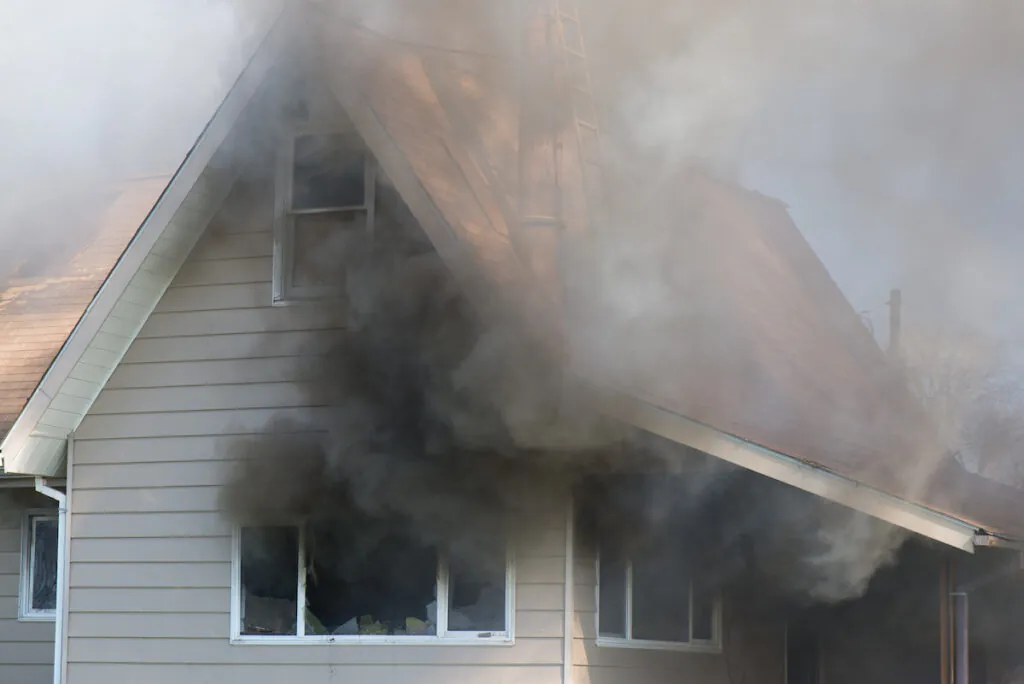
Even after a fire is extinguished, smoke, soot, and odor can continue to affect your home. Fire damage restoration services address visible damage while also helping reduce lingering effects that impact indoor air quality and surfaces.
Explore Our Fire and Smoke Damage Restoration Services
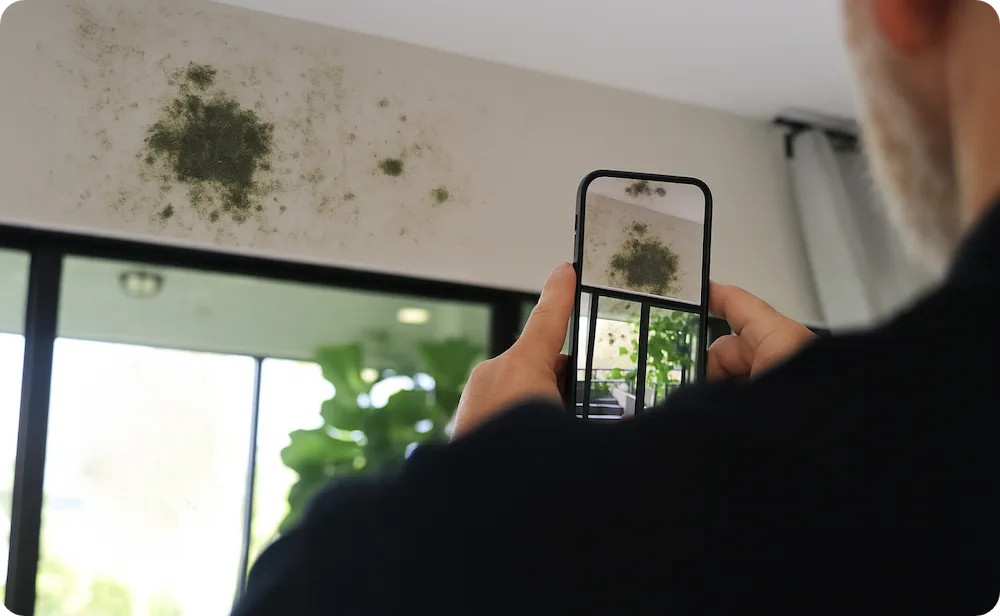
Mold often develops as a result of unresolved moisture or hidden water damage. Professional mold remediation helps identify affected areas, contain growth, and restore healthy indoor conditions.
Explore Our Mold Removal and Remediation Services
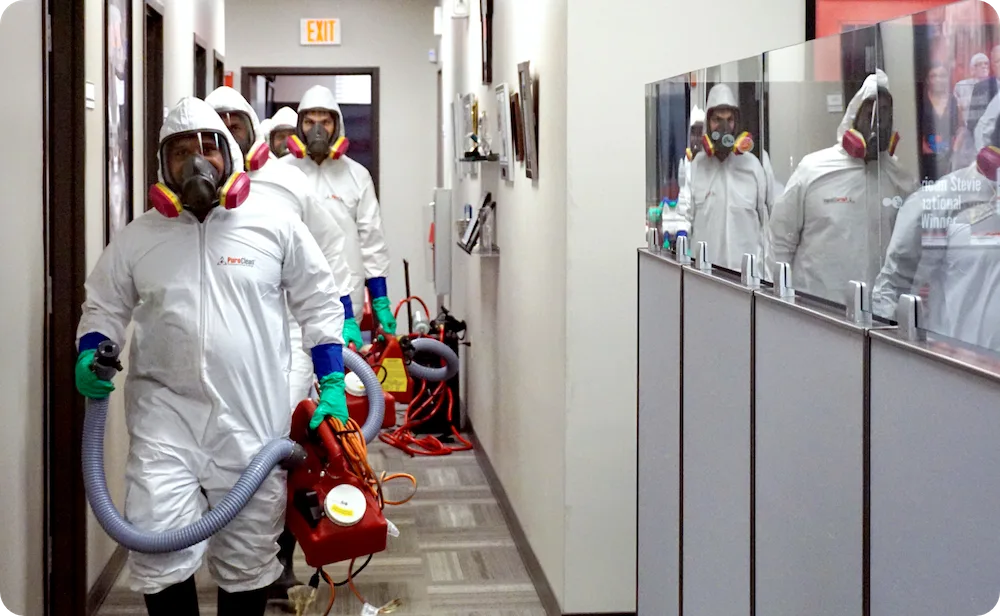
Biohazard situations, including crime scene cleanup and virus decontamination, require specialized cleaning and handling to protect health and safety. Biohazard cleanup services address contamination using proper protocols and professional care.
Explore Our Biohazard Cleanup Services
In some cases, property damage requires repairs beyond cleanup and mitigation. Reconstruction services help restore damaged areas of the home after water, fire, or other incidents, supporting a smoother transition from damage to recovery.
Explore Our Reconstruction Services Services
PuroClean provides 24/7 commercial property damage restoration services for businesses and facilities across the United States.
Explore Our Commercial Services
Water damage can result from unexpected leaks, flooding from storms, plumbing failures, or appliance malfunctions. Our certified teams focus on rapid water removal, drying, and stabilization to help prevent further damage and mold growth.
Explore Our Water Damage Mitigation Services


PuroClean of Vineland
(888) 598-1441
3003 N. Mill Road, Building 400, Suite 3, Vineland, NJ 08360

© 2026 PuroClean. All Rights Reserved.