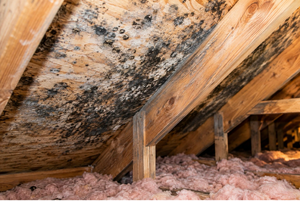
24/7 Emergency Basement Mold Remediation Millville Services in Vineland, NJ
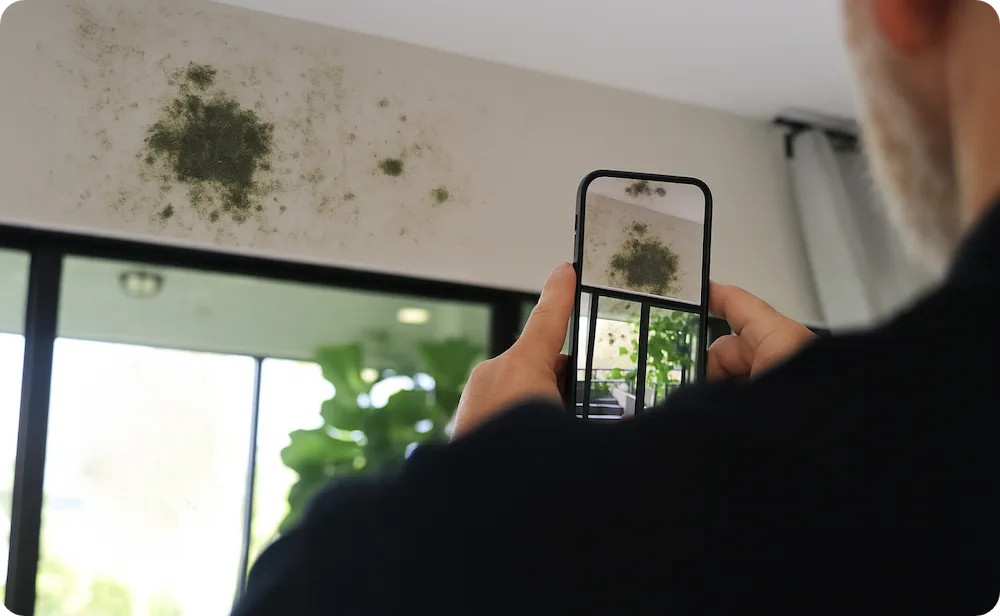
You move a few storage boxes away from the basement wall and find dark spotting behind them.
Or the basement has smelled musty for months, but you never saw anything until you pulled up a corner of carpet.
Maybe the story is more obvious: the sump pump failed last spring, the basement flooded, everything looked dry afterward, and now mold is showing up along the bottom of the finished walls.
Basement mold usually has a history.
The useful question is not just, “How do I get this mold off the wall?”
It is:
Where is the moisture coming from, what did it reach, and what has to change so the basement stays dry after the cleanup?
PuroClean provides professional basement mold remediation in Millville, NJ for homes dealing with mold after flooding, sump pump failures, foundation moisture, plumbing leaks, high humidity, wet drywall, damp carpet, and other basement moisture problems.
New Jersey basements deal with moisture from several directions.
Water can move through or around a foundation after heavy rain. A sump system can fail. A pipe can leak behind a finished wall. Humid summer air can enter a cool basement and create damp conditions. Water from an upstairs plumbing problem can eventually find its way down.
Sometimes the source is obvious.
Sometimes the mold is the first clue.
| What You Notice | What May Be Happening | What to Investigate |
|---|---|---|
| Mold low on basement drywall | Previous flooding, foundation moisture, wet flooring, or a plumbing leak | Wall cavity, base plate, flooring, flood history |
| Musty odor after heavy rain | Water intrusion or moisture entering around the foundation | Foundation walls, floor joints, drainage, sump system |
| Mold behind boxes or furniture | Limited airflow combined with a cool or damp wall | Humidity, wall moisture, storage placement |
| Carpet smells musty but looks dry | Moisture may remain in padding or beneath the flooring | Carpet pad, slab, perimeter walls |
| Mold appears near the sump pit | Repeated water events, high local humidity, sump overflow, or seepage | Pump operation, discharge, basin area, surrounding materials |
| One basement wall repeatedly gets damp | Exterior drainage, foundation seepage, plumbing, or condensation | What is happening on both sides of that wall |
Mold remediation works better when the building tells us the story first.
Millville is not primarily a city of new apartment towers.
Recent Census-based housing estimates put the city at roughly 12,200 housing units. About 63% are detached single-family homes, and roughly 64% of occupied homes are owner-occupied.
The median Millville structure was built around 1970.
That does not mean a 1970 house has a mold problem.
It does mean many local homeowners are maintaining houses that have been through decades of:
An older house is not automatically a wet house.
But the longer a house has been standing, the more useful its water history becomes.
One important limitation: Census housing data does not tell us how many Millville single-family homes actually have basements.
So we do not pretend it does.
For the house in front of us, the foundation, drainage, sump system, plumbing, grading, previous flooding, and current moisture readings matter far more than a citywide statistic.
A basement can become damp even when no pipe has broken and no water is visibly running down the wall.
During warm, humid weather, basement walls, slabs, pipes, and other surfaces may stay considerably cooler than the outside air.
Bring humid air into that cooler environment and relative humidity rises.
Under the right conditions, condensation can form on cool surfaces.
You may notice:
EPA guidance generally recommends keeping indoor relative humidity below 60%, and ideally around 30–50% when practical.
That range is useful as a reference.
It is not permission to ignore an actual leak.
A dehumidifier can help manage humid air. It cannot repair water entering through a foundation crack or stop a failed pipe behind the wall.
Winter creates a different set of moisture conditions.
A frozen plumbing line can split and leak after thawing.
Cold foundation surfaces can interact with warmer indoor air.
Rain followed by freezing and thawing can expose drainage problems outside the home.
A basement that stays dry in July can still have a January plumbing loss.
A basement that stays dry all winter can still become humid in August.
That is why the right question is not, “What season causes basement mold?”
It is, “What is supplying moisture to this basement?”
This is a common sequence:
The problem is not necessarily that no drying occurred.
The problem may be that nobody checked everything the water reached.
A basement flood can affect:
If standing water is still part of the current problem, see our basement water extraction in Millville service.
A sump pump failure creates an obvious mechanical problem.
But replacing the pump does not automatically dry the basement.
If water escaped the sump basin and reached walls, flooring, carpet, boxes, furniture, or finished materials, those materials still need attention.
If mold later appears around a previously flooded area, the remediation should consider both:
For the water-loss side of that problem, see sump pump failure cleanup in Millville.
Do not start punching holes in every wall.
Start with the history.
Ask yourself:
A smell does not tell you exactly what is growing or where.
But a pattern can tell you where to start looking.
An unfinished masonry wall is honest.
If water comes through it, you can often see the staining or dampness.
A finished wall can make the room look beautiful while hiding the original foundation several inches behind it.
Now the assembly may include:
A small foundation moisture problem can now stay out of sight.
That does not mean finished basements are a bad idea.
It means recurring odor, swollen baseboards, peeling paint, unexplained flooring changes, or mold returning in the same location deserves investigation behind the finish.
Sometimes you never see the mold itself until the wall is opened.
Clues can include:
One clue does not automatically prove hidden mold.
But several together can justify a closer look.
Maybe not.
A white, chalky or crystalline deposit on concrete or masonry may be efflorescence.
Efflorescence occurs when moisture moves through masonry, carries dissolved salts with it, and leaves those salts behind as the water evaporates.
Efflorescence itself is not mold.
But it is useful evidence.
It tells you that moisture has been moving through that masonry.
So wiping away the white material may improve appearance without answering the more important question:
Why is water moving through this wall?
Concrete and masonry are different from paper-faced drywall, carpet padding, or cardboard.
The masonry itself is inorganic, but dirt, dust, coatings, paper products, wood nearby, or other organic material on the surface can support growth when moisture is present.
If mold appears repeatedly on a basement masonry wall, look beyond the surface.
Possible contributors include:
Cleaning the wall is one part of the job.
Keeping it dry is the part that makes the cleanup last.
No.
Mold by itself does not diagnose a structural foundation problem.
A basement can have excess moisture because of drainage, humidity, a plumbing leak, condensation, a sump issue, or many other conditions that have nothing to do with structural failure.
If you see meaningful foundation movement, large cracks, bowing walls, or another structural concern, that should be evaluated by the appropriate foundation or structural professional.
The remediation contractor’s job is not to turn mold into a diagnosis of every system in the house.
It can help solve one part of the problem if elevated humidity is actually contributing to the moisture.
It cannot remove existing mold simply by running.
And it cannot repair:
If the basement is simply humid, dehumidification may be very useful.
If water is actively entering, fix the water.
Not automatically.
If visible mold is plainly present and you already know the basement flooded, sampling may not answer the most urgent questions.
You already know two important facts:
There is mold.
There was moisture.
Now you need to determine the extent and make sure the moisture source is under control.
Testing can be more useful when:
A good question before paying for a test is:
What decision are we going to make differently based on the result?
The New Jersey Department of Health’s basic guidance is sound: when mold cannot readily be traced to a leak, investigate the building to identify the excess-water source.
Before cleaning mold, we want to understand whether we are dealing with:
We do not assume every basement wall needs to come down because mold appeared in one corner.
We also do not assume the visible patch is necessarily the entire problem.
The goal is to determine which materials and areas are actually involved.
Remediation can disturb moldy materials and create dust and debris.
Depending on the scope, controls may be used to separate the work area from unaffected portions of the basement or home.
Material type matters.
Heavily affected drywall, insulation, carpet padding, fiberboard, or other porous materials may require removal when cleaning and drying them is not realistic.
Removal should follow the actual affected area.
Not fear.
Not guesswork.
Structurally sound framing, masonry, and other materials may be candidates for cleaning depending on their condition and the extent of contamination.
Simply changing the color of a stained surface is not the same thing as completing remediation.
Any materials remaining in the basement should be dry enough to stay dry under normal conditions.
EPA and other public-health guidance generally recommends drying wet building materials promptly, commonly within approximately 24–48 hours when possible, to help reduce the likelihood of mold growth.
That is not a stopwatch.
A wet wall does not become moldy at one exact minute.
The practical lesson is to avoid leaving building materials damp unnecessarily.
Depending on the cause, that may mean work by another trade.
PuroClean can remediate mold.
A plumber repairs plumbing.
A drainage or foundation professional addresses certain exterior water-entry conditions.
A sump professional may need to correct the sump system.
The mold contractor should not pretend that cleaning alone repairs every cause of basement moisture.
Drywall is porous, particularly its paper facing.
Whether it can remain depends on the condition of the material, extent of mold growth, moisture history, and what is happening behind it.
Removal becomes more likely when drywall is:
The removal line should make sense based on the actual conditions.
There is no intelligent universal rule that every basement mold job requires gutting the room from floor to ceiling.
Carpet can hide moisture especially well.
You may walk across it and think the room is dry while the padding or slab underneath tells a different story.
Watch for:
Carpet affected by sewage is a different situation from carpet affected by clean water or humidity.
If wastewater was involved, see our sewage backup cleanup in Millville service.
The top surface may look completely normal.
That does not automatically mean the assembly beneath it is dry.
Depending on how the flooring was installed, water can move beneath planks and become difficult to see from above.
The concern becomes greater after:
The flooring itself may resist water better than some traditional materials.
But the condition beneath it still matters.
A spray bottle cannot diagnose a basement.
Even if a cleaning product changes the appearance of the visible growth, you still need answers to:
Why did it grow there?
Is anything affected behind that surface?
Is the material something that should be cleaned or removed?
Will it stay dry afterward?
Cleaning methods should match the material and the scope of the problem.
The moisture source still has to be solved.
Not as the first step.
Paint can make a wall look finished again.
It cannot turn a damp, mold-affected wall into a properly remediated one.
Before coating the surface:
The paint belongs near the end.
Sometimes.
EPA guidance says that a relatively small mold area—less than about 10 square feet in many situations—may be manageable by a homeowner following appropriate cleanup guidance.
But square footage is not the only consideration.
Call a professional sooner when:
If someone in the home has specific health concerns, those questions should be discussed with a qualified healthcare professional rather than diagnosed by a restoration contractor.
This is a small practical change that can prevent a lot of frustration.
Cardboard is porous.
Put it directly on a damp slab or tightly against a cool basement wall and it can absorb moisture.
The box may become musty before anything else in the room looks wet.
For basement storage, consider:
It will not stop a basement flood.
It can make a minor moisture problem easier to spot before dozens of boxes become part of the cleanup.
The basement starts below grade, but some basement moisture problems begin above grade.
Take a walk around the house after rain and look at basics such as:
You do not need to diagnose drainage engineering yourself.
But noticing that one downspout dumps water beside the exact basement corner that gets wet is useful information.
Do not start with mold remediation while the room is actively taking on water.
First control the current water loss.
If there is standing water, see our basement water extraction in Millville service.
If water is actively spreading through multiple areas of the property, see emergency water removal in Millville.
Mold remediation is much more useful after the building has stopped receiving new water.
There is no honest one-number answer.
A small area on exposed masonry is different from mold behind forty feet of finished basement wall.
Timing depends on:
A contractor should be able to explain what has to happen before giving you confidence in a schedule.
The phrase “mold in the basement” is too broad to predict the scope by itself.
Cost usually changes based on practical things:
A small accessible area should not automatically become a whole-basement proposal.
A finished basement with mold behind multiple walls should not be priced like a spot on exposed concrete either.
Sometimes, depending on the policy and what caused the mold.
A basement mold problem following a sudden covered plumbing loss may be treated differently from mold associated with long-term seepage, recurring groundwater, chronic humidity, or neglected maintenance.
If insurance may be involved:
Do not assume that “mold is never covered” or that “mold is always covered.”
The cause of the loss matters.
If the proposal begins and ends with, “We’re going to spray everything,” keep asking questions.
If your problem is clearly concentrated in the basement, this page addresses that environment specifically.
If mold has been found in several parts of the building, followed a larger water event, or involves multiple rooms or building systems, our broader mold remediation in Millville service may better match the scope.
Recurring mold usually means moisture is recurring too. Common possibilities include humidity, condensation, foundation moisture, flooding, plumbing leaks, sump problems, or wet materials remaining from an earlier water loss.
A rain-related pattern can point toward foundation or drainage moisture, although the source still needs to be identified. Check for visible seepage, damp walls, water around the floor-wall joint, sump activity, and exterior drainage conditions.
Yes. Elevated humidity can keep materials damp enough to support mold growth, particularly on cooler basement surfaces or behind stored items where airflow is limited.
EPA guidance generally recommends keeping indoor relative humidity below 60% and ideally around 30–50% when practical. A hygrometer can help you track conditions rather than judging humidity by feel alone.
A dehumidifier can help control humidity, but it does not remove established mold and it cannot correct an active water leak or foundation problem.
No. The scope depends on the amount of growth, condition of the drywall, moisture behind it, flood history, and what other materials are involved.
It may be efflorescence rather than mold. Efflorescence is a mineral deposit left behind as moisture moves through masonry and evaporates. Even though it is not mold, it can be evidence of moisture movement.
Yes. Moisture can become trapped beneath carpet, padding, floating floors, and other flooring systems, especially after flooding or a plumbing loss.
It can contribute if the failure allows basement materials to remain wet. Replacing the pump addresses the mechanical problem; affected walls, flooring, insulation, and contents still need to be evaluated and dried.
There is no exact mold-growth clock. EPA and CDC guidance generally recommends drying wet materials within approximately 24–48 hours when possible to reduce the likelihood of mold growth.
Not necessarily. If visible growth is already present, testing may add little unless the results are needed to answer a specific question or change the remediation plan.
Not as a substitute for remediation. The moisture source and mold contamination should be addressed first, and the material should be dry before cosmetic finishing.
EPA guidance indicates that relatively small areas, generally less than about 10 square feet in many situations, may be manageable by homeowners following appropriate precautions. Larger problems, significant water damage, hidden mold, repeated growth, or sewage-related losses are good reasons to involve an experienced professional.
It can if the basement becomes wet again. Long-term success depends heavily on controlling the moisture source that allowed the growth in the first place.
Age alone does not cause mold. Older homes may have a longer history of renovations, drainage changes, plumbing repairs, foundation maintenance, or previous water events, but a new basement can develop mold too if moisture is not controlled.
PuroClean handles mold remediation and water-damage restoration. If the underlying cause requires foundation waterproofing, drainage reconstruction, plumbing repair, or another specialty trade, that portion of the work should be handled by the appropriate professional.
A basement can be cleaned beautifully and still have the same problem six months later if nobody answers the moisture question.
So before deciding what gets sprayed, painted, removed, or rebuilt, we want to know:
Where is the water coming from?
What materials did it affect?
How far does the mold actually extend?
What can stay?
What needs to come out?
What keeps this basement dry afterward?
PuroClean of Vineland provides basement mold remediation for homeowners and businesses in Millville and surrounding Cumberland County communities.
Whether the problem began with a flooded basement, failed sump pump, plumbing leak, foundation moisture, or a basement that simply stays too damp, we can help determine the affected area, address mold-contaminated materials, dry the structure where needed, and build the remediation scope around the actual conditions in the property.
Call (888) 598-1441 if your Millville basement has visible mold, recurring musty odors, mold after flooding, or a moisture problem you cannot explain.
What Our Customers Say:
Find answers to common questions about our services
Mold returning after DIY remediation is likely if the underlying moisture problem is not. Professional remediation includes moisture control measures and post-remediation verification to reduce this risk significantly.
A small, contained project may take only a few days, while large-scale contamination can take weeks. The timeline depends on the extent of damage, materials affected, and whether reconstruction is required.
Mold remediation may require partial relocation or temporary closure of affected areas. Containment zones and HEPA air scrubbers minimize disruption, and many properties remain partially usable during the process
Professional technicians at PuroClean of Vineland use tools such as moisture meters, infrared cameras, and air sampling to detect moisture where mold colonies may be found. Identifying hidden mold is critical, as untreated areas can continue to spread contamination.
Early indicators include musty odors, visible patches of discoloration on walls or ceilings, and unexplained allergy-like symptoms among occupants. Mold may also hide behind wallpaper, under flooring, or inside HVAC systems
Water damage can result from unexpected leaks, flooding from storms, plumbing failures, or appliance malfunctions. Our certified teams focus on rapid water removal, drying, and stabilization to help prevent further damage and mold growth.
 Explore Our Water Damage Mitigation Services
Even after a fire is extinguished, smoke, soot, and odor can continue to affect your home. Fire damage restoration services address visible damage while also helping reduce lingering effects that impact indoor air quality and surfaces.
Explore Our Fire and Smoke Damage Restoration Services
Mold often develops as a result of unresolved moisture or hidden water damage. Professional mold remediation helps identify affected areas, contain growth, and restore healthy indoor conditions.
Explore Our Mold Removal and Remediation Services
Biohazard situations, including crime scene cleanup and virus decontamination, require specialized cleaning and handling to protect health and safety. Biohazard cleanup services address contamination using proper protocols and professional care.
Explore Our Biohazard Cleanup Services
In some cases, property damage requires repairs beyond cleanup and mitigation. Reconstruction services help restore damaged areas of the home after water, fire, or other incidents, supporting a smoother transition from damage to recovery.
Explore Our Reconstruction Services Services
PuroClean provides 24/7 commercial property damage restoration services for businesses and facilities across the United States.
Explore Our Commercial Services
Water damage can result from unexpected leaks, flooding from storms, plumbing failures, or appliance malfunctions. Our certified teams focus on rapid water removal, drying, and stabilization to help prevent further damage and mold growth.
Explore Our Water Damage Mitigation Services


PuroClean of Vineland
(888) 598-1441
3003 N. Mill Road, Building 400, Suite 3, Vineland, NJ 08360

© 2026 PuroClean. All Rights Reserved.