24/7 Emergency Mold Remediation Services in Vineland, NJ
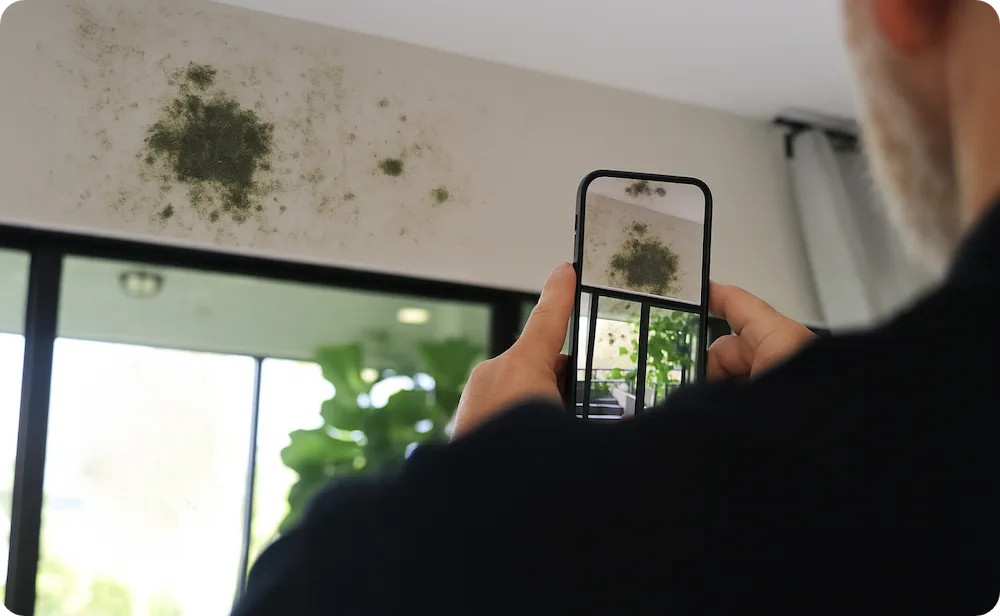
You notice dark spotting on a basement wall.
Or a contractor opens something up and finds growth behind the drywall.
Maybe the attic smells musty. Maybe a finished basement flooded months ago and one corner never quite smelled right afterward. Or maybe you know exactly what happened: a pipe leaked, the water was cleaned up, and now something is growing where the wall stayed wet.
Whatever led you here, the useful question is not simply, “How do we kill the mold?”
It is:
Why did this part of the building stay wet long enough for mold to grow, how far does the problem extend, and what needs to change so it does not come back?
PuroClean provides professional mold remediation in Millville, NJ for homes and businesses dealing with visible mold, hidden moisture, water-damaged building materials, attic growth, basement moisture problems, crawl-space conditions, and mold following leaks or flooding.
Mold spores exist naturally in indoor and outdoor environments.
Trying to create a house with absolutely no mold spores is not a realistic remediation goal.
Indoor mold growth becomes a problem when those spores find the moisture and materials they need to grow.
That means a lasting mold remediation plan has two jobs:
Skip the second part and the house may look better for a while without the underlying problem actually being solved.
A Millville home has to manage moisture coming from more than one direction.
During warm, humid weather, outdoor humidity can become part of the equation, particularly in cooler basements and other below-grade spaces.
During periods of heavy rain, groundwater and foundation moisture can expose weaknesses around basements and crawl spaces.
During winter, warm indoor air can move into colder building cavities and condense where it does not belong. Frozen plumbing can create an entirely different moisture problem once a damaged pipe thaws.
And roof leaks, plumbing failures, appliance leaks, bathroom moisture, and drainage problems can happen at any time of year.
| Where You Find Mold | Moisture Source Worth Investigating | What Often Gets Missed |
|---|---|---|
| Attic roof sheathing | Roof leak, condensation, indoor air entering attic, bathroom exhaust | Treating the sheathing without solving why the attic is getting wet |
| Basement walls or framing | Foundation seepage, flooding, humidity, plumbing leak, sump problem | Moisture behind finished walls and stored contents |
| Crawl space | Ground moisture, drainage, plumbing leakage, humidity | Looking only at visible wood instead of the moisture beneath the building |
| Bathroom | Repeated condensation, poor exhaust, plumbing leak | Assuming every recurring spot is merely a cleaning problem |
| Around windows or exterior walls | Condensation, flashing issue, exterior water intrusion | Painting the surface before determining where the moisture originates |
| Behind drywall after a water loss | Pipe leak, appliance failure, flood, roof leak | Stopping the drying process because the visible surface feels dry |
Mold does not need a uniquely “mold-related” source.
It needs moisture.
When mold appears on attic sheathing, people understandably suspect a roof leak first.
Sometimes that is exactly what happened.
But not every moldy attic has a hole in the roof.
An attic can also become damp when warm, moisture-containing air from the living space finds its way upward through:
When that warmer air reaches sufficiently cold roof sheathing during winter, condensation can become part of the moisture problem.
That is why simply treating dark staining on the roof deck without asking how the wood became damp can lead to a frustrating repeat problem.
If the attic is the primary affected area, see our attic mold cleanup in Millville service for a deeper look at roof leaks, attic condensation, insulation, ventilation, and roof-sheathing cleanup.
Basements have their own moisture logic.
Water may enter suddenly during a flood or plumbing failure.
Or the problem can be much quieter:
A finished basement can hide this particularly well.
The painted drywall facing the room may look normal while the back side of the wall, insulation, base plate, or flooring assembly remains damp.
If your basement recently took on standing water, our basement water extraction in Millville service addresses the initial water-removal side of the loss.
If the flooding was tied to a failed sump system, see sump pump failure cleanup in Millville.
In an unfinished basement, a foundation wall is usually right in front of you.
You can see staining. You may notice dampness. You may see water enter during rain.
Finish that same basement with framing, insulation, drywall, baseboards, flooring, cabinets, and furniture, and the moisture pathway becomes less obvious.
Now water can sit behind something.
That does not mean every musty finished basement needs to be demolished.
It means the investigation should answer:
Crawl spaces are easy to ignore because nobody spends much time in them.
Unfortunately, the building does.
Wood framing, plumbing, insulation, soil, foundation walls, and outside air can all meet in a relatively confined space.
When mold develops there, the investigation may include:
Cleaning the wood without changing the crawl-space moisture conditions is only half a repair.
Water damage and mold remediation often overlap, but they are not the same job.
If a pipe breaks today and wet materials are found and dried promptly, the project may remain primarily a water-damage job.
If the leak went unnoticed, drying was incomplete, or wet material remained enclosed, visible or hidden mold may become part of the scope later.
EPA and CDC guidance generally recommends drying wet materials within approximately 24–48 hours when possible to help reduce the likelihood of mold growth.
That is not an alarm clock that makes mold appear at hour 49.
It is practical guidance: the longer building materials remain wet, the less comfortable we should be simply closing everything back up and hoping for the best.
If water is still actively entering the building, stop there first. Our emergency water removal in Millville service addresses an active water loss before mold remediation begins.
The word remediation sometimes makes the process sound more mysterious than it is.
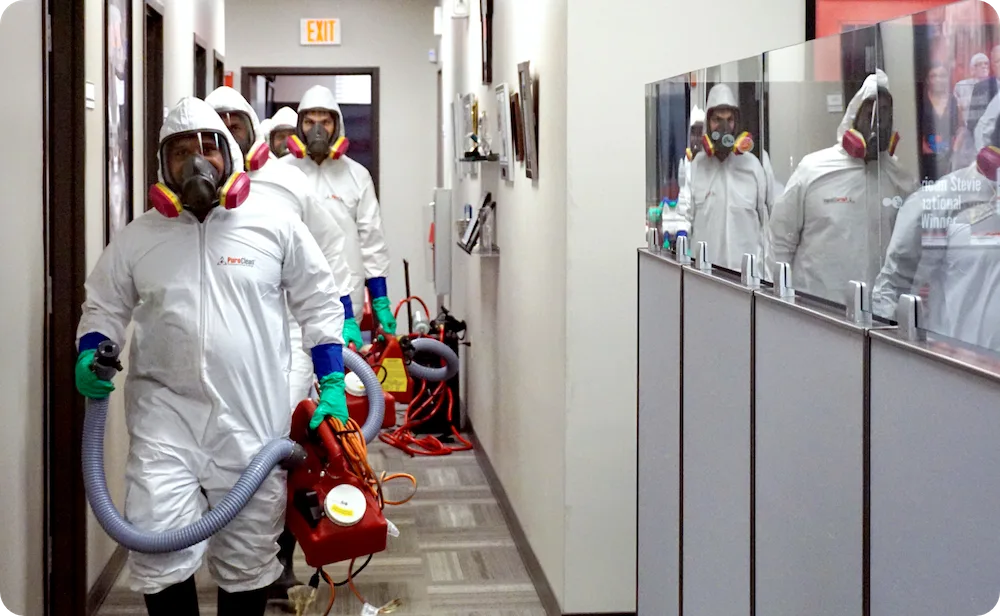
At its core, mold remediation means identifying the affected area, addressing the moisture condition, removing or cleaning contaminated materials appropriately, protecting unaffected areas during the work, and leaving the building in a condition that can stay dry.
Depending on the property and scope, the process may include the following.
Before deciding what to remove, we want to understand why the area is moldy.
Was there a flood?
Was a pipe leaking behind the wall?
Does the basement get damp every summer?
Does the attic show signs of winter condensation?
Did a roof leak continue through several storms?
Was the home vacant when the problem developed?
The moisture history often tells us as much as the visible mold.
The first visible patch is not always the entire affected area.
Moisture can travel behind drywall, beneath flooring, through insulation, along framing, and into adjoining spaces.
At the same time, a small isolated problem should not automatically become a whole-house project.
The scope should follow evidence.
Mold remediation involves disturbing materials that may contain mold growth.
Depending on the size and configuration of the project, containment and other controls may be used to reduce the movement of dust and debris into unaffected portions of the building.
Some building materials are more forgiving than others.
Porous materials that contain significant embedded growth, have deteriorated, or cannot be adequately cleaned may require removal.
The decision should consider the material itself, the amount of contamination, the moisture history, and whether restoration is realistic.
Structurally sound materials that can be appropriately cleaned may remain in place.
The cleaning approach depends on the material and the condition of the surface.
Mold remediation is not simply spraying something over visible growth and waiting for the color to disappear.
This part cannot be optional.
If a roof still leaks, the roof needs repair.
If a plumbing line leaks, the plumbing needs repair.
If the basement floods because a sump system failed, the sump problem needs attention.
If humid air continually condenses on a cool surface, the moisture condition needs to change.
Materials that remain should be dry enough to stay that way once the area is rebuilt or returned to normal use.
Closing a wall around damp framing simply creates another hidden moisture problem.
At the end of remediation, the basic questions should be boring:
Is the water problem corrected?
Has the mold contamination been addressed?
Are the remaining materials dry?
Is there any reason this area should become wet again?
Boring is good.
No.
Different materials behave differently.
Structurally sound wood can often be evaluated for cleaning rather than automatically discarded.
But the moisture source still matters. Cleaned roof sheathing in an attic that continues condensing every winter is not a finished project.
Drywall is porous.
A small amount of superficial growth under limited conditions is different from drywall that is wet, deteriorated, or has mold extending into the paper and wall cavity.
Where necessary, selective removal can provide access to affected framing and insulation without turning every mold job into a complete gut renovation.
Wet, contaminated, or heavily affected insulation may be difficult to restore depending on the material and circumstances.
If insulation is removed, correcting the reason it became wet should come before replacement.
Concrete block and masonry are different from paper-faced drywall or carpet.
They still need to be cleaned appropriately and, most importantly, kept dry enough that the same moisture pattern does not continue.
Homeowners call us worried because they found something black.
We understand why.
But the color of visible growth does not answer the most useful questions about the building.
Whether the growth is black, green, gray, white, or another color, we still need to know:
Do not let color distract you from moisture and extent.
Not every visible mold problem needs an air test before anything can be done.
If growth is plainly visible and the moisture problem is obvious, the immediate questions are often where the affected area ends and how the source will be corrected.
Testing can make more sense when:
A test should answer a question.
If nobody can explain what decision the test result will change, ask why you are paying for it.
A persistent musty odor is worth investigating, but odor alone does not tell us exactly where a moisture problem is located.
Start with the building history.
Has there been:
The history can point toward walls, flooring, attics, basements, cabinets, crawl spaces, or other concealed areas that deserve a closer look.
No remediation plan should begin with the paint can.
If the underlying material is moldy or damp, covering it does not correct either condition.
The sensible order is:
Paint belongs near the end of the job.
A bottle of bleach does not answer the three questions that determine whether a mold problem is actually solved:
Where is the moisture coming from?
How far does the growth extend?
Is the affected material something that can reasonably be cleaned?
Cleaning methods vary by material and condition.
A hard surface in a bathroom is different from mold growing through paper-faced drywall, insulation, carpet backing, or hidden framing.
Whatever product is used, the moisture problem still has to be corrected.
Think before turning a small visible problem into a large disturbed one.
If you suspect significant growth behind drywall, opening the wall can release dust and debris into the room and may reveal a much larger affected area than expected.
There can also be other building concerns behind walls, particularly in older construction.
A small exploratory opening and a planned remediation are not the same thing as taking a sledgehammer to every suspicious wall.
A basement can feel dry enough to you while still spending long periods at elevated humidity.
EPA guidance recommends keeping indoor relative humidity below 60 percent and ideally in roughly the 30–50 percent range when practical.
That does not mean every Millville basement needs to sit at one exact number all year.
It means repeated high humidity and condensation are warning signs worth addressing.
A dehumidifier may be part of the solution in some basements.
But a dehumidifier is not a substitute for repairing an active foundation leak, broken pipe, or failing sump system.
Tell the remediation company.
Mold is only one part of that loss.
If building materials were affected by sewage or wastewater, contamination from the original water source changes how those materials should be evaluated and handled.
For an active or recent wastewater loss, see our sewage backup cleanup in Millville service.
No.
A ceiling can become moldy after a roof leak, plumbing leak, bathroom moisture problem, condensation, or an earlier water loss that was never completely dried.
If you have active staining, dripping, or sagging drywall, first solve the water problem.
Our ceiling water damage cleanup in Millville page explains how water can move through ceiling cavities and why the stain is not always directly below the source.
There is no useful finish line that says, “The machines ran for three days, so we are done.”
A better completion check asks whether:
Cosmetic staining may sometimes remain even after a material has been successfully cleaned.
Appearance matters, but moisture and condition matter more.
It can if the moisture comes back.
That is why recurrence is often more of a building-moisture question than a mold-cleaning question.
If the original problem was:
Mold remediation cleans up yesterday’s problem. Moisture control is what helps prevent tomorrow’s.
Sometimes.
Mold coverage often depends on why the mold developed, what the policy covers, whether the underlying water event is covered, and whether there are mold limitations or endorsements in the policy.
A sudden covered plumbing loss followed by mold is a very different insurance question from long-term seepage or a moisture condition that developed gradually.
If insurance may be involved:
Do not assume every mold claim is covered or automatically excluded.
The cause matters.
Two houses can both have “mold” and have completely different projects.
The largest cost drivers are usually not the color of the growth or the name someone gives it.
They are things such as:
A ten-square-foot bathroom problem should not automatically be priced or scoped like a basement with mold behind multiple finished walls.
You do not need to become a mold expert.
But you should understand what you are paying someone to accomplish.
A good scope should make sense when someone explains it in ordinary English.
A small amount of surface growth in an easily accessible area with an obvious moisture source is different from mold throughout an attic or behind a finished basement wall.
Professional evaluation becomes increasingly useful when:
If anyone in the property has specific medical concerns related to possible mold exposure, those questions belong with a qualified healthcare professional rather than a restoration contractor.
People often use the terms interchangeably. In practical terms, remediation is broader than simply removing visible growth. It includes understanding the moisture source, determining the affected area, cleaning or removing impacted materials appropriately, and helping return the area to dry conditions.
No realistic remediation project makes a home completely free of mold spores. Mold spores naturally exist in indoor and outdoor environments. The goal is to address problematic indoor growth and the moisture supporting it.
Often, no. When visible growth is already present, determining the extent and correcting the moisture problem may be more useful than routine sampling. Testing can be appropriate when mold is suspected but hidden, the source is unclear, or the results are needed for a specific decision.
Recurring mold usually means the conditions supporting it have not been fully corrected. Look for recurring condensation, humidity, leaks, foundation moisture, plumbing problems, or another source keeping the material damp.
Yes. Attic moisture is not only a summer issue. Warm indoor air moving into a cold attic can contribute to condensation on cold surfaces when conditions allow. Roof leaks and improper exhaust routing can also contribute to attic moisture.
Cool basement surfaces and humid air can create damp conditions, while foundation seepage and previous water events may add additional moisture. The specific source should be identified rather than assuming every basement problem is simply “humidity.”
It can help manage humidity, but it cannot repair a leaking foundation, broken pipe, failing sump pump, or other active water source. It works best when humidity is actually the problem or one part of the problem.
Sometimes. Removal depends on the extent of growth, material condition, moisture exposure, what is happening inside the wall, and whether the material can be adequately cleaned and dried.
Structurally sound wood can often be evaluated for cleaning rather than automatically replaced. The moisture source must still be corrected so the wood does not become damp again.
Yes. Hidden moisture from plumbing leaks, flooding, condensation, or exterior water intrusion can affect the back of drywall, insulation, framing, and other concealed materials.
There is no useful one-size-fits-all timeline. A small accessible area is different from an attic, crawl space, or finished basement with concealed contamination. The amount of material involved, access, removal, cleaning, drying, and source correction all affect the schedule.
That depends on the size and location of the work, containment, access to unaffected areas, and individual circumstances. The appropriate plan should be discussed after the affected area is evaluated.
It can if moisture returns. A successful cleanup should be paired with correction of the leak, humidity, condensation, drainage, or other water condition that allowed the growth to develop.
Coverage depends on the policy and cause of loss. Mold related to a covered sudden water event may be handled differently from long-term seepage, neglected maintenance, or recurring humidity. Review the specific policy and speak with the insurer.
Color alone does not tell you the source, extent, or proper remediation scope. Regardless of color, identify the moisture source and determine which materials are affected.
If you remember only one thing from this page, make it this:
Do not start with the mold. Start with the water.
Find out why the attic sheathing is damp.
Find out why the basement wall keeps getting wet.
Find out what happened behind the drywall after the pipe leaked.
Find out whether the crawl space has a water problem below the growth you can see above.
Then build the remediation around what the building is actually telling you.
PuroClean of Vineland provides mold remediation for homes and businesses in Millville and surrounding Cumberland County communities.
We can help identify the affected area, evaluate moisture conditions, address mold-contaminated materials, dry the structure where needed, and help you understand what needs to change to reduce the chance of the problem returning.
Call (888) 598-1441 if you have visible mold, recurring musty odors, mold following water damage, or a moisture problem you cannot explain.
What Our Customers Say:
Find answers to common questions about our services
Mold returning after DIY remediation is likely if the underlying moisture problem is not. Professional remediation includes moisture control measures and post-remediation verification to reduce this risk significantly.
A small, contained project may take only a few days, while large-scale contamination can take weeks. The timeline depends on the extent of damage, materials affected, and whether reconstruction is required.
Mold remediation may require partial relocation or temporary closure of affected areas. Containment zones and HEPA air scrubbers minimize disruption, and many properties remain partially usable during the process
Professional technicians at PuroClean of Vineland use tools such as moisture meters, infrared cameras, and air sampling to detect moisture where mold colonies may be found. Identifying hidden mold is critical, as untreated areas can continue to spread contamination.
Early indicators include musty odors, visible patches of discoloration on walls or ceilings, and unexplained allergy-like symptoms among occupants. Mold may also hide behind wallpaper, under flooring, or inside HVAC systems
Water damage can result from unexpected leaks, flooding from storms, plumbing failures, or appliance malfunctions. Our certified teams focus on rapid water removal, drying, and stabilization to help prevent further damage and mold growth.
 Explore Our Water Damage Mitigation Services
Even after a fire is extinguished, smoke, soot, and odor can continue to affect your home. Fire damage restoration services address visible damage while also helping reduce lingering effects that impact indoor air quality and surfaces.
Explore Our Fire and Smoke Damage Restoration Services
Mold often develops as a result of unresolved moisture or hidden water damage. Professional mold remediation helps identify affected areas, contain growth, and restore healthy indoor conditions.
Explore Our Mold Removal and Remediation Services
Biohazard situations, including crime scene cleanup and virus decontamination, require specialized cleaning and handling to protect health and safety. Biohazard cleanup services address contamination using proper protocols and professional care.
Explore Our Biohazard Cleanup Services
In some cases, property damage requires repairs beyond cleanup and mitigation. Reconstruction services help restore damaged areas of the home after water, fire, or other incidents, supporting a smoother transition from damage to recovery.
Explore Our Reconstruction Services Services
PuroClean provides 24/7 commercial property damage restoration services for businesses and facilities across the United States.
Explore Our Commercial Services
Water damage can result from unexpected leaks, flooding from storms, plumbing failures, or appliance malfunctions. Our certified teams focus on rapid water removal, drying, and stabilization to help prevent further damage and mold growth.
Explore Our Water Damage Mitigation Services


PuroClean of Vineland
(888) 598-1441
3003 N. Mill Road, Building 400, Suite 3, Vineland, NJ 08360